
Method and system for asynchronous lamp identification
一种照明系统、同步码的技术,应用在照明系统和光学接收器领域,能够解决增大照明系统复杂度和成本等问题
Patent Information
- Authority / Receiving Office
- CN · China
- Patent Type
- Applications(China)
- Current Assignee / Owner
- Publication Date
- 2012-05-23
- Estimated Expiration
- Not applicable · inactive patent
Smart Images
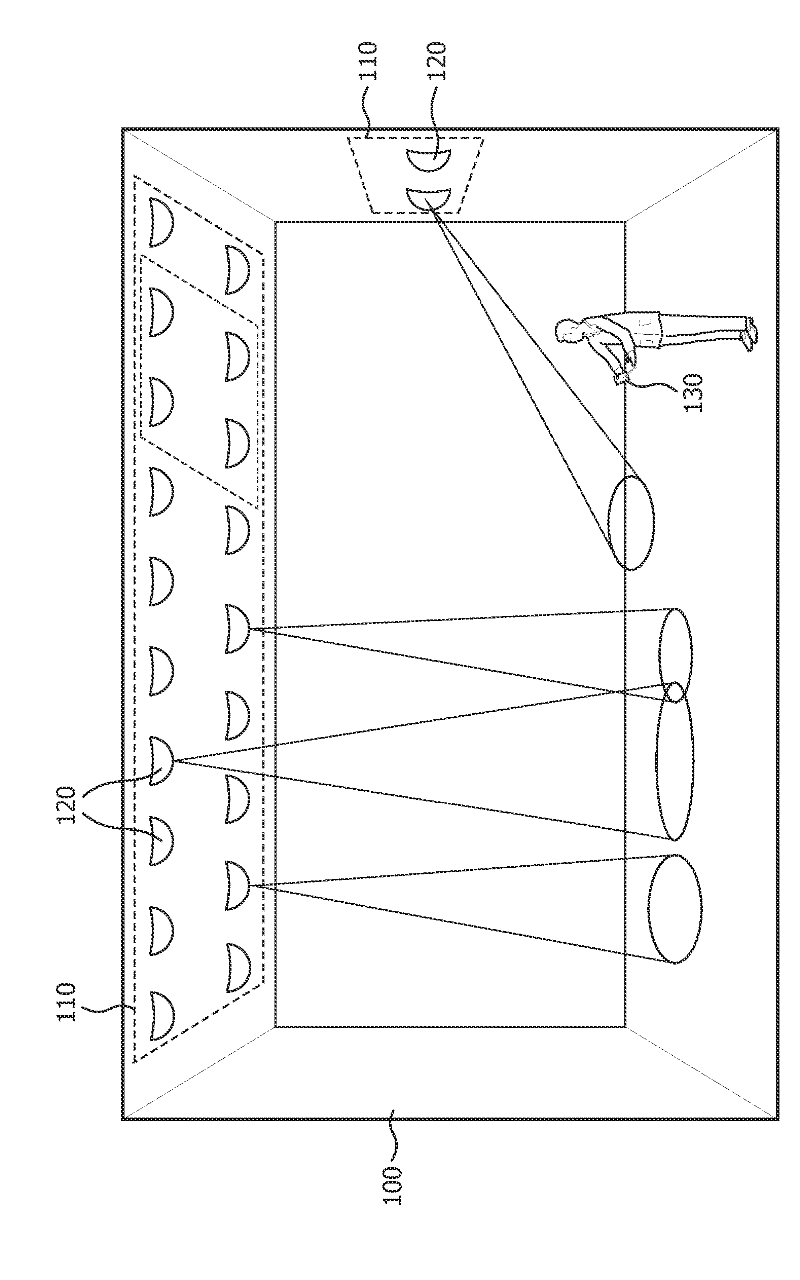
Figure 1 
Figure 2 
Figure 3
Abstract
Description
technical field
[0001] Embodiments of the invention relate generally to the field of lighting systems and optical receivers, and more particularly, to systems and methods for embedding data into the luminance output of such lighting systems. Background technique
[0002] In recent years, highly advanced lighting systems are being developed which allow consumers to obtain the desired atmosphere of a particular room or space. These lighting systems move away from traditional control of individual light sources (on / off and dimming) to scene settings, where groups of light sources are controlled simultaneously. An example of such a lighting system is an arrangement of groups of light sources in a room, hall or vehicle.
[0003] Intuitive user interaction is considered to be one of the most important success factors for these scene-setting applications. Providing the user with information about light sources, such as localized identification of light sources, their capabilities...
Examples
Embodiment Construction
[0038] In the following description, numerous specific details are set forth in order to provide a more thorough understanding of the present invention. It will be apparent, however, to one skilled in the art that the present invention may be practiced without one or more of these specific details. In other instances, well-known features have not been described in order to avoid obscuring the present invention.
[0039] figure 1 Shown is a structure 100 , which in this case is a room, with an installed lighting system 110 . The lighting system 110 includes one or more light sources 120 and one or more controllers for controlling the light sources 120 ( figure 1 not shown). The light source 120 may include a high / low voltage gas discharge source, an inorganic / organic light emitting diode, a laser diode, an incandescent source, or a halogen source. The lighting system 110 may further include a remote control 130 that allows a user to control the light source 120 .
[0040] ...