
1,3,4 - Trisubstituted pyrrole compound and preparation method and application thereof
A compound, three-substituted technology, applied in the field of medicine, can solve problems such as unreported
Patent Information
- Authority / Receiving Office
- CN · China
- Patent Type
- Patents(China)
- Current Assignee / Owner
- Publication Date
- 2014-08-20
- Estimated Expiration
- Not applicable · inactive patent
Smart Images
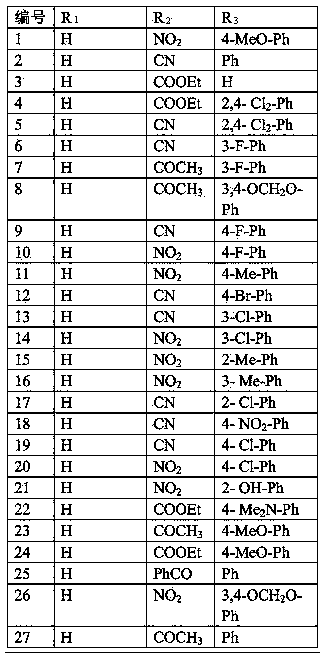
Figure 1 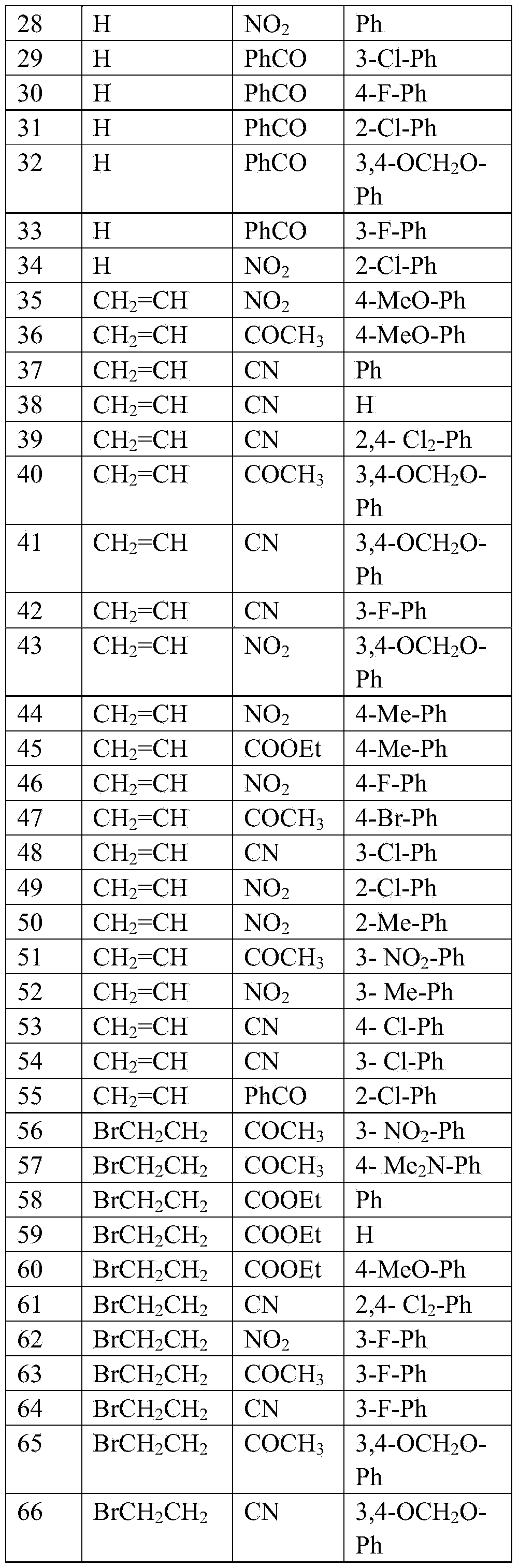
Figure 2 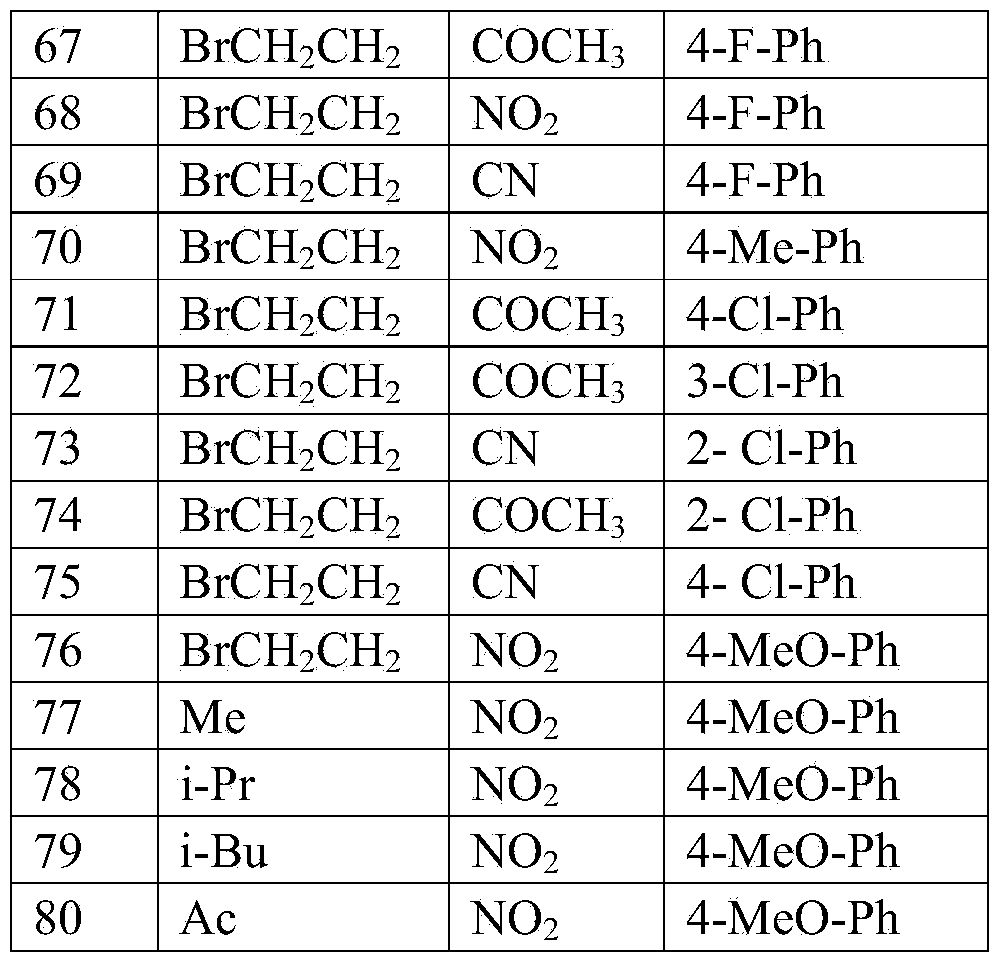
Figure 3
Abstract
Description
technical field
[0001] The invention relates to the pharmaceutical industry, in particular to the antitumor application of a class of 1,3,4-trisubstituted pyrrole compounds. Background technique
[0002] Pyrrole is a nitrogen-containing five-membered heterocyclic ring with weak aromaticity, which exists in a large number of natural compounds and plays an important role as the core structure. Pyrrole compounds are widely used in the field of medicine. International Patent Document No. WO8706266 (A1) discloses an excellent anti-inflammatory drug and analgesic drug Ketorolac (ketorolac), which works by inhibiting the production of prostaglandins. International Patent Document No. WO9961476 (A1) discloses a pyrrole ring-containing compound SU-5416, which is an ATP competitive inhibitor of tyrosine kinase of Flk-1 / KDR receptor, and can be used to treat malignant tumors such as melanoma and colon cancer. U.S. Patent Document No. US4089951 discloses the non-steroidal anti-inflamma...
Examples
Embodiment example 1
[0050] Implementation case 1, 3-(4-methoxyphenyl)-4 nitropyrrole
[0051] Under the protection of nitrogen, add 4-methoxyphenylnitroethylene (0.18g, 1mmol) and p-toluenesulfonate methyl isocyanide (0.23g, 1.2mmol) to 10mLDMSO, slowly add tert-butanol Potassium (0.15g, 1.3mmol), stirred at room temperature for 3 hours, quenched the reaction by adding saturated aqueous ammonium chloride solution, extracted three times with dichloromethane, dried over anhydrous sodium sulfate, distilled off the solvent, silica gel column chromatography (petroleum Ether: ethyl acetate=3:1), a solid (0.17g) was obtained, and the reaction yield was 79%. 1 HNMR (300MHz, CDCl 3 )δ(ppm):8.551(1H,s),7.741(1H,m),7.381(2H,d,J=4.8Hz),6.935(2H,d,J=4.2Hz),6.706(1H,m) ,3.845(3H,s).
Embodiment example 2
[0052] Implementation case 2, N-bromoethyl-3-(4-fluorophenyl)-4 cyanopyrrole
[0053] Under nitrogen protection, 3-(4-fluorophenyl)-4-cyanopyrrole (0.19g, 1mmol), 1,2-dibromoethane (0.56g, 3mmol) and potassium carbonate (1.38g , 10mmol), heated at 80°C for 8 hours, after the reaction, add 20mL of water, extract three times with dichloromethane, dry over anhydrous sodium sulfate, evaporate the solvent, silica gel column chromatography (petroleum ether: ethyl acetate = 6:1 ), a solid (67 mg) was obtained, and the reaction yield was 23%. 1 HNMR (300MHz, CDCl 3 )δ(ppm):7.933(2H,d,J=8.1Hz),7.367(2H,d,J=8.1Hz),7.249(1H,s),6.896(1H,s),4.320(2H,t, d=6.3Hz),3.622(2H,t,d=6.3Hz).
Embodiment example 3
[0054] Implementation case 3, N-methyl-3-4-methoxy-4-nitropyrrole
[0055] Under the protection of nitrogen, add 3-(4-methoxy)-4-nitropyrrole (0.218g, 1mmol), iodomethane (0.42g, 3mmol) and potassium carbonate (1.38g, 10mmol) in 15mL DMF, room temperature Stir for 5 hours. After the reaction is over, add 20 mL of water, extract three times with dichloromethane, dry over anhydrous sodium sulfate, evaporate the solvent, perform silica gel column chromatography (petroleum ether: ethyl acetate = 6:1), and obtain the product, pale Yellow solid, the reaction yield is 88%. 1 HNMR (300MHz, CDCl 3 )δ(ppm):7.555(1H,s),7.342(2H,d,J=9Hz),6.903(2H,d,J=9Hz),6.496(1H,s),3.833(3H,s),3.715 (3H).