

Method for preparing p-cresol into p-hydroxy benzaldehyde by catalytic oxidation of metalloporphyrin-metal salt composite catalyst
A technology of p-hydroxybenzaldehyde and composite catalyst, which is applied to the preparation of carbon-based compounds, chemical instruments and methods, and the preparation of organic compounds. Less, lower resource consumption and operating costs, high selectivity effect
Patent Information
- Authority / Receiving Office
- CN · China
- Current Assignee / Owner
- Publication Date
- 2013-07-03
- Estimated Expiration
- Not applicable · inactive patent
Smart Images
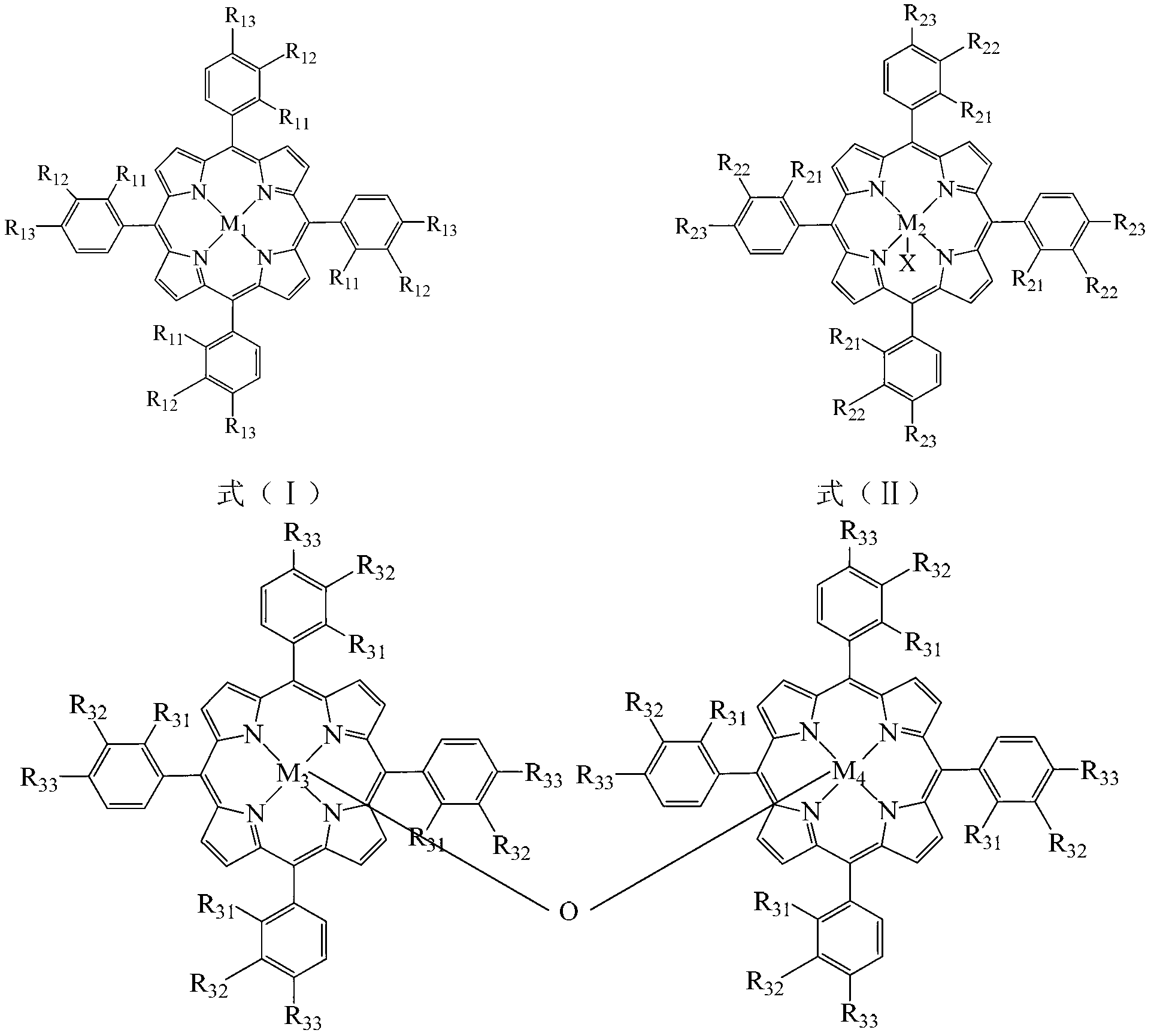
Figure 1 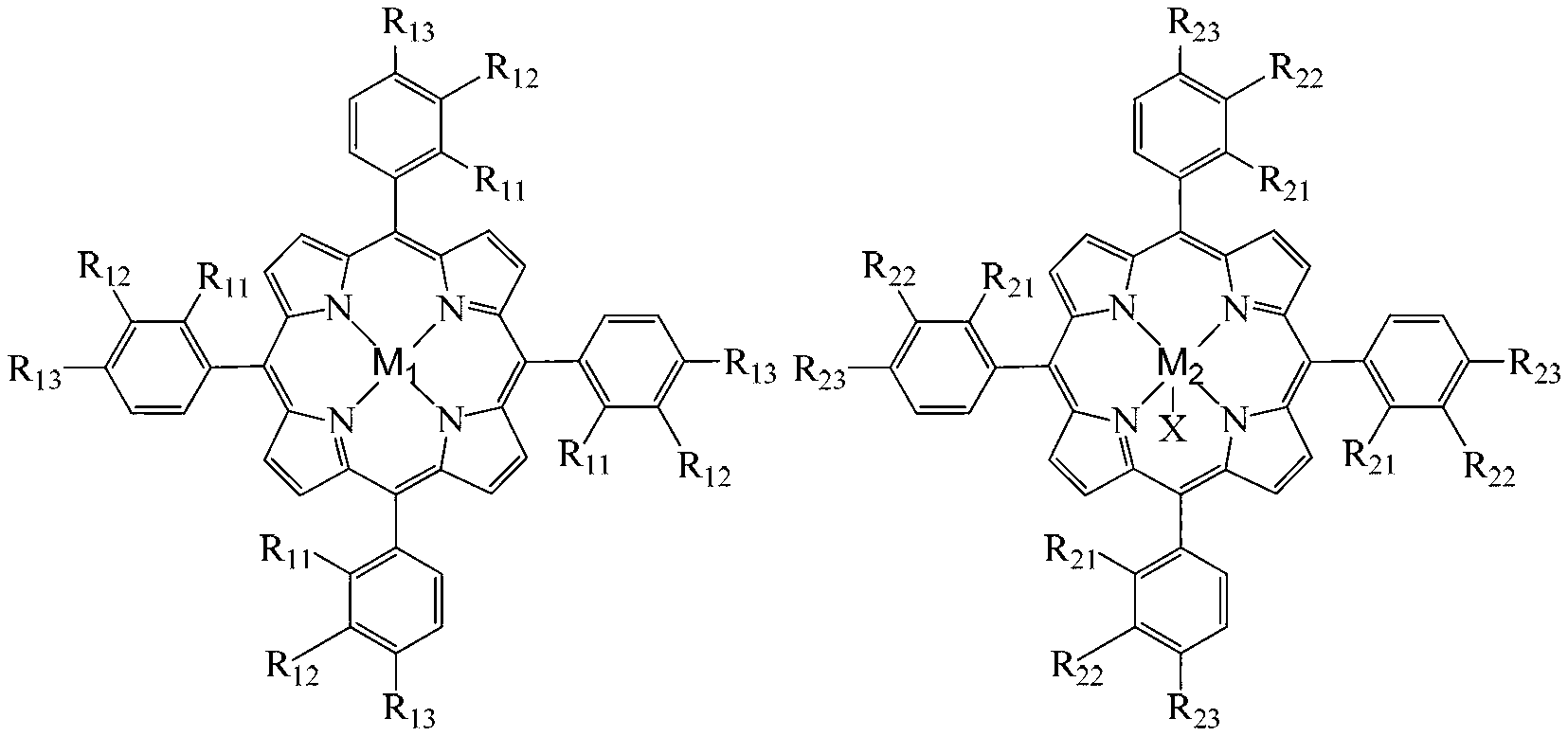
Figure 2 
Figure 3
Abstract
Description
technical field
[0001] The invention relates to a method for preparing aromatic aldehydes, in particular to a method for preparing p-hydroxybenzaldehyde by catalyzing the oxidation of p-cresol with a metalloporphyrin-metal salt composite catalyst. Background technique
[0002] p-Hydroxybenzaldehyde is an important organic synthesis intermediate, widely used in medicine, pesticide, dyestuff and other fields. Although there are many methods for synthesizing p-hydroxybenzaldehyde from p-cresol at present, the biomimetic catalytic oxidation of metalloporphyrins is relatively superior. European patent EP330036A1 (disclosure date: August 30, 1989) discloses a method for preparing p-hydroxybenzaldehyde by biomimetic catalytic oxygen oxidation of p-cresol, which uses metalloporphyrin or metalloporphyrin-metal salt as a catalyst, The problem of environmental pollution caused by the use of a large amount of cobalt chloride catalyst in the traditional method (EP0012939A1, publication ...
Examples
Embodiment 1
[0022] Take 6.4×10 -3 g chloride tetra-(p-methoxyphenyl) cobalt porphyrin (i.e. R in the general formula (II) 21 =R 22 = H, R 23 =OCH 3 , X=Cl,M 2 =Co), 3.2×10 -2 Add 1 g of ferrous acetate, 12.0 g of p-cresol and 12.0 g of sodium hydroxide into a 100 mL autoclave, add 40 mL of methanol, feed oxygen at a pressure of 0.2 MPa, and react in a water bath at a temperature of 65°C for 10 h. After the reaction was completed, the reaction liquid was detected by high performance liquid chromatography, and the conversion rate of p-cresol was 99.2%, the selectivity of p-hydroxybenzaldehyde was 80.0%, and the yield of p-hydroxybenzaldehyde was 79.4%.
Embodiment 2
[0024] Take 8.6×10 -4 g chloride tetra-(p-nitrophenyl)iron porphyrin (i.e. R in the general formula (II) 21 =R 22 = H, R 23 =NO 2 , X=Cl,M 2 =Fe), 3.8×10 -4 Add 1g zinc chloride, 16.0g p-cresol and 8.9g sodium hydroxide into a 100mL autoclave, add 40mL methanol, feed oxygen at a pressure of 0.6MPa, and react in a water bath at a temperature of 70°C for 5h. After the reaction was completed, the reaction solution was detected by high performance liquid chromatography, and the conversion rate of p-cresol was 83.0%, the selectivity of p-hydroxybenzaldehyde was 67.4%, and the yield of p-hydroxybenzaldehyde was 55.9%.
Embodiment 3
[0026] Take 6.4×10 -3 g chloride tetra-(p-methoxyphenyl)iron porphyrin (i.e. R in the general formula (II) 11 =R 12 = H, R 13 =OCH 3 , X=Cl,M 2 =Fe), 1.8×10 -3 Add g cobalt acetate, 16.0 g p-cresol and 14.5 g sodium hydroxide into a 100 mL autoclave, add 40 mL methanol, feed oxygen at a pressure of 0.2 MPa, and react in a water bath at 65°C for 10 h. After the reaction was completed, the reaction liquid was detected by high performance liquid chromatography, and the conversion rate of p-cresol was 99.9%, the selectivity of p-hydroxybenzaldehyde was 87.1%, and the yield of p-hydroxybenzaldehyde was 87.0%.