
A kind of resin composition and its application
A technology of resin composition and epoxy resin, which is applied in the field of copper-clad laminates, can solve problems such as poor dimensional stability and heat resistance, and achieve improved heat resistance and dimensional stability, improved thermal expansion coefficient, and improved dimensional stability The effect of sex and heat resistance
Patent Information
- Authority / Receiving Office
- CN · China
- Patent Type
- Patents(China)
- Current Assignee / Owner
- Publication Date
- 2017-02-22
Smart Images
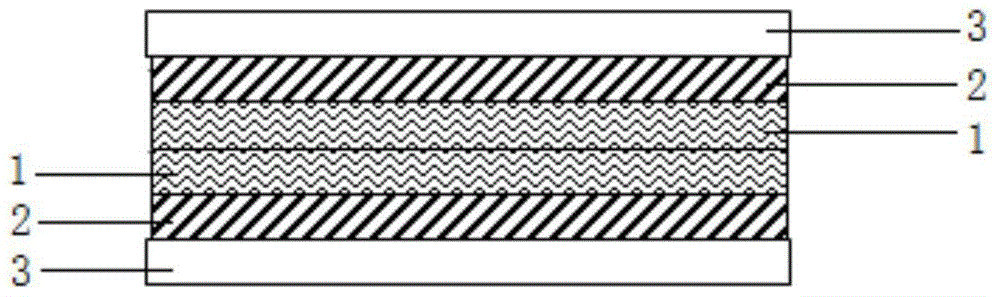
Figure 1 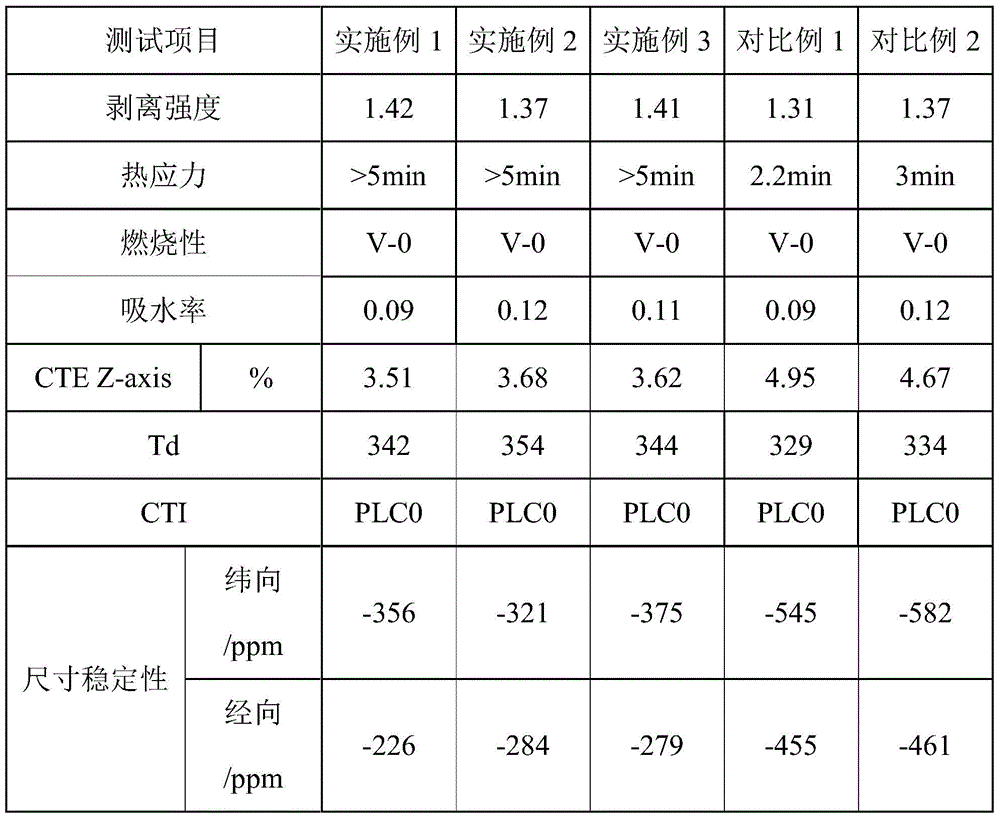
Figure 2
Abstract
Description
technical field
[0001] The invention belongs to the technical field of copper-clad laminates, in particular to a resin composition, and also relates to a copper-clad laminate made of the resin composition. Background technique
[0002] With the rapid development of electronic integration technology and assembly technology, printed circuit board (Printed circuitboard, PCB) manufacturers also have higher requirements for the dimensional stability and thermal expansion coefficient (Coefficient of Thermal Expansion, CTE) of CCL. Copper Clad Laminate (CCL) prepared by epoxy resin-based composite materials with phenolic resin as curing agent has good heat resistance, medium resistance, CAF (ion migration) resistance, etc., but there are some problems after curing. There are problems such as poor dimensional stability and high brittleness of the plate. However, although the epoxy resin-based composite material cured with dicyandiamide has good dimensional stability, it has poor he...
Examples
Embodiment 1
[0036]Step 1: Weigh the following components according to parts by weight: 10 parts of epoxy soybean oil modified epoxy resin, 90 parts of DOPO-HQ modified phosphorus-containing epoxy resin, 15 parts of biphenyl type phenolic resin, nonyl 20 parts of phenol-modified benzoxazine, 70 parts of silicon dioxide, 50 parts of boehmite, 0.08 parts of diphenylimidazole, 60 parts of acetone, and 50 parts of ethylene glycol methyl ether; among them, silicon dioxide is spherical Silicon, mixed with 60 parts of silicon dioxide with an average particle size of 5 μm and 10 parts of silicon dioxide with an average particle size of 80 nm; boehmite is granular, with an average particle size of 2 μm;
[0037] Use KH560-ethanol solution with a volume concentration of 30%, the amount of KH560 is 2% of the mass of silica and boehmite, use dry spray to treat the surface of silica and boehmite in a kneader for 2 hours, then take it out for use ;
Embodiment 2
[0042] Step 1: Take the following components in parts by weight: 30 parts of epoxy soybean oil modified epoxy resin, 70 parts of DOPO-HQ modified phosphorus-containing epoxy resin, 20 parts of biphenyl type phenolic resin, nonyl 5 parts of phenol-modified benzoxazine, 103 parts of silicon dioxide, 20 parts of boehmite, 0.15 parts of diphenylimidazole, 60 parts of acetone, and 50 parts of ethylene glycol methyl ether; among them, silicon dioxide is spherical Silicon, mixed with 100 parts of silicon dioxide with an average particle size of 5 μm and 3 parts of silicon dioxide with an average particle size of 80 nm; boehmite is granular, with an average particle size of 2 μm;
[0043] Use KH560-ethanol solution with a volume concentration of 30%, the amount of KH560 is 2% of the mass of silica and boehmite, use dry spray to treat the surface of silica and boehmite in a kneader for 2 hours, then take it out for use ;
[0044] Step 2: using ethylene glycol methyl ether and acetone ...
Embodiment 3
[0048] Step 1: Take the following components in parts by weight: 22 parts of epoxy soybean oil modified epoxy resin, 78 parts of DOPO-HQ modified phosphorus-containing epoxy resin, 18 parts of biphenyl phenolic resin, nonyl 15 parts of phenol-modified benzoxazine, 95 parts of silicon dioxide, 40 parts of boehmite, 0.1 part of diphenylimidazole, 60 parts of acetone, and 50 parts of ethylene glycol methyl ether; among them, silicon dioxide is spherical Silicon, mixed with 88 parts of silicon dioxide with an average particle size of 5 μm and 7 parts of silicon dioxide with an average particle size of 80 nm; boehmite is granular, with an average particle size of 2 μm;
[0049] Use KH560-ethanol solution with a volume concentration of 30%, the amount of KH560 is 2% of the mass of silica and boehmite, use dry spray to treat the surface of silica and boehmite in a kneader for 2 hours, then take it out for use ;
[0050] Step 2: using ethylene glycol methyl ether and acetone to disso...