
A kind of titanium silicon molecular sieve and preparation method thereof
A titanium-silicon molecular sieve and silicon source technology, applied in the direction of crystalline aluminosilicate zeolite, nanotechnology, nanotechnology for materials and surface science, etc., can solve problems such as complex process, insufficient reactivity, and small grain size , to achieve the effects of increased selectivity, full play of oxidation activity, and increased relative crystallinity and yield
Patent Information
- Authority / Receiving Office
- CN · China
- Patent Type
- Patents(China)
- Current Assignee / Owner
- Publication Date
- 2018-04-13
Smart Images
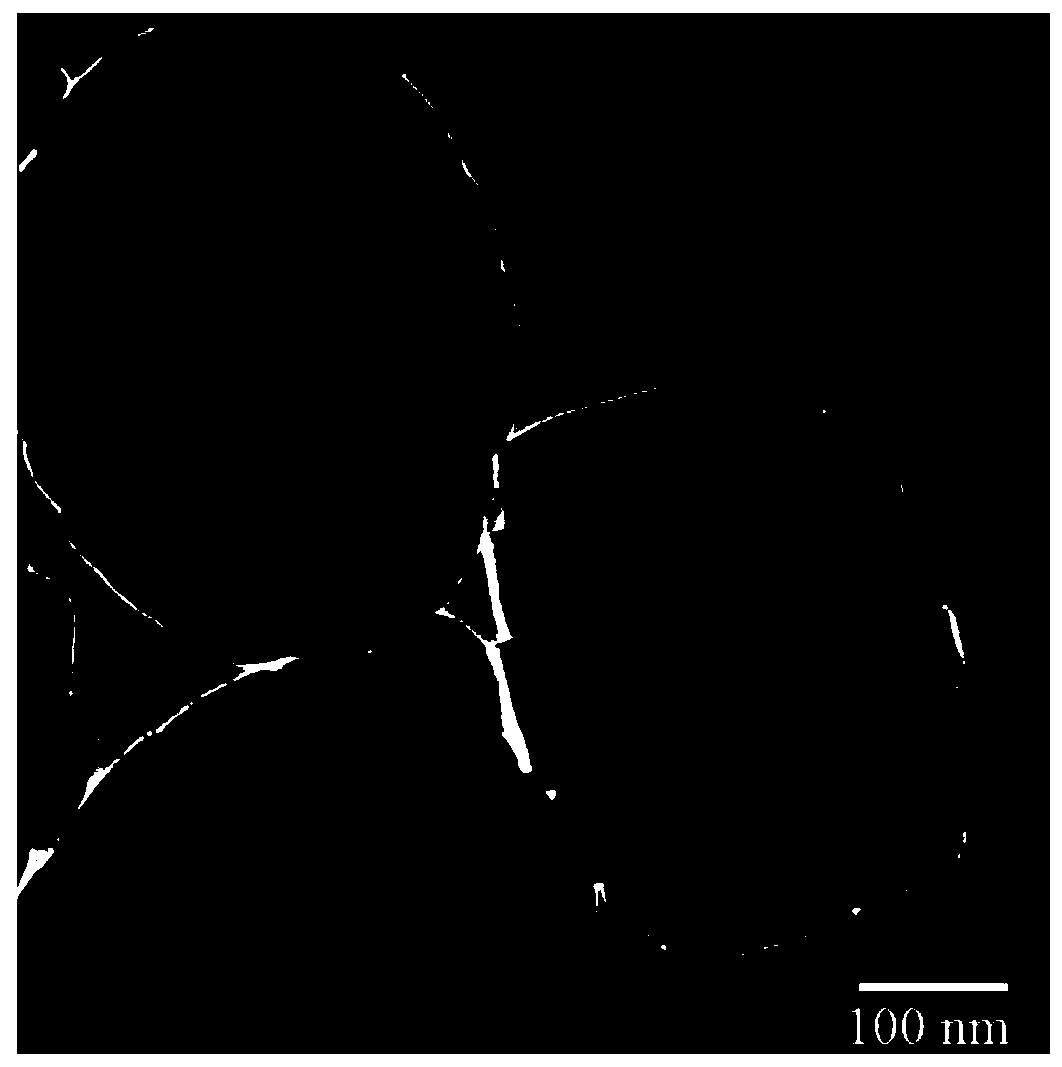
Figure 1 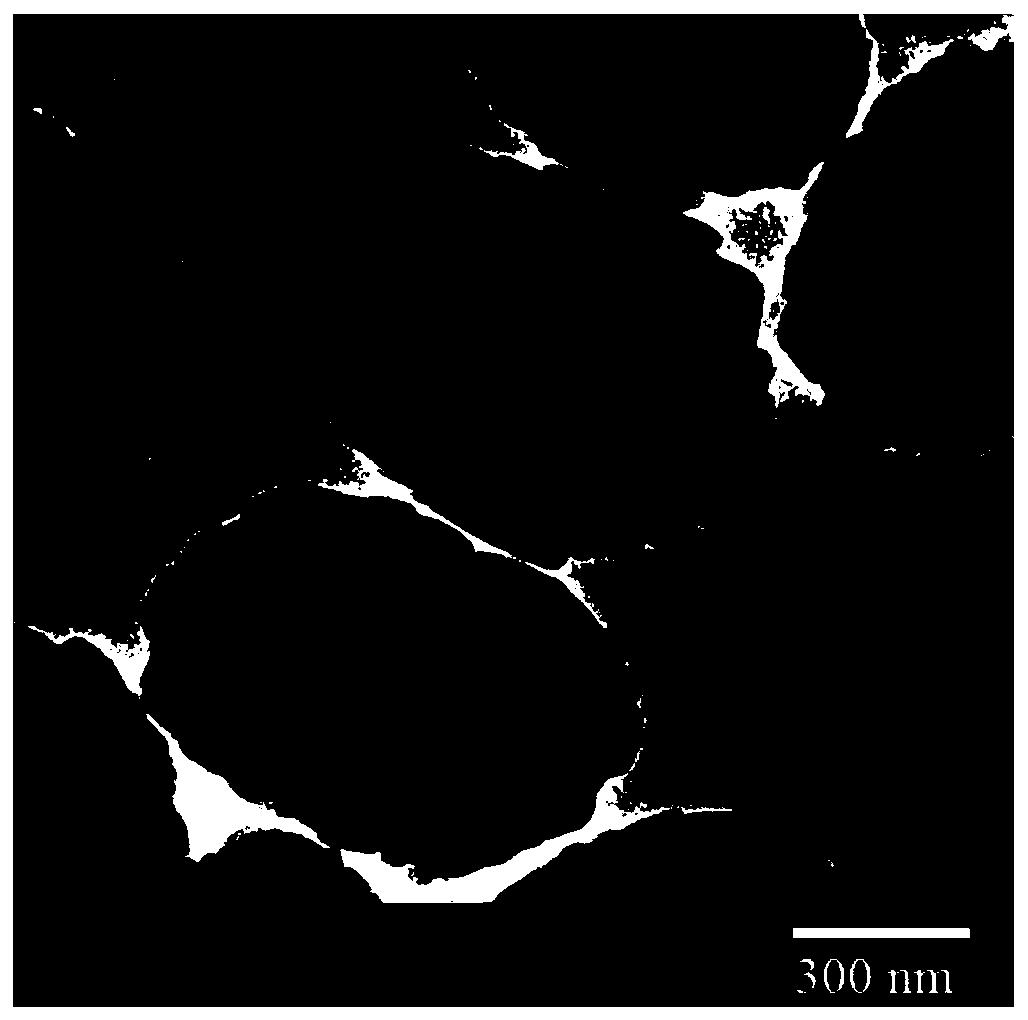
Figure 2 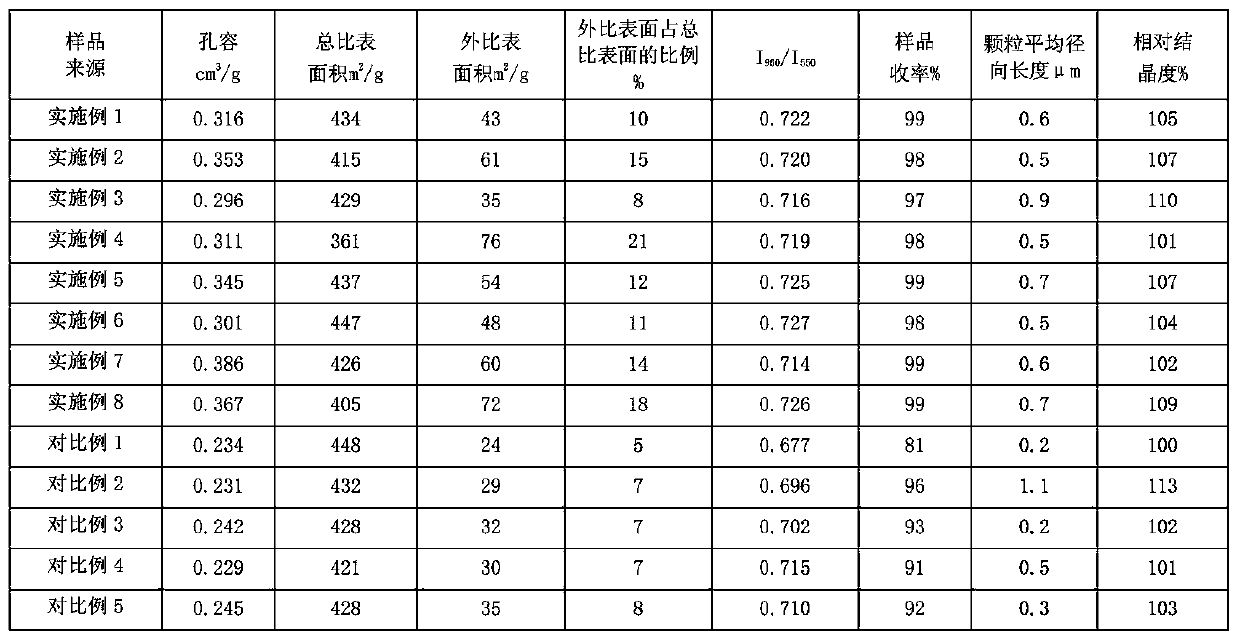
Figure 3
Abstract
Description
technical field
[0001] The invention relates to a titanium silicon molecular sieve and a preparation method thereof. Background technique
[0002] Titanium-silicon molecular sieve is a new type of heteroatom molecular sieve developed in the early 1980s. Among them, titanium-silicon molecular sieve TS-1 not only has the catalytic oxidation effect of titanium, but also has the shape-selective effect and excellent stability of ZSM-5 zeolite. Titanium silicate molecular sieves are used as catalysts to catalyze various types of organic oxidation reactions, such as epoxidation of alkenes, partial oxidation of alkanes, oxidation of alcohols, hydroxylation of phenols, ammoxidation of cyclic ketones, etc. As a catalyst for the selective oxidation of organic matter, titanium-silicon molecular sieves are considered to be a milestone in the field of molecular sieve catalysis.
[0003] However, according to the classic method such as the method in US4410501, the particle size of the ti...
Examples
Embodiment 1
[0036] Add 20 grams of silicon source tetraethyl orthosilicate to tetrapropyl ammonium hydroxide aqueous solution and stir to mix evenly, then add tetrabutyl titanate and mix evenly to obtain the molar composition: silicon source: titanium source: alkali source: Water = 100:2:15:1000 mixture, wherein the silicon source is SiO 2 Meter, titanium source as TiO 2 In terms of, the alkali source is in terms of N or OH-. Put the mixture in a sealed stainless steel reaction kettle, raise the temperature of the kettle from room temperature to 100°C at a heating rate of 2°C / min and perform hydrothermal treatment at this temperature for 24 hours, and then raise the temperature of the kettle to 190°C at a heating rate of 15°C / min And hydrothermal treatment at this temperature for 6 hours; then reduce the temperature of the kettle to 170 °C at a cooling rate of 10 °C / min and hydrothermal treatment at this temperature for 48 hours, and finally cool down to room temperature and release the ...
Embodiment 2
[0060] Add 20 grams of silicon source solid silicon source white carbon black to tetrapropyl ammonium hydroxide aqueous solution and stir to mix evenly, then add tetrabutyl titanate and mix evenly to obtain the molar composition: silicon source: titanium source: alkali source: Water = 100:1:20:600 mixture, wherein the silicon source is SiO 2 Meter, titanium source as TiO 2 In terms of, the alkali source is in terms of N or OH-. Put the mixture in a sealed stainless steel reaction kettle, raise the temperature of the kettle from room temperature to 90°C at a heating rate of 10°C / min, and conduct hydrothermal treatment at this temperature for 12 hours, and then raise the temperature of the kettle to 190°C at a heating rate of 20°C / min And hydrothermal treatment at this temperature for 4 hours; then reduce the temperature of the kettle to 170 ° C at a cooling rate of 20 ° C / min and hydrothermal treatment at this temperature for 36 hours, and finally cool down to room temperatu...
Embodiment 3
[0064] Add 20 grams of silicon source tetraethyl orthosilicate to tetrapropyl ammonium hydroxide aqueous solution and stir to mix evenly, then add titanium sulfate and mix evenly to obtain the molar composition: silicon source: titanium source: alkali source: water = 100 : 4:10:1500 mixture, wherein the silicon source is SiO 2 Meter, titanium source as TiO 2 In terms of, the alkali source is in terms of N or OH-. Put the mixture in a sealed stainless steel reaction kettle, raise the temperature of the kettle from room temperature to 100°C at a temperature increase rate of 1°C / min and perform hydrothermal treatment at this temperature for 24 hours, and then raise the temperature of the kettle to 180°C at a temperature increase rate of 10°C / min And hydrothermal treatment at this temperature for 6 hours; then reduce the temperature of the kettle to 150 ° C at a cooling rate of 5 ° C / min and hydrothermal treatment at this temperature for 48 hours, and finally cool down to room ...