
Preparation method of porosity controllable nickel base coating layer
A coating, nickel-based technology, applied in the field of nickel-based coating preparation, can solve the problem of inability to regulate the pore distribution, and achieve the effect of improving the control effect, wide application range, and increasing control ability.
Patent Information
- Authority / Receiving Office
- CN · China
- Patent Type
- Applications(China)
- Current Assignee / Owner
- Publication Date
- 2016-12-07
Smart Images
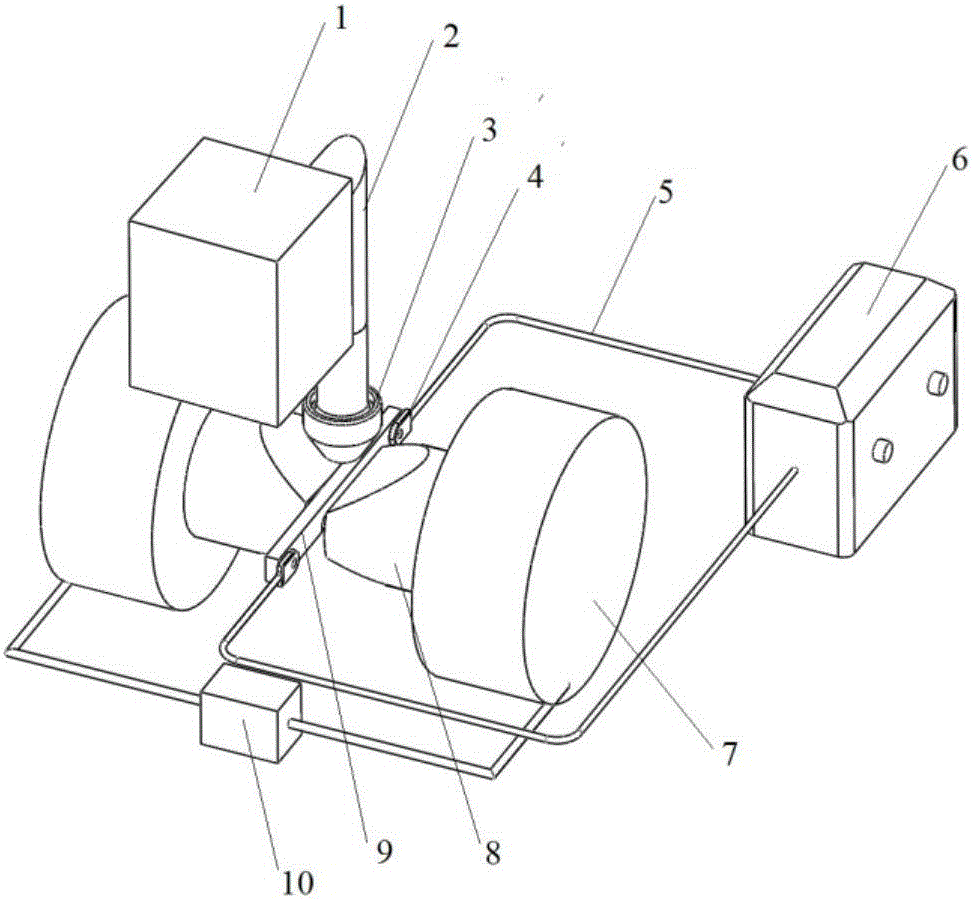
Figure 1 
Figure 2 
Figure 3
Abstract
Description
technical field
[0001] The invention relates to a preparation method of a nickel-based coating, in particular to a preparation method of a nickel-based coating with adjustable porosity. Background technique
[0002] As a new type of manufacturing technology, laser cladding technology has been more and more used in industrial production. During the cladding process, due to the moisture in the environment, the carrier gas or the presence of C, Ti and other elements in the cladding material, the cladding layer often inevitably generates pores randomly. However, with the increasingly harsh conditions of use, the performance requirements of the coating are also getting higher and higher. In some applications, while meeting the requirements of mechanical properties, it is necessary to set requirements for the shock resistance and thermal conductivity of the cladding layer. According to the relevant literature, the number and distribution of pores in the coating have an important...
Examples
Embodiment 1
[0044] The base material of laser cladding is 316 austenitic stainless steel, which is machined into a metal sample of 100×10×10mm. Grease removal. The cladding powder is nickel-based alloy powder, and the powder is placed in a drying oven with a set temperature of 100° C. and a drying time of 60 minutes. After the powder is cooled, put it into the powder feeder, place the sample to be clad horizontally on the workbench, turn on the laser generator (the power is 1600W), the gas protection device (the protection gas is argon, the flow rate is 20HF / min, moisture content 0.05%) and powder feeder (powder feeding amount 10g / min), 10mm / s scan speed to carry out cladding according to the preset cladding trajectory. The particle size of the powder is 50-75 μm, and the sphericity is 0.8-0.9, wherein the mass fraction of the nickel-based powder is: Ni 52.5%, Cr 15%, C 0.1%, Si 0.3%, Mn0.3%, S 0.01%, P 0.01%, Al 0.4%, Ti 1.5%, Mo 3%, Nb 5%, Fe 21.88%. figure 2 It is the distribution ...
Embodiment 2
[0047] This example is a comparative example, and the water content in the shielding gas in Example 1 is reduced to 0.04%, and the powder chemical composition (mass fraction, %) is consistent with Example 1: Ni 52.5%, Cr 15%, C 0.1%, Si 0.3%, Mn 0.3%, S 0.01%, P 0.01%, Al 0.4%, Ti 1.5%, Mo 3%, Nb 5%, Fe 21.88%. Guarantee that other technological parameters are consistent with embodiment 1, obtain cladding layer longitudinal section pore distribution figure ( image 3 shown), wherein the shape of the pores of the cladding layer is spherical, and the diameter ranges from 5 to 10 μm, and the total volume of the pores of the cladding layer is about 0.05% of the total volume of the cladding layer; contrast figure 2 It can be found that the number of pores and the diameter of the pores in the cladding layer are significantly reduced, indicating that the moisture content in the shielding gas is reduced, which makes the oxygen content in the cladding layer decrease and the pore conte...
Embodiment 3
[0049] This example is a comparative example. Only according to the conditions in Example 1, when the particle size of the nickel-based powder is increased to 150 μm to 180 μm, the sphericity is 0.8 to 0.9, and the laser process and powder chemical composition are kept consistent with Example 1, and the cladding layer is obtained. Pore distribution in longitudinal section ( Figure 4 shown). It can be seen from the figure that when the particle size increases to more than 150 μm, there are micropores on the surface of the cladding layer, and the total volume of the pores in the cladding layer is about 0.05% of the total volume of the cladding layer, indicating that the increase in particle size makes the particle surface The gas-carrying capacity is reduced, resulting in a lower porosity.