
Natural killer cell culture substrate and natural killer cell expansion culture method
A natural killer cell expansion culture technology, which is applied in the field of natural killer cell culture substrate and natural killer cell expansion culture, can solve the problems of undiscussed safety, low natural killer cell expansion efficiency, and high cell purity. Achieve the effects of alleviating the cumbersome production process, enhancing cell killing activity, and enhancing cytotoxicity
Patent Information
- Authority / Receiving Office
- CN · China
- Patent Type
- Patents(China)
- Current Assignee / Owner
- Publication Date
- 2018-07-20
Smart Images
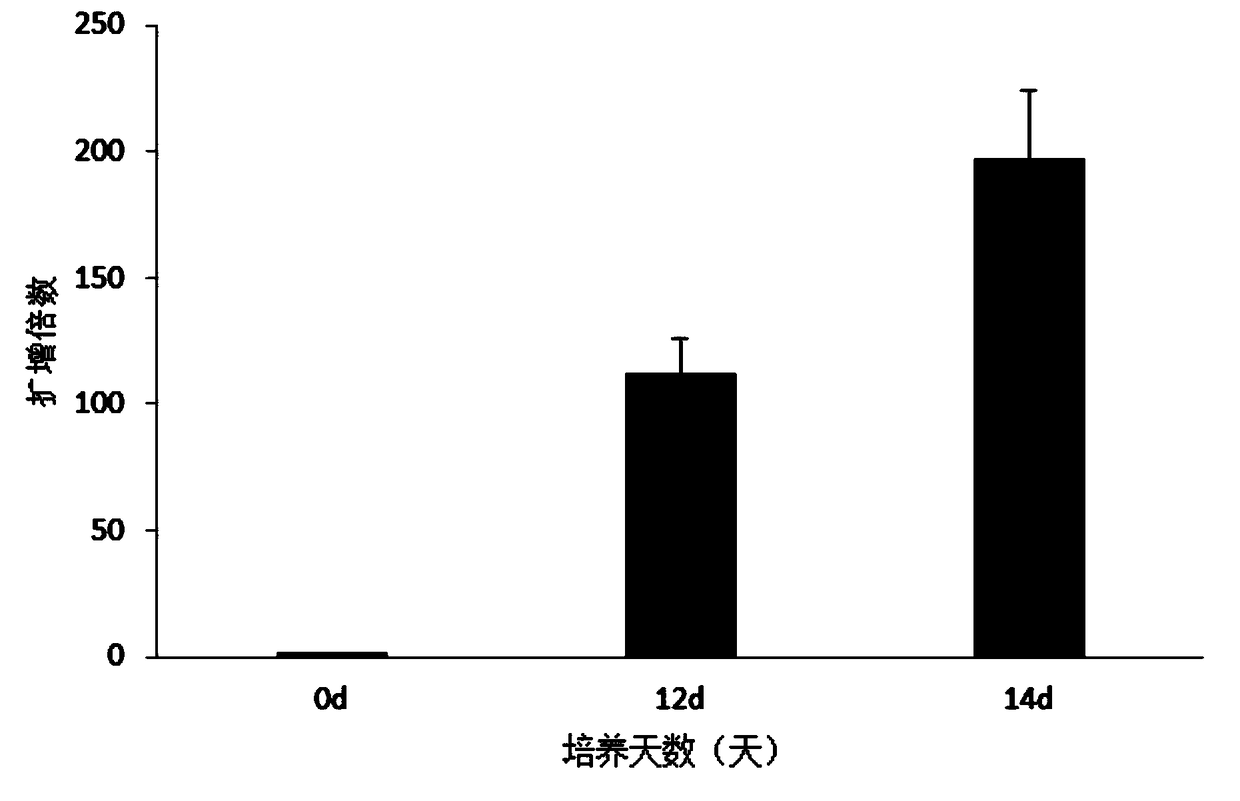
Figure 1 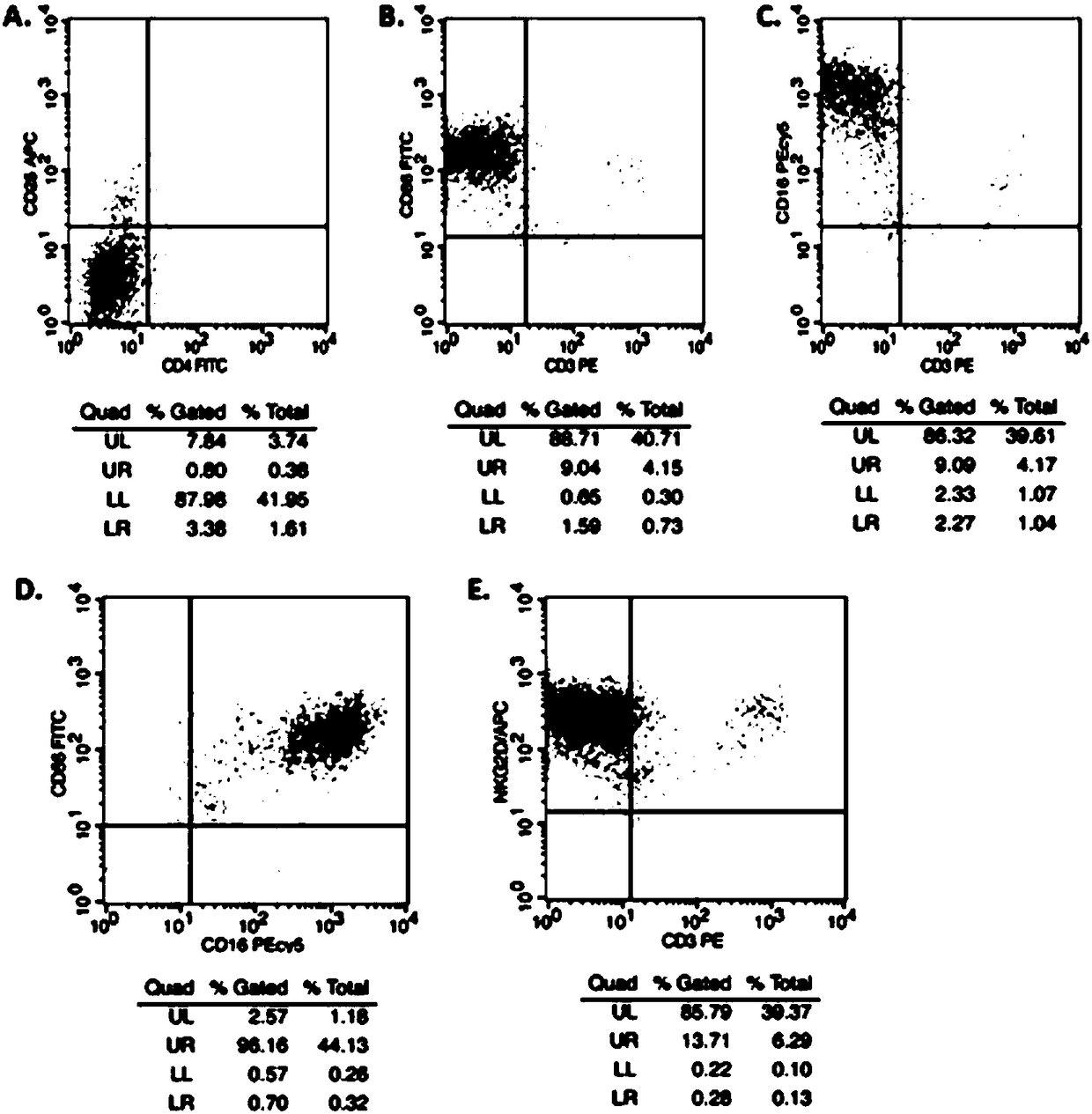
Figure 2 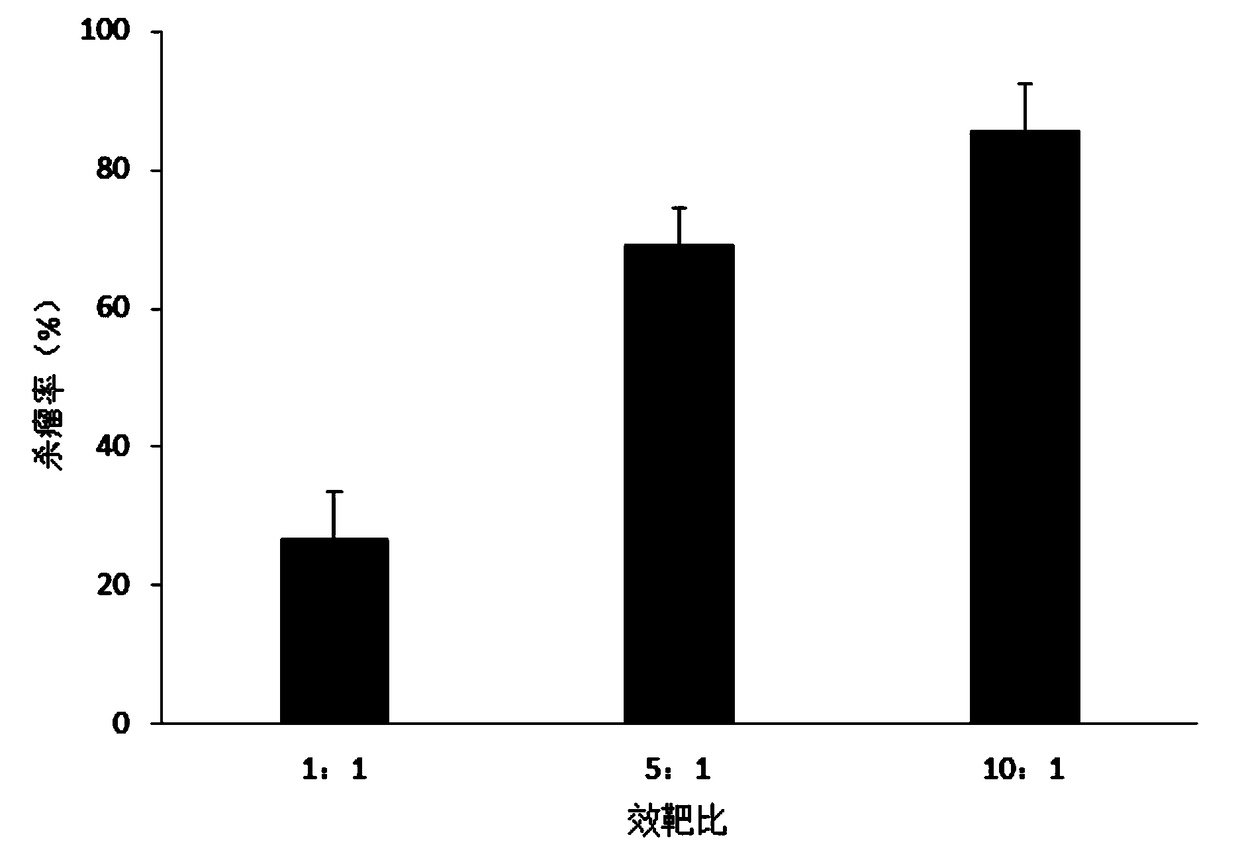
Figure 3
Abstract
Description
technical field
[0001] The invention relates to the technical field of cell culture, in particular to a natural killer cell culture substrate and a natural killer cell expansion culture method. Background technique
[0002] Natural killer cells (Nature Killer cells, NK) are cytotoxic lymphocytes of the body's innate immune system, which exist in lymphoid organs and peripheral tissues, and have functions such as anti-tumor, anti-infection, and immune regulation. Direct recognition and non-specific killing of tumor cells is the first barrier of the human defense system. Natural killer cells have strong cytotoxic activity, they respond very quickly to stimulating factors, and have a high intensity of immune response; at the same time, the killing activity of natural killer cells does not require antigen stimulation and is not limited by MHC molecules; in addition, natural killer cells The cells also have a strong cytokine / chemokine secretion function, which helps to initiate a...
Examples
Embodiment 1
[0068] Example 1: Lymactin-NK antibody coating
[0069] The Lymactin-NK antibody with a concentration of 0.6mg / mL was coated on the cell culture flask, the coating condition was 37°C, and the incubation time was 2h to obtain the coated cell culture flask.
Embodiment 2
[0070] Example 2: Preparation of autologous plasma and human peripheral blood mononuclear cells
[0071] Collect peripheral blood, transfer the collected peripheral blood to a 50mL centrifuge tube, and centrifuge at 2000rmp, 20°C for 10 minutes to obtain autologous plasma; then use lymphocyte separation medium to separate and collect human peripheral blood mononuclear cells. The collected human peripheral blood mononuclear cells were washed three times with PBS buffer to obtain human peripheral blood mononuclear cells.
[0072] Wherein, the steps of separating and collecting human-derived peripheral blood mononuclear cells using lymphocyte separation medium specifically include:
[0073] 1. Add the blood sample after drawing the plasma into PBS at a ratio of 1:1, and mix well;
[0074] 2. Slowly add the diluted blood sample on the surface of the lymphocyte separation liquid, and the ratio of the diluted blood sample to the lymphocyte separation liquid is 1:1;
[0075] 3. Cen...
Embodiment 3
[0077] Embodiment 3: induction culture
[0078] Step 1: Use X-VIVO 15:AlyS505NK-AC=1:1 serum-free medium to resuspend the human peripheral blood mononuclear cells obtained in Example 2, and adjust the cell concentration in the medium to 1.5×10 6 / mL, then inoculated into the cell culture flask coated with Lymactin-NK antibody obtained in Example 1;
[0079] Step 2: Add the autologous plasma obtained in Example 2 into the cell culture flask of step 1 above, the concentration of the autologous plasma in the natural killer cell culture medium is 5%, and add cytokine: IL-2 (1000IU / mL), IL-12 (5ng / mL), IL-15 (20ng / mL), IL-21 (10ng / mL), followed by induction culture for 14 days;
[0080] Step 3: In the first 7 days of the induction culture process, perform rehydration every 3 days, and use the rehydration medium to adjust the cell density to 1.5×10 6 / mL, and supplemented with autologous plasma and IL-2, IL-12, IL-15, IL-21 cytokines; in the last 7 days of the induction culture pr...