
Preparation method for electrode modified material of silver indium disulphide/reduced graphene oxide and application thereof for detecting ciprofloxacin
A silver disulfide indium and electrode modification technology, which is applied in the direction of material electrochemical variables, chemical instruments and methods, and material analysis through electromagnetic means, can solve the problems of expensive, complex technology and equipment, and achieve low detection limits, Low cost, high sensitivity effect
Patent Information
- Authority / Receiving Office
- CN · China
- Current Assignee / Owner
- Publication Date
- 2019-01-11
Smart Images
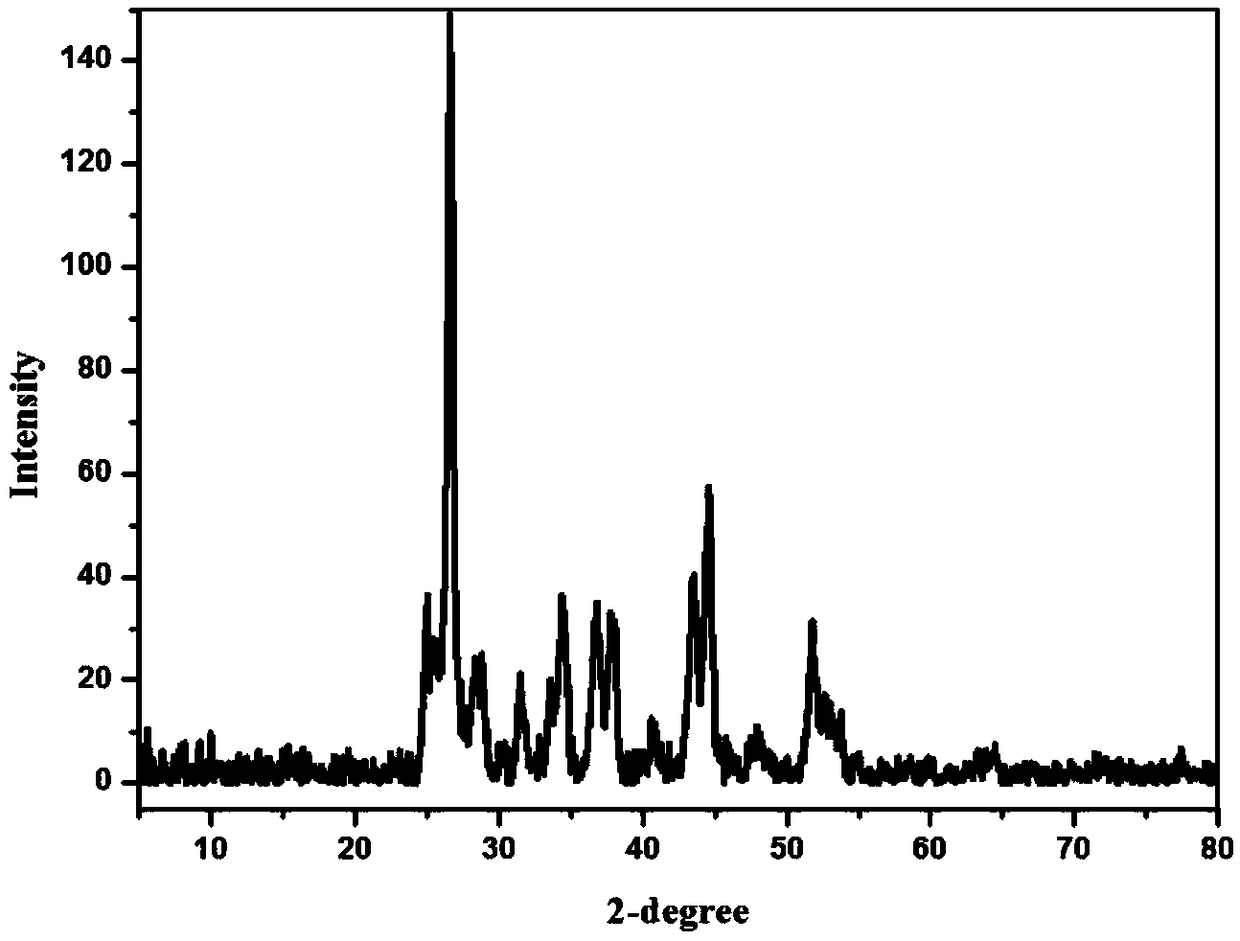
Figure 1 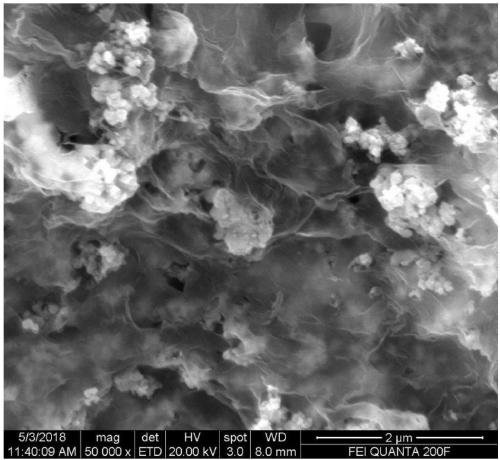
Figure 2 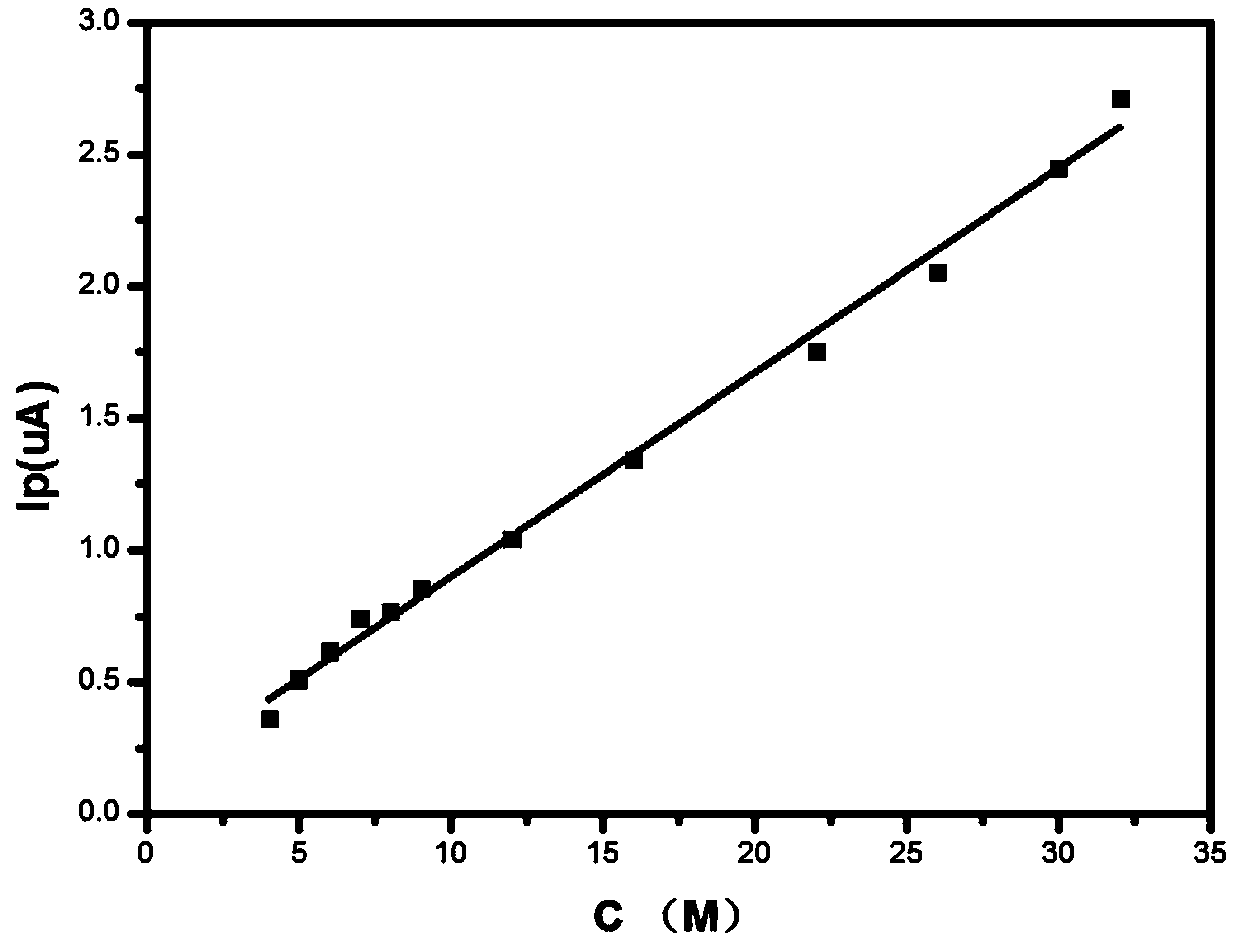
Figure 3
Abstract
Description
technical field
[0001] The invention relates to a detection method with low detection limit and excellent selectivity for ciprofloxacin, which belongs to the technical field of environmental pollutant detection, and specifically relates to a method for preparing an electrode modification material silver disulfide indium oxide / reduced graphene oxide and its application in detecting ciprofloxacin. Background technique
[0002] As the third-generation quinolone antibacterial drug, ciprofloxacin has broad-spectrum antibacterial activity, good bactericidal effect, and low cost. It is currently widely used in humans and animals. However, like most other antibiotic drugs, most of ciprofloxacin is excreted into the environment in the form of metabolites or even the original drug after being metabolized by patients or animals, thereby destroying the ecological balance of the environment and producing drug-resistant superbugs and other issues that seriously affect environmental safet...
Examples
Embodiment 1
[0024] Graphene oxide (GO) was prepared by modified Hummer's method.
[0025] Preparation of AgInS by precipitation method 2 , specifically: take 0.0012mol AgNO 3 Dissolve in 50mL ethylene glycol, add 0.0054mol InCl dropwise under stirring 3 4H2O, stirred for another 10 min, then added 0.75 g of thioacetamide under stirring. After continuous stirring for about 1 h, the above solution was transferred to a 100 mL three-neck flask and refluxed for 3 h. After the reaction was completed, the cloudy solution was naturally cooled to room temperature and aged for 12 h. The resulting solid was collected by filtration and washed alternately with absolute ethanol and deionized water. Finally, the product was dried in a vacuum oven for 12 hours and ground to obtain AgInS 2 Material.
[0026] By ultrasonic dispersion method, GO was prepared into a 4.3 mg / ml dispersion liquid with deionization, and 30 mL of ethylene glycol was taken, and 9.3 mL of the above-mentioned GO dispersion liq...
Embodiment 2
[0029] Graphene oxide (GO) was prepared by modified Hummer's method.
[0030] Preparation of AgInS by precipitation method 2 , specifically: take 0.0012mol AgNO 3 Dissolve in 50mL ethylene glycol, add 0.0054mol InCl dropwise under stirring 3 4H 2 0, then stirred for 10min, then added 0.75g thioacetamide under stirring. After continuous stirring for about 1 h, the above solution was transferred to a 100 mL three-neck flask and refluxed for 3 h. After the reaction was completed, the cloudy solution was naturally cooled to room temperature and aged for 12 h. The resulting solid was collected by filtration and washed alternately with absolute ethanol and deionized water. Finally, the product was dried in a vacuum oven for 12 hours and ground to obtain AgInS 2 Material.
[0031] GO was made into a 4.3mg / ml dispersion with deionization, 30mL of ethylene glycol was taken, and 9.3mL of the above-mentioned GO dispersion was added under stirring. Weigh 20mg AgInS 2 , made a sol...
Embodiment 3
[0034] Graphene oxide (GO) was prepared by modified Hummer's method.
[0035] Preparation of AgInS by precipitation method 2 , specifically: take 0.0012mol AgNO 3 Dissolve in 50mL of ethylene glycol, add 0.0054mol InCl3·4H2O dropwise under stirring, stir for another 10min, then add 0.75g of thioacetamide under stirring. After continuous stirring for about 1 h, the above solution was transferred to a 100 mL three-neck flask and refluxed for 3 h. After the reaction was completed, the cloudy solution was naturally cooled to room temperature and aged for 12 h. The resulting solid was collected by filtration and washed alternately with absolute ethanol and deionized water. Finally, the product was dried in a vacuum oven for 12 hours and ground to obtain AgInS 2 Material.
[0036] GO was made into a 4.3mg / ml dispersion with deionization, 30mL of ethylene glycol was taken, and 9.3mL of the above-mentioned GO dispersion was added under stirring. Weigh 80mg AgInS 2 , made a solu...