
Electrolyte for improving low-temperature performance of lithium-ion battery and lithium-ion battery containing the same
A lithium-ion battery, low-temperature performance technology, applied in the direction of secondary batteries, circuits, electrical components, etc., can solve the problems of abnormal use of products, increased electrolyte viscosity, low charge and discharge capacity, etc., to improve reversible capacity performance, Effect of reducing concentration polarization and reducing interfacial impedance
Patent Information
- Authority / Receiving Office
- CN · China
- Patent Type
- Patents(China)
- Current Assignee / Owner
- Publication Date
- 2020-12-11
Smart Images
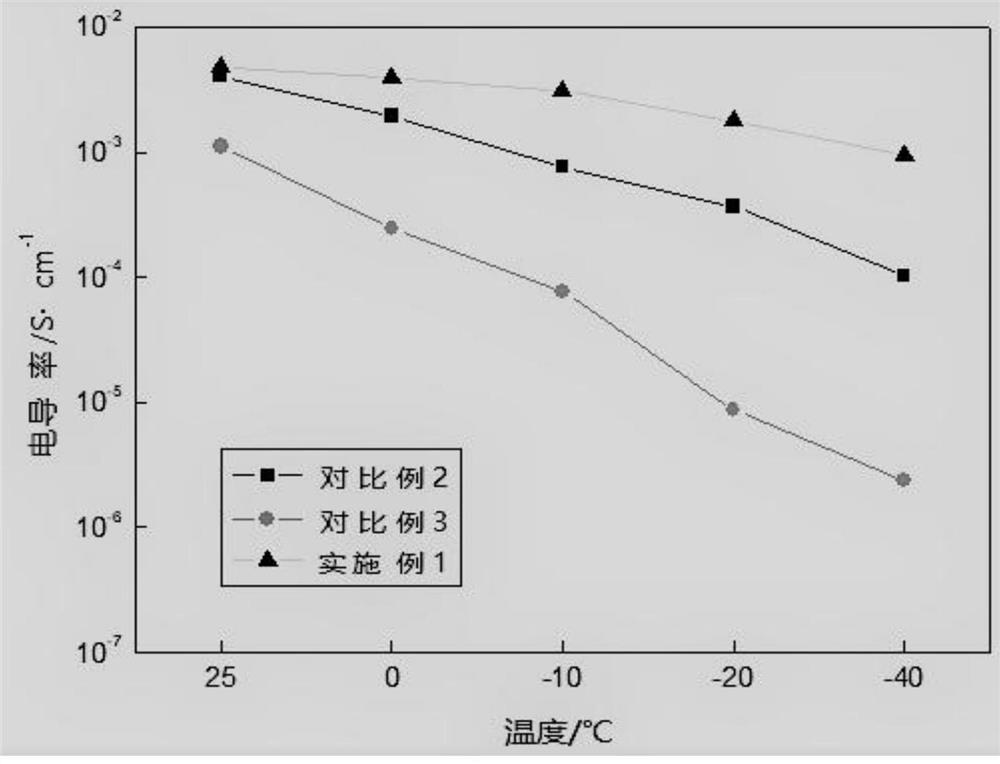
Figure 1 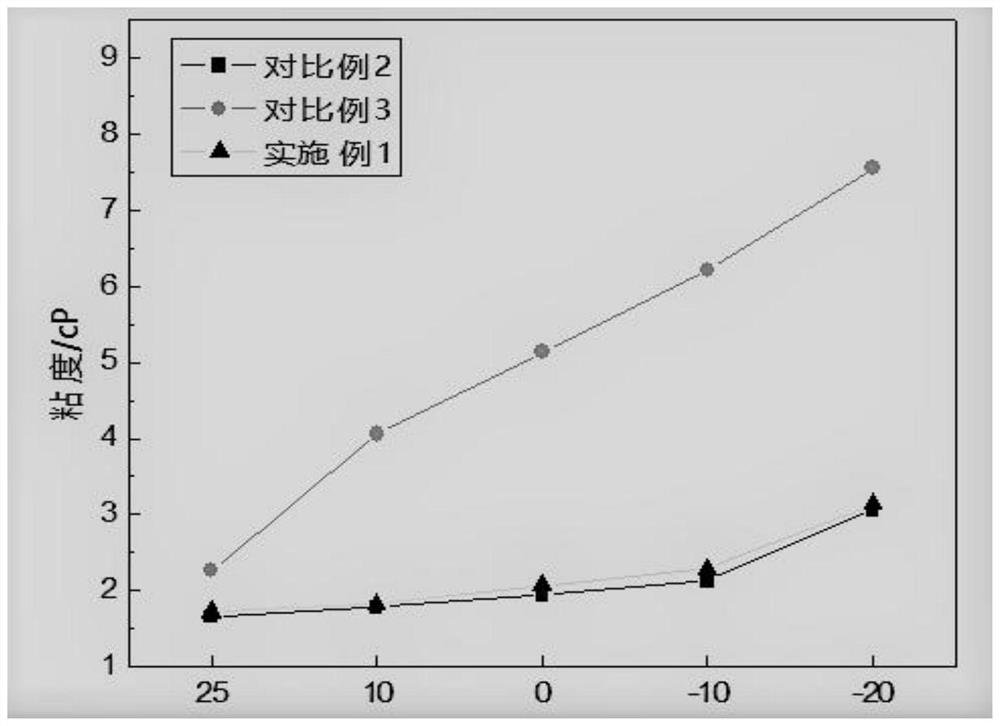
Figure 2 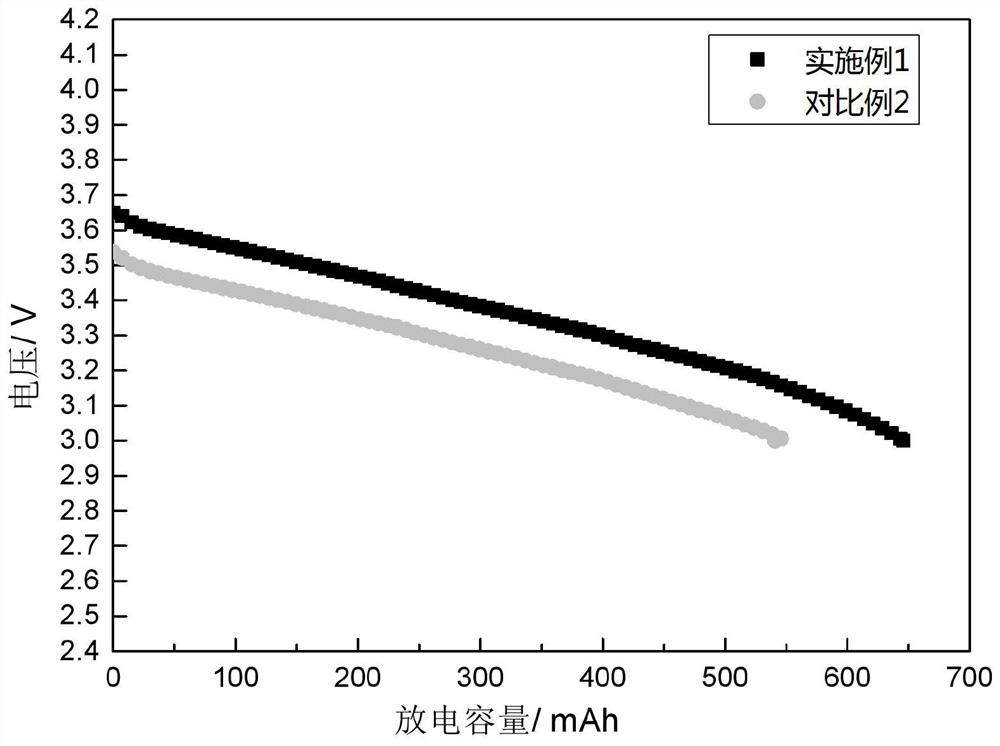
Figure 3
Abstract
Description
technical field
[0001] The invention relates to the field of lithium ion batteries, in particular to an electrolyte solution for improving the low-temperature performance of the lithium ion battery and a lithium ion battery containing the electrolyte solution. Background technique
[0002] The rapid development of electronic information technology and consumer electronics poses new challenges to the performance requirements of batteries, especially the low-temperature discharge performance of batteries. Key technical difficulties encountered. Therefore, developing a battery with low temperature resistance has become a major challenge and research hotspot in the field of lithium-ion batteries.
[0003] At present, the performance of the low-temperature electrolyte of lithium-ion batteries is mainly limited by three aspects: first, the viscosity of the commonly used EC-based electrolyte increases or even solidifies at low temperature, which makes the ionic conductivity of the...
Examples
Embodiment 1
[0049] Electrolyte preparation: In a glove box filled with argon, ethylene carbonate, dimethyl carbonate, propylene carbonate and methyl acetate were prepared according to the mass ratio of EC:DMC:PC:MA=3:3:3:2 Mixed, and then slowly added 12.5wt% lithium hexafluorophosphate based on the total weight of the electrolyte, 0.5wt% lithium bisfluorosulfonimide (LiTFSI) based on the total weight of the electrolyte and 2.5wt% based on the total weight of the electrolyte Lithium bisfluorosulfonyl imide (LiFSI), finally add 11.0wt% of the compound having the structure shown in formula I based on the total weight of the electrolyte, 0.1wt% of the cyclic acid anhydride compound shown in formula II, 2.0wt% sulfuric acid Vinyl ester (DTD) and 1.0wt% fluoroethylene carbonate (FEC) were stirred evenly to obtain the lithium-ion battery electrolyte of Example 1.
[0050] Preparation of soft-pack battery: stack the prepared positive electrode sheet, separator, and negative electrode sheet in or...
Embodiment 2-9
[0052] Embodiment 2-9 and comparative example 1-6
[0053] In Examples 2-9 and Comparative Examples 1-6, except that the proportions of the components of the electrolyte are added as shown in Table 2, the others are the same as in Example 1.
[0054] Table 2 Embodiment 1-9 and the composition ratio of each component of the electrolyte of comparative example 1-6
[0055]
[0056]
[0057] Performance Testing
[0058] Relevant performance tests were carried out on the batteries and their electrolytes prepared in Examples 1-9 and Comparative Examples 1-6.
[0059] (1) Electrolyte conductivity and viscosity test: Use conductivity meter and viscosity tester to measure the ion conductivity and viscosity of the electrolyte at different temperatures.
[0060] (2) Test of capacity remaining rate after high temperature storage at 45°C: first place the battery at room temperature and cycle charge and discharge once at 0.5C (4.2V~3.0V), record the discharge capacity C of the batte...