
Ink
A technology of ink and percarbonic acid, which is applied in the direction of ink, household utensils, applications, etc., can solve the problems of low boiling point, poor dispersibility, and low viscosity of printing ink, etc., and achieve the effect of lowering threshold voltage, good dispersion performance, and uniform dispersion
Patent Information
- Authority / Receiving Office
- CN · China
- Patent Type
- Applications(China)
- Current Assignee / Owner
- Publication Date
- 2019-10-01
- Estimated Expiration
- Not applicable · inactive patent
Smart Images
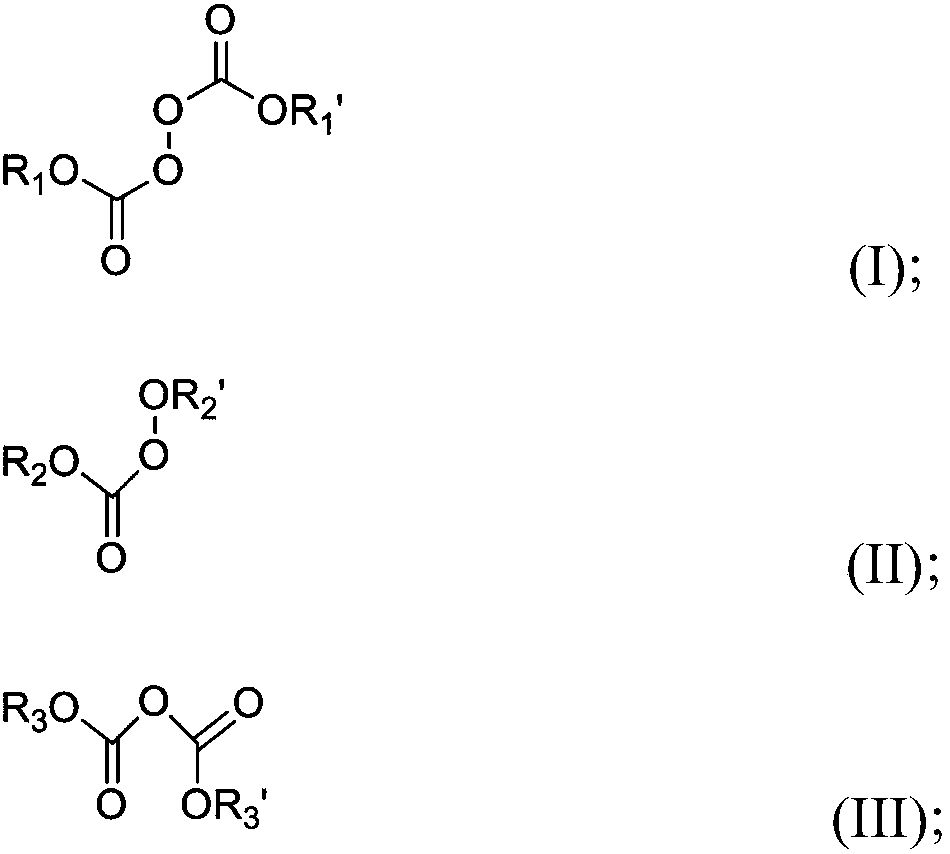
Figure 1 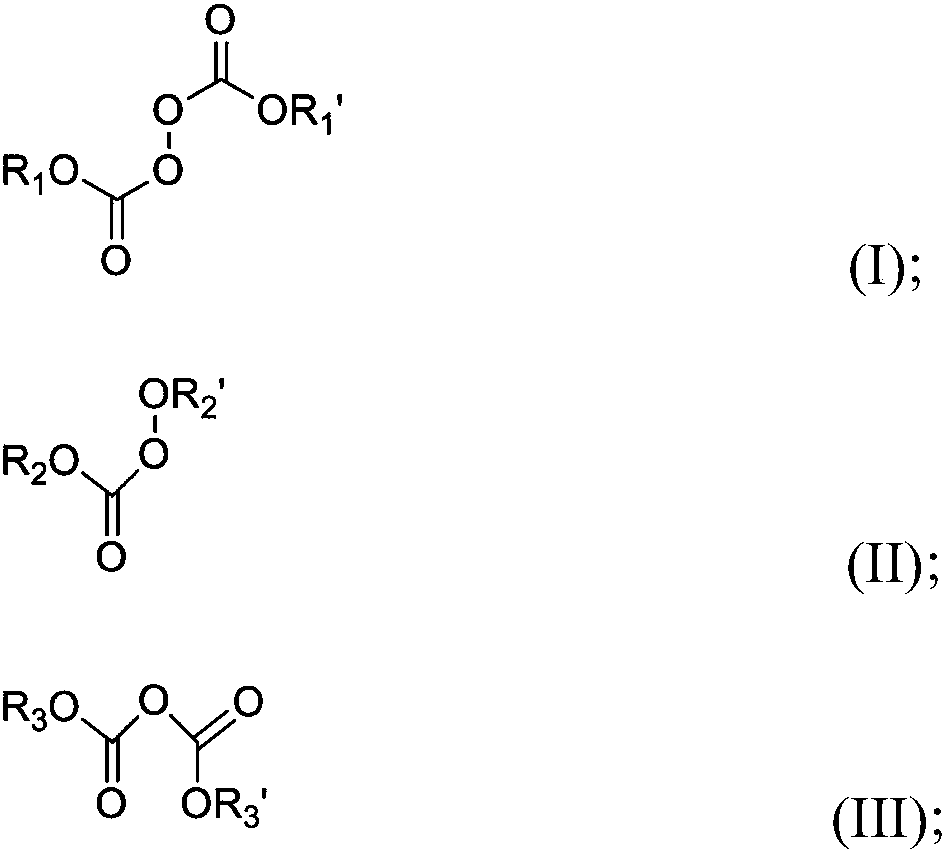
Figure 2 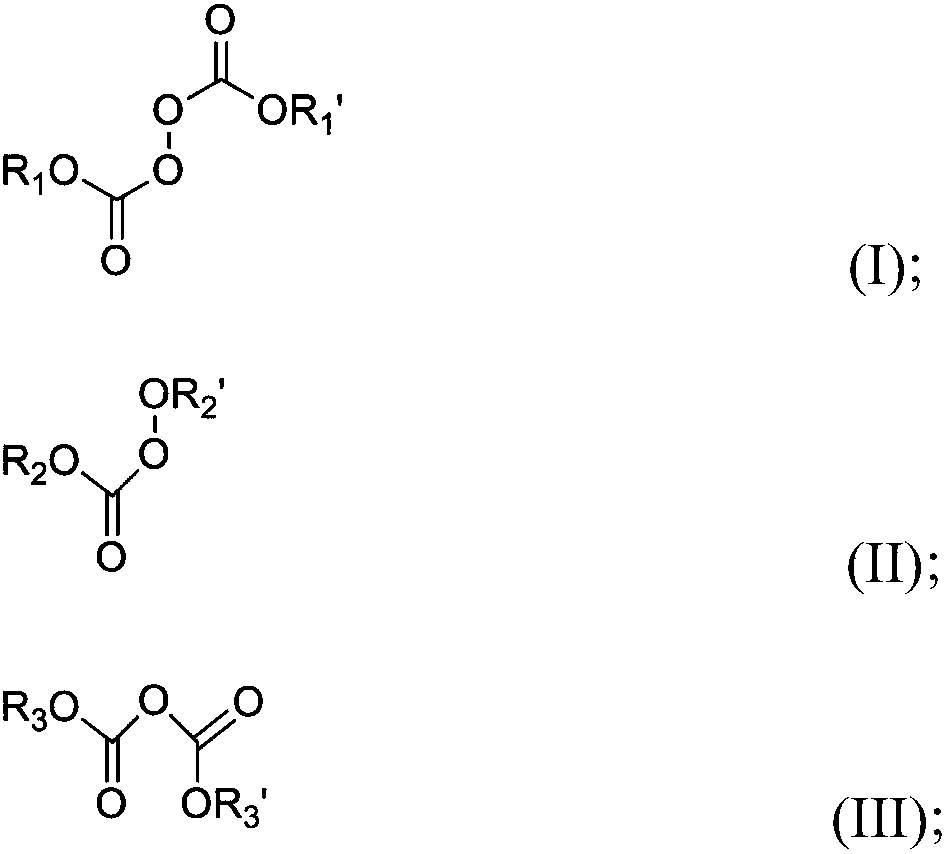
Figure 3
Abstract
Description
technical field
[0001] The invention relates to the field of ink formulations, in particular to an ink. Background technique
[0002] Quantum dot (QD) luminescent materials have the characteristics of changing emission frequency with size change, narrow emission line width, relatively high luminescence quantum efficiency, ultra-high photostability and solution processing. These characteristics make quantum dot light-emitting diodes (QLED) with quantum dot materials as the light-emitting layer have broad application prospects in solid-state lighting, flat panel display and other fields, and have attracted extensive attention from academia and industry.
[0003] The solution processing characteristics of quantum dots make the quantum dot light-emitting layer can be prepared by various methods such as spin coating, scraping coating, spraying, and inkjet printing. Compared with the previous methods, the inkjet printing technology can accurately deposit the quantum dot luminesce...
Examples
preparation example Construction
[0051] Based on the above-mentioned printing ink, the present invention also provides a preparation method of the printing ink, comprising the steps of: first dispersing the inorganic nanomaterial in a solvent containing at least one percarbonate organic solvent according to the above-mentioned formula, and then stirring evenly, Printing ink with proper viscosity and surface tension can be obtained. Control the boiling point of all ink compositions below 320°C.
[0052] The present invention also provides a method for carrying out inkjet printing with the printing ink, which comprises the steps of:
[0053] Inorganic nanomaterial layer printing: choose a suitable inkjet printer to inkjet print the inorganic nanomaterial layer.
[0054] Post-treatment: Under the action of heating or cooling and / or decompression, remove the percarbonate organic solvent in the inorganic nanomaterial layer, except for inorganic nanomaterials (quantum dots), so that other organic substances in the...
Embodiment 1
[0061] The mixed solvent is composed of 1-methoxynaphthalene, dipentylbenzene and bis(2-ethylhexyl)peroxydicarbonate, and all solvents are purified by corresponding methods to remove water and oxygen to a purity greater than 99.9%.
[0062] Add the following components to about 500mL single-necked flask, under stirring, the order of addition is: 10wt% oleylamine-stabilized red CdSe / ZnS quantum dots, 5wt% 1-methoxynaphthalene, 5wt% dipentyl Benzene, 80 wt% bis(2-ethylhexyl) peroxydicarbonate, and the mixture was stirred for 30 minutes to obtain printing ink.
[0063] The printing ink is injected into the printing inkjet printer cartridge, the corresponding parameters are adjusted, and the red quantum dot layer of 20×30um and resolution 200×200ppi is printed.
[0064] Place the printed substrate on a hot stage and heat it to 155°C with a vacuum of 1×10 -6 Volatilize and dry under Torr for 30 minutes to obtain a monochromatic quantum dot light-emitting layer.
Embodiment 2
[0066] The mixed solvent is composed of tridecane, tetrahydronaphthalene and tert-butylperoxyisopropyl formate, and all solvents are purified by corresponding methods to remove water and oxygen to a purity greater than 99.9%.
[0067] Add the following components to an approximately 500mL high-density polyethylene bottle with stirring in the following order: 10wt% oleylamine-stabilized green CdZnSe / CdZnS, 20wt% tridecane, 30wt% tetralin, 40wt% % tert-butylperoxyisopropyl formate, the mixture was stirred for 30 minutes to obtain printing ink.
[0068] With an inkjet printer, it is printed into a green quantum dot layer of 20×30um and a resolution of 200×200ppi.
[0069] Heat to 150°C on a hot plate, vacuum 1×10 -5 Volatilize and dry under Torr for 30 minutes to obtain a monochromatic quantum dot light-emitting layer.