
Virtual reality rehabilitation training method and system based on surface myoelectricity and depth image
A virtual reality and rehabilitation training technology, applied in the field of rehabilitation engineering, can solve the problems of inconspicuous hand features, limit the application and effect of rehabilitation training, and cannot accurately identify the intention of hand movements of residual limbs, so as to enhance interactivity and fun. , Improve rehabilitation effect and efficiency, reduce training burden
Patent Information
- Authority / Receiving Office
- CN · China
- Patent Type
- Patents(China)
- Current Assignee / Owner
- Publication Date
- 2021-04-30
Smart Images
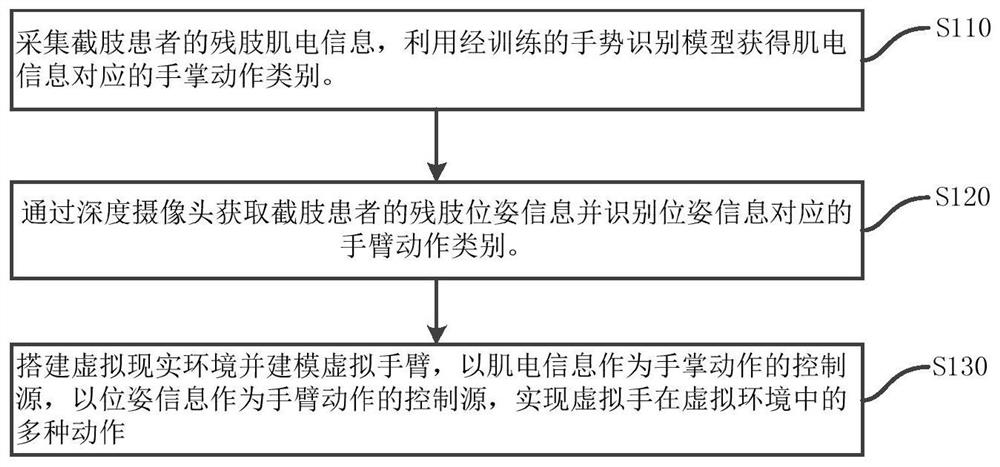
Figure 1 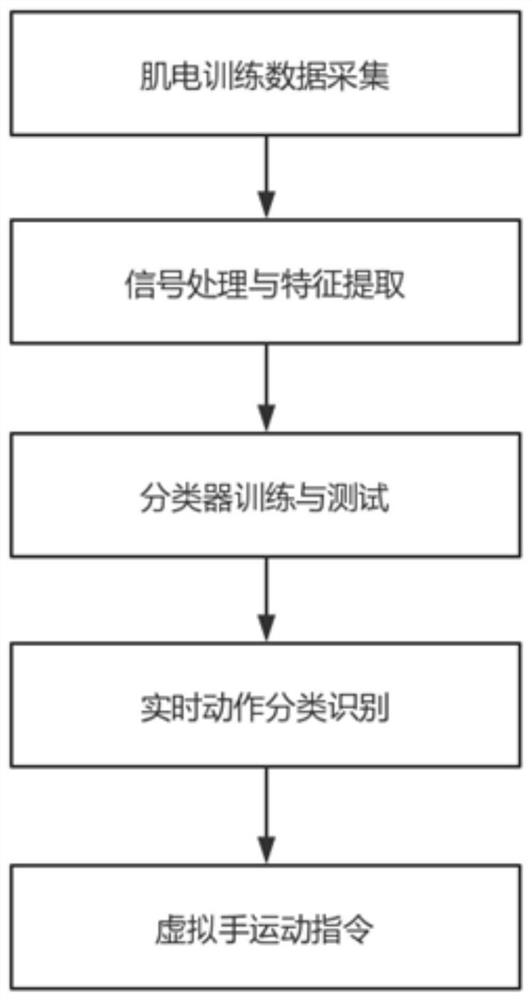
Figure 2 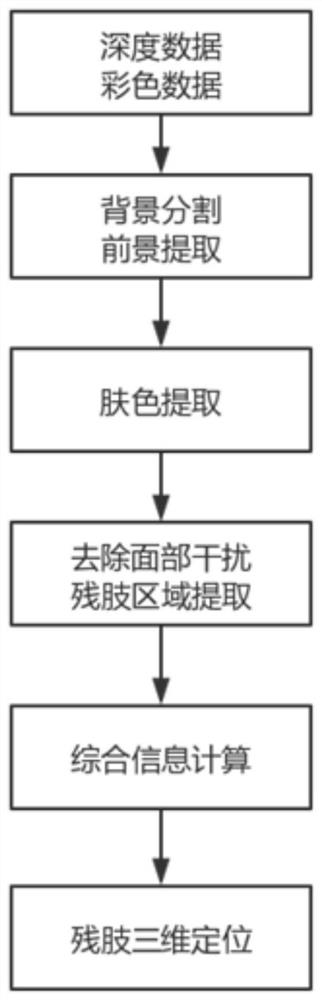
Figure 3
Abstract
Description
technical field
[0001] The invention relates to the technical field of rehabilitation engineering, in particular to a virtual reality rehabilitation training method and system based on surface electromyography information and depth image information. Background technique
[0002] According to statistics, the number of disabled people in mainland China has reached more than 60 million, including about 18 million to 24 million people with upper limb disabilities, and more than 4 million people with forearm amputation. Installing artificial limbs can make up for the psychological trauma of patients to a certain extent and improve the quality of life of patients. Myoelectric signal control prosthesis is a safe and non-invasive control method. For patients with myoelectric prosthetics, specific muscle training at the amputation site can achieve the purpose of activating the muscles at the amputation site, promote blood circulation at the site, and improve muscle quality. It can ...
Examples
Embodiment Construction
[0038] In order to make the object, technical solution, design method and advantages of the present invention clearer, the present invention will be further described in detail through specific embodiments in conjunction with the accompanying drawings. It should be understood that the specific embodiments described here are only used to explain the present invention, not to limit the present invention.
[0039] In all examples shown and discussed herein, any specific values should be construed as exemplary only, and not as limitations. Therefore, other instances of the exemplary embodiment may have different values.
[0040]Techniques, methods and devices known to those of ordinary skill in the relevant art may not be discussed in detail, but where appropriate, such techniques, methods and devices should be considered part of the description.
[0041] According to an embodiment of the present invention, a rehabilitation training method based on surface electromyographic inf...