
Forging method for improving roll blank net shape level by using radial forging machine
A radial forging machine and mesh technology, which is applied in the forging field of using a radial forging machine to improve the mesh shape of roll blanks, can solve the problems of limited forging precision, high cost, and long production cycle, and achieve precise control and reduced tensile stress , The effect of improving the mesh pass rate
Patent Information
- Authority / Receiving Office
- CN · China
- Patent Type
- Applications(China)
- Current Assignee / Owner
- Publication Date
- 2020-05-19
Smart Images
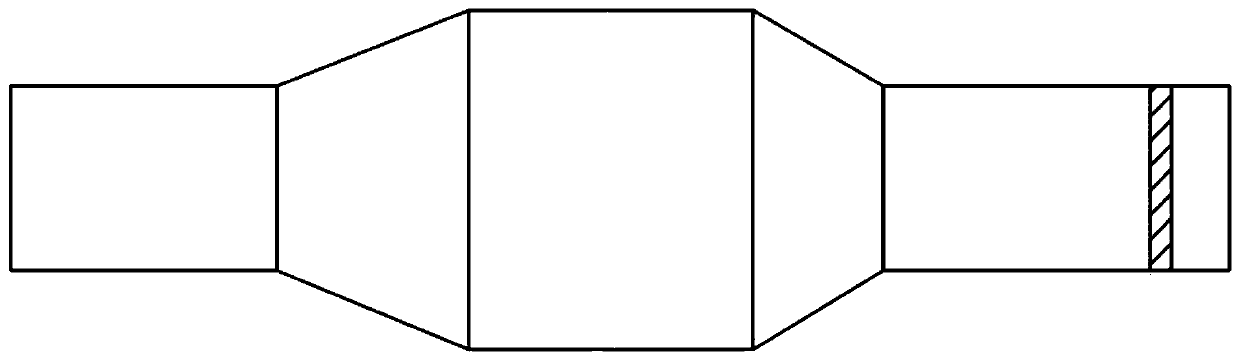
Figure 1 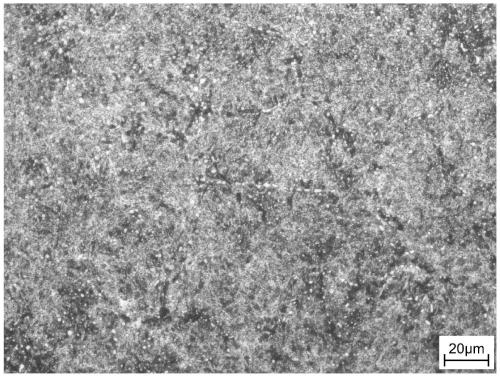
Figure 2 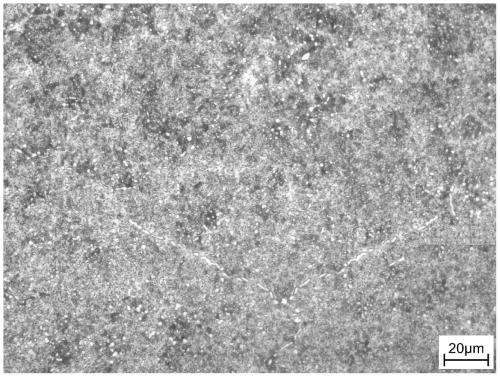
Figure 3
Abstract
Description
technical field
[0001] The invention belongs to the technical field of metallurgical machinery manufacturing, and in particular relates to a forging method for improving the network shape of a roll blank by using a radial forging machine. Background technique
[0002] For a long time, the problem of excessive network carbides that has plagued major roll blank production plants has always existed, and has become the second most difficult problem after ultrasonic flaw detection. Overweight network carbides will be used as a Fatigue crack sources exist, and accidents such as spalling and roll holding may occur at any time during the use of the rolling mill, which will bring incalculable losses to the entire rolling mill production line. At present, it can be normalized twice, and the mesh level can be further reduced by adding another normalizing, but the method has a great impact on the cost and production cycle, and is rarely used in actual production. It is also possible to...
Examples
Embodiment 1
[0023] The specific forging method steps are as follows:
[0024] Step 1. Heating with gas furnace, the heating temperature is 1190-1210°C, the holding time is 14-18h, and the furnace temperature is raised to 1210-1230°C 2-3h before upsetting;
[0025] Step 2. Use 30MN fast forging machine to upsetting and elongating;
[0026] Step 3. Transfer the upsetting and elongated billet to the forging area of the radial forging machine by using the transfer roller table, and control the surface temperature of the billet at 900°C to 920°C;
[0027] Step 4: forging with a 16MN radial forging machine, and heat-treating the forged billet to obtain a forged product. The forging frequency of the hammer head is 180 times / min. The roll body forging pass, the A-side roll neck forging pass, the B-side roll neck forging pass, and the finish forging pass are sequentially carried out by using a radial forging machine. Air cooling is performed before the finish forging pass. 30s to control the f...
Embodiment 2
[0037] The specific forging method steps are as follows:
[0038] Steps 1 to 3 are the same as in Example 1, and Step 4 is forging with a 16MN diameter forging machine, and heat-treating the forged billet to obtain a forged product. The forging frequency of the hammer head is 180 times / min. The roll body forging pass, the A-side roll neck forging pass, the B-side roll neck forging pass, and the finish forging pass are sequentially carried out by using a radial forging machine. Air cooling is performed before the finish forging pass. 30s to control the forging temperature at the lower limit of the final forging temperature of 850±10°C, control the deformation of the finishing forging pass to 20mm according to the deformation rate of 87.3%, and forge the blank to the finished product. The specific forging steps are:
[0039] (1) Roll body forging passes: first pass: φ520mm→φ485mm, reduction 35mm, feed speed 3.5m / min, discharge speed 4.0m / min; second pass: φ485mm→φ480mm, reducti...