
Cladosporium p-1 and its application in aging of base wine
A technology of P-1 and Cladosporium, applied in the preparation of alcoholic beverages, methods based on microorganisms, fungi, etc., can solve the problems of lack and accelerate the aging of base wine, so as to accelerate the aging of new wine and improve the ester The relative content of substances and the effect of reducing the content of higher alcohols
Patent Information
- Authority / Receiving Office
- CN · China
- Patent Type
- Patents(China)
- Current Assignee / Owner
- Publication Date
- 2022-05-17
Smart Images
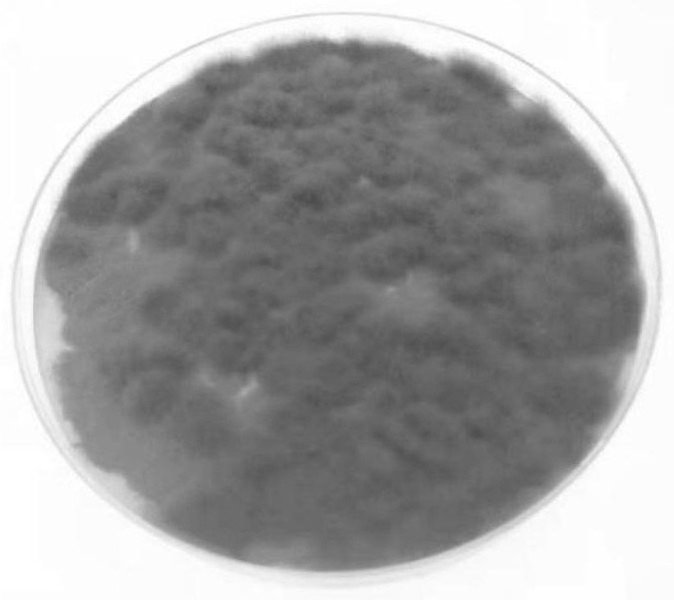
Figure 1 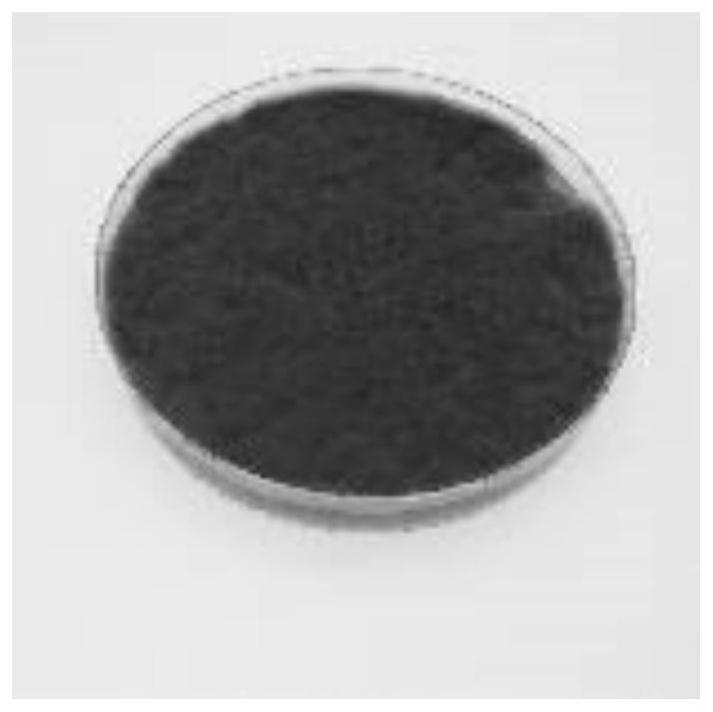
Figure 2 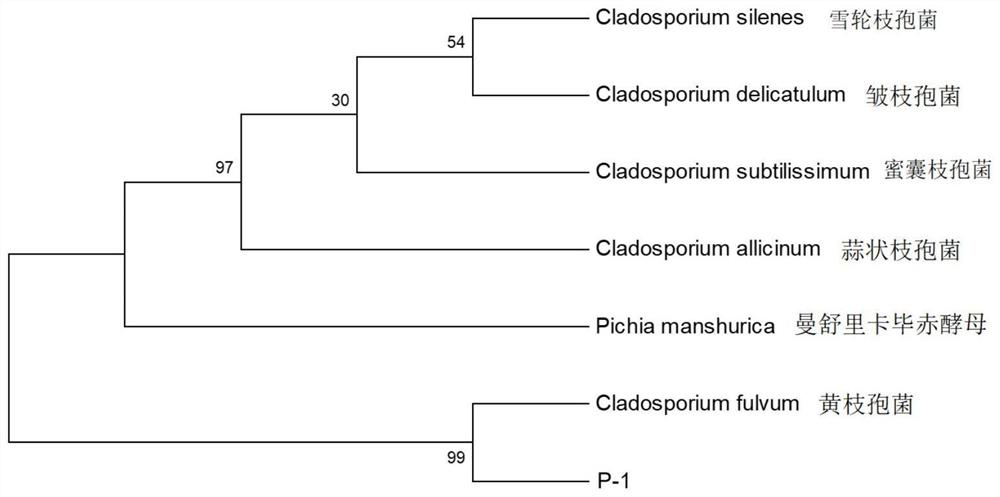
Figure 3
Abstract
Description
technical field
[0001] The invention belongs to the field of food biotechnology, and in particular relates to a cladosporium P-1 and its application in the aging of base wine. Background technique
[0002] Under normal circumstances, new wine is relatively pungent and spicy, with rough taste and mixed aroma. Due to these characteristics, new wine is difficult to be accepted by people. Therefore, new wine needs an aging process. During this period, the rough taste of new wine will become mellow, soft and harmonious. This change is called aging. For traditional high-quality wine, the method of natural aging is adopted, because various chemical reactions such as oxidation and esterification have occurred during the aging process, and aroma compounds are generated during the reaction; in addition One reason is that new wine contains some high-level alcohol substances, which have a pungent smell, so after aging for a long time, these low-boiling substances will evaporate over ti...
Examples
Embodiment 1
[0052] The separation of embodiment 1 Cladosporium P-1 of the present invention
[0053] Scrape 10 g of wall samples from the Chunyang Cave in Luzhou Laojiao Tourist Area, and quickly put them into sterile No. 5 ziplock bags for later use. Afterwards, add the sample into a conical flask filled with 90 mL of sterile water, add sterilized glass beads, and oscillate fully on a vortex shaker for 10 minutes to fully disperse the sample. The supernatant was subjected to a 10-fold serial dilution, and the dilution was 10 -3 、10 -4 、10 -5 、10 -6 、10 -7 , use a pipette gun to draw 0.2mL sample solution, and use the plate coating method to evenly spread the sample solution on the PDA screening medium, and place the prepared plate upside down in a constant temperature incubator at 20°C for 96 hours. Isolate the strains by streaking on a plate, pick the strains that can grow well on the culture medium, and isolate a single colony through multiple streak isolation cultures, then inocu...
Embodiment 2
[0054] The identification of embodiment 2 Cladosporium P-1 of the present invention
[0055] Step 1: Morphological identification of Cladosporium P-1
[0056] For the isolated bacterial strains, according to the method of "Handbook of Fungal Identification" (Edited by Wei Jingchao, Shanghai Science and Technology Press, 1979), the structures such as colonies, hyphae, and spores were observed using a PDA plate and a microscope. The results showed that the strain was cultured on PDA medium at 20°C for 72 hours, the colony was spherical, the surface structure was granular, the spores were black or brown, the conidia were spherical, the hyphae were colorless, no septum, occasionally branched, no lock joint. Referring to the "Handbook of Fungal Identification", the screened strain was preliminarily considered to be Cladosporium fulvum.
[0057] Step 2: Molecular Biological Identification of Cladosporium P-1
[0058] Genomic DNA of Cladosporium P-1 was extracted using a fungal ge...
Embodiment 3
[0067] Embodiment 3 Research on the degradation characteristics of Cladosporium P-1 of the present invention
[0068] (1) Inoculate the Cladosporium P-1 that isolates in the PDB liquid culture medium (inoculum size is 5%), and add β-phenylethanol, 50mg / L hexanol, 20mg / L respectively in the culture medium 20mg / L nonanol, 5mg / L 1-decanol, 4mg / L 3-methyl-2-octanol, 5mg / L heptanol, cultivated at 20°C for 72h to obtain the fermentation stock solution;
[0069] (2) Get the supernatant of the fermentation stoste obtained in step (1) to carry out content detection respectively, in order to realize that phenylethyl alcohol, hexanol, nonanol, 1-decanol, 3-methyl-2-octyl alcohol in the fermentation liquid For the real-time detection of alcohol and heptanol, methanol is used as the solvent, the chromatographic column is HP-5 column, and the gas chromatography (GC) external standard method for simultaneously determining the content of six higher alcohols.
[0070] (3) According to the met...