
Information compression/decompression method and device
An information compression and decompression technology, applied in the field of information processing, can solve the problem that the efficiency of text compression is not optimized, etc.
Patent Information
- Authority / Receiving Office
- CN · China
- Current Assignee / Owner
- Publication Date
- 2020-11-10
Smart Images
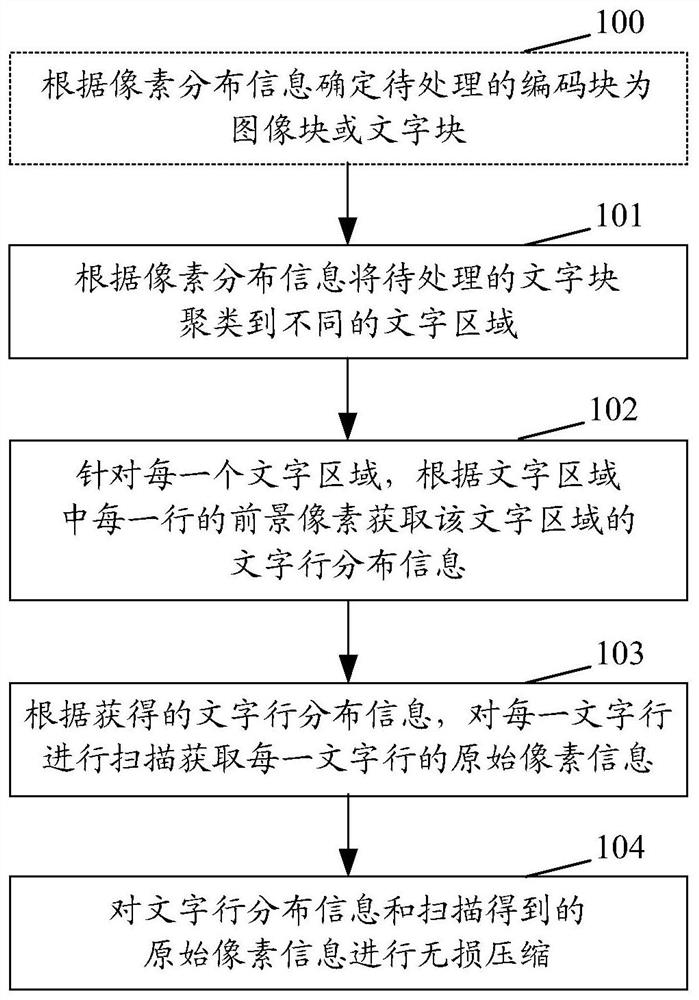
Figure 1 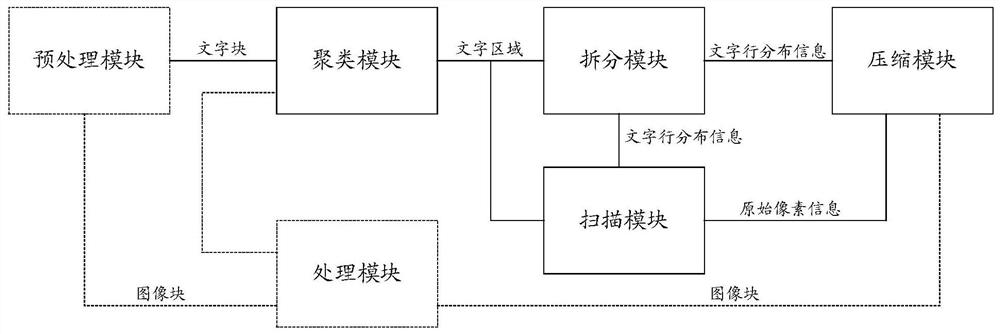
Figure 2 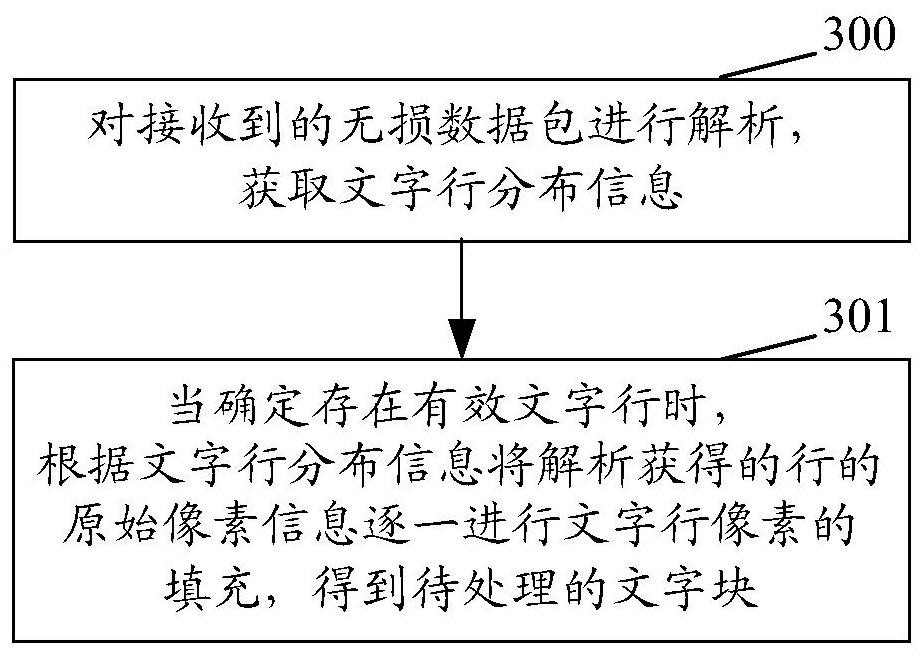
Figure 3
Abstract
Description
technical field
[0001] This application relates to but not limited to information processing technology, especially an information compression / decompression method and device. Background technique
[0002] With the popularization of cloud computing, virtual desktop and other technologies, it is necessary to transmit a large amount of remote data as quickly and clearly as possible to the user terminal for display through the network. In cloud desktop daily office-related scenarios, the screen content usually contains a large amount of text, and the clarity of the text content can significantly affect the comfort of human vision. Therefore, in common cloud desktop scenarios, text is used in lossless or Approximately lossless compression algorithm for processing.
[0003] In the related art, a mainstream method for text compression is based on the limited distribution of pixel values in the text area. After the text area is clustered to generate a palette, the palette index ...
Examples
Embodiment Construction
[0073] In a typical configuration of the present application, a computing device includes one or more processors (CPUs), input / output interfaces, network interfaces, and memory.
[0074] Memory may include non-permanent storage in computer readable media, in the form of random access memory (RAM) and / or nonvolatile memory such as read only memory (ROM) or flash RAM. Memory is an example of computer readable media.
[0075] Computer-readable media, including both permanent and non-permanent, removable and non-removable media, can be implemented by any method or technology for storage of information. Information may be computer readable instructions, data structures, modules of a program, or other data. Examples of computer storage media include, but are not limited to, phase change memory (PRAM), static random access memory (SRAM), dynamic random access memory (DRAM), other types of random access memory (RAM), read only memory (ROM), Electrically Erasable Programmable Read-On...