
Method for converting lignocellulose into phenolic compounds, polyols and organic acids by one-pot process
A technology of lignocellulose and phenolic compounds, applied in lignin derivatives, chemical instruments and methods, organic chemistry, etc., can solve the problems of high energy consumption, low catalytic efficiency, difficult recovery of catalysts and waste liquid, etc. Effects of excessive oxidative degradation
Patent Information
- Authority / Receiving Office
- CN · China
- Patent Type
- Applications(China)
- Current Assignee / Owner
- Publication Date
- 2021-05-07
Smart Images
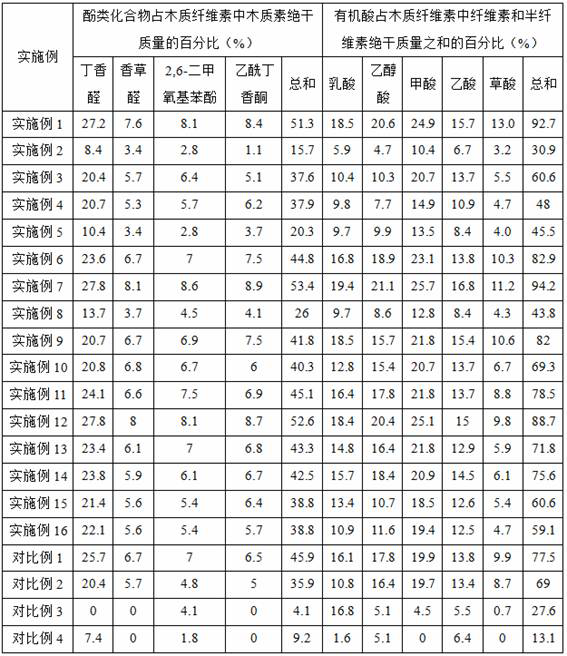
Figure 1 
Figure 2
Abstract
Description
technical field
[0001] The invention specifically relates to a method for converting lignocellulose into phenolic compounds, polyols and organic acids in one pot. Background technique
[0002] Currently, fossil-based phenolic compounds (such as vanillin, syringaldehyde, ethylguaiacol, and 4-ethyl-2,6-dimethoxyphenol, etc.) and polyols (such as ethylene glycol, propylene glycol, etc.) and Organic acids (such as formic acid, acetic acid, oxalic acid, lactic acid, and glycolic acid, etc.) are important chemical raw materials or solvents required by industries such as medicine, spices, pesticide chemistry, and polymers. They have become an important material basis for the development of human society.
[0003] Lignocellulose is the most abundant renewable carbon resource on Earth. Lignocellulose is mainly composed of lignin and carbohydrates (cellulose and hemicellulose). Among them, lignin is mainly polymerized by phenylpropane monomers, and carbohydrates are mainly composed o...
Examples
Embodiment 1
[0032] (1) Deoxygenation of the reaction system
[0033] Add 1 g of dry eucalyptus powder (particle size of 40-60 mesh) and 2 g of CuO into a reaction kettle containing 10 mL of 2 mol / L NaOH aqueous solution, and then the mixture is ultrasonically deoxygenated. After the treatment, the reactor was sealed, and the reactor was purged with nitrogen for 3 times, and nitrogen was continued to make the internal pressure of the reactor 0.2 MPa.
[0034] (2) One-pot conversion of lignocellulose
[0035] Heat the sealed reactor in step (1) to 210 °C, react at this temperature for 40 min, and cool down to room temperature quickly after the reaction, then filter and separate the solid-liquid mixture in the reactor to obtain alkaline solution, Cu 2 O and Cu elemental residual solids.
[0036] (3) Acidification treatment of the product
[0037] Use SO 2 Adjust the pH of the obtained alkaline solution to 2 to obtain an acidified solution containing phenolic compounds and organic acids. ...
Embodiment 2
[0039] The reaction temperature in step (1) of Example 1 was replaced by 150°C, the reaction time was replaced by 10 h, and other operations were the same as in Example 1.
Embodiment 3
[0041] Replace the reaction temperature in step (1) of Example 1 with 350°C and the reaction time with 10 s, and other operations are the same as in Example 1.