
A kind of fresh-keeping method of rose flower
A fresh-keeping method and technology of roses, applied in botany equipment and methods, plant preservation, application, etc., can solve the problems of rising rose fresh-keeping effect, achieve the effects of delaying cell physiological activities, prolonging fresh-keeping time, and prolonging biological activity
Patent Information
- Authority / Receiving Office
- CN · China
- Patent Type
- Patents(China)
- Current Assignee / Owner
- Publication Date
- 2022-04-15
Smart Images
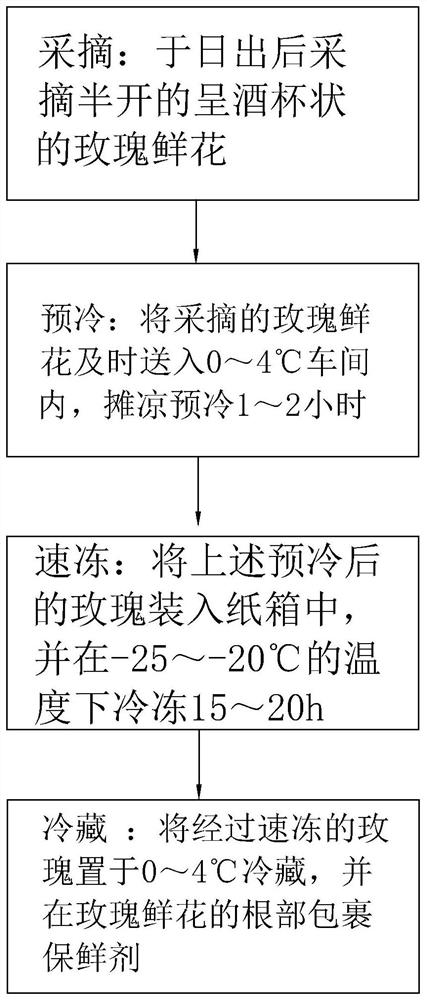
Figure 1 
Figure 2 
Figure 3
Abstract
Description
technical field
[0001] The present application relates to the technical field of fresh-keeping flowers, and more specifically, it relates to a fresh-keeping method for rose flowers. Background technique
[0002] With the improvement of living standards, people are not only satisfied with material life, but more and more people begin to pursue spiritual enjoyment. Flowers become an indispensable decoration for beautifying the environment because of their beautiful color and luster and fragrant smell, and are loved by more and more people. Among them, rose is a deciduous shrub of Rosaceae Rosaceae, which is native to North China, Japan and Korea, and plays an important role in the flower commodity market.
[0003] However, because most flowers will age and wither soon after harvesting, roses need to be transported for a long time after picking before they can be delivered to consumers. In order to shorten the transportation time of roses, manufacturers often use air transport...
Examples
preparation example 1
[0039] Prepare a preservative, in parts by weight, the preservative includes: 16 parts of sucrose, 2 parts of vitamin C, 3 parts of alcohol, 1 part of polyoxyethylene lauryl ether, 8 parts of plant growth regulator, 12 parts of potassium chloride, and 2 parts of propolis; 1 part of honey; wherein the plant growth regulator includes cytokinin, gibberellin and sodium nitrophenolate, and the weight ratio of cytokinin, gibberellin and sodium nitrophenolate is 1:1:45.
preparation example 2
[0041] Preservatives are prepared, in parts by weight, the preservatives include: 20 parts of fructose, 8 parts of salicylic acid, 5 parts of aspirin, 2 parts of neutral washing powder, 10 parts of plant growth regulators, 16 parts of aluminum chloride, 3 parts of propolis; 2 parts of honey; wherein the plant growth regulator includes cytokinin, gibberellin and sodium nitrophenolate, and the weight ratio of cytokinin, gibberellin and sodium nitrophenolate is 3:1:47.
preparation example 3
[0043] Preservatives are prepared, in parts by weight, the preservatives include: 18 parts of chitosan, 5 parts of citric acid, 4 parts of thiabendazole, 2 parts of fulvic acid, 9 parts of plant growth regulators, 14 parts of calcium nitrate, 2 parts of propolis 1 part; 1 part of honey; wherein the plant growth regulator includes cytokinin, gibberellin and sodium nitrophenolate, and the weight ratio of cytokinin, gibberellin and sodium nitrophenolate is 5:1:50.