
Mirror image rejection down-conversion receiving system and method based on photoelectric oscillator
A photoelectric oscillator and image suppression technology, which is applied in the field of optical communication, can solve the problems of IM suppression performance degradation and achieve the effects of avoiding mismatch problems, low power consumption, and high-performance optical down-conversion output
Patent Information
- Authority / Receiving Office
- CN · China
- Current Assignee / Owner
- Publication Date
- 2022-02-25
Smart Images
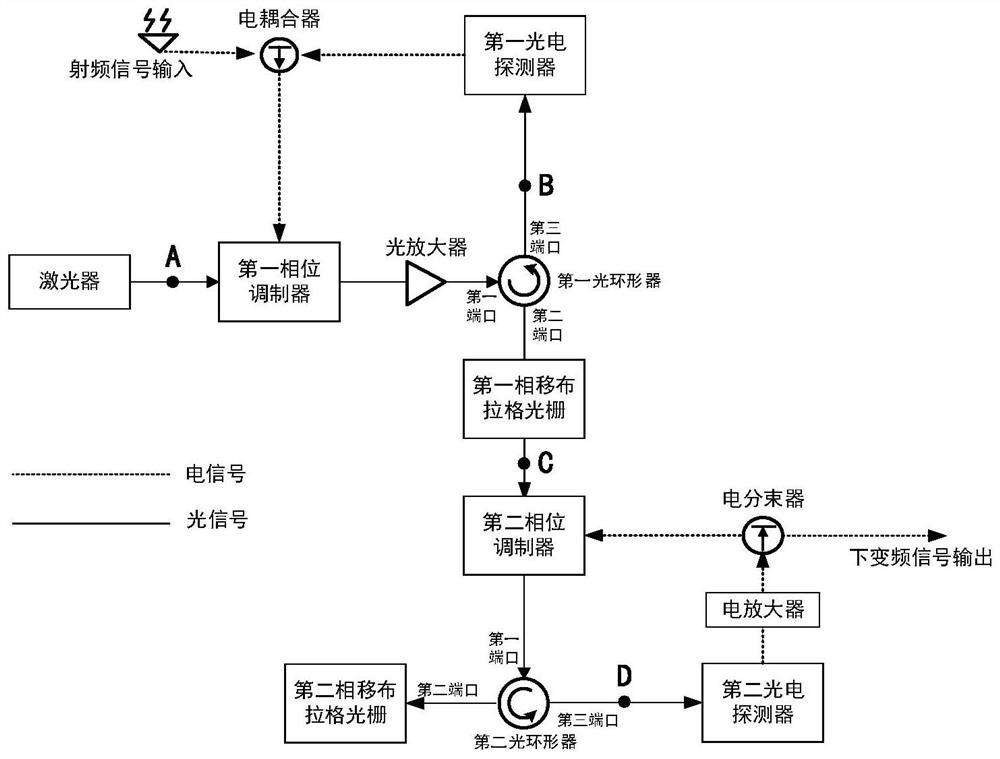
Figure 1 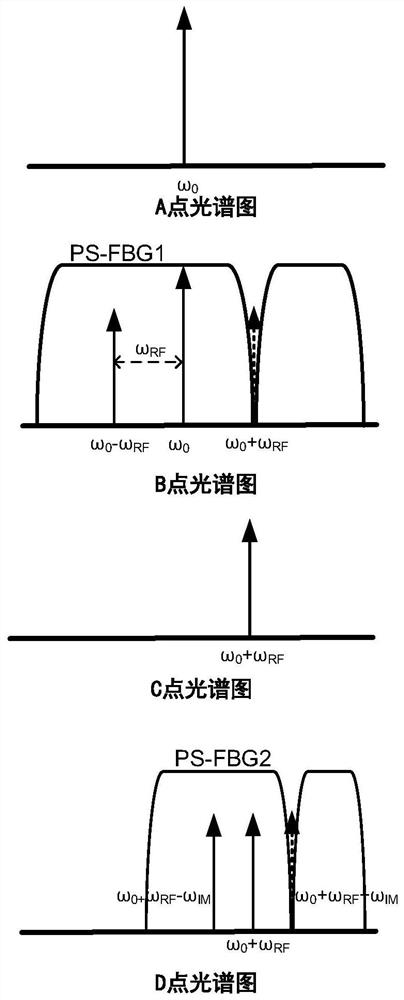
Figure 2 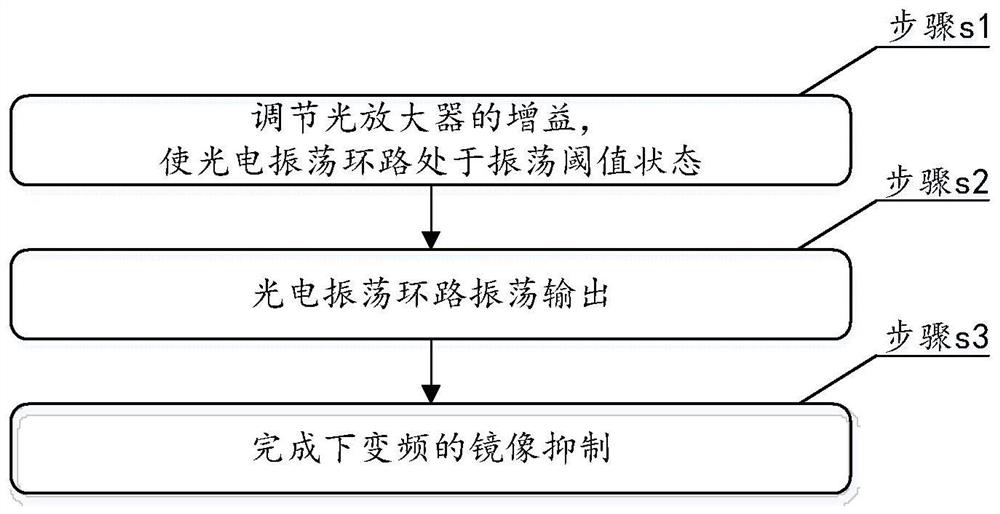
Figure 3
Abstract
Description
technical field
[0001] The present invention relates to the field of optical communication and the field of microwave photon technology, in particular to a photoelectric oscillator-based image suppression down-conversion receiving system and method. Background technique
[0002] In existing radar and communication applications, the RF front-end is mainly based on microwave electronic technology to realize signal frequency conversion and transmission. With the increase of processing frequency, the traditional RF front-end faces "electronic bottlenecks" such as large transmission loss, difficult high-frequency processing, limited bandwidth, poor isolation, and susceptibility to electromagnetic interference, and cannot solve the needs of multi-band and multi-function. The resulting electronic devices are complex, heavy, high power consumption, and high cost.
[0003] The frequency down-conversion based on microwave photonic technology is to modulate the radio frequency signal ...
Examples
Embodiment Construction
[0020] In order to make the objects and advantages of the present invention clearer, the present invention will be further described below in conjunction with the examples; it should be understood that the specific examples described here are only for explaining the present invention, and are not intended to limit the present invention.
[0021] Preferred embodiments of the present invention are described below with reference to the accompanying drawings. Those skilled in the art should understand that these embodiments are only used to explain the technical principle of the present invention, and are not intended to limit the protection scope of the present invention.
[0022] It should be noted that, in the description of the present invention, terms such as "upper", "lower", "left", "right", "inner", "outer" and other indicated directions or positional relationships are based on the terms shown in the accompanying drawings. The direction or positional relationship shown is ...