
Enzyme combining stabilizer
A compound stabilizer and lactate dehydrogenase technology, applied in enzyme stabilization, peptide/protein components, medical preparations containing active ingredients, etc., can solve the problems of sensitivity differences, affecting clinical diagnosis, uneven quality, etc., to achieve The effect of a strong stabilizing effect
Patent Information
- Authority / Receiving Office
- CN · China
- Patent Type
- Applications(China)
- Current Assignee / Owner
- Publication Date
- 2007-06-27
Smart Images
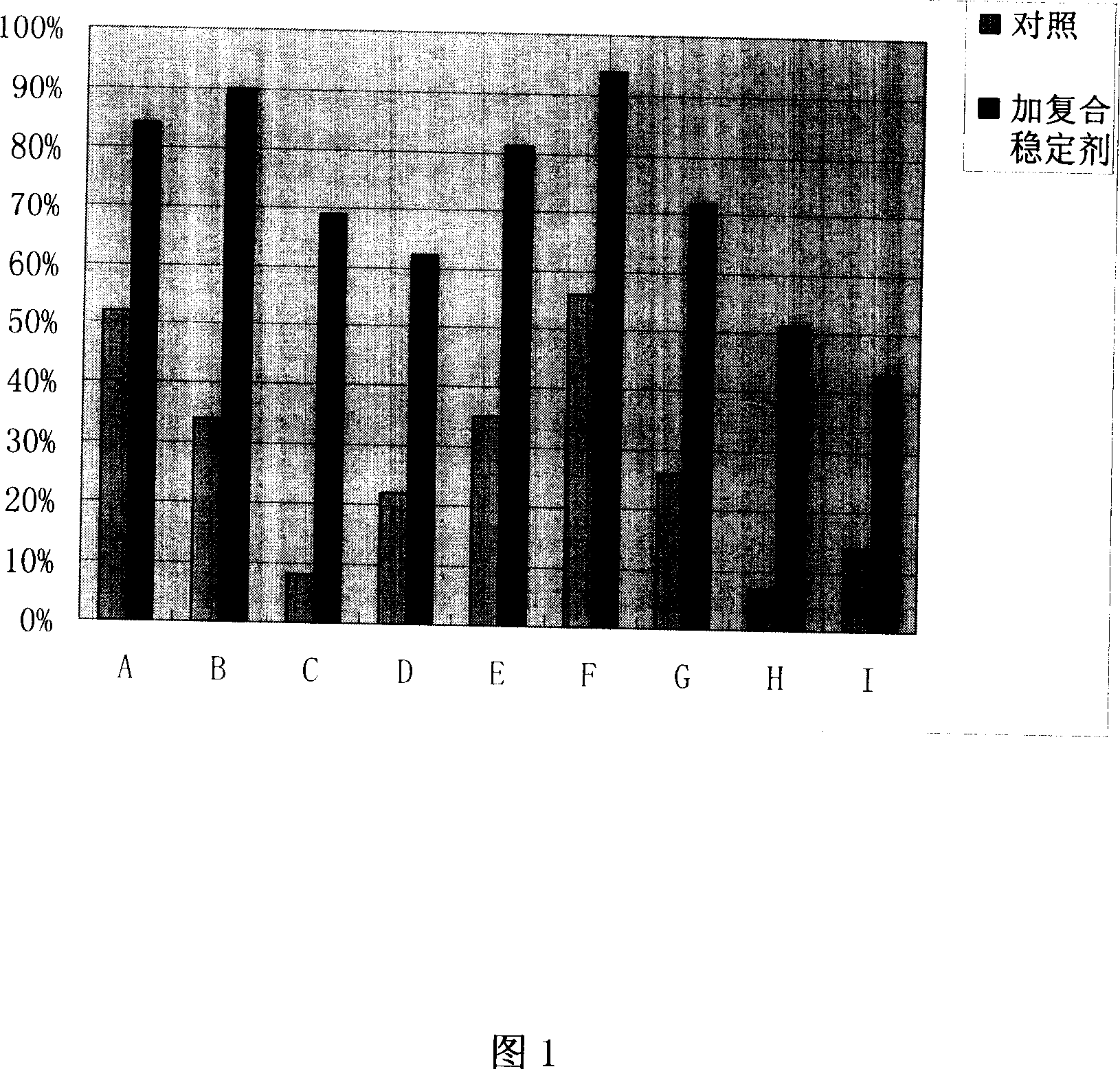
Figure 1 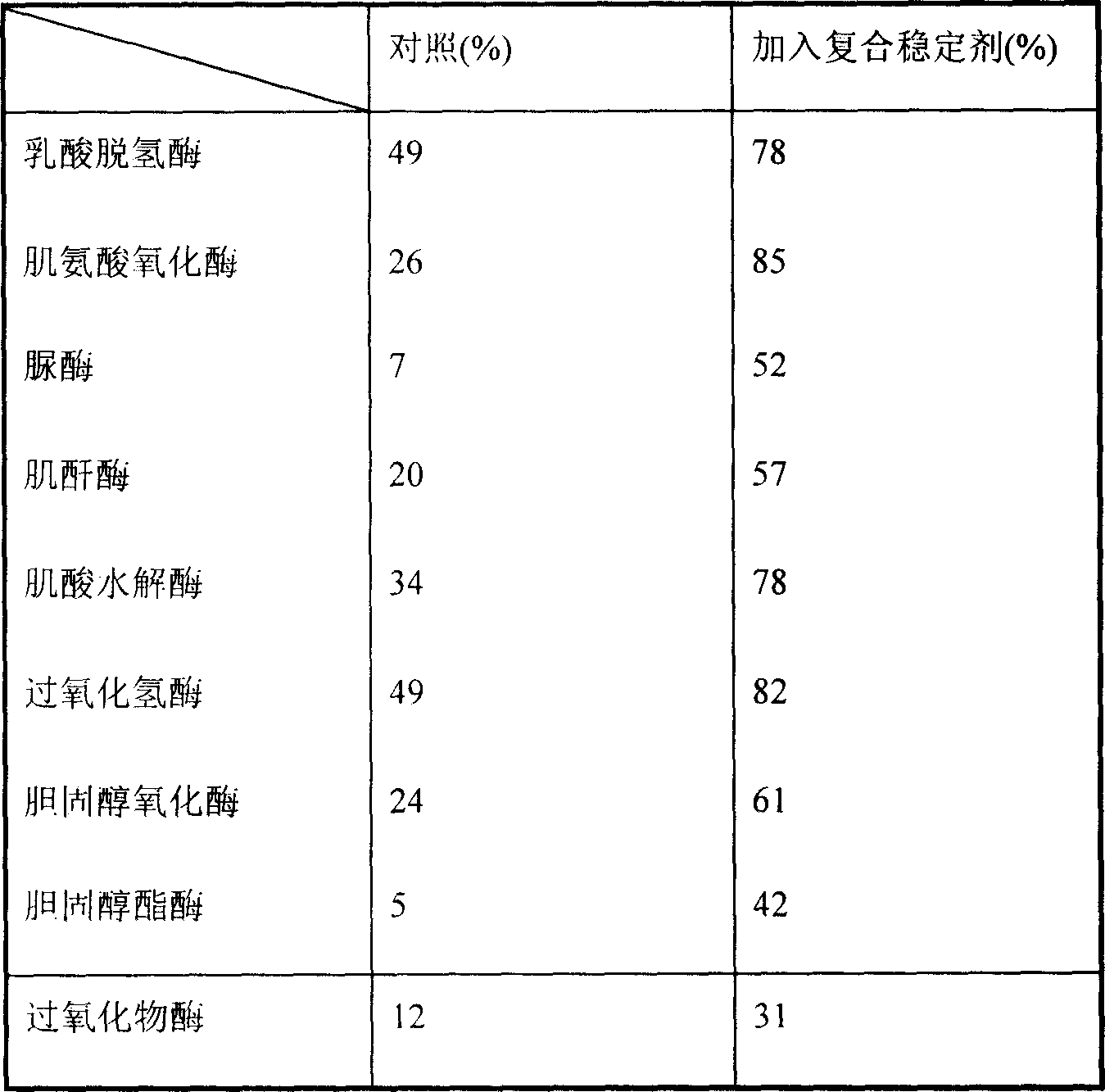
Figure 2 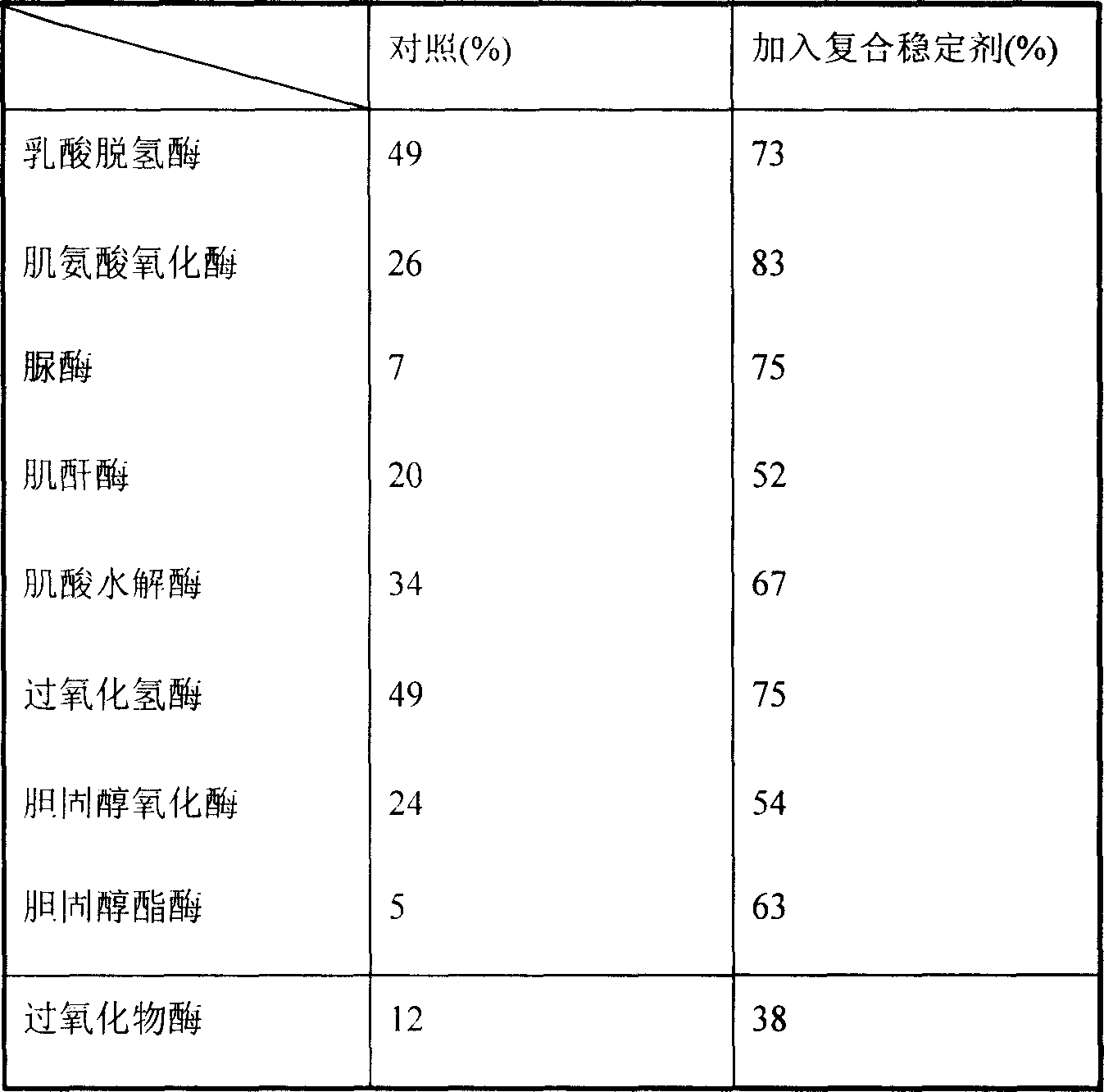
Figure 3
Abstract
Description
Technical field:
[0001] The invention belongs to the field of biotechnology. Specifically, it relates to an enzyme composite stabilizer. Background technique:
[0002] With the development of the medical profession, the field of medical clinical diagnosis is gradually developing, various clinical diagnosis technologies are further improved, and clinical diagnosis reagents continue to innovate, which provides great help for clinical diagnosis. Because it is used for clinical diagnosis, this requires stable quality of diagnostic reagents, which can prevent misdiagnosis due to reagent quality problems. Therefore, studies on the stability of clinical diagnostic reagents have been included in people's concerns. However, the quality of clinical diagnostic reagents at home and abroad is uneven, and there are big differences in terms of reagent specificity and sensitivity. As an important performance indicator of diagnostic reagents, the stability is particularly obvious. The test data o...
Examples
example 1
[0020] Bovine Serum Albumin 2g
[0021] EGTA 4g
[0022] 1,2-Dithiothreitol 25 grams
[0023] Potassium Gluconate 30g
[0024] 20 grams of sodium chloride
[0025] proclin300 1 g,
[0026] Magnesium acetate 8 g
[0027] Take 5 ml of the above compound enzyme stabilizer and add it to 95 ml containing lactate dehydrogenase (A liquid), sarcosine oxidase (B liquid), urease (C liquid), creatininase (D liquid), and creatine hydrolase. (Liquid E), catalase (liquid F), cholesterol oxidase (liquid G), cholesterol esterase (liquid H), peroxidase (liquid I), put it in an oven at 37 degrees for 5 days, Respectively detect the residual enzyme activity (use the enzyme preparation without compound enzyme stabilizer as a control) (see Figure 1)
example 2
[0029] Bovine Serum Albumin 2g
[0030] EDTA 10 grams,
[0031] Sucrose 1g
[0032] Potassium gluconate 10 g
[0033] 60 grams of sodium chloride
[0034] proclin300 1 g
[0035] Magnesium chloride 24 g
[0036] Take 5 ml of the above compound enzyme stabilizer and add it to 95 ml containing lactate dehydrogenase (A liquid), sarcosine oxidase (B liquid), urease (C liquid), creatininase (D liquid), and creatine hydrolase. (E liquid), catalase (F liquid), cholesterol oxidase (G liquid), cholesterol esterase (H liquid), peroxidase (I liquid) in the enzyme preparation, put 2-8 degrees refrigerator 12 Months later, detect the residual enzyme activity separately (use the enzyme preparation without compound enzyme stabilizer as the control)
[0037] Table 1: Residual enzyme activity control
example 3
[0039] Bovine Serum Albumin 2g
[0040] EGTA 0.1 g,
[0041] Mannitol 300g
[0042] Potassium Gluconate 183g
[0043] Sodium chloride 100g
[0044] proclin300 1 g
[0045] 24 grams of magnesium acetate
[0046] Take 5 ml of the above compound enzyme stabilizer and add it to 95 ml containing lactate dehydrogenase (A liquid), sarcosine oxidase (B liquid), urease (C liquid), creatininase (D liquid), and creatine hydrolase. (E liquid), catalase (F liquid), cholesterol oxidase (G liquid), cholesterol esterase (H liquid), peroxidase (I liquid) in the enzyme preparation, put 2-8 degrees refrigerator 12 Months later, detect the residual enzyme activity separately (use the enzyme preparation without compound enzyme stabilizer as the control)
[0047] Table 2: Residual enzyme activity control