
Radiolabeling kit and binding assay
Patent Information
- Authority / Receiving Office
- US · United States
- Patent Type
- Applications(United States)
- Current Assignee / Owner
- Publication Date
- 2002-08-01
- Estimated Expiration
- Not applicable · inactive patent
Smart Images
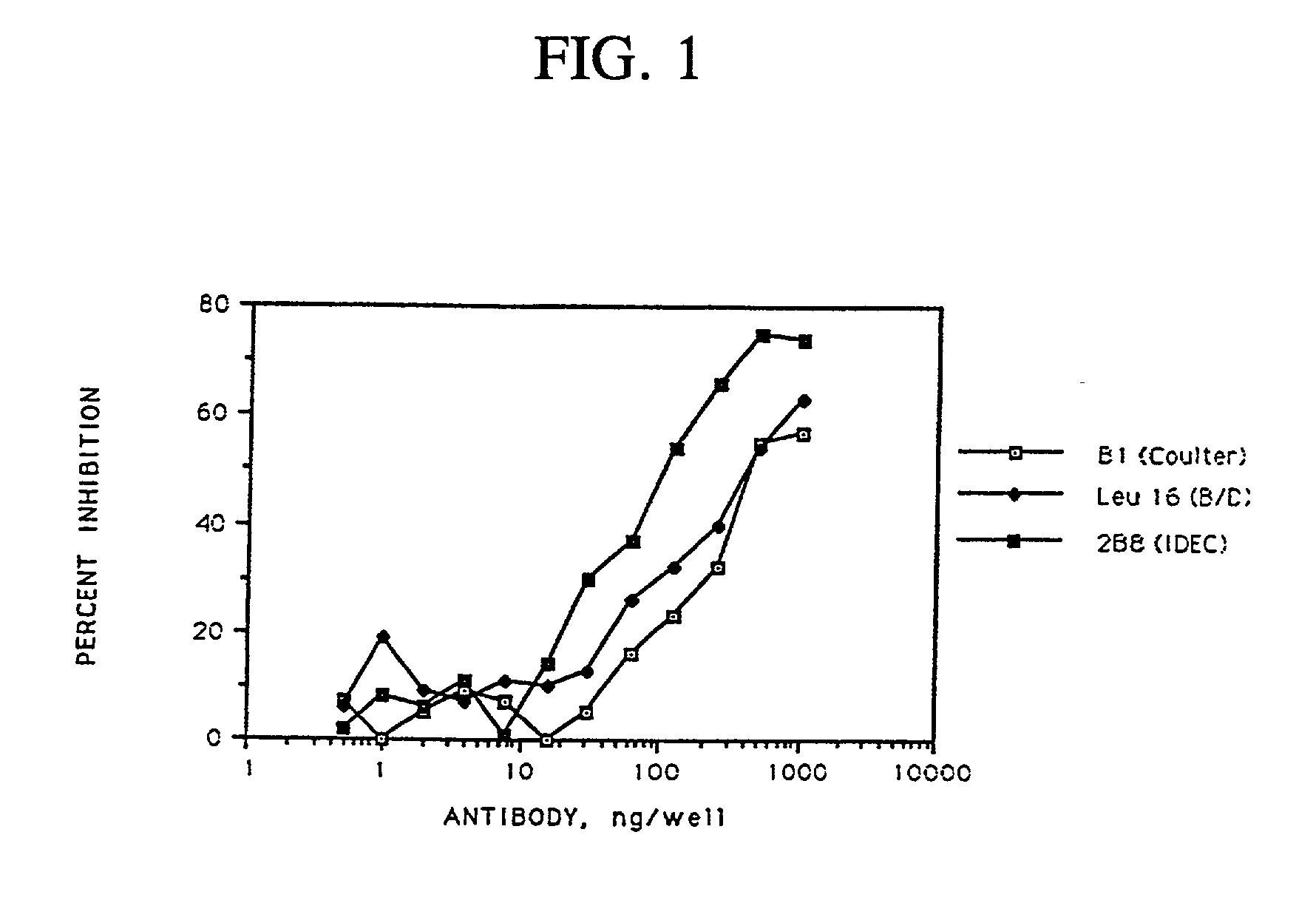
Figure 1 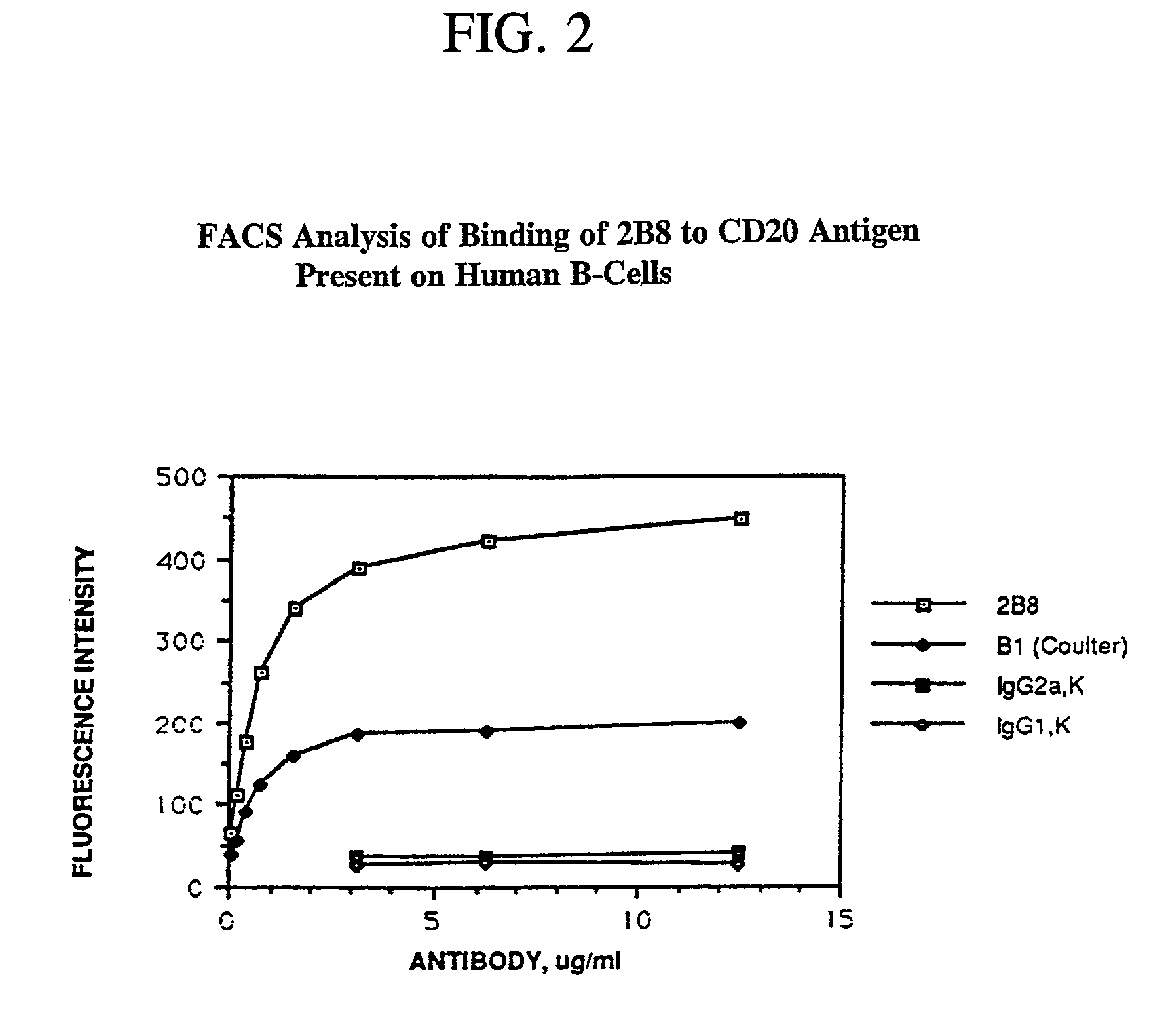
Figure 2 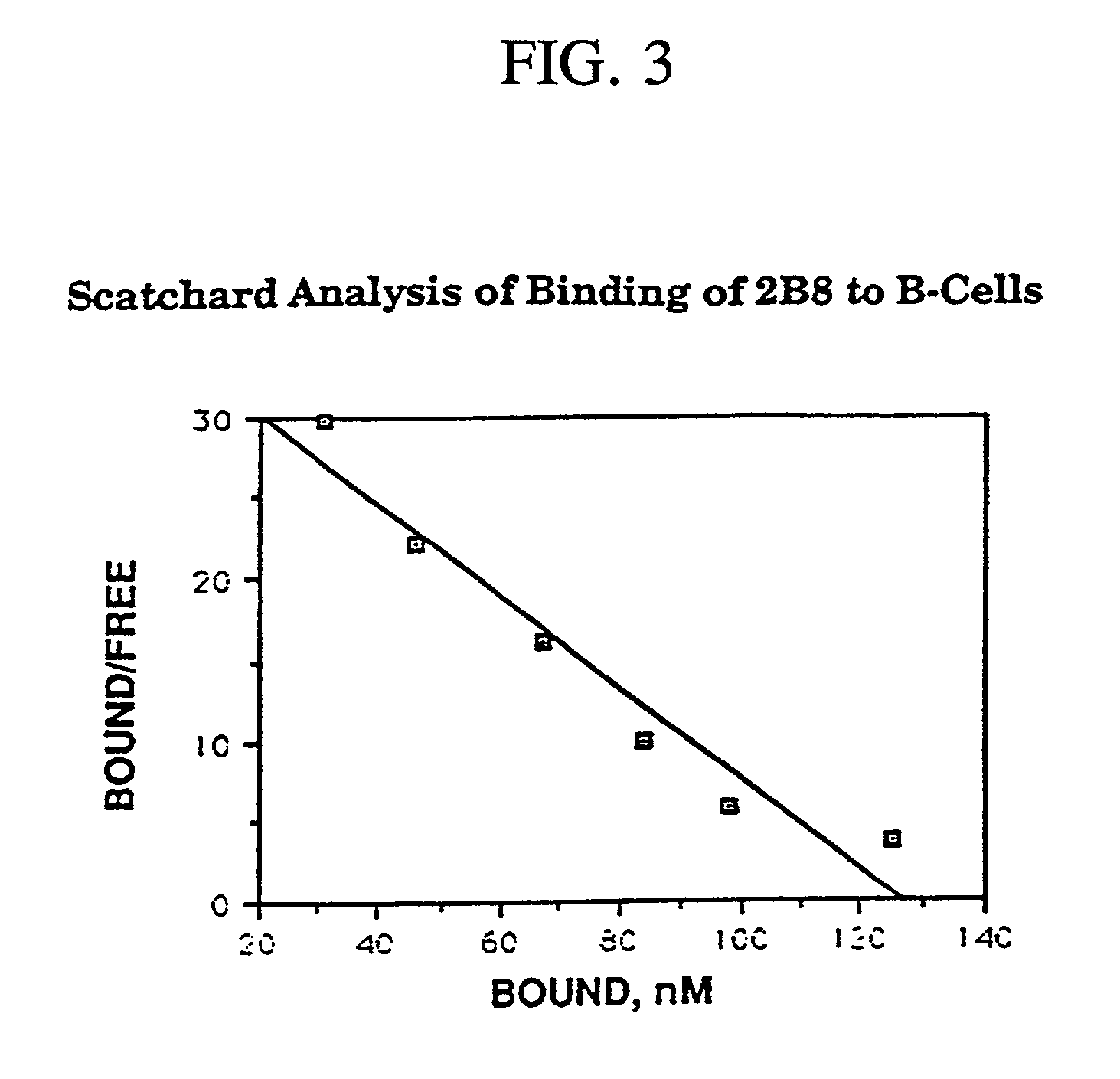
Figure 3
Abstract
Description
[0001] 1. Field of the Invention
[0002] The present invention relates to antibody binding assays and radiolabeling kits, lyophilized cell preparations, reagents and protocols for testing the clinical efficacy of therapeutic antibodies for the treatment / imaging of tumors and tumor cells. Specifically, the kits of the present invention are used for making and evaluating radiolabeled antibody conjugates that will be used for the treatment and imaging of B-cell lymphoma tumors by targeting the B cell surface antigen BP35 ("CD20").
[0003] 2. Technology Background
[0004] All publications and patent applications herein are incorporated by reference to the same extent as if each individual publication or patent application was specifically and individually indicated to be incorporated by reference.
[0005] The immune system of vertebrates (for example, primates, which include humans, apes, monkeys, etc.) consists of a number of organs and cell types which have evolved to: accurately and specific...
Examples
example 1
Radioincorporation--Kits and Assays
[0341] I. Summary One objective of the present invention was to devise radiolabeling kit protocols for preparation of .sup.111In and .sup.90Y-labeled 2B8-MX-DTPA (In2B8 and Y2B8, respectively) and to establish release specifications for clinical products. The radiolabeling kit protocols are reproducible with respect to radioincorporation and binding to antigen-positive SB cells and indicate the suitability of the radiolabeling kit for use in the clinical trials. It is recommended that In2B8 and Y2B8 release specifications for radioincorporation and binding be established at .gtoreq.95% and .gtoreq.70%, respectively.
[0342] II. Introduction
[0343] A .sup.90Y-labeled murine monoclonal anti-CD20 antibody (Y2B8) is currently being evaluated in clinical trials for the treatment of relapsed B-cell lymphoma. The yttrium isotope lacks a gamma component making it unsuitable for imaging systems. Therefore, .sup.111In-labeled 2B8-MX-DTPA (In2B8) will be used to...
example 2
Radioincorporation and Binding--Kits and Assays
[0510] I. Summary
[0511] The murine anti-CD20 monoclonal antibody designated 2B8 has been cloned in CHO cells to yield a high expression cell line. Specificity of the CHO-derived antibody for CD20-positive human cells was demonstrated by FACS analysis and competitive binding. Negligible binding was observed to human T-cells. The affinity of the antibody for CD20-positive cells was determined to be 1.3.times.10.sup.-10 M using a competitive binding assay. The antibody was reacted with the chelating agent MX-DTPA to form a conjugate, 2B8-MX-DTPA, with negligible loss of immunoreactivity (affinity value was 4.4.times.10.sup.-10 M. Optimal chelator conjugation, as determined by measuring radioincorporation of .sup.111In, was achieved after eight hours reaction. Radiolabeling protocols for 2B8-MX-DTPA were optimized for .sup.90Y or .sup.111In with respect to pH and incubation time to insure maximal radioincorporation (>95%) and retention of i...