
Bearing pressure-resistant member and process for making the same
a technology of pressure-resistant components and pressure-resistant components, which is applied in the direction of solid-state diffusion coatings, mechanical devices, coatings, etc., can solve the problems of difficult homogeneous dispersing of msub>, excessive long treatment time at the holding step, and deterioration of rolling fatigue strength, so as to improve significantly surface fatigue strength and reduce residual h2. , the effect of excellent surface fatigue strength
Patent Information
- Authority / Receiving Office
- US · United States
- Patent Type
- Applications(United States)
- Current Assignee / Owner
- Publication Date
- 2005-03-03
- Estimated Expiration
- Not applicable · inactive patent
Smart Images
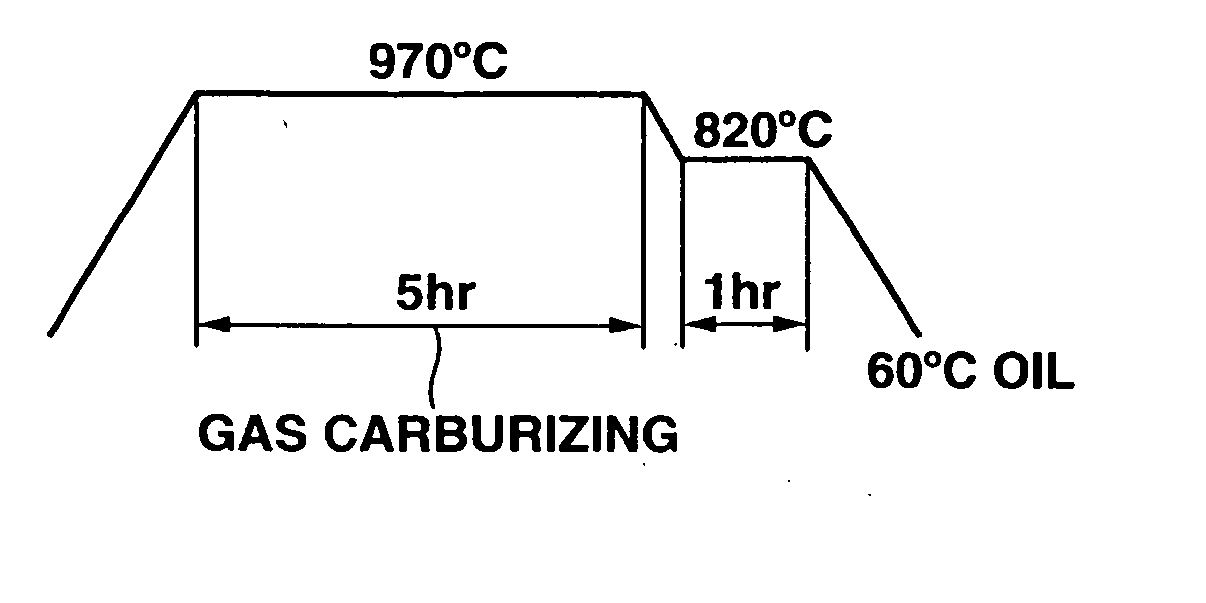
Figure 1 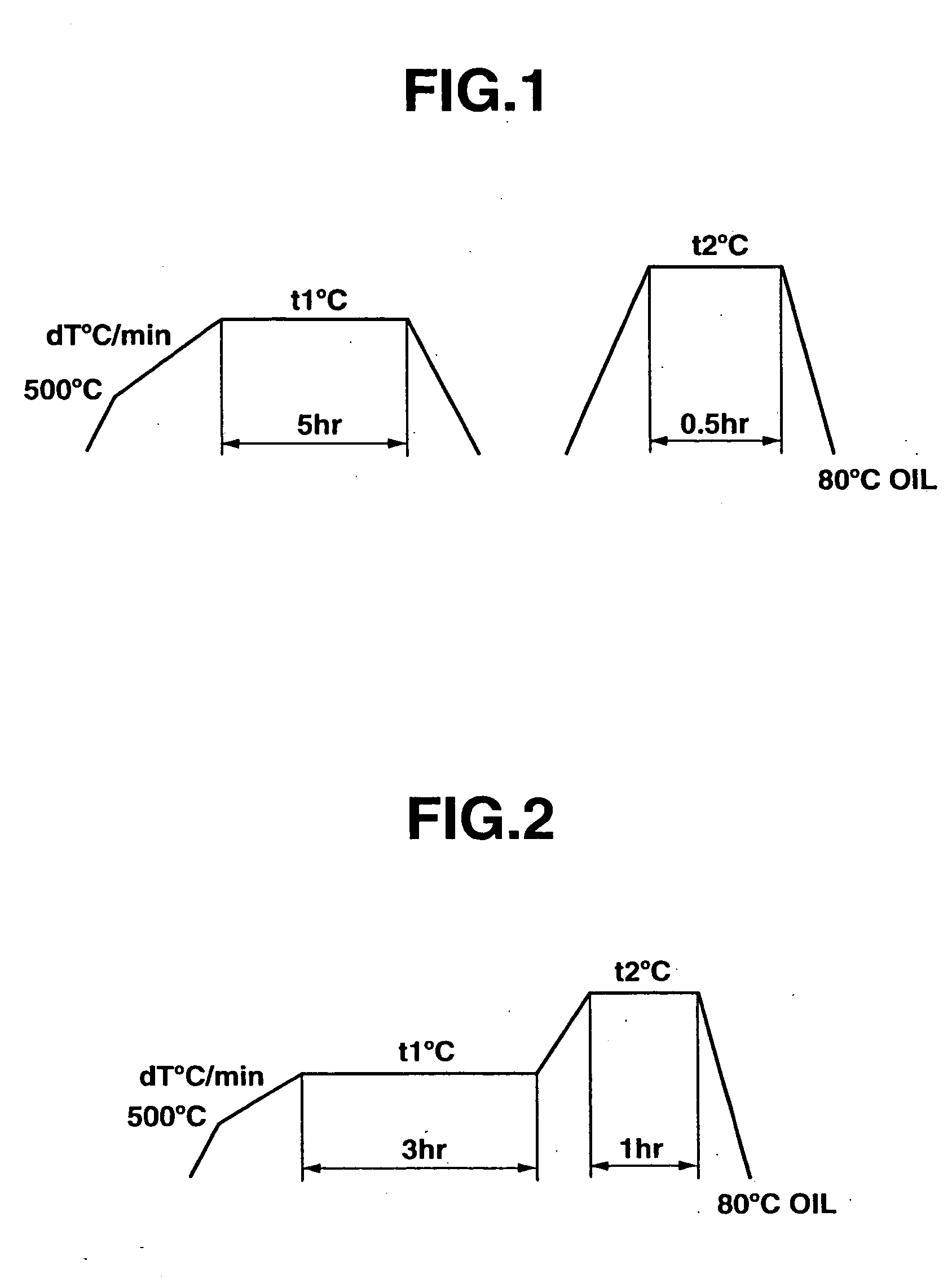
Figure 2 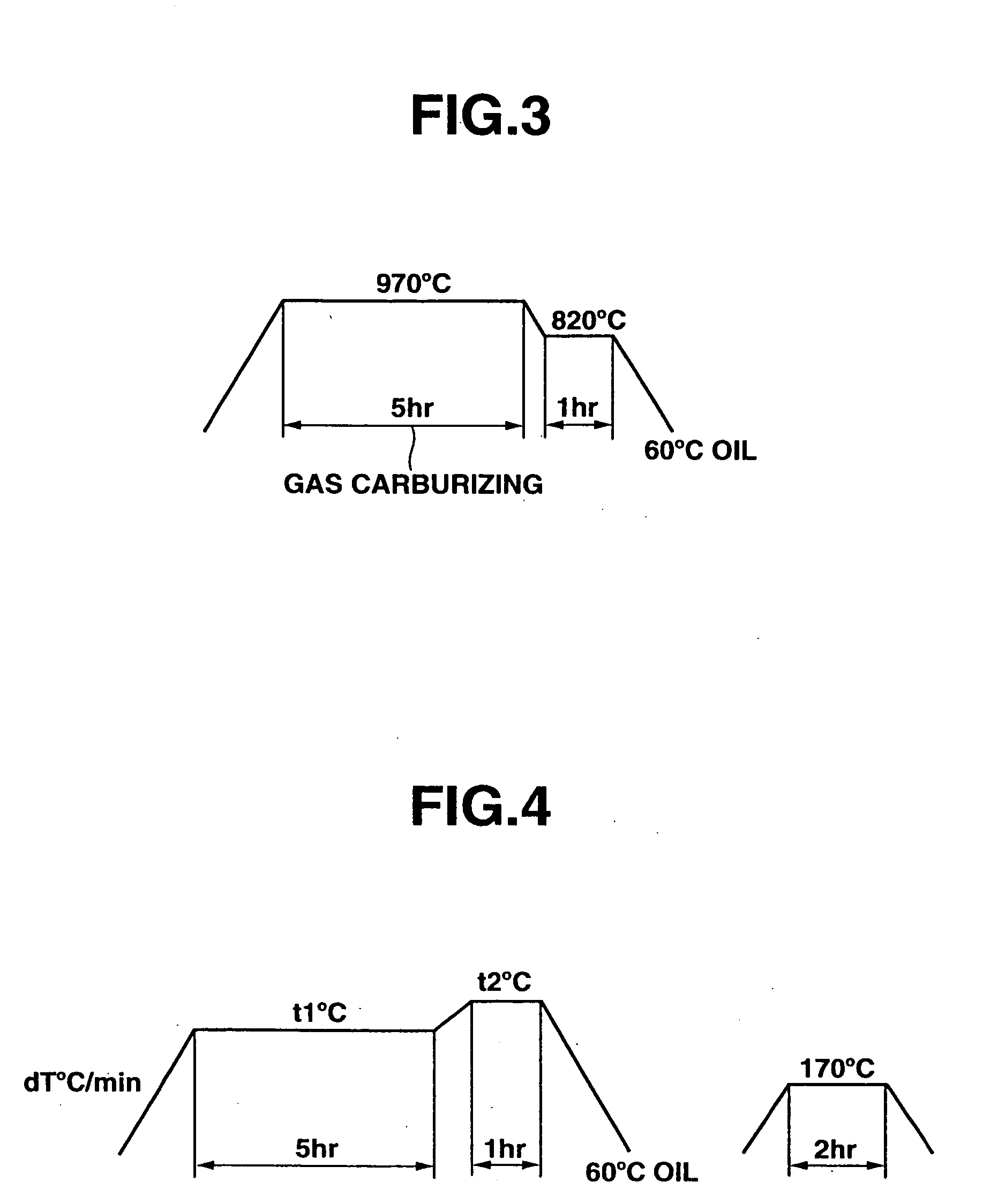
Figure 3
Abstract
Description
BACKGROUND OF THE INVENTION The present invention relates to an element useable as a power transmission part such as gears and rolling-contact bearings, which necessitates a high surface fatigue strength. More specifically, this invention relates to a bearing pressure-resistant member suitable for use under a relatively high bearing pressure in a relatively high temperature range of about 100° C. to about 300° C., and relates to a process for making the bearing pressure-resistant member. There have been proposed methods for enhancing bearing pressure strength of the above-described power transmission part. Among the methods, there are hyper-eutectoid carburizing and high density carburizing. In these carburizing methods, M3C carbide such as Fe3C which is not readily decomposed in the above-described temperature range, is precipitated so that hardness of the part and resistance to tempering softening can be enhanced. European Patent Application Publication No. 1070760 A2 (correspon...
Examples
examples
The present invention is described in more detail by way of examples and comparative examples by referring to the accompanying drawings. However, these examples are only illustrative and not intended to limit a scope of the present invention thereto.