
Cardiac ablation using microbubbles
a technology of microbubbles and ablation chambers, which is applied in the field of medical procedures and devices for cardiac ablation, can solve problems such as potentially life-threatening conditions, and achieve the effects of reducing the dilution of microbubbles, and increasing the rate of ultrasonic absorption in myocardial tissues
Patent Information
- Authority / Receiving Office
- US · United States
- Patent Type
- Applications(United States)
- Current Assignee / Owner
- Publication Date
- 2006-05-11
- Estimated Expiration
- Not applicable · inactive patent
Smart Images
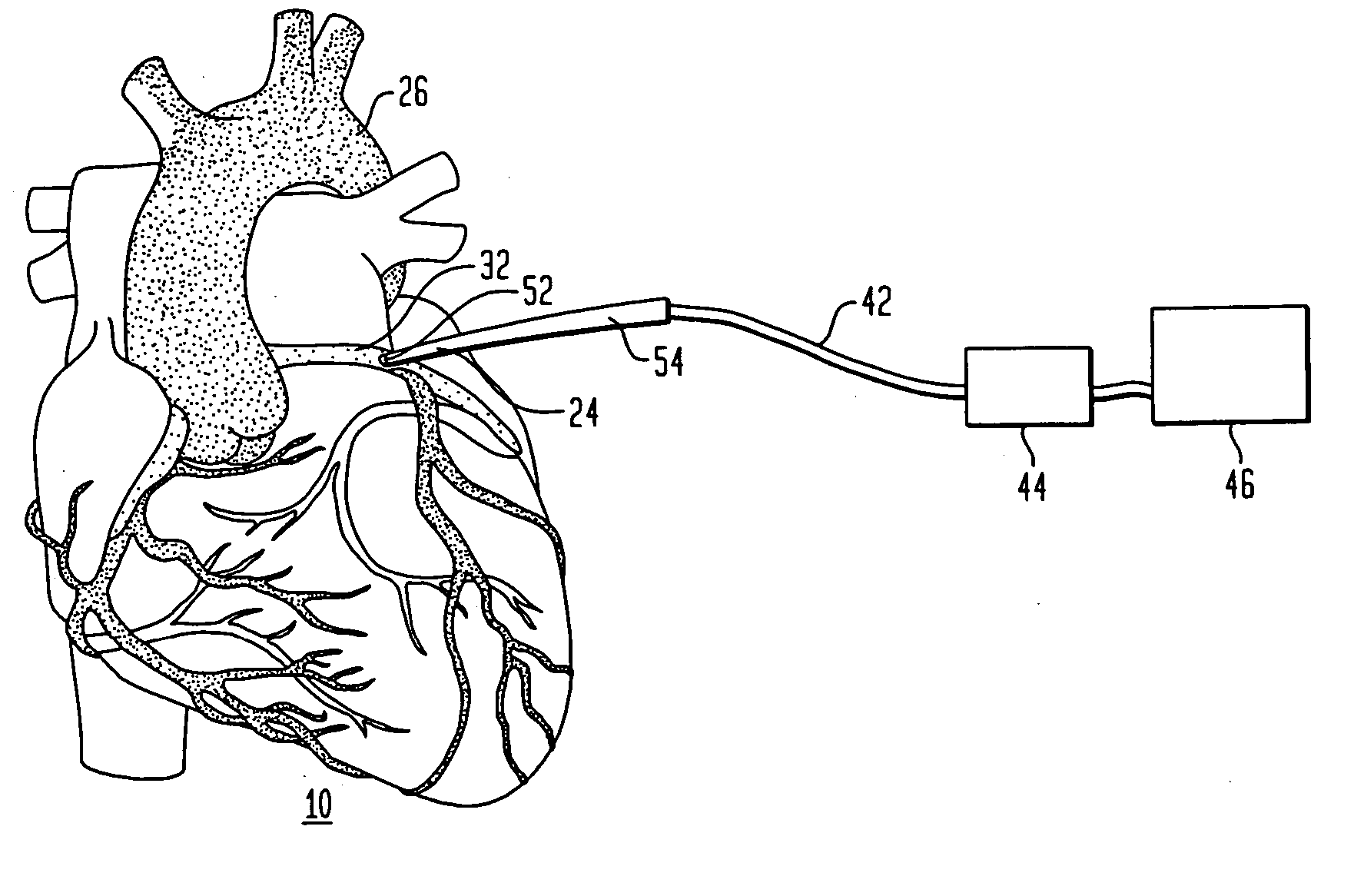
Figure 1 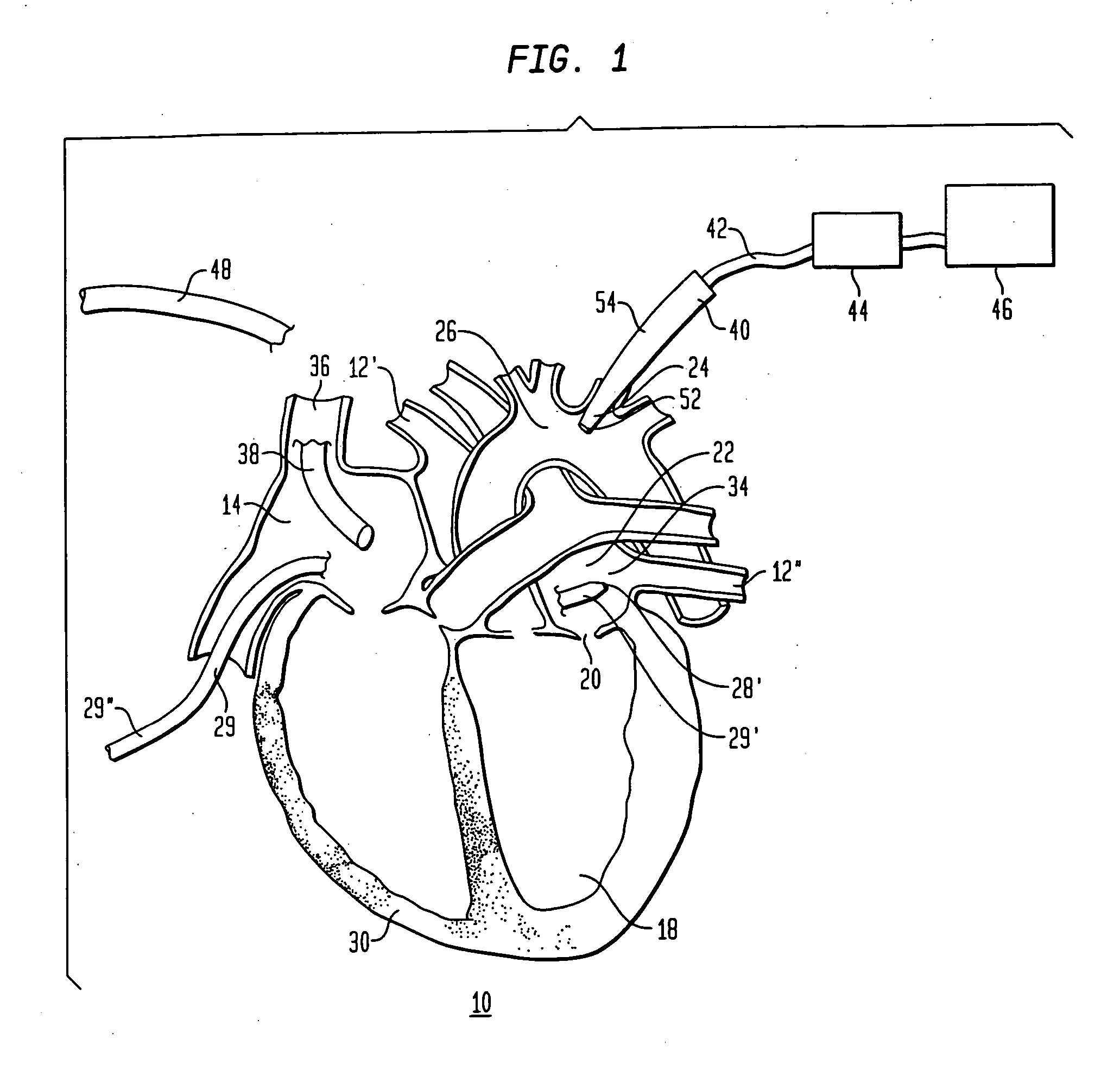
Figure 2 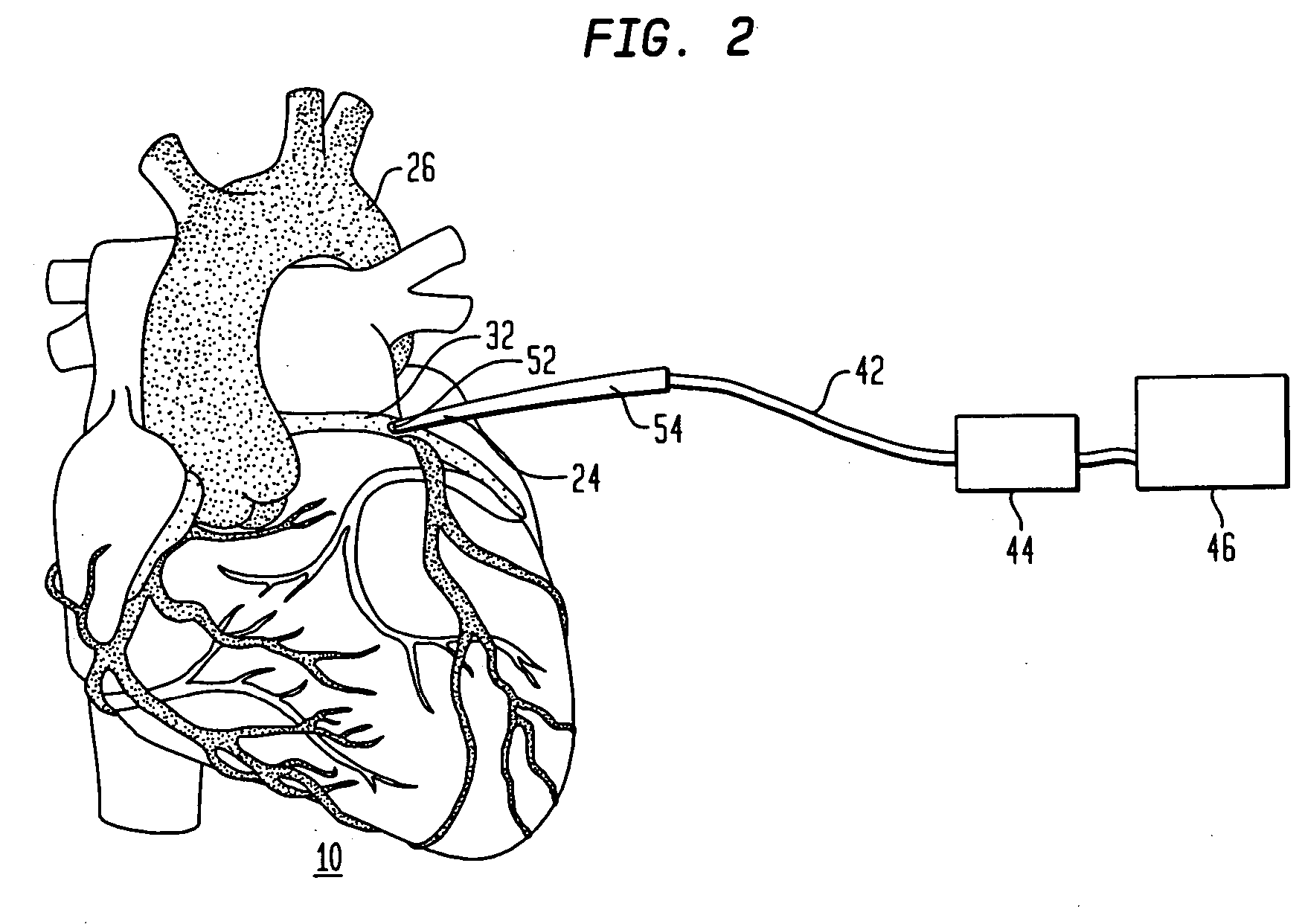
Figure 3
Abstract
Description
CROSS-REFERENCE TO RELATED APPLICATIONS
[0001] The present application claims benefit of U.S. Provisional Patent Application Ser. No. 60 / 394,392, the disclosure of which is incorporated by reference herein.TECHNICAL FIELD
[0002] The present invention relates to medical procedures and devices for cardiac ablation and further relates to performing ultrasonic cardiac ablation, or similar medical procedures, with microbubbles. BACKGROND ART
[0003] Certain diseases can be treated by ablating tissues within the heart or in the vascular structures connected to the heart. Contraction or “beating” of the heart is controlled by electrical impulses generated at nodes within the heart and transmitted along conductive pathways extending within the wall of the heart. Diseases of the heart known as cardiac arrhythmias involve abnormal generation or conduction of the electrical impulses. One such arrhythmia is atrial fibrillation or “AF”. Certain cardiac arrhythmias can be treated by deliberately d...
Examples
Embodiment Construction
[0022]FIG. 1 shows a method for performing cardiac ablation in accordance with one embodiment of the present invention. The method includes the use of an ultrasonic ablation device 28. Device 28 preferably is a device according to the aforementioned co-pending, commonly assigned U.S. patent application Ser. Nos. 09 / 905,227, 09 / 904,963 and 09 / 904,620, and includes an ultrasonic emitter together with a reflector or lens for focusing the energy emitted from the emitter onto a region of tissue to be ablated. Device 28 desirably is mounted on the distal end 29′ of catheter referred to herein as the device catheter. The proximal end 29″ of the device catheter is connected to a source of excitation energy (not shown) from the ultrasonic device. The apparatus further includes a microbubble catheter 54, and an intracardiac or ultrasound imaging device 48. The distal end of the ultrasonic ablation device 28′ is moved into the heart 10 by a physician. The physician then moves the distal end 29...