
Electromechanical cable actuator assembly controller
Patent Information
- Authority / Receiving Office
- US · United States
- Current Assignee / Owner
- Publication Date
- 2006-12-07
- Estimated Expiration
- Not applicable · inactive patent
Smart Images
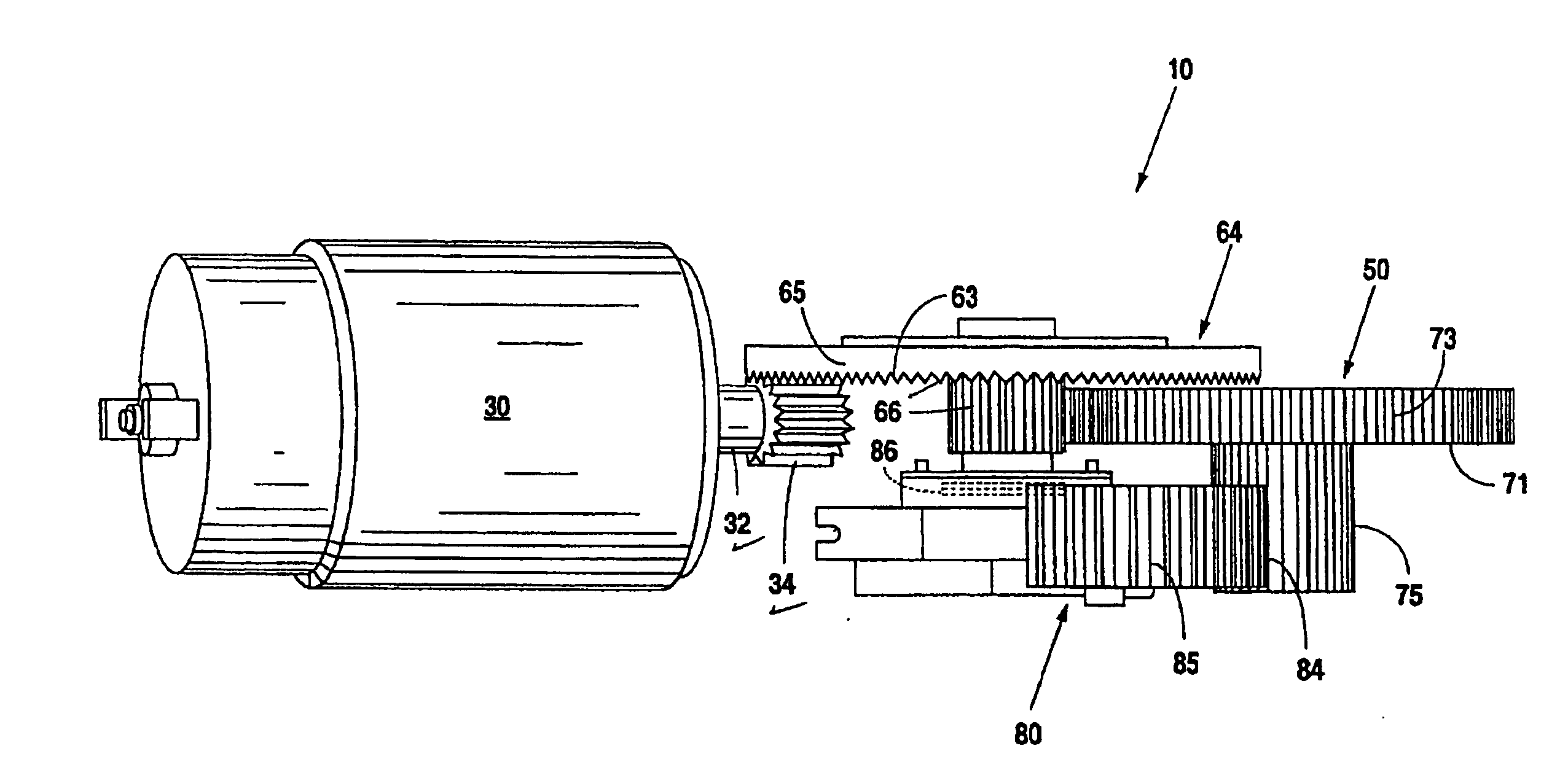
Figure 1 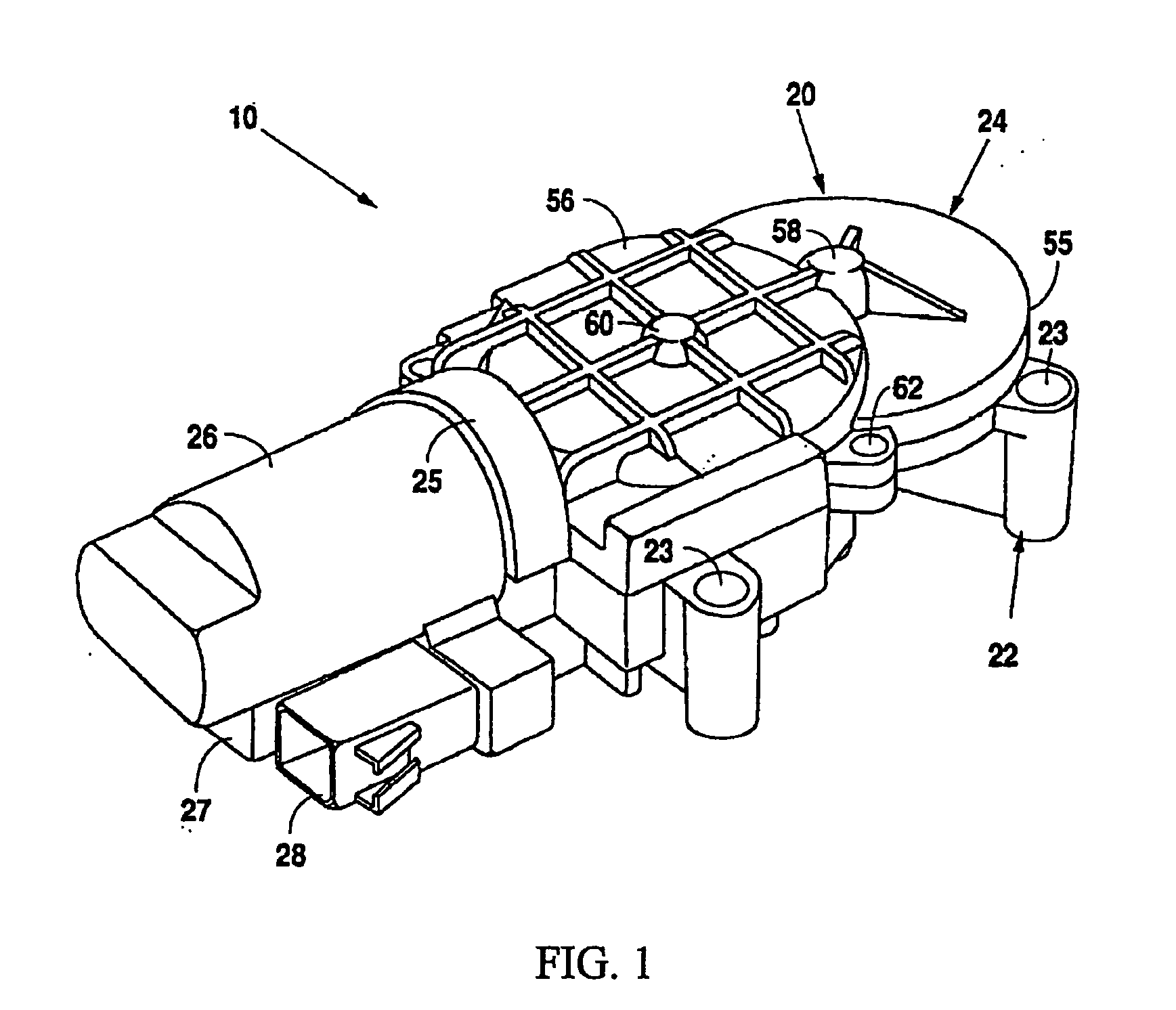
Figure 2 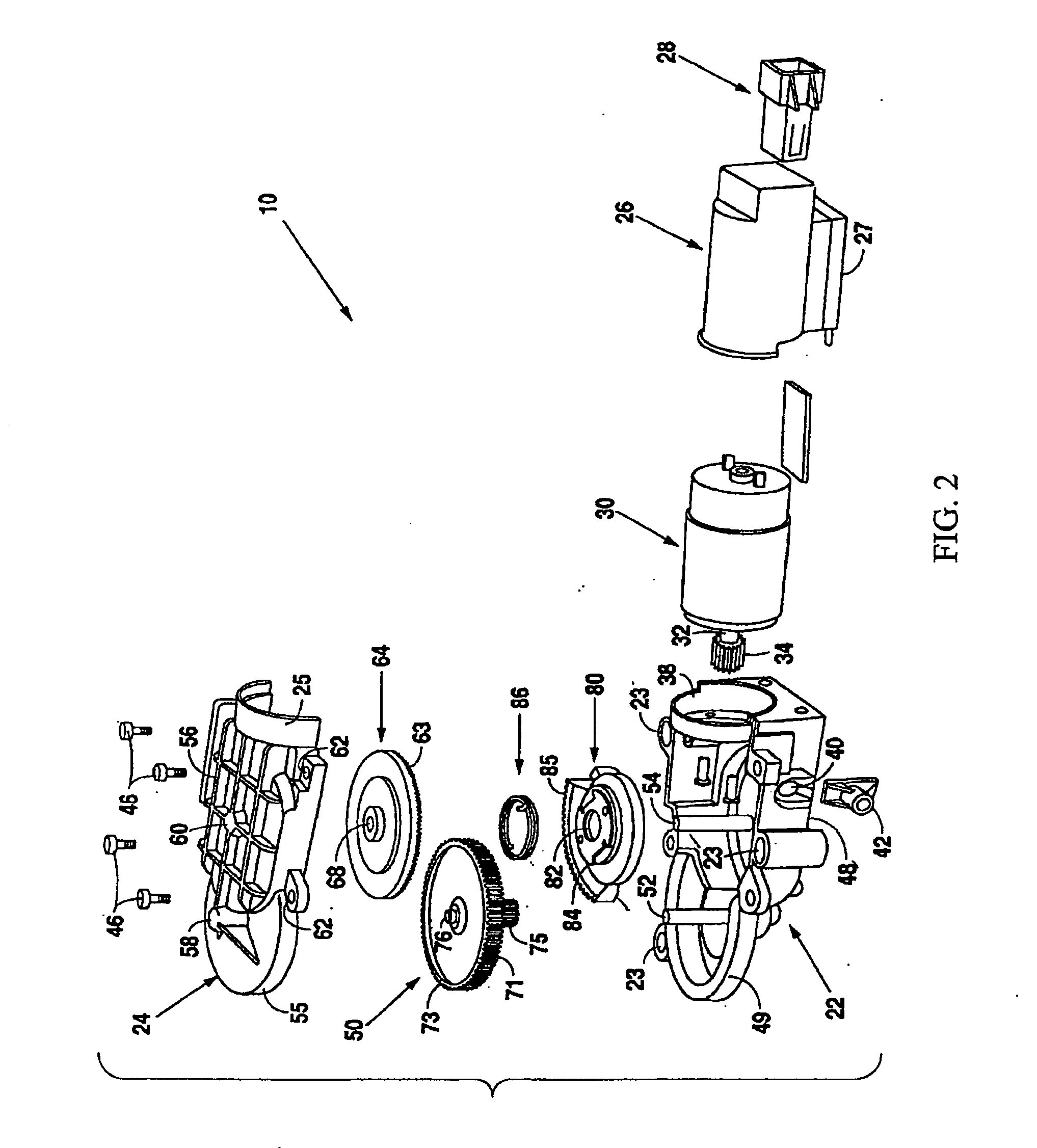
Figure 3
Abstract
Description
[0001] This patent application claims priority from Non-provisional U.S. patent application Ser. No. 11 / 068,579, filed Feb. 28, 2005.FIELD OF THE INVENTION
[0002] The present invention pertains to a system for imparting a force on a cable; more particularly the present invention pertains to a system for imparting a force on a cable using a motor, a gear train, and a pulley. The pulley receives rotating force from the motor through the gear train and, when the pulley rotates, force is placed on the cable. The force causes the cable to move a predetermined distance. BACKGROUND OF THE INVENTION
[0003] Changing consumer demands for passenger vehicles in the United States have encouraged automobile manufacturers to build multiple-use or utility vehicles that are suitable to carry both passengers and / or cargo. One of the keys to the adaptability of such utility vehicles to carry either passengers and / or cargo is the invention of complex seating systems which enable individual seats to fol...
Examples
Embodiment Construction
[0031] The invention will now be described with reference to the drawing figures, in which like reference numerals refer to like parts throughout.
[0032] As will be seen in FIGS. 1, 2, 3, and 4, the electromechanical cable actuator 10 of the present invention is a self-contained device whose size is conducive to allowing its installation in a vehicle. To meet the requirements of automobile manufacturers, the disclosed electromechanical cable actuator 10 must be operable using the available electrical power provided by the electrical system typically found on a passenger vehicle. Specifically, the disclosed electromechanical actuator 10 must operate at a low voltage (specifically, 12 volts in most U.S. passenger vehicles) and have a small current draw (typically, 5 amps maximum). Yet, at the same time, the electromechanical actuator 10 must be able to impart a sufficient level of force on a cable to rapidly operate the mechanical locking portions of various different types of complex...