
Process for preparing clopidogrel
a technology of clopidogrel and clopidogrel, which is applied in the field of process for the preparation of clopidogrel and intermediates, can solve the problems of increasing the processing time cycle, reducing the application range of clopidogrel,
Patent Information
- Authority / Receiving Office
- US · United States
- Patent Type
- Applications(United States)
- Current Assignee / Owner
- Publication Date
- 2007-09-27
- Estimated Expiration
- Not applicable · inactive patent
Smart Images
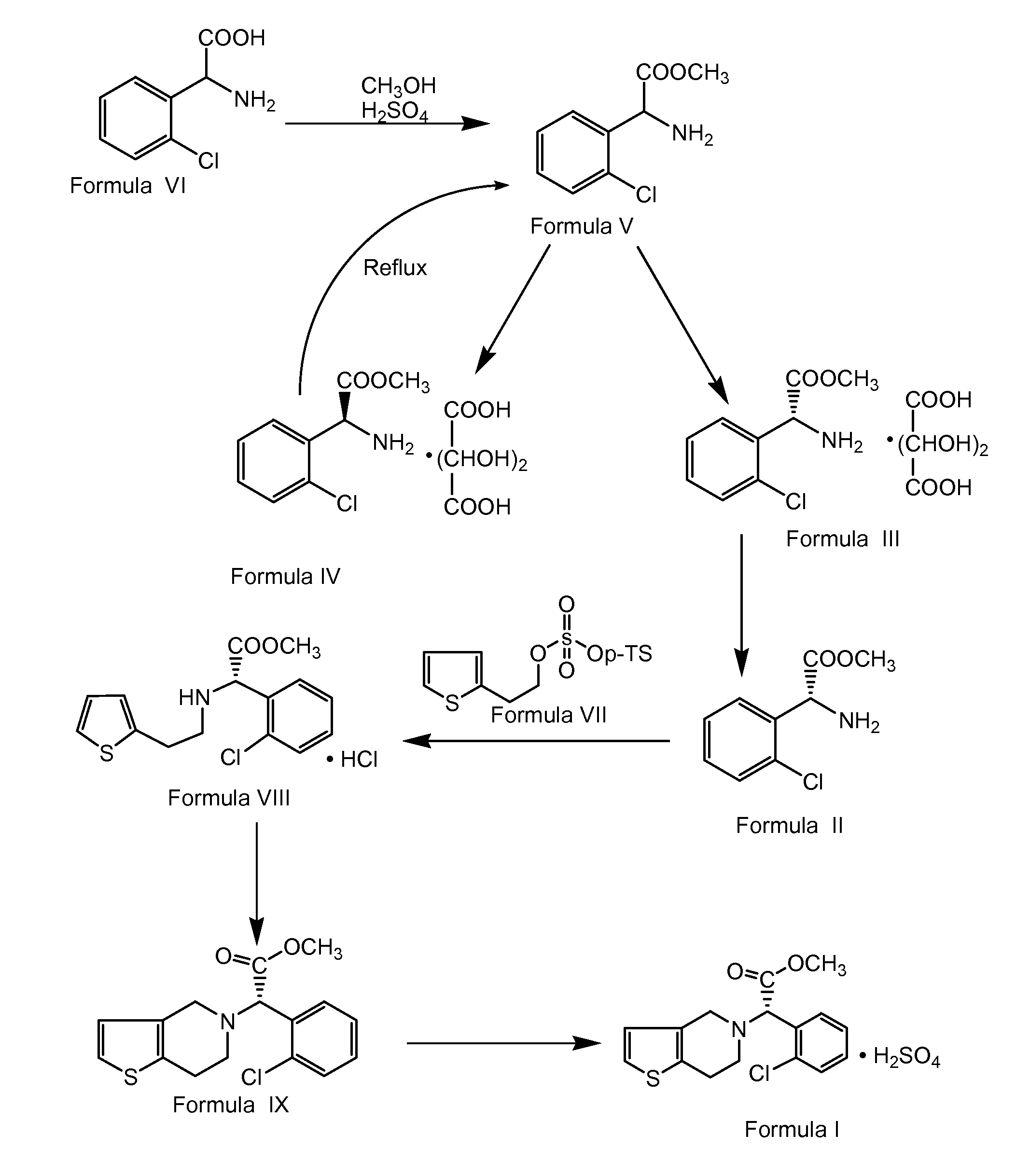
Figure 1 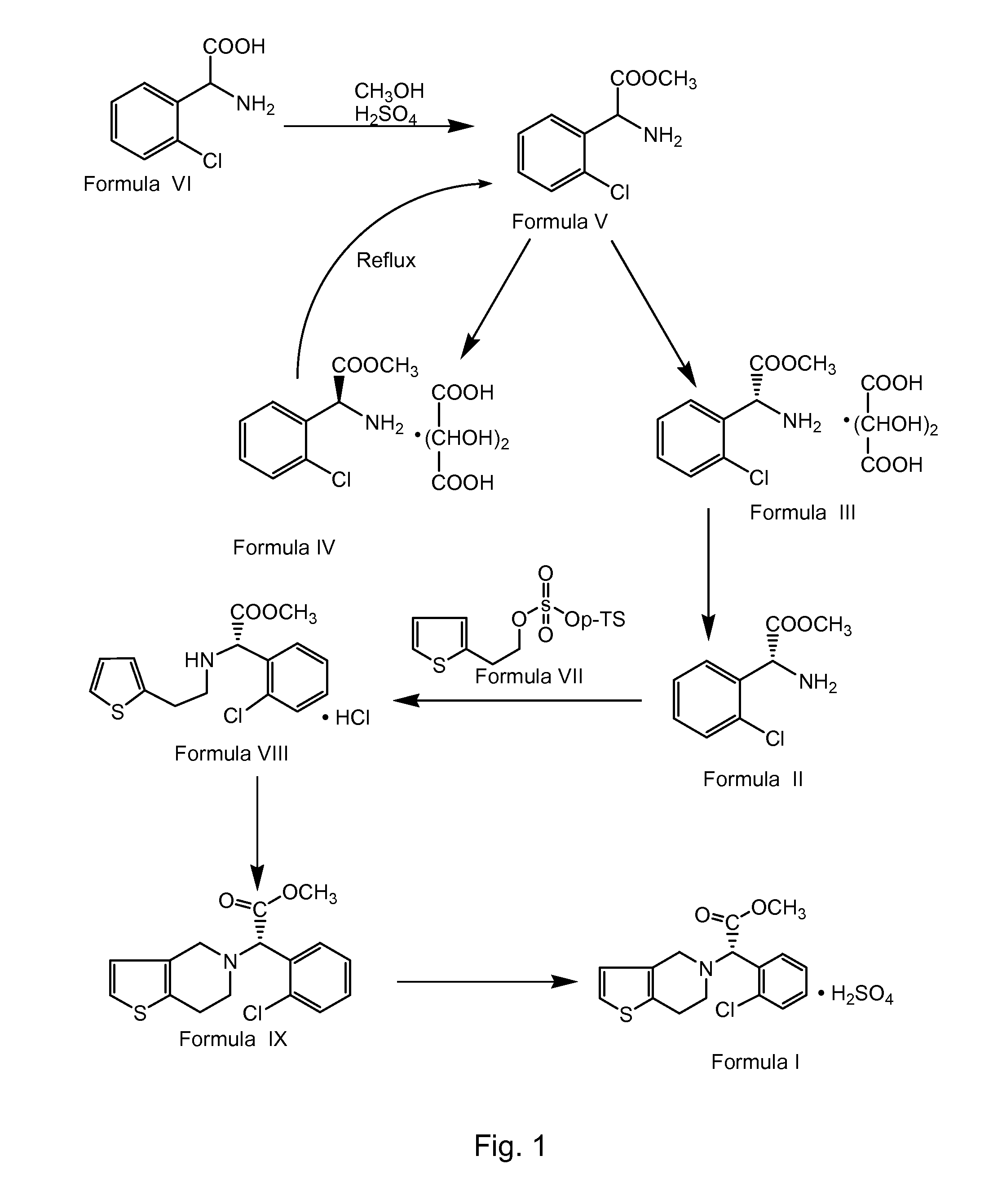
Figure 2 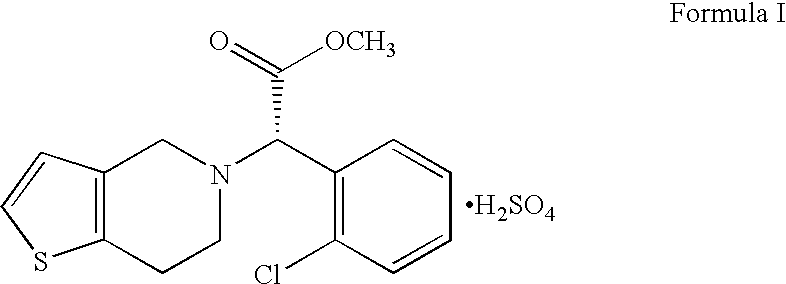
Figure 3
Abstract
Description
INTRODUCTION TO THE INVENTION
[0001] The present invention relates to a process for the preparation of clopidogrel and intermediates thereof. In particular it relates a process for the preparation of methyl-α-amino-(2-chlorophenyl)acetate, an intermediate useful in the preparation of clopidogrel.
[0002] Clopidogrel bisulfate has a chemical name methyl (+)-(S)-α-(2-chlorophenyl)-6,7-dihydrothieno[3,2-c]pyridine-5(4H)-acetate sulfate, and is represented by structural Formula I.
[0003] Clopidogrel is an inhibitor of ADP-induced platelet aggregation, acting by direct inhibition of the binding of adenosine diphosphate (ADP) binding to its receptor and of the subsequent ADP mediated activation of the glycoprotein GPIIb / IIIa complex.
[0004] The drug is currently being marketed in products sold as PLAVIX™ tablets containing about 98 mg clopidogrel bisulfate, which is the equivalent of 75 mg clopidogrel base. PLAVIX works by preventing platelets from sticking together to form clots that would restri...
Examples
example 1
Preparation of α-Amino-(2-Chlorophenyl)-Acetic Acid Methyl Ester (Formula V)
[0091]900 liters of methanol and 180 kg of DL-2-chlorophenylglycine of Formula VI were charged into a clean and dry reactor. 145.3 kg of concentrated sulphuric acid was added slowly to the above reaction mixture below 40° C. over 3.5 hours, followed by heating to about 67.5° C. The resultant reaction mixture was stirred at about 67.5° C. for about 15 hours. After completion of the reaction, the solvent was distilled completely at about below 70° C. under vacuum. 540 liters of water was charged to the residue followed by stirring for about 30 minutes. The mixture was cooled to about 25° C. followed by charging of 360 liters of methylene chloride. The resultant reaction mass was stirred at about 25° C. for about 10 minutes followed by cooling to a temperature of about 10° C. Reaction mass pH was adjusted to about 7.62 by the addition of 360 liters of 30% aqueous sodium carbonate at below 20° C. over about 3.5 ...
example 2
Preparation of L-(+)-Tartaric Acid Salt of α-Amino-(2-Chlorophenyl)Acetic Acid Methyl Ester (Formula III)
[0092]1485 liters of methanol and 140 kg of α-amino-(2-chlorophenyl)acetic acid methyl ester of Formula V were charged into a clean and dry reactor followed by stirring for about 10 minutes. 105 kg of L-(+)-tartaric acid was charged to the above reaction solution at about 25° C. followed by stirring for about 10 minutes. 1.4 kg of S-(+)-isomer of amino-(2-chloro-phenyl)acetic acid methyl ester of Formula III was charged as seeding crystals to the reaction mass followed by stirring for about 10 minutes. The obtained reaction mass was cooled to about 3° C. followed by stirring for about 2.5 hours. The solid that separated was centrifuged followed by subjecting to spin drying for about 30 minutes to afford 117 kg of wet solid title compound. 280 liters of methanol was charged into a clean and dry reactor followed by the charging of the above obtained wet solid. The suspension was st...
example 3
Preparation of 2-Thienylethyl Para-Toluenesulphonate (Formula VII) Using Toluene
[0095]400 liters of toluene and 163.2 kg of para-toluene sulfonyl chloride were charged into a clean and dry reactor followed by cooling to about 5° C. 100 kg of thiophene-2-ethanol was added at about 5° C. over about 20 minutes followed by addition of 130 kg of triethylamine over about 8 hours, 50 minutes. The reaction mixture temperature was raised to about 30° C. followed by stirring for about 12 hours. The reaction mass was filtered through a Nutsche filter and washed with 2×100 liters of toluene. The reaction filtrate was transferred into another reactor followed by washing with 5×200 liters of water. Organic and aqueous layers were separated and the organic layer was distilled completely at about below 70° C. under vacuum to afford 212 kg (yield: 96.37%) of title compound.
[0096]Purity by GC: 95.59%.