
Matrix multiply with reduced bandwidth requirements
a matrix multiplication and memory bandwidth technology, applied in the field of performing matrix multiplication, can solve the problem of limiting the overall computational performance of the processing device for matrix multiplication, and achieve the effect of reducing the memory bandwidth requirements for matrix multiplication, reducing the memory bandwidth requirements for performing operations such as multiplying add, and reducing the memory bandwidth requirements
Patent Information
- Authority / Receiving Office
- US · United States
- Patent Type
- Applications(United States)
- Current Assignee / Owner
- Publication Date
- 2007-11-22
- Estimated Expiration
- Not applicable · inactive patent
Smart Images
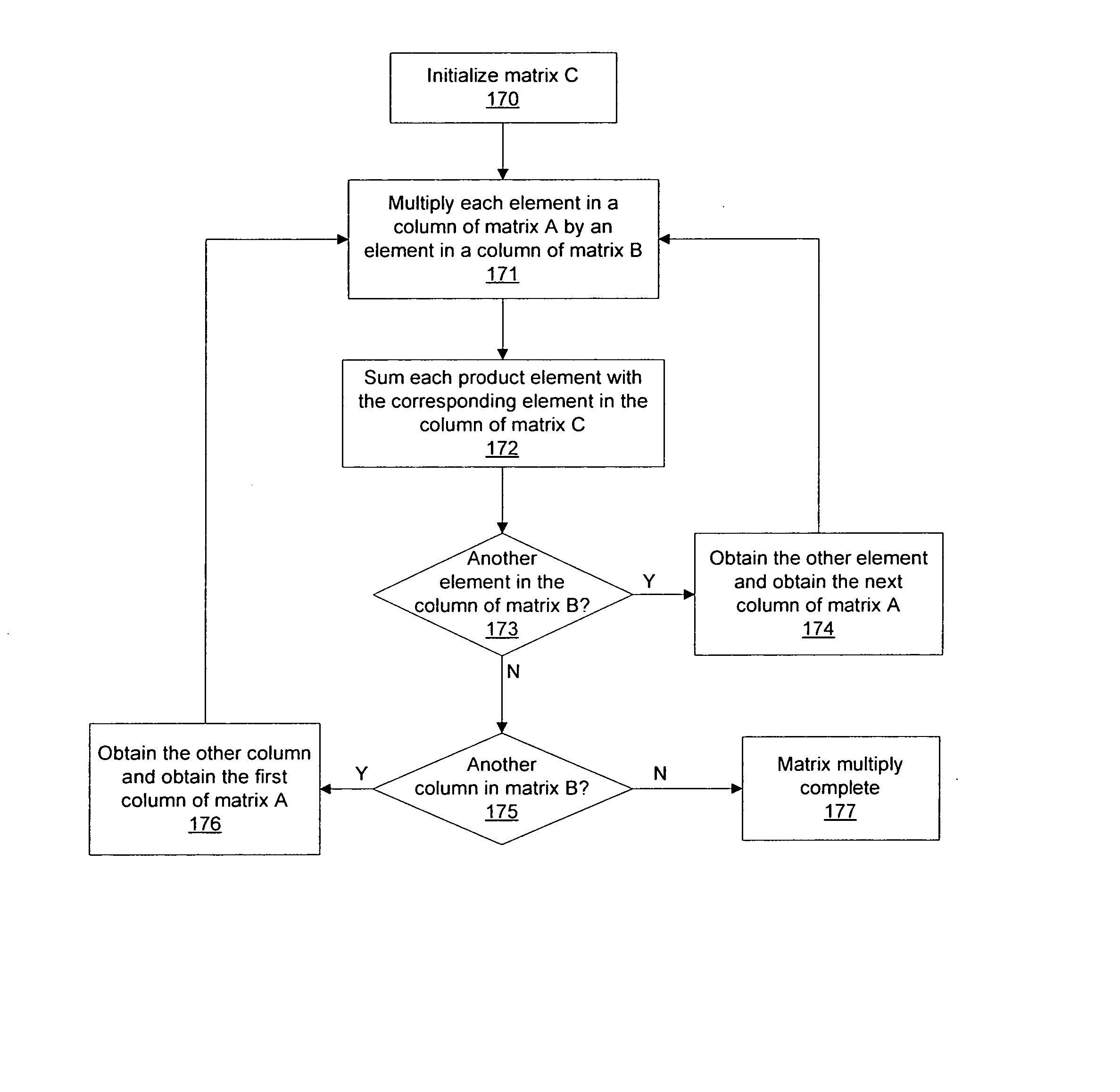
Figure 1 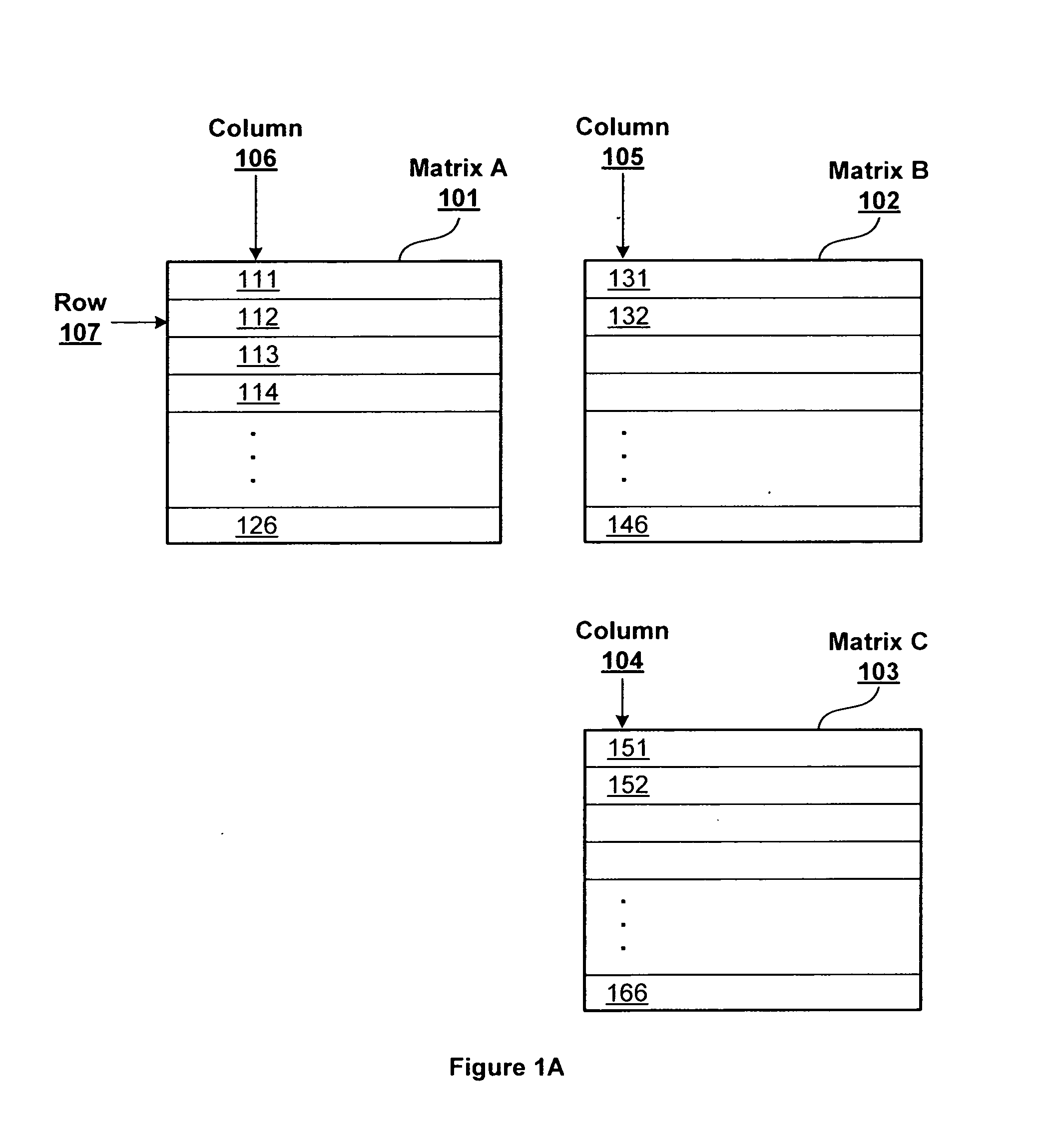
Figure 2 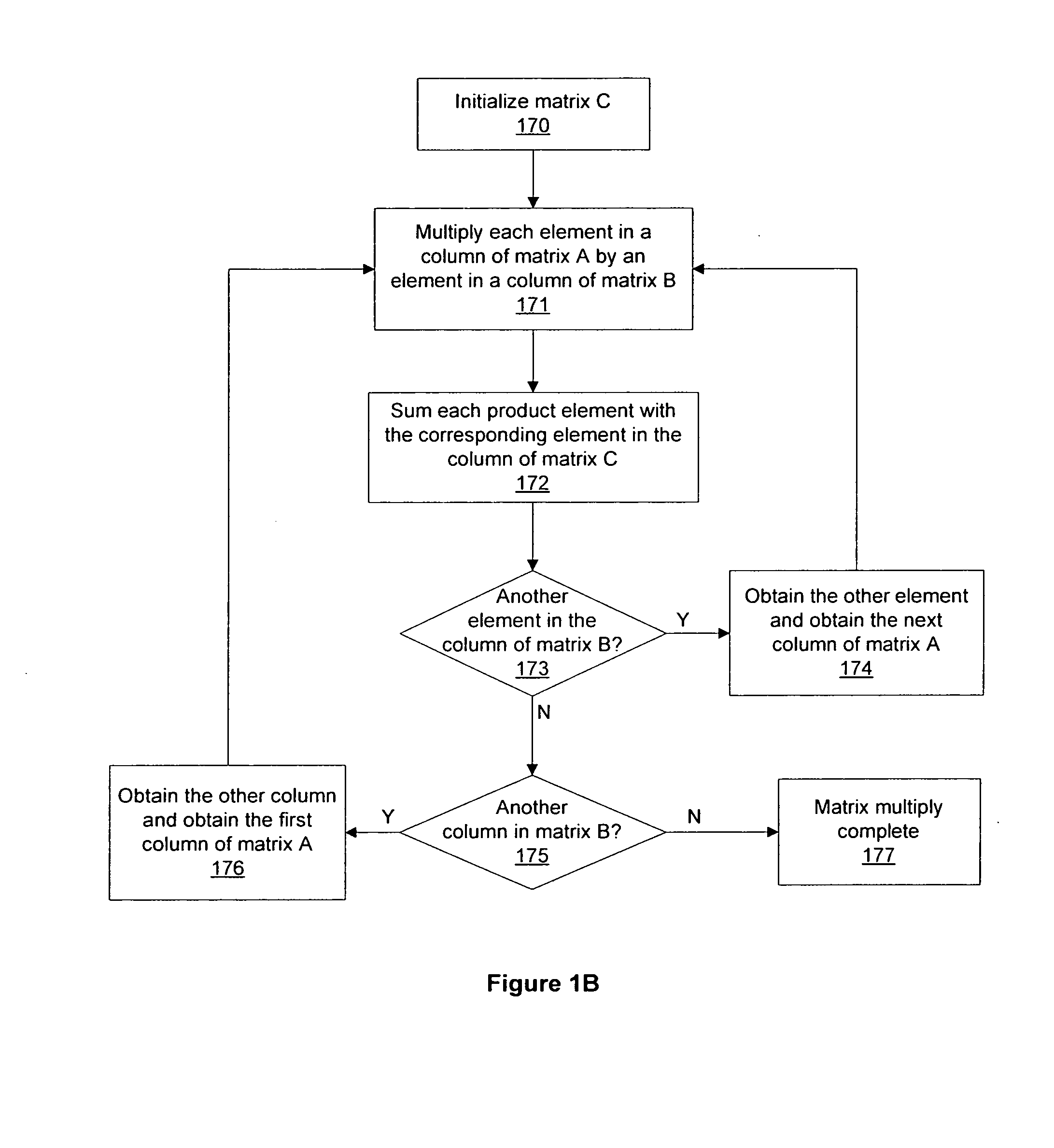
Figure 3
Abstract
Description
BACKGROUND OF THE INVENTION
[0001] 1. Field of the Invention
[0002] Embodiments of the present invention generally relate to performing matrix multiplication using multi-threaded processing or vector processing and, more specifically, to reducing memory bandwidth.
[0003] 2. Description of the Related Art
[0004] Matrix-matrix multiplication is an important building block for many computations in the high-performance computing field. Each multiply-add operation used to perform the matrix-matrix multiplication requires access to two source operands in memory. Therefore, in a multi-threaded processor which executes T threads simultaneously, each of which performs a multiply-add operation, 2T memory operands are required to source the operands for the multiply portion of the operation. Similarly, in a vector processor which executes T data lanes in parallel, such as a T-lane single instruction multiple data (SIMD) vector processor, 2T memory operands are required per vector multiply-add....
Examples
Embodiment Construction
[0015] In the following description, numerous specific details are set forth to provide a more thorough understanding of the present invention. However, it will be apparent to one of skill in the art that the present invention may be practiced without one or more of these specific details. In other instances, well-known features have not been described in order to avoid obscuring the present invention.
[0016]FIG. 1A illustrates a conceptual diagram of a matrix A 101 and a matrix B 102 that are multiplied to produce a matrix C 103, in accordance with one or more aspects of the present invention. Conventionally, a dot product is computed using the elements in a row of matrix A 101 and a column of matrix B 102 to produce an element of a column of matrix C 103. For example the elements in row 107 of matrix A 101 and the elements, e.g., 131, 132, and 146, in column 105 of matrix B 102, are used to produce element 152 in column 104 of matrix C 103. When multiple execution threads are used...