
Method of a fastening a bolt and a nut and their fastening structure
Patent Information
- Authority / Receiving Office
- US · United States
- Current Assignee / Owner
- Publication Date
- 2009-03-12
- Estimated Expiration
- Not applicable · inactive patent
Smart Images
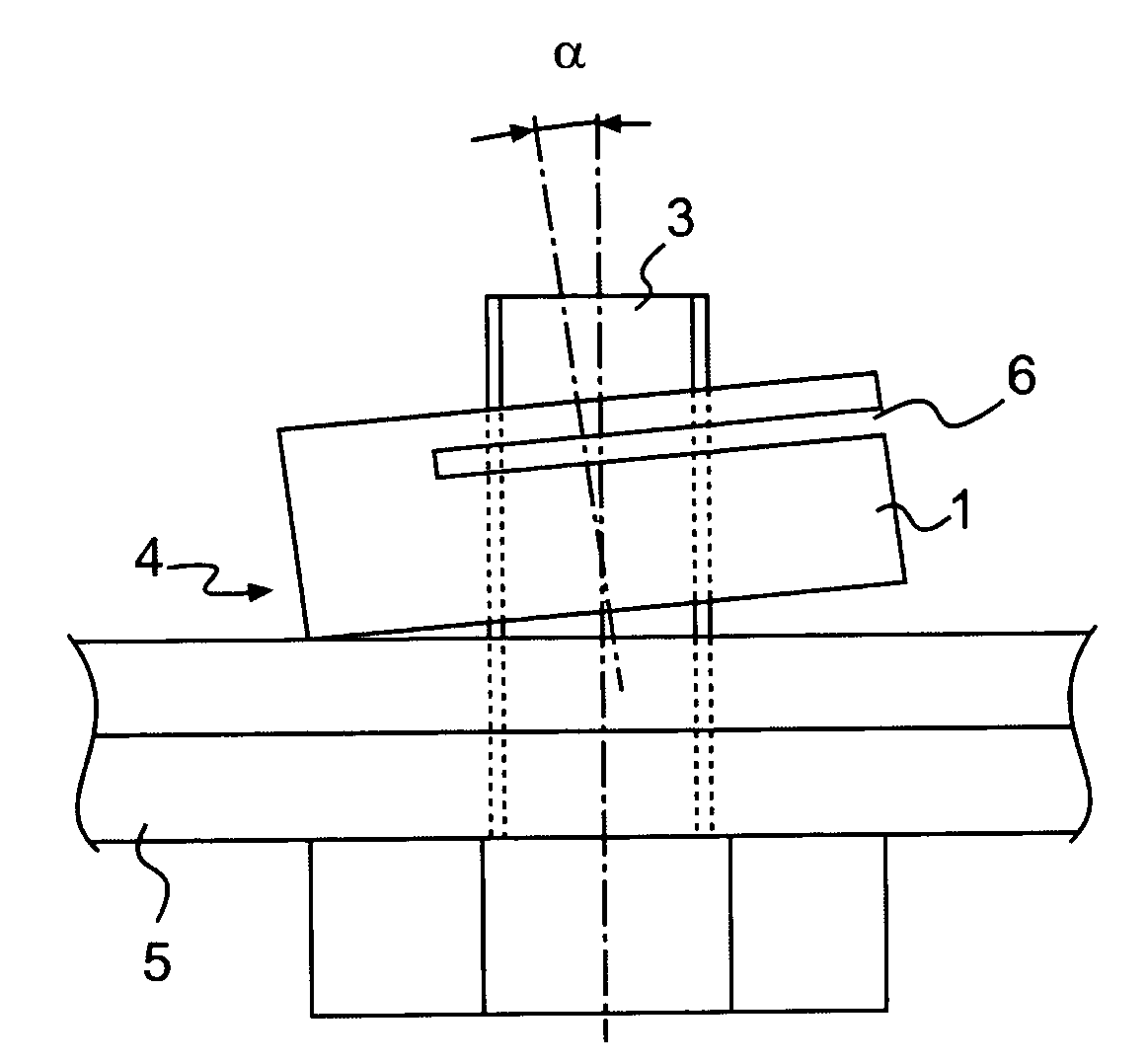
Figure 1 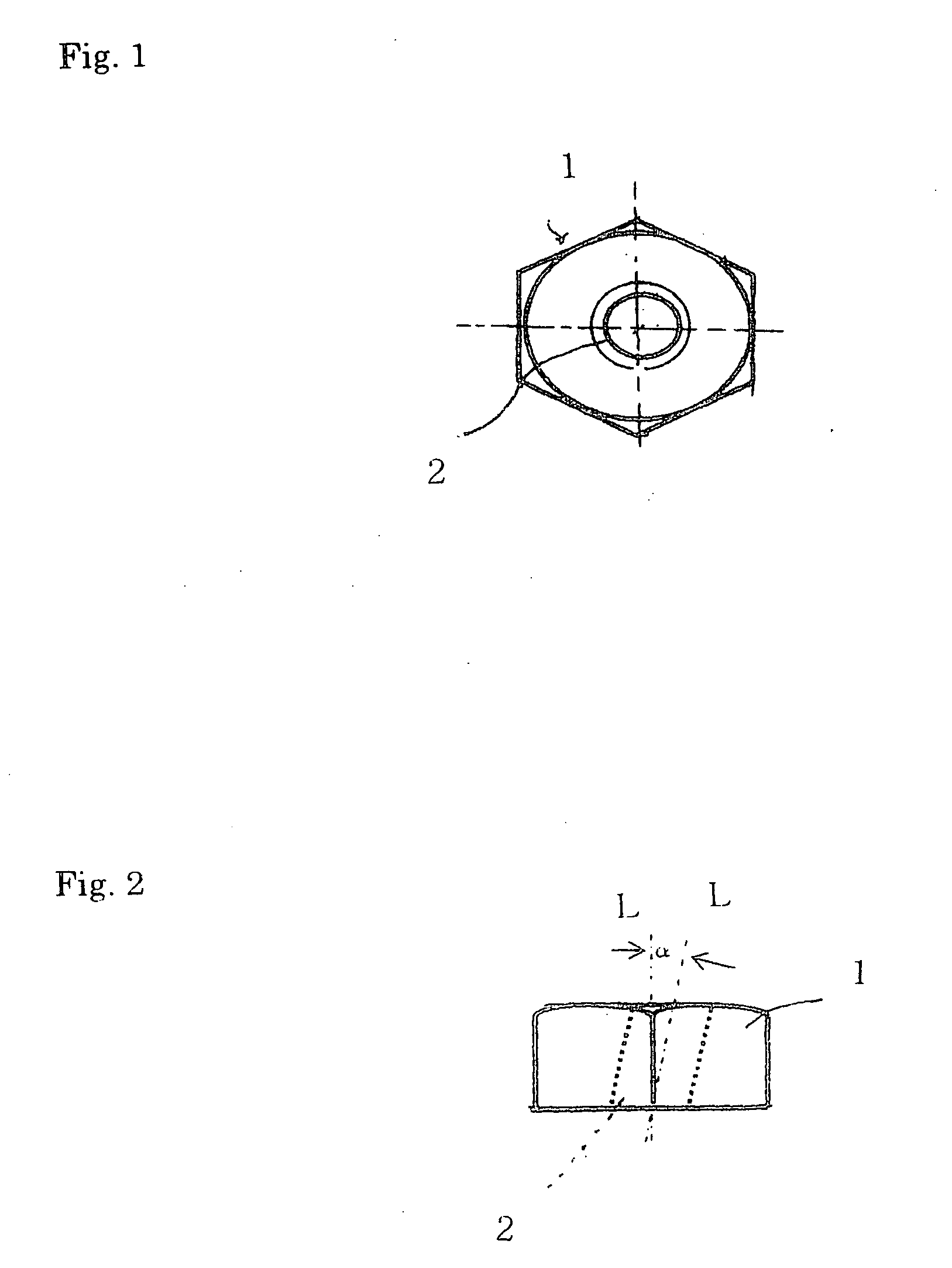
Figure 2 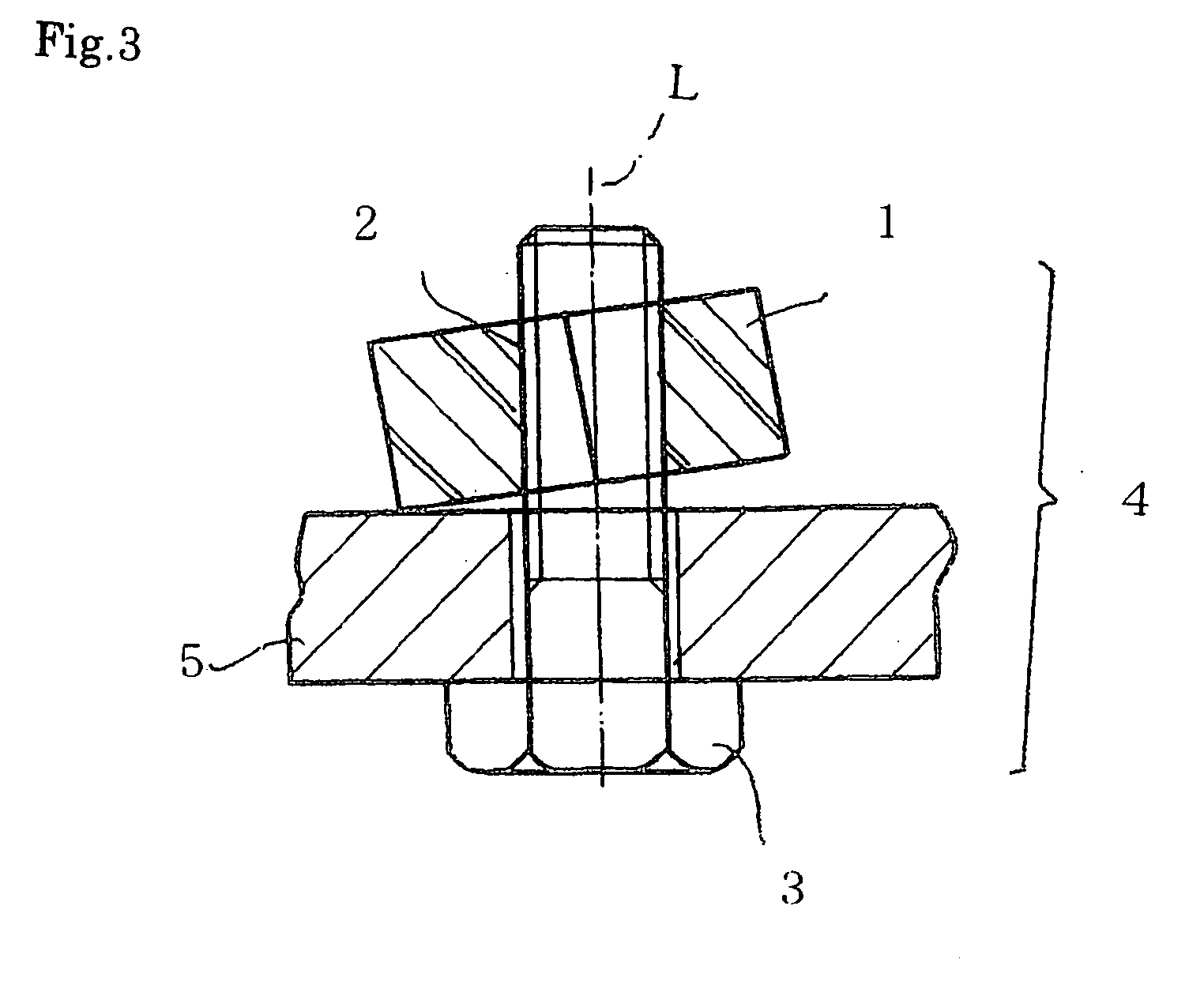
Figure 3
Abstract
Description
BACKGROUND OF THE INVENTION
[0001] 1 Field of the Invention
[0002] The present invention relates to a fastening method of a bolt and a nut without causing, and a structure thereof.
[0003] 2. Description of the Related Art
[0004] Bolted joint, which is one of coupling methods used for assembling structures such as automobiles, a variety of machines, electrical apparatus, and various constructions, is widely used because of easiness of installation and removal, cheap price etc.
[0005] However, when dynamic, external force such as impact, vibration or thermal loading acts on a joint such as a bolt, a nut often start to rotationally return, so that a bolted joint loses fastening power and a fastening portion will not fulfill its function.
[0006] As the result, up to this day in the industry, many troubles still occur due to loosening of a nut and a bolt. As mentioned above, the troubles of loosening of a joint by a bolt and a nut are one of important challenges to be solved in the engineering field...
Examples
Embodiment Construction
[0043]Now, a best mode of the present invention will be described. FIGS. 1, 2 show a screw inclined nut 1 used in this embodiment which has a form equivalent to a usual, flat hexagonal nut and is formed of a single material, in which an inner screw 2 is made to be inclined at an angle α of 1° to 6° against a vertical center line L of this hexagonal nut 1.
[0044]Then, a fastening structure body 4 of the present invention is completed by screwing a usual bolt 3 onto the inner nut 2 of the nut 1 described above.
[0045]In this case, FIG. 3 shows an initial step of installation in which the nut 1 of the present invention is screwed onto the bolt 3 fitted into a member 5 to be attached, and for an article of the embodiment shown in this drawing, the nut 1 whose dimensions were shown in Table 1 was used.
TABLE 1#1Diagonal dimension#2Distance between parallel planes#3Nominal diameter of screw#4Pitch#5Height of nut
[0046]Then, specifically, in the initial step of fastening the nut 1, the incline...