
Conductor of an electric wire, and an insulated wire
Patent Information
- Authority / Receiving Office
- US · United States
- Current Assignee / Owner
- Publication Date
- 2010-01-28
- Estimated Expiration
- Not applicable · inactive patent
Smart Images
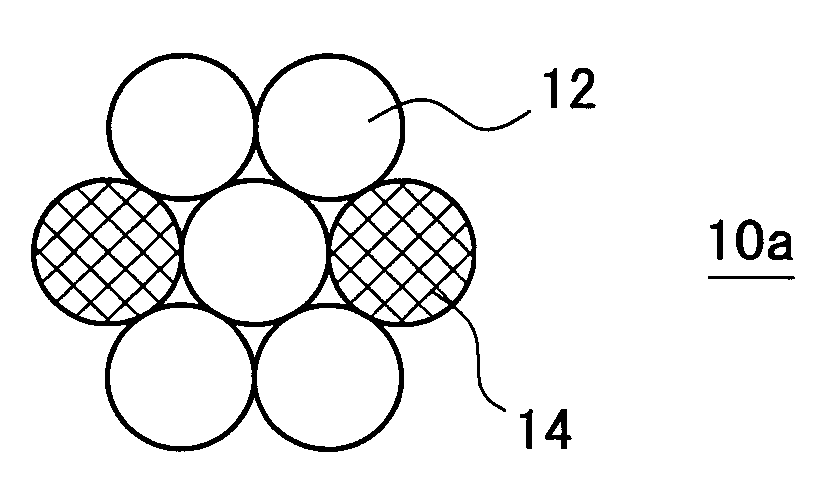
Figure 1 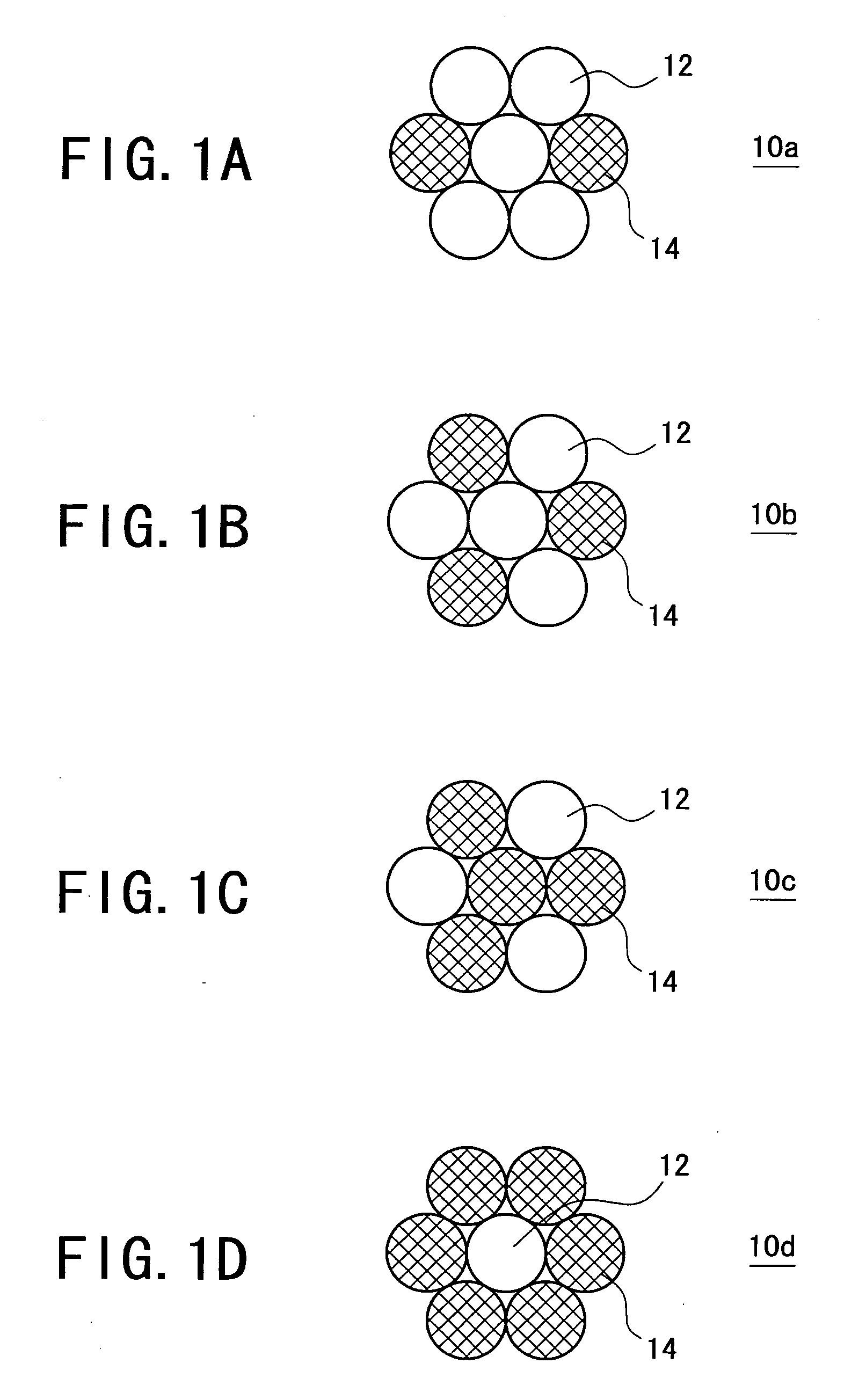
Figure 2 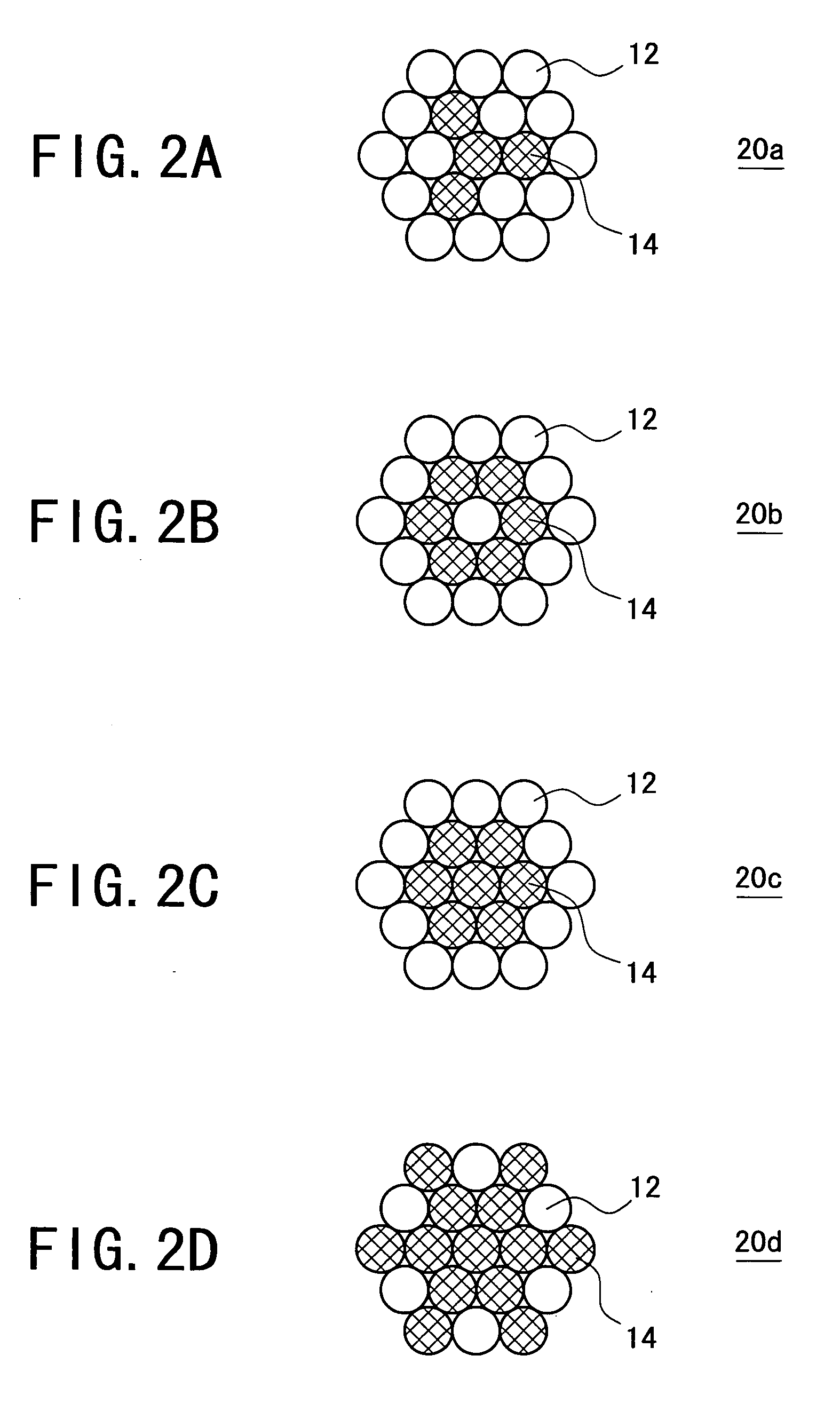
Figure 3
Abstract
Description
TECHNICAL FIELD
[0001] The present invention relates to a conductor of an electric wire, and an insulated wire, and more specifically relates to a conductor of an electric wire, and an insulated wire which are suitably used for an automotive electric wire.BACKGROUND ART
[0002] Conventionally, for an insulated wire used in a vehicle such as an automobile, and electric / electronic equipment, there is widespread use of an insulated wire which includes a conductor prepared by stranding a plurality of elemental wires made from pure copper such as tough pitch copper.
[0003] Recently, the performance of a vehicle such as an automobile, and an electric / electronic equipment has been rapidly improved, increasing the number of various control circuits and other components used therein, and accompanied with this increase, the number of insulated wires used therein is also increasing.
[0004] In the field of automobiles, weight reduction of a vehicle is desired from the viewpoint of energy saving. Hence, ...
Examples
example 1
[0076]A conductor according to Example 1 was prepared by stranding three copper wires for electric purpose and four Cu—Ni—Si alloy wires, and subjecting the stranded wires to heat treatment for thermal refining at 440° C. for 8 hours. The prepared conductor was measured for tensile strength, breaking elongation, and electrical conductivity by measuring methods to be described below. In addition, corrosion resistance of the conductor was evaluated based on a standard electrode potential difference between the materials from which the conductor was made, and also recyclability of the conductor was evaluated based on the materials from which the conductor was made. Results thereof are shown in Table 1.
example 2
[0077]A conductor according to Example 2 was prepared by stranding two copper wires for electric purpose and five Cu—Ni—Si alloy wires, and subjecting the stranded wires to heat treatment for thermal refining at 400° C. for 8 hours. Measurement and evaluation of the conductor were made in the same manner as Example 1. Results thereof are shown in Table 1.
example 3
[0078]A conductor according to Example 3 was prepared by stranding thirteen copper wires for electric purpose and six Cu—Ni—Si alloy wires, and subjecting the stranded wires to heat treatment for thermal refining at 380° C. for 8 hours. Measurement and evaluation of the conductor were made in the same manner as Example 1. Results thereof are shown in Table 1.