
Nasopharyngeal cancer malignancy biomarker and method thereof
a nasopharyngeal cancer and biomarker technology, applied in the field of nasopharyngeal cancer malignancy biomarker and hnrnp kbased biomarker, can solve the problem of negatively correlated hnrnp k expression with the overall survival rate, and achieve the effect of predicting the malignancy of nasopharyngeal cancer, preventing the spread of nasopharyngeal
Patent Information
- Authority / Receiving Office
- US · United States
- Patent Type
- Applications(United States)
- Current Assignee / Owner
- Publication Date
- 2010-12-16
- Estimated Expiration
- Not applicable · inactive patent
Smart Images
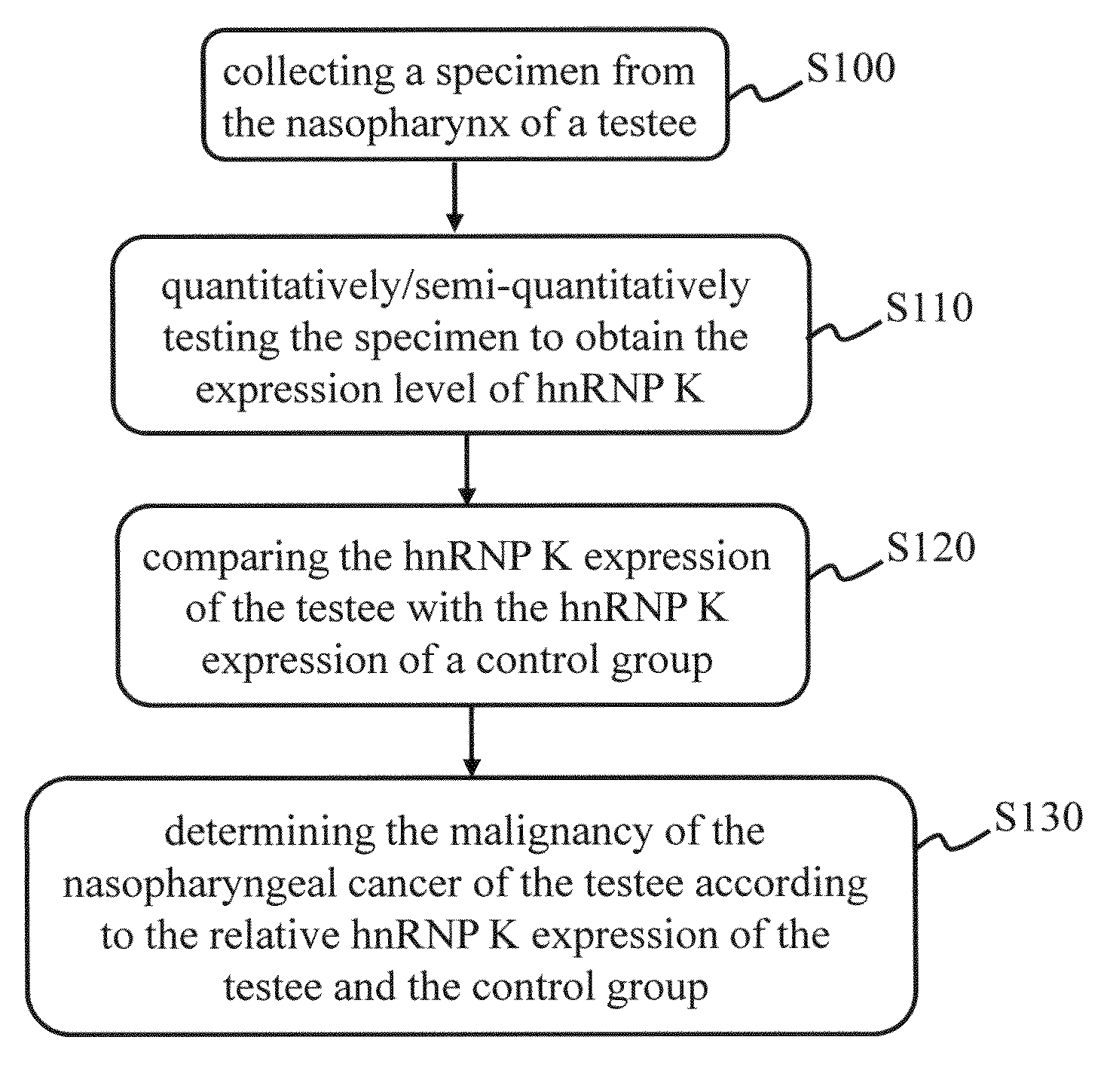
Figure 1 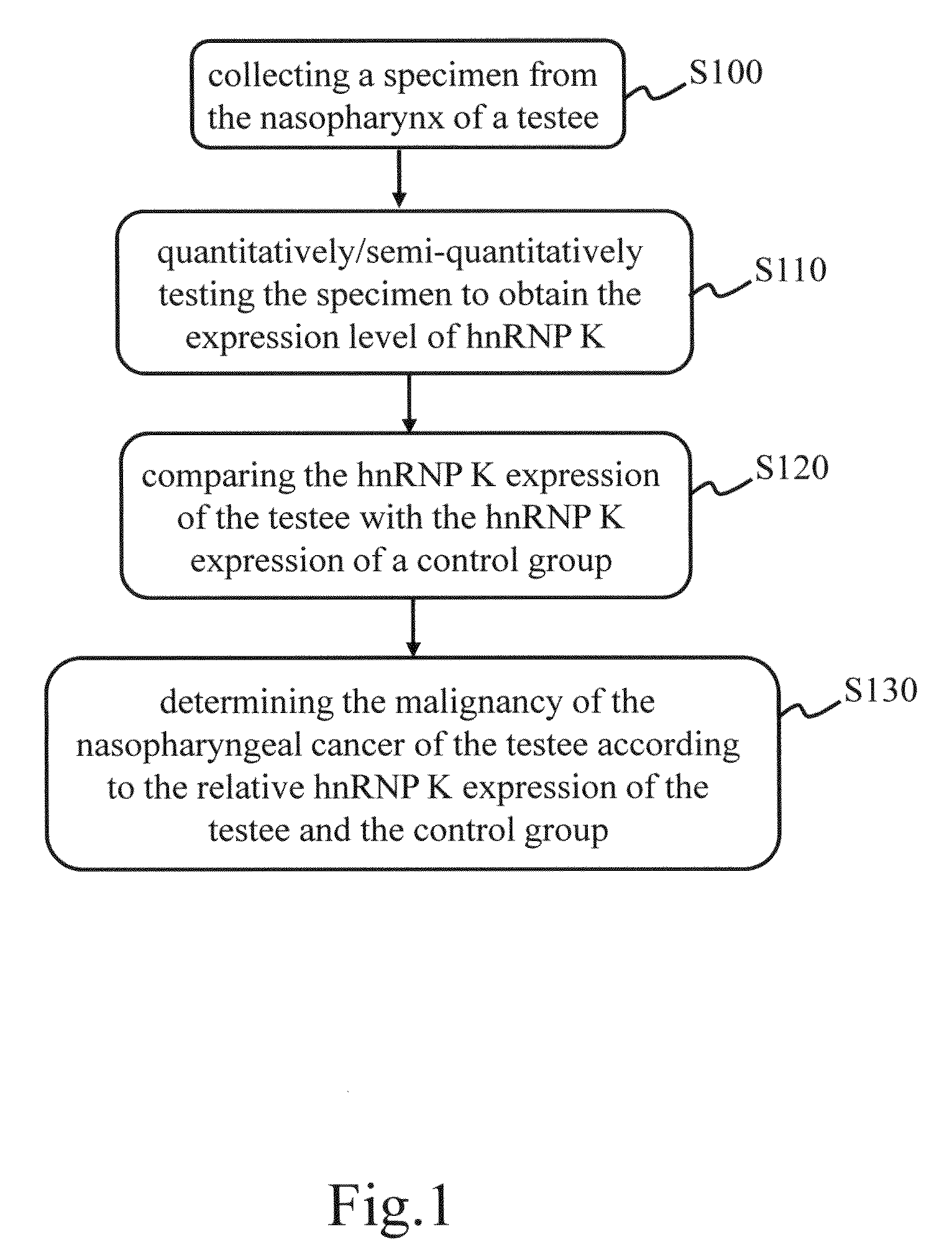
Figure 2 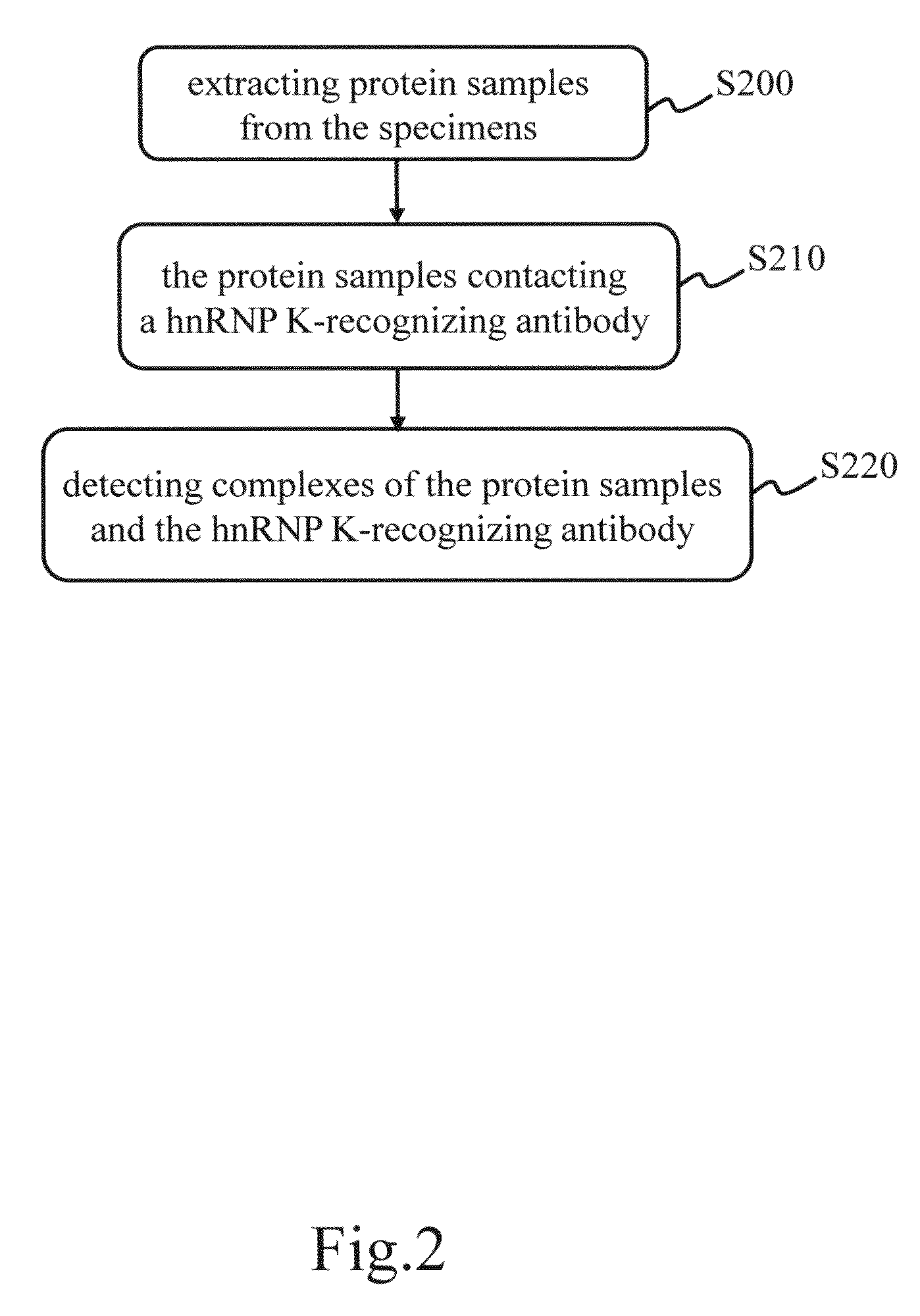
Figure 3
Abstract
Description
FIELD OF THE INVENTION
[0001] The present invention relates to a technology for testing cancer malignancy, particularly to an hnRNP K-based biomarker for testing the malignancy of nasopharyngeal cancer and a method thereof.DESCRIPTION OF THE RELATED ART
[0002] Heterogeneous nuclear ribonucleoprotein K (hnRNP K) is a member of the ribonucleoprotein family. HnRNP K can directly interact with DNA and RNA via the K homology domain and can regulate gene expression in different aspects, including transcription, translation and ligation. HnRNP K may induce canceration via regulating the expression of oncogenes c-myc and eIF4E. HnRNP K can respectively join with the internal ribosome entry site of c-myc and the polypyrimidine of the promoter of eIF4E to induce the expression of c-myc and eIF4E. As hnRNP K normally exists in the nucleus, it cannot undertake regulation and translation unless it transfers to cytoplasm. A recent paper pointed out that hnRNP K may cause the metastasis of fibrosarcom...
Examples
Embodiment Construction
[0012]The present invention addresses the malignancy test of nasopharyngeal cancer. As hnRNP K is highly expressed in nasopharyngeal cancer and clinically correlated with nasopharyngeal cancer, the present invention adopts hnRNP K as a biomarker of nasopharyngeal cancer. Below, a clinical embodiment is used to demonstrate the principle of the present invention and prove the efficacy of the present invention.
[0013]Related experiments proved that hnRNP K and the target thereof—thymidine phosphorylase (TP) are over-expressed in nasopharyngeal cancer. The abnormal hnRNP K expression and TP over-expression in cytoplasm correlates with the shorter overall survival period and the distant metastasis. A multivariate analysis shows that hnRNP K and TP in cytoplasm is the independent factors for prognosis.
[0014]Therefore, the present invention adopts hnRNP K as a biomarker of nasopharyngeal cancer to accurately and effectively test the malignancy of nasopharyngeal cancer. Refer to FIG. 1 a flo...