
Methods and compositions for preventing and relieving muscle cramps and for recovery from neuromuscular irritability and fatigue following exercise
a neuromuscular irritability and fatigue recovery technology, applied in the direction of drug compositions, biocides, dispersed delivery, etc., can solve the problems of muscle cramps inability to tolerate exercise, etc., and few treatments and therapeutic regimens are available to alleviate this neuromuscular irritability
Patent Information
- Authority / Receiving Office
- US · United States
- Current Assignee / Owner
- Publication Date
- 2012-02-02
- Estimated Expiration
- Not applicable · inactive patent
Smart Images
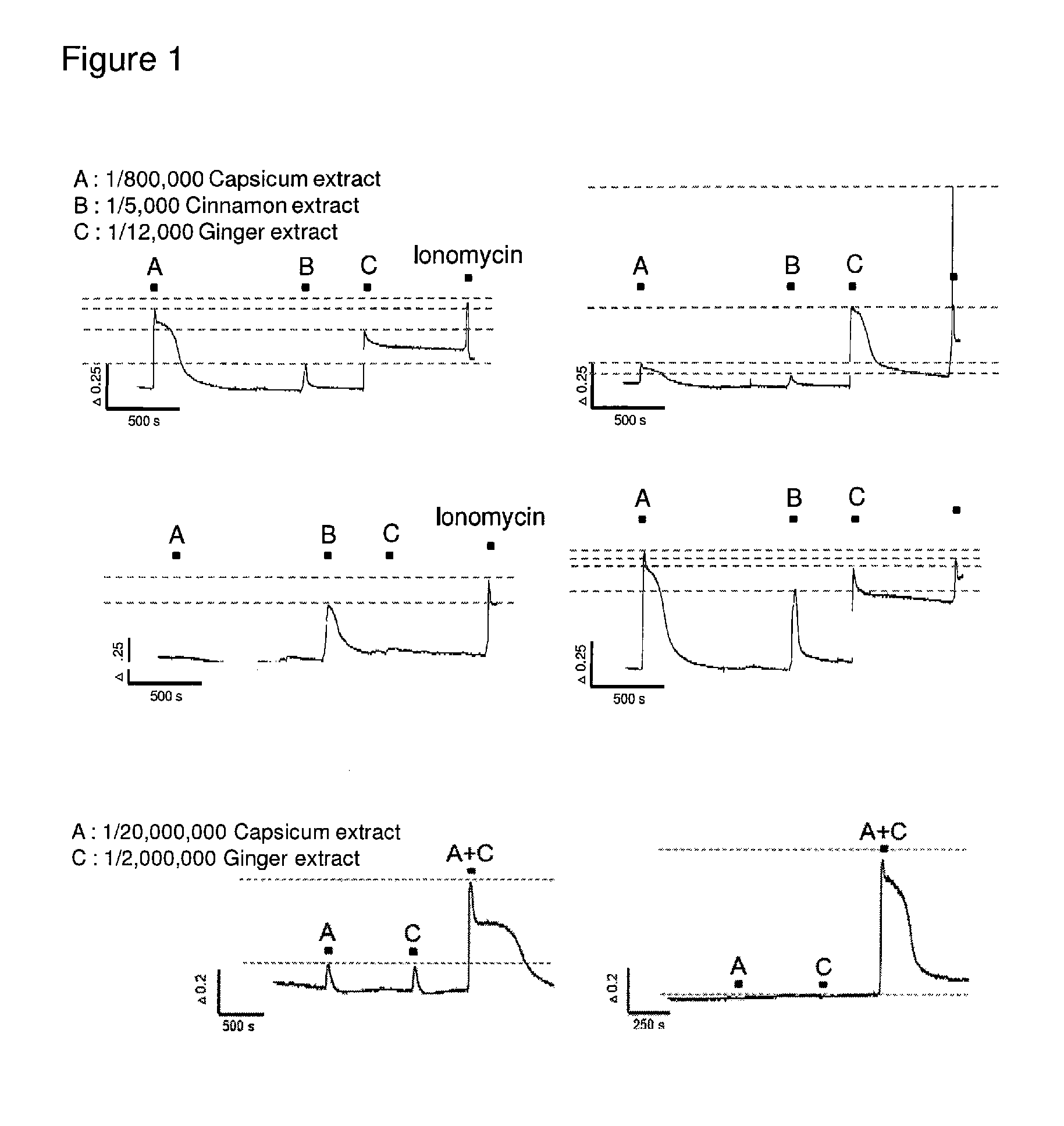
Figure 1 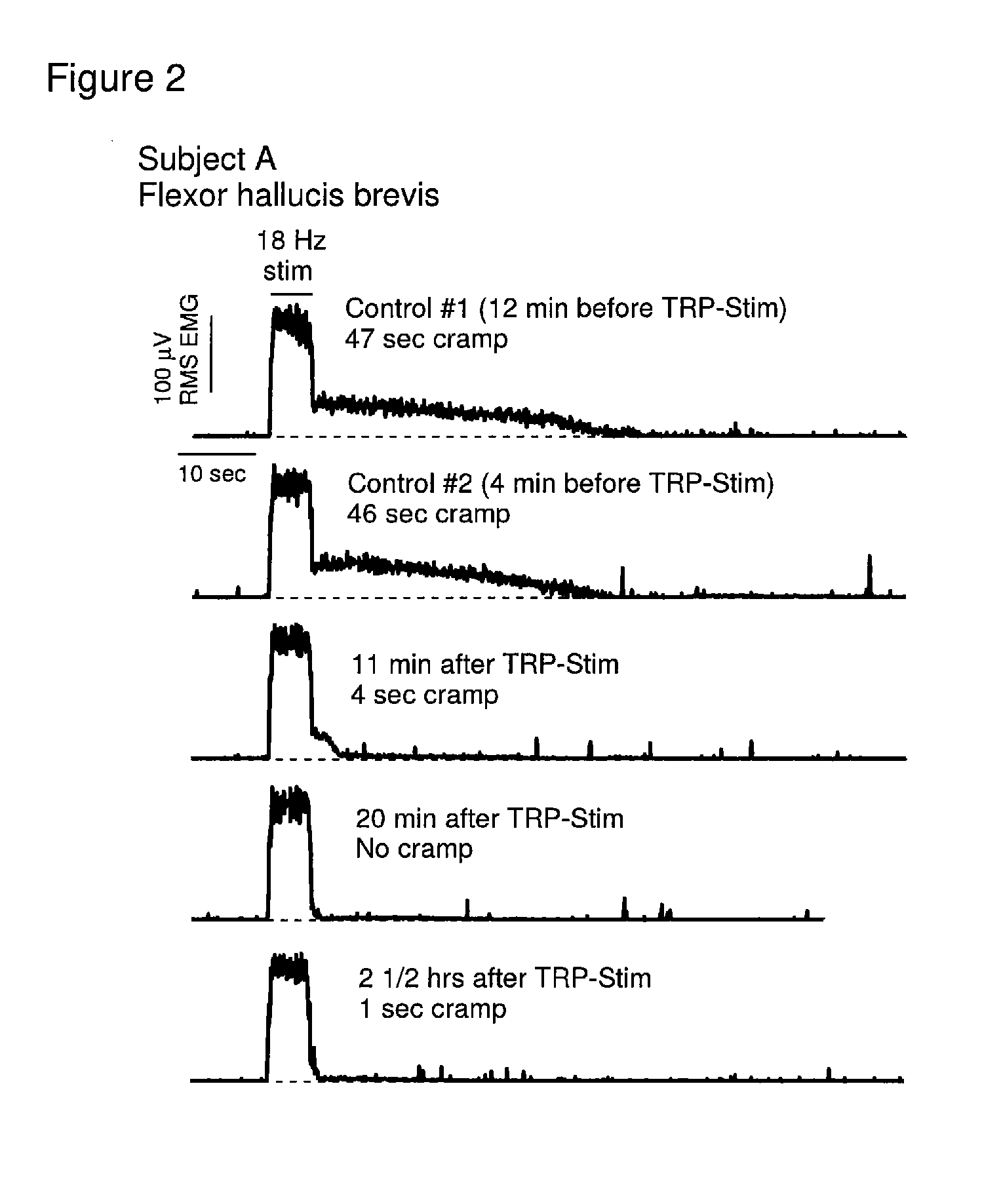
Figure 2 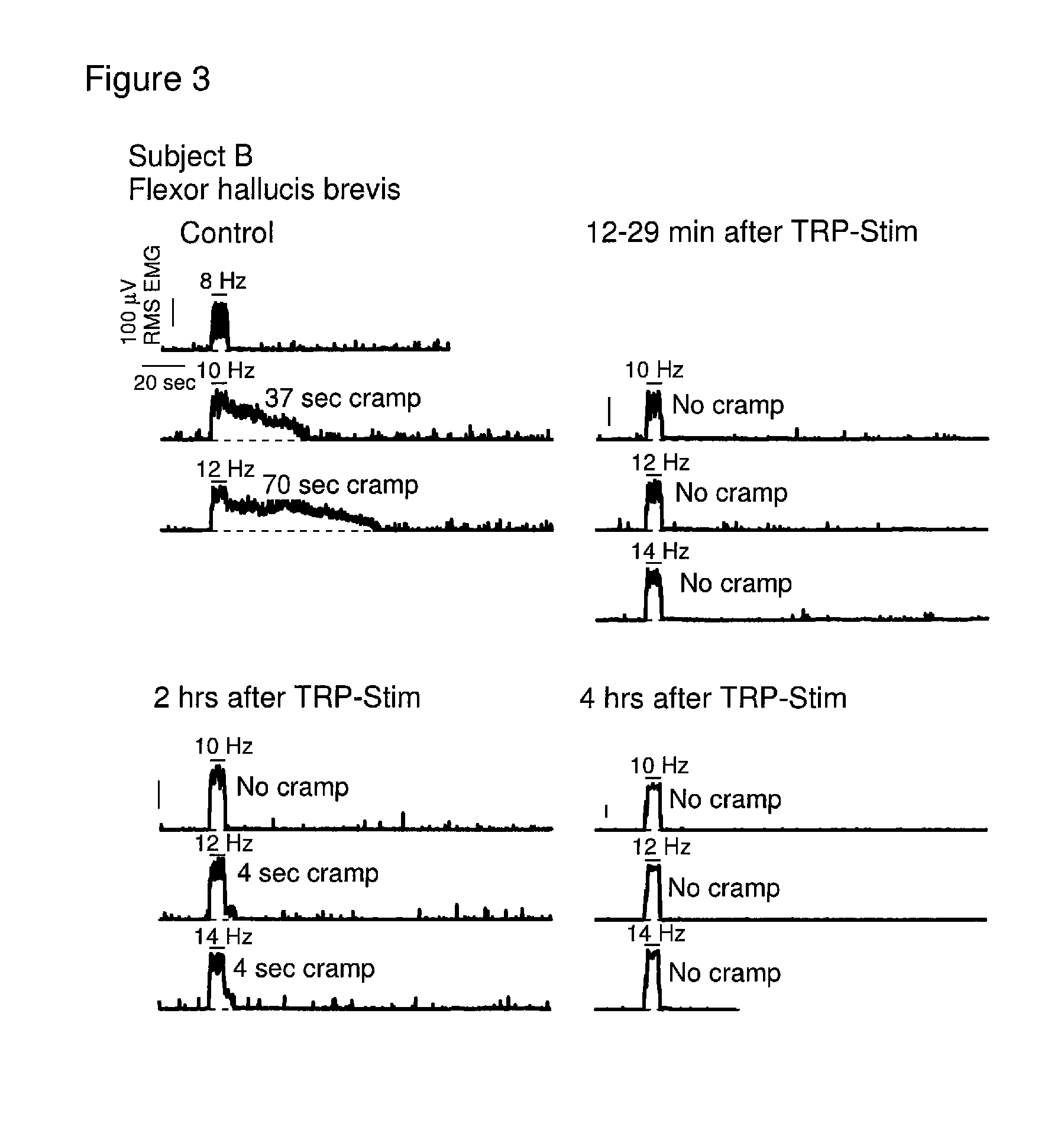
Figure 3
Abstract
Description
CROSS-REFERENCE TO RELATED APPLICATIONS
[0001] This application claims benefit of U.S. Provisional Application No. 61 / 368,059, filed on Jul. 27, 2010, which is hereby incorporated by reference in its entirety.BACKGROUND OF THE INVENTION
[0002] In general, the invention relates to methods and compositions for preventing, treating or ameliorating muscle cramping and / or accelerating nerve-muscle recovery from exercise fatigue.
[0003] Muscle cramps, the involuntary and forceful contraction of muscles, are often painful and can last for a prolonged period of time. Muscle contractions and cramping can be triggered by exercise and can also occur spontaneously (e.g., nocturnal or night cramps). The underlying physiological mechanism of muscle cramping is unknown. Recent understanding has led to the hypothesis that cramping results from excessive electrical firing of the neurons (motor neurons) that project from the spinal cord and trigger contraction of skeletal muscles (Schwellnus, Br J Sports M...
Examples
example 1
Activation of Rat Sensory Neurons by Capsicum, Cinnamon, and Ginger Extracts
[0129]FIG. 1 shows graphs from six sensory neurons isolated from the trigeminal ganglia of rats, illustrating their activation by the capsicum, cinnamon, and ginger extracts that were used in the human experiments. Activation was quantified as an increase in intracellular free calcium, monitored by a fluorescent calcium indicator. Extracts were diluted into normal extracellular saline (Tyrode's solution) and were tested at lower concentrations than used in the beverage, taking account that concentrations present at nerve endings in mouth, esophagus, or stomach are expected to be lower than the beverage as a result of dilution into mucosa and interstitial fluid. All three extracts were capable of activating individual neurons when applied at concentrations 50-fold to 15.000-fold lower than used in the beverage. Each trace shows a record from a different neuron, illustrating that some neurons could be activate...
example 2
Effect of TRP-Stim Administration to Human Subjects
[0130]The in vitro data of Example 1 show that each individual component of the TRP-Stim solution by itself was capable of activating sensory neurons. Consistent with this, human experiments showed the efficacy of a beverage with capsicum alone (ClearCap capsicum at 1 / 2000 dilution) to inhibit cramping, achieved within 5 minutes.
[0131]The in vitro data also show that combinations of channel activators can not only show the desired activity, but can also provide synergistic effects. The following experiments, illustrated by FIGS. 2-8, show cramp relief by the administration of a uniform beverage composition designed for maximal TRP stimulation containing capsicum, cinnamon extract, and ginger extract, and where the physiological effects were monitored by EMG recording.
[0132]FIGS. 2-8 are graphs of EMG recordings of muscle contractions in seven human volunteers (four females and three males) that show the efficacy in preventing and tr...