

Isolated nucleic acid molecule, genic construct, vector, transgenic cell, method of obtaining a cell and a transgenic plant, isolated and purified polypeptide, biodegradable pesticide composition, method of controlling a pest, method of obtaining transgenic strains resistant to an insect pest
a technology of nucleic acid molecule and nucleic acid atom, applied in the field of controlling insect pests, can solve the problems of direct prejudice to cotton fiber commercialization, insect represents potentially major damage, and vulnerability to pests
Patent Information
- Authority / Receiving Office
- US · United States
- Patent Type
- Applications(United States)
- Current Assignee / Owner
- Publication Date
- 2012-10-25
Smart Images
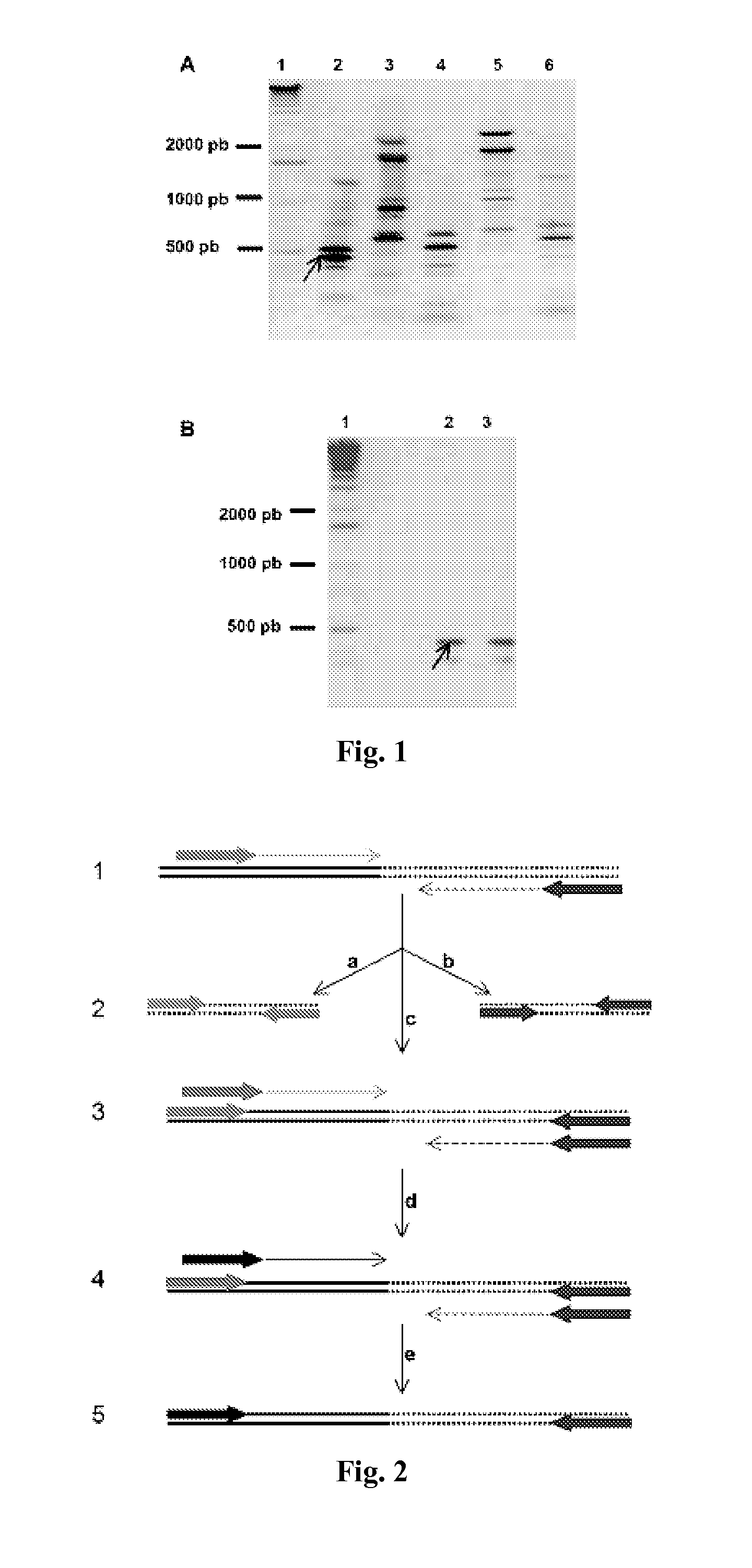
Figure 1 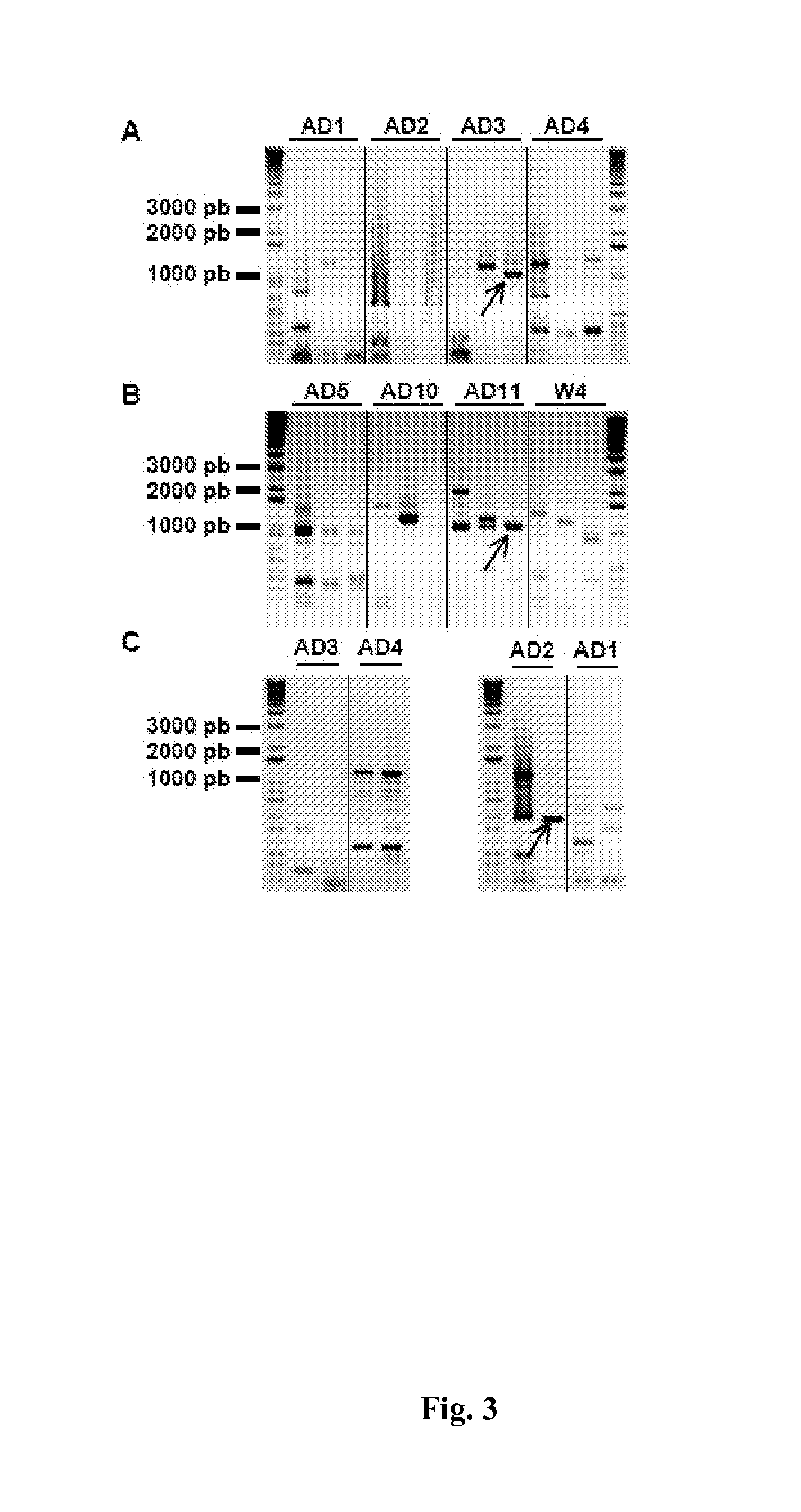
Figure 2 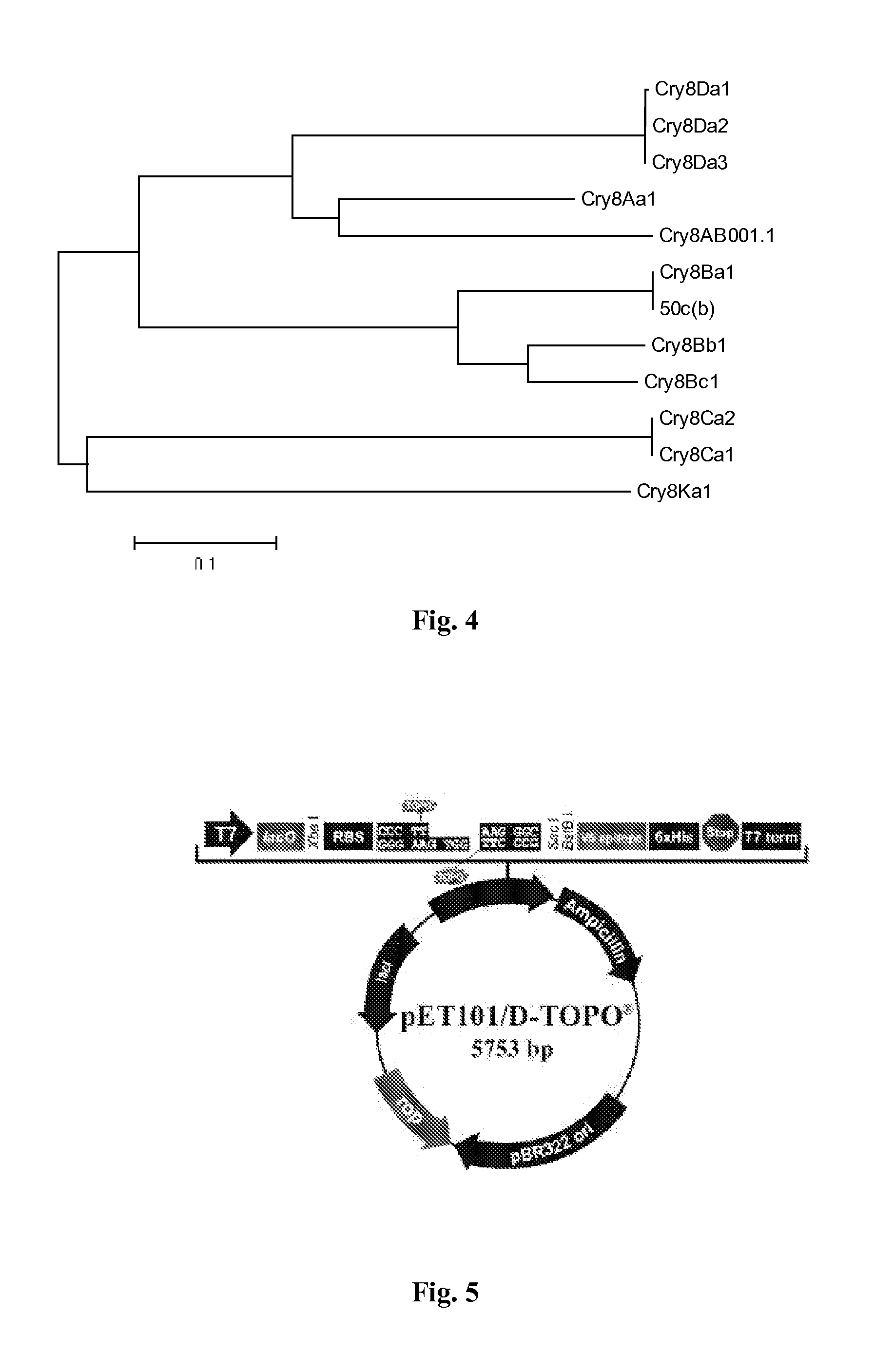
Figure 3
Abstract
Description
FIELD OF THE INVENTION
[0001] The following specification of the patent of invention refers to the field of controlling insect-pests which attack crops, using methods and compositions that comprise δ-endotoxins derived from the microorganism Bacillus thuringiensis. BACKGROUND OF THE ART
[0002] Of all the domestic and cultivatable plants, cotton is one of the most attacked by diseases and insect-pests, besides being highly sensitive to the occurrence imposed by weed plants (Beltrão, E. M., Souza, J. G. O. agronegócio do algodão no Brasil. Embrapa: Brasília, v. 01, 1999). Among the main insect-pests comes the boll weevil, Anthonomus grandis (Boheman, C. H. Description of new species. In Schoenherr, Genera et species Curculionidum cum synonymia hujus Familiae, vol. 7, pt. 2. Paris: Roret. 461 p., 1843), considered one of the most serious pests for cotton cultivation, being prevalent across Mexico, Cuba, Haiti, Venezuela, Colombia, Paraguay and Brazil. This insect uses the flower buds and f...
Examples
example 1
Selection of Bacillus thuringiensis Strain S811 from the Germoplasm Bank of Embrapa Recursos Genéticos e Biotecnológicos
[0117]In a previous work by Silva-Werneck et al. (Monerat, R. G., Silva, S. F., Silva-Werneck, J. O. Catálogo do banco de germoplasma de bactérias do g{tilde over (e)}nero Bacillus. Brasília: Embrapa-Cenargen, Documentos 60, 65 p., 2001), various strains belonging to the Microbial Germoplasm Bank of Embrapa Recursos Genéticos e Biotecnologia were identified and characterized. Among these, strain S811 was selected due to its high entomotoxic activity against insects of the Coleoptera order, such as, for example, Anthonomus grandis. Toxicity was evaluated by means of selective bioassays, using the total protein extract of the bacteria Bacillus thuringiensis S811 as substrate.
[0118]To obtain the gross protein extract, the strain was cultivated in a nutrient broth culture medium (MCCN; nutrient broth 8 g / L, yeast extract 1 g / L and 1 g / L of potassium phosphate monobasic...
example 2
Identification, Isolation and Characterization of the Cry8 Gene of the Bacillus thuringiensis Strain S811
[0119]Extraction of the total DNA from Bacillus thuringiensis S811 was performed according to protocol CTAB (2% CTAB, 0.2% of β-mercaptoethanol). After 12 hours of cultivation, 30 mL of the culture, in vegetative phase, was centrifuged at 5000 rpm for 20 minutes. The pellet was frozen in liquid nitrogen and soaked following the protocol described by Romano, E. (Romano, E. Extração de DNA de tecidos vegetais. In: Manual de transformação genética de plantas. A. C. M. Brasileiro & V. T. C. Carneiro (Eds). Embrapa Recursos Genéticos e Biotecnologia, Brasília, 1998). The final product was dried and resuspended in 50 μL of Milli-Q water and subsequently stored at −20° C.
[0120]The PCR (Polymerase Chain Reaction) technique was used to identify Cry toxin-encoding genes in strain S811. The amplifications were carried out using specific oligonucleotides to detect genes of the cry1 subgroup ...
example 3
Construction of the Expression Vector Containing the New Cry8Ka1 Gene and Obtainment of the Recombinant Toxin
[0129]For the expression of the heterologous protein, the commercial expression vector pET101-D / TOPO (Invitrogen—FIG. 5) was used. The vector was acquired in its linearized form with one abrupt end and the other cohesive, complementary to the end of the amplified gene insert. In this system, the PCR product is directly cloned by adding the four base pairs of the sense oligonucleotide. The cohesive end of the cloning vector (GTGG) invades 5″end of the PCR product, annealing with the four added (CACC) and stabilizes the PCR product in the correct sense. Topoisomerase then cleaves the protruding part of the PCR product so that the ligation is effective (FIG. 6). The inserts can be cloned in this manner with 90% efficiency.
[0130]To amplify the gene cry8 with the complementary ends, oligonucleotides were designed based on the initiation codon (ATG) of the genes, with addition of t...