
Optical Receiver with Reduced Cavity Size and Methods of Making and Using the Same
Patent Information
- Authority / Receiving Office
- US · United States
- Current Assignee / Owner
- Publication Date
- 2013-02-21
Smart Images
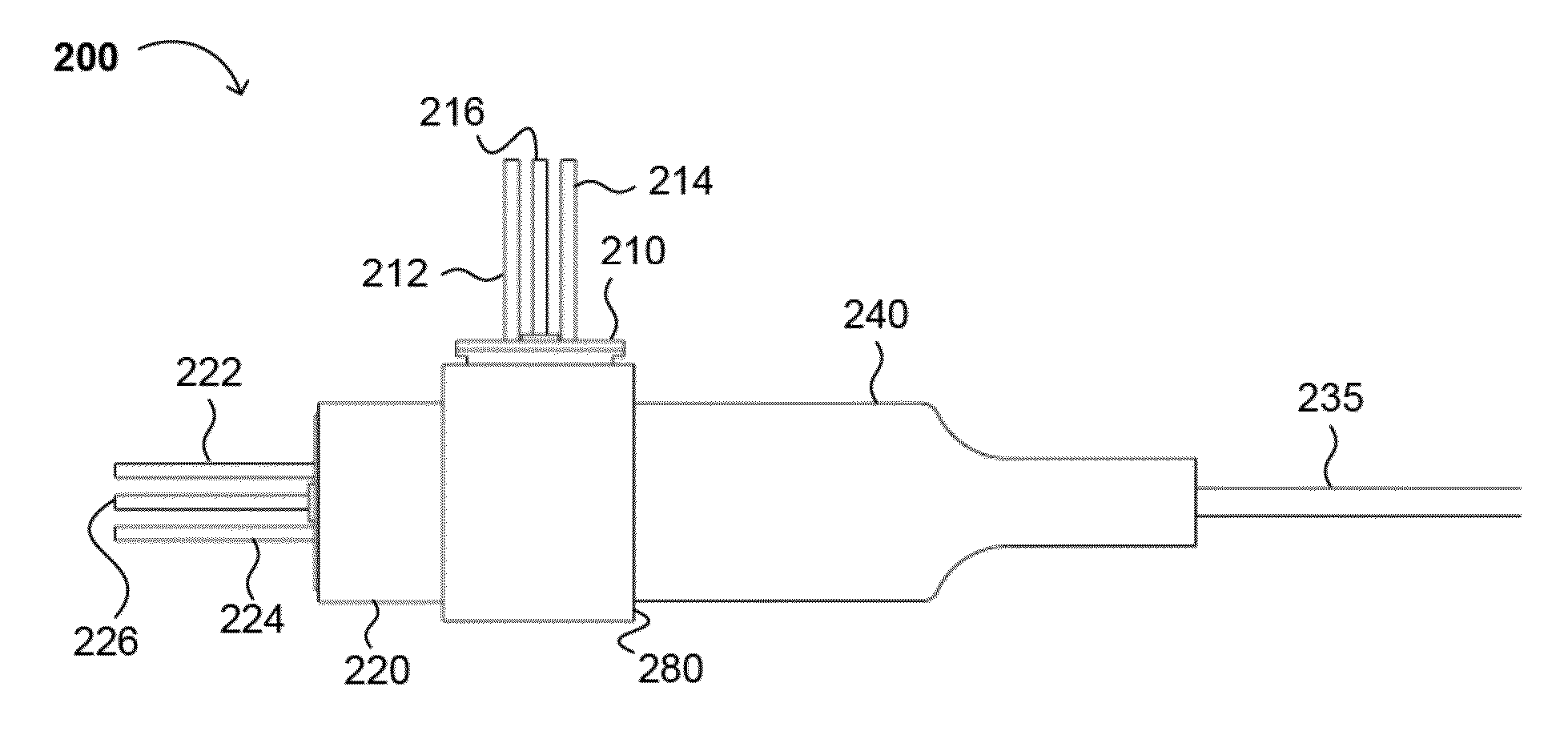
Figure 1 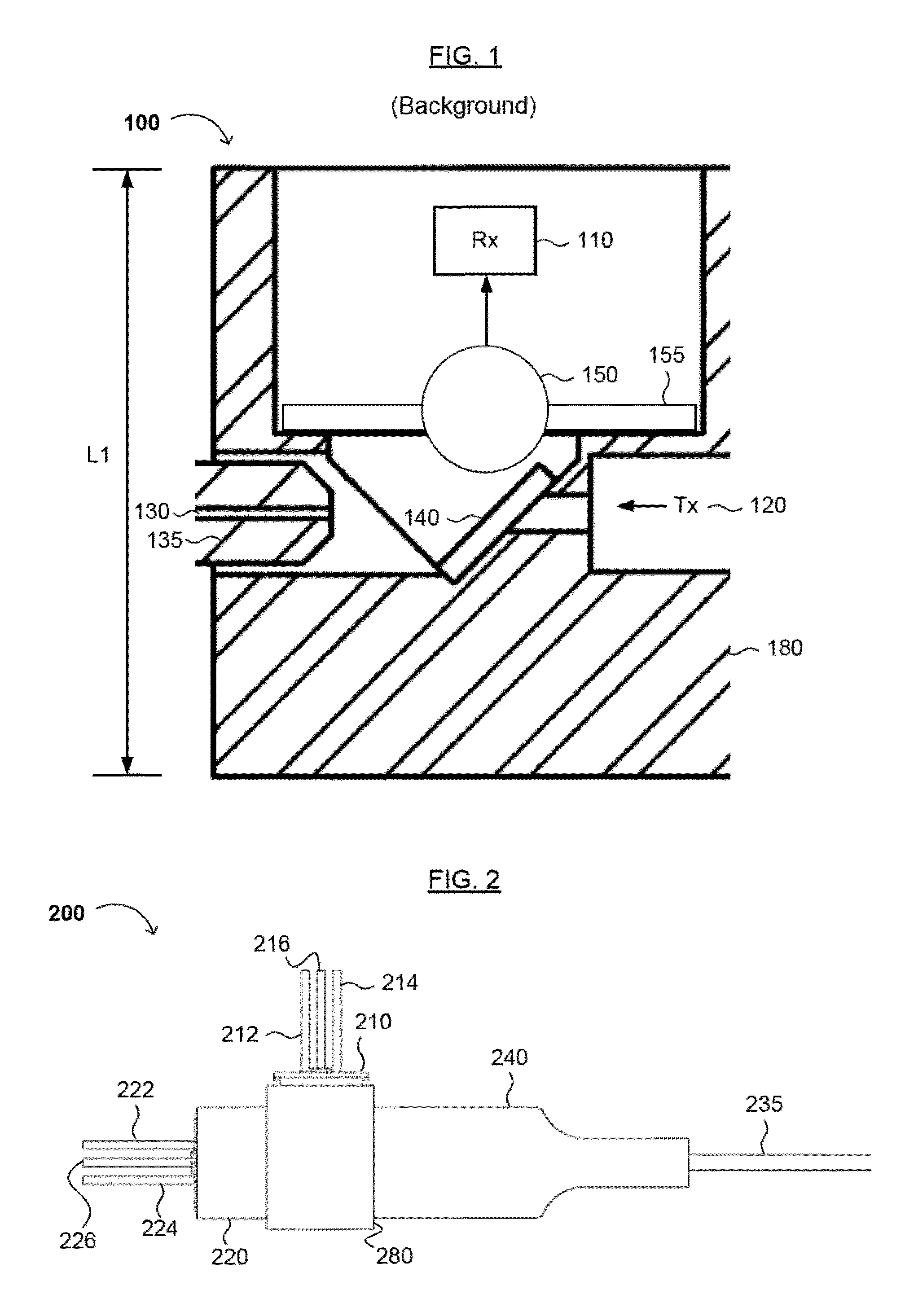
Figure 2 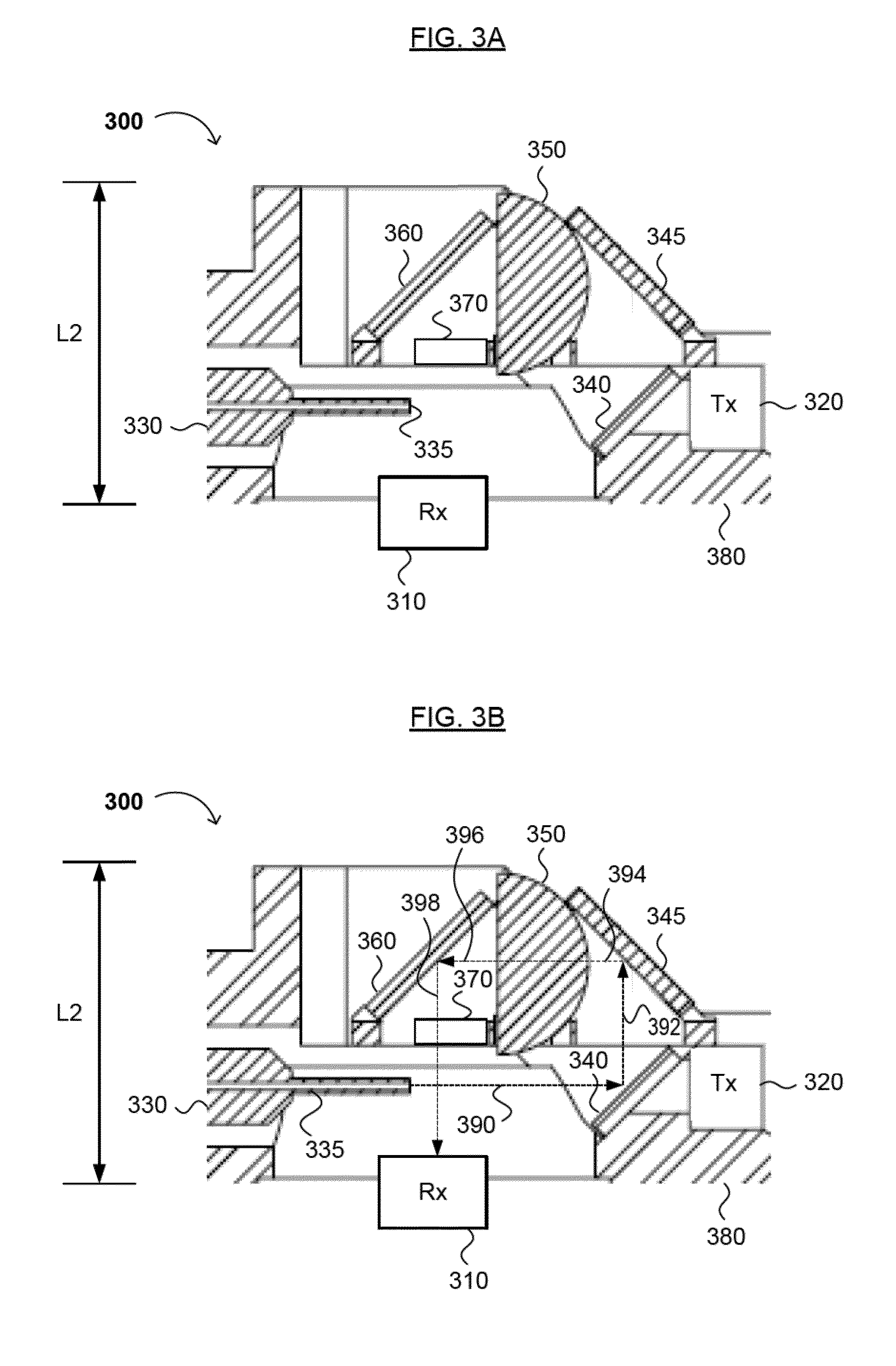
Figure 3
Abstract
Description
FIELD OF THE INVENTION
[0001] The present invention generally relates to optical signal reception, and optionally, optical signal transmission. More specifically, embodiments of the present invention pertain to methods and apparatuses for receiving an optical signal using a light-processing cavity having a reduced size.DISCUSSION OF THE BACKGROUND
[0002] FIG. 1 shows a portion of a conventional optical transceiver 100 having a housing 180. The optical transceiver 100 comprises a light-carrying medium 130 (e.g., an optical fiber) which transmits a received optical signal towards a beam splitter 140. At least a portion of the optical signal is reflected by beam splitter 140 towards a ball lens 150. The reflected portion of the light passes through the lens 150 and is received by a light-receiving unit 110 (e.g., a photodiode). The lens 150 is positioned in a lens cap 155. Thus, the housing 180 encompasses a light processing cavity in the optical transceiver 100.
[0003] The transceiver 100 f...
Examples
Embodiment Construction
[0023]Reference will now be made in detail to various embodiments of the invention, examples of which are illustrated in the accompanying drawings. While the invention will be described in conjunction with the following embodiments, it will be understood that the descriptions are not intended to limit the invention to these embodiments. On the contrary, the invention is intended to cover alternatives, modifications and equivalents that may be included within the spirit and scope of the invention as defined by the appended claims. Furthermore, in the following detailed description, numerous specific details are set forth in order to provide a thorough understanding of the present invention. However, it will be readily apparent to one skilled in the art that the present invention may be practiced without these specific details. In other instances, well-known methods, procedures, components, and circuits have not been described in detail so as not to unnecessarily obscure aspects of th...