
Fiber optic cable for very-short-distance networks
a fiber optic cable and very-short-distance technology, applied in the field of fiber optic cables, can solve the problems of cable stiffness, cable is usually not intended for consumer handling, and is usually too stiff to be manually maneuvered in very-short-distance network applications
Patent Information
- Authority / Receiving Office
- US · United States
- Patent Type
- Applications(United States)
- Current Assignee / Owner
- Publication Date
- 2013-07-25
Smart Images
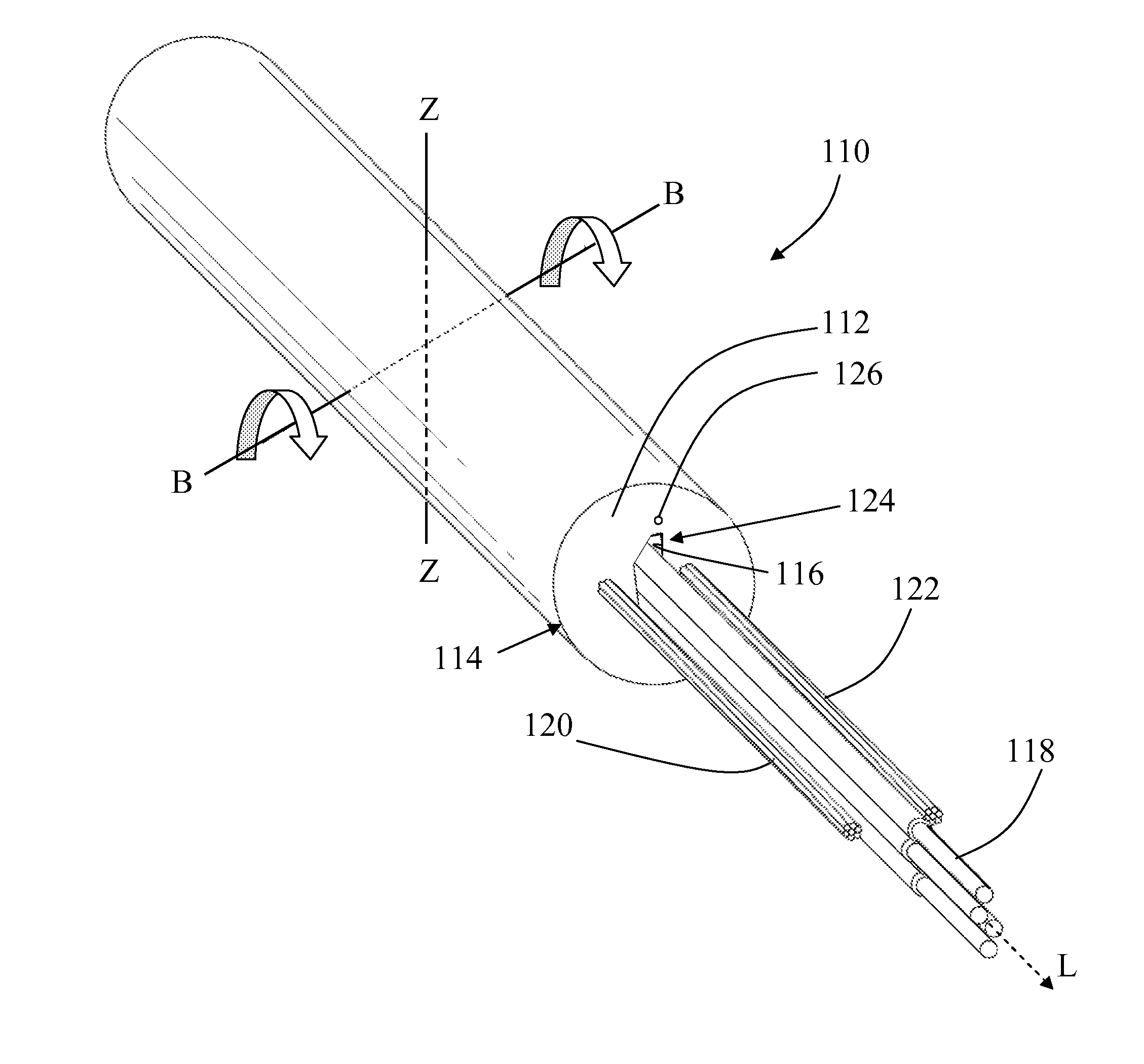
Figure 1 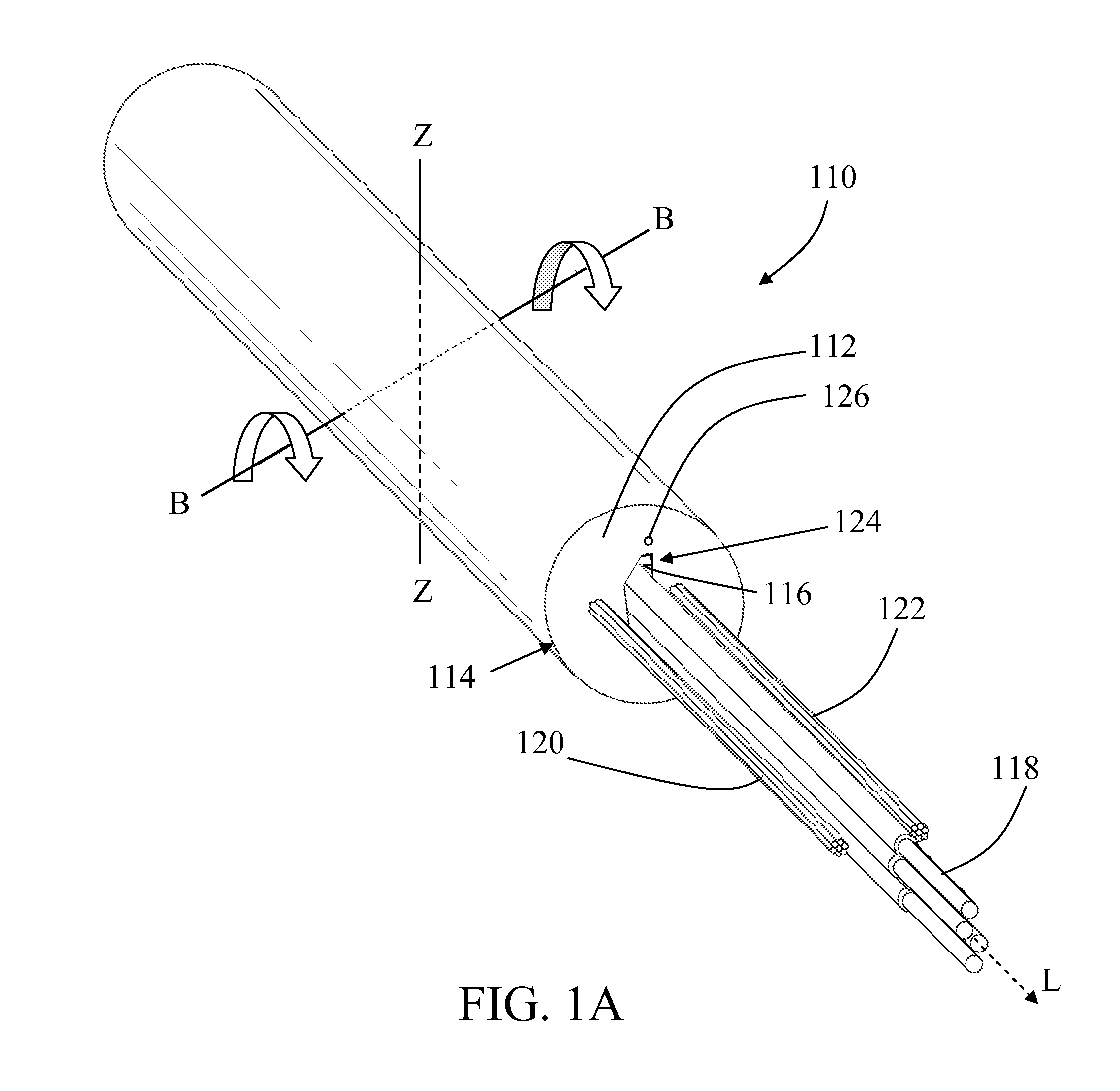
Figure 2 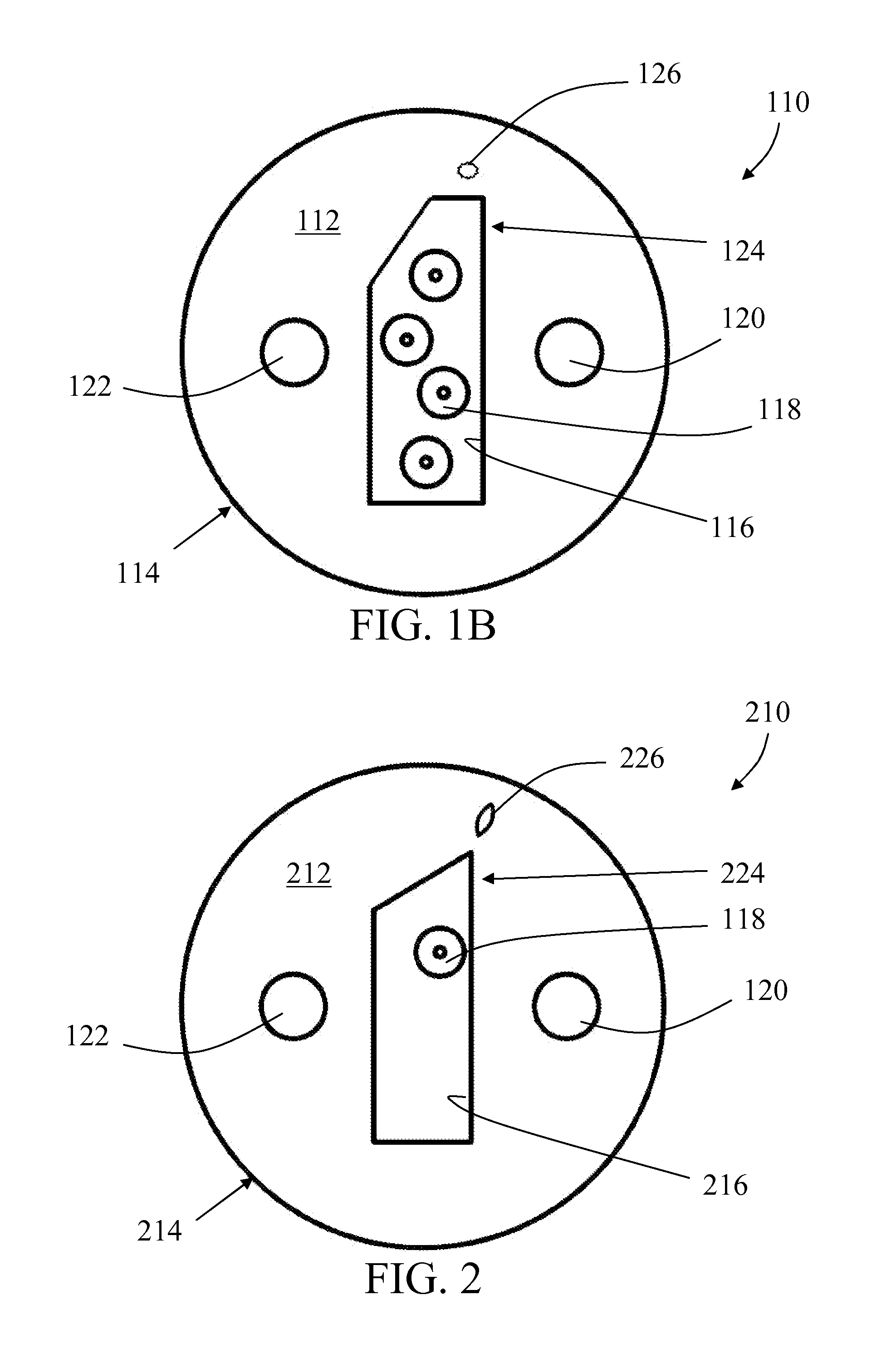
Figure 3
Abstract
Description
RELATED CASES
[0001] Subject matter disclosed in the present Application is related to subject matter disclosed in U.S. Provisional Application 61 / 588,950 filed Jan. 20, 2012, which is incorporated by reference herein in its entirety.BACKGROUND
[0002] Aspects of the present disclosure relate generally to a fiber optic cable configured for use in very-short-distance networks, and particularly configured to facilitate manual handling of the cable and associated hardware due to the size, structure, and bend characteristics of the cable.
[0003] Consumer cables commonly have a round profile without a preferential bend, attributes that are beneficial for making the cables easy to handle, but that also create problems with tangling and spontaneous knot formation of cables. Such problems may particularly effect small, round-bodied flexible cords, wires, ropes, or cables, because such linear objects, without a preferential bend, generally lack resistance opposing motion once moving radially or per...
Examples
Embodiment Construction
[0013]Before turning to the following Detailed Description and Figures, which illustrate exemplary embodiments in detail, it should be understood that the present invention is not limited to the details or methodology set forth in the Detailed Description or illustrated in the Figures. For example, as will be understood by those of ordinary skill in the art, features and attributes associated with embodiments shown in one of the Figures or described in the text relating to one of the embodiments may well be applied to other embodiments shown in another of the Figures or described elsewhere in the text.
[0014]Referring to FIGS. 1A-1B, a fiber optic cable 110 that includes a polymeric jacket 112 defining an outer periphery 114 and a cavity 116 interior thereto and an optical fiber 118 positioned within the cavity 116 of the jacket 112. The fiber optic cable 110 further includes a first longitudinal strength element 120 fully embedded in the jacket 112, and a second longitudinal strengt...