
Therapeutic agent for chronic respiratory disease and composition for inhibiting cardiac fibrosis
Patent Information
- Authority / Receiving Office
- US · United States
- Current Assignee / Owner
- Publication Date
- 2018-02-22
- Estimated Expiration
- Not applicable · inactive patent
Smart Images
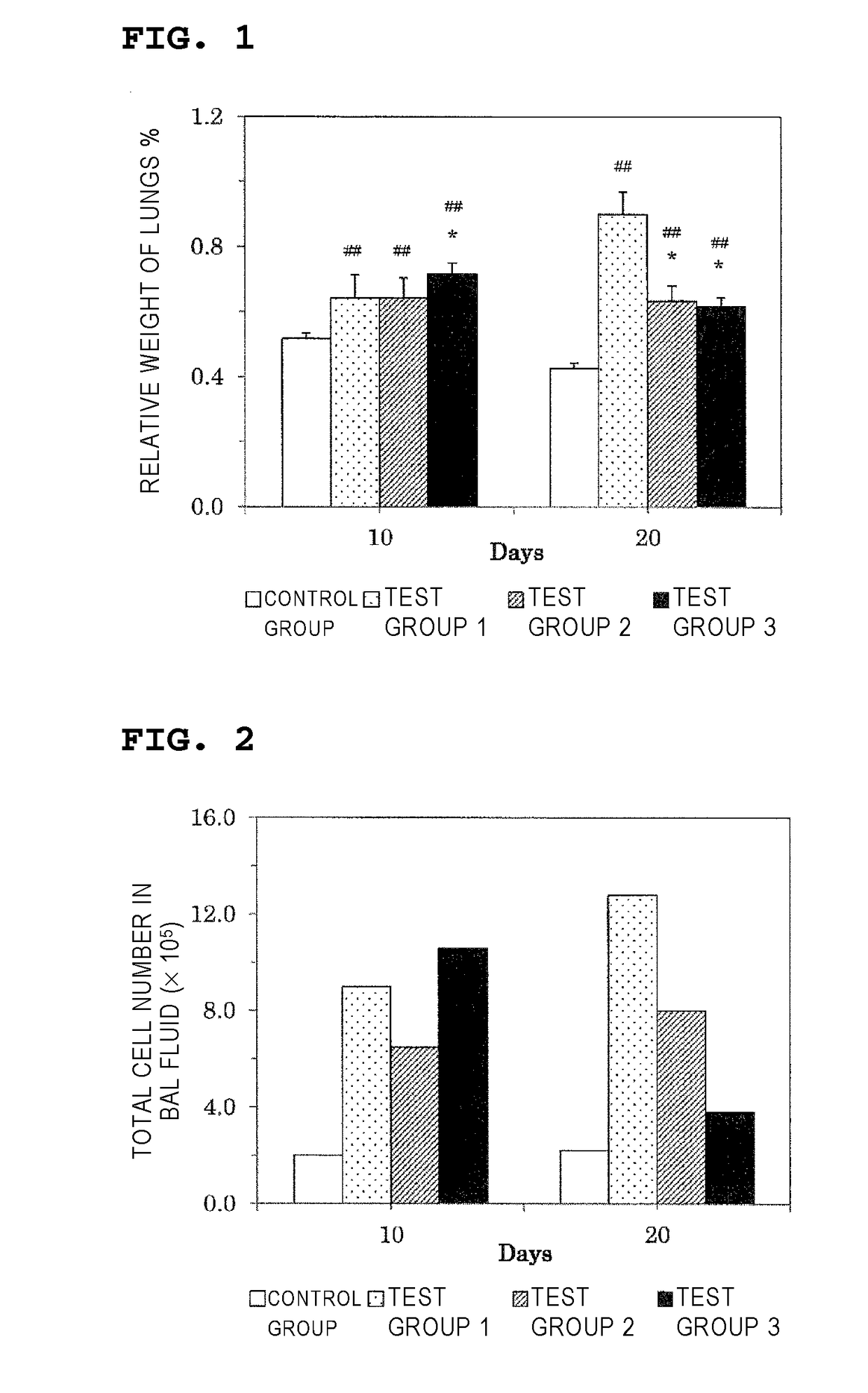
Figure 1 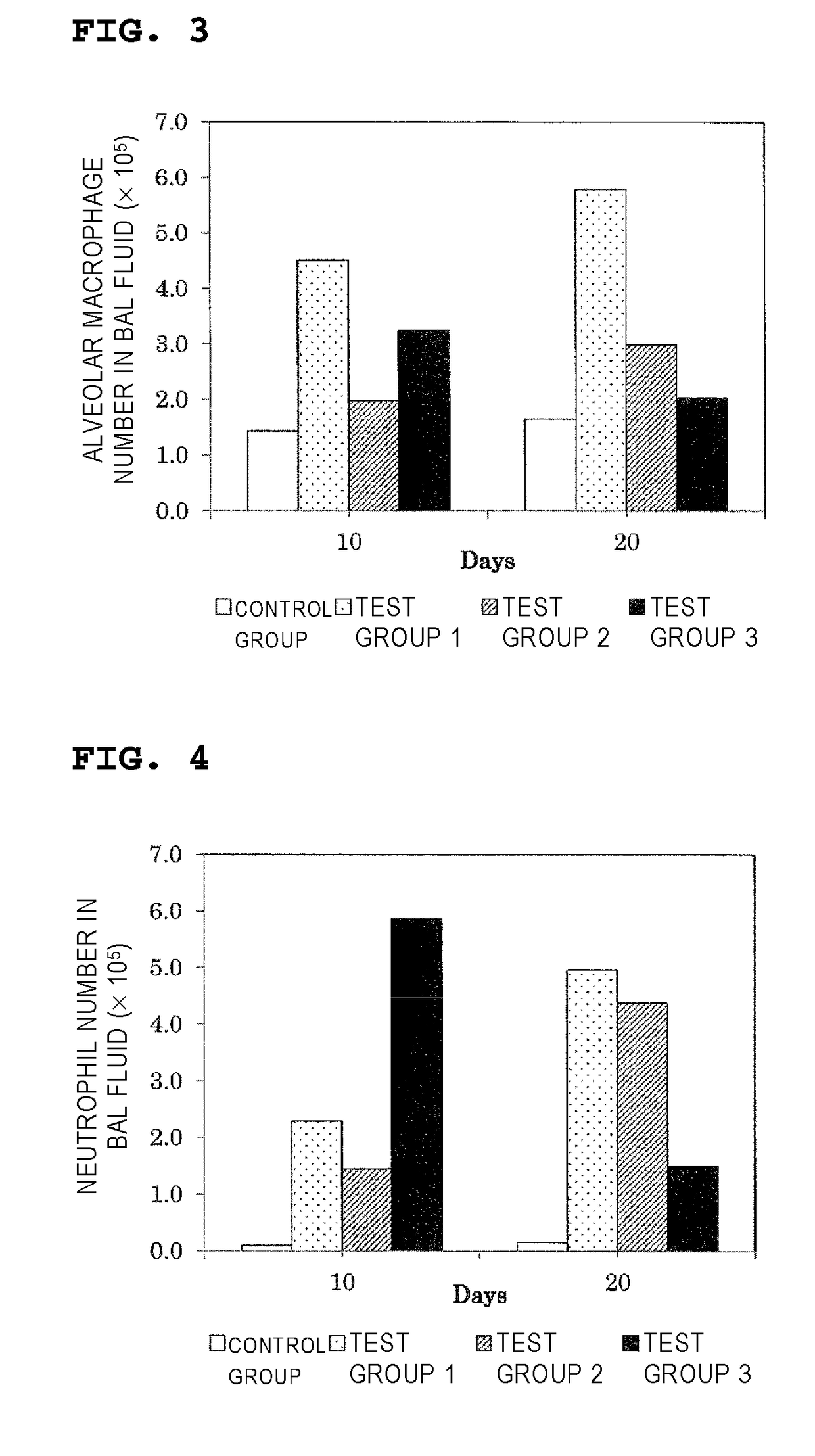
Figure 2 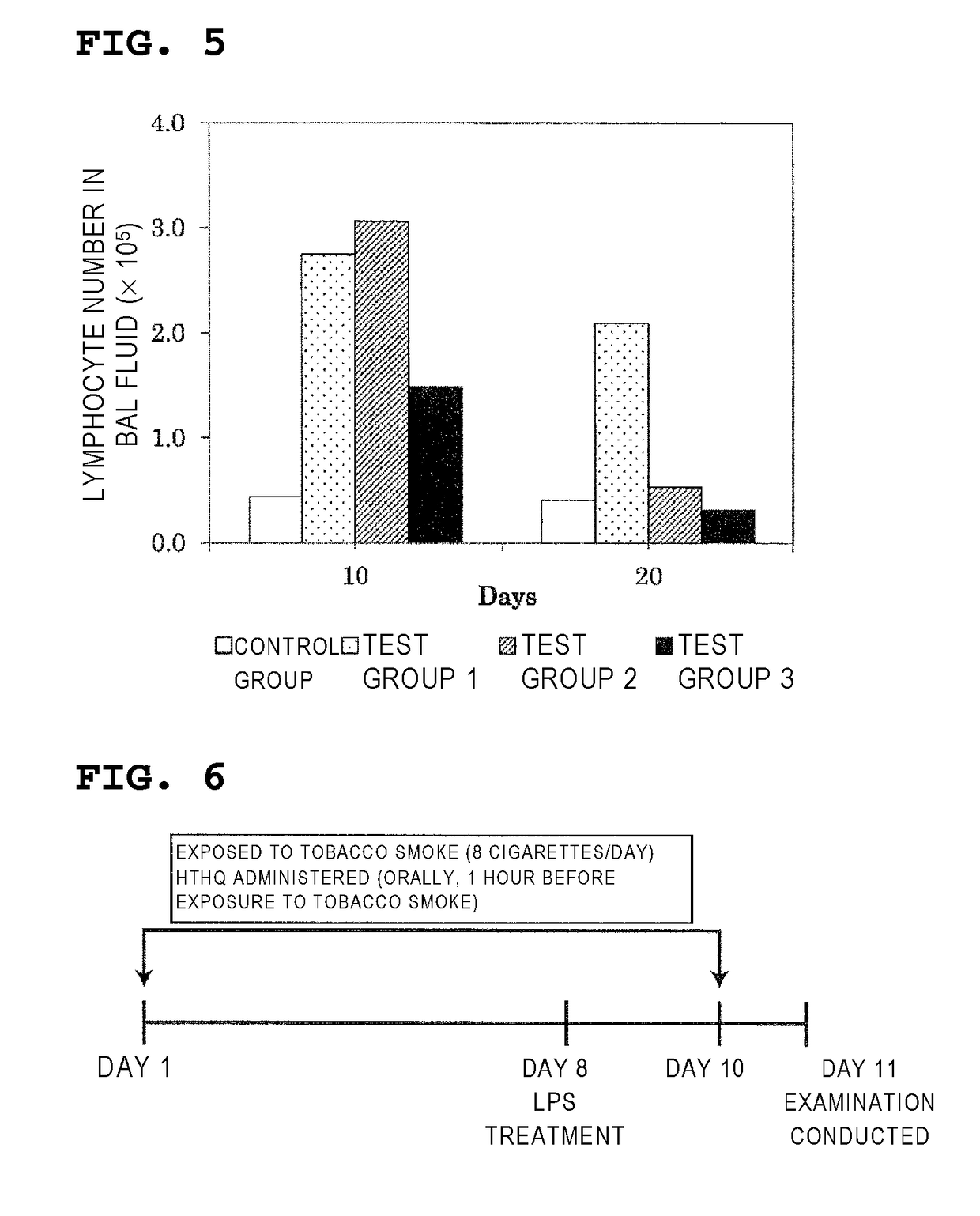
Figure 3
Abstract
Description
TECHNICAL FIELD
[0001] The present invention relates to a therapeutic agent for a chronic respiratory disease, a food composition for prevention or improvement of a chronic respiratory disease, a composition for inhibiting cardiac fibrosis and a composition for alleviating a side effect of an agent, comprising a specific hydroquinone derivative as an active ingredient.BACKGROUND ART
[0002] Chronic respiratory diseases are noninfective chronic diseases of the respiratory tract and lung tissue, and examples of the chronic respiratory diseases mainly include chronic obstructive pulmonary disease (COPD), asthma and interstitial pneumonia. Among these, the chronic obstructive pulmonary disease (COPD) is an inflammatory disease of the lung mainly caused by long team inhalation of toxic substances such as tobacco smoke or polluted air, and exhibits progressive airflow obstruction. Prevalence and the mortality rate of COPD is in high level worldwide (the 4th cause of death in the world, survey ...
Examples
example
Example 1
[0070]1. Study of the Action on Pulmonary Fibrosis Induced by Bleomycin
[0071]Bleomycin is used to produce disease-model animals of interstitial pneumonia. The bleomycin and 2,3,5-trimethylhydroquinone-1-hexyl ether (HTHQ) as the hydroquinone derivative represented by the general formula (1) described above of the present invention were simultaneously administered to male SD rats of 10 week old after birth to examine the effect of the action. The test groups consisted of the control group to which sterile saline was administered; test group 1 to which bleomycin (7.5 mg / kg body weight) alone was administered; test group 2 to which bleomycin (7.5 mg / kg body weight) and HTHQ (50 mg / kg body weight / day) were administered in combination; and test group 3 to which bleomycin (7.5 mg / kg body weight) and HTHQ (200 mg / kg body weight / day) were administered in combination.
[0072]In test groups 1 to 3, bleomycin was orally administered in a single dose. In test groups 2 and 3, 2,3,5-trimet...
example 2
[0086]2. Study of the Action on Lung Inflammation Induced by Tobacco Smoke
[0087]6 week old male SPF C57BL / 6N mice, 20 to 25 g of body weight, were purchased from CORETEC INC. (South Korea). After quarantine and adaptation period of about 1 week, mice were divided into 5 groups shown in Table 2 below.
TABLE 2Control group and test groupsDetails of administrationControlNormal controlNo agentNotLPS notgroupgroup “NC”administeredexposedadminis-to tobaccoteredsmokeTestCOPD modelNo agentExposedLPSgroupgroup “COPD”administeredto tobaccoadminis-Positive controlRoflumilastsmoketeredsubstance-administeredadministeredat 10 mg / kg / daygroup “ROF”HTHQ-administeredHTHQgroup (low-dose)administered“HTHQ10”at 10 mg / kg / dayHTHQ-administeredHTHQgroup (high-dose)administered“HTHQ20”at 20 mg / kg / day
[0088]The tests were conducted as follows. The mice in the COPD (chronic obstructive pulmonary disease) model group of the test groups were exposed to tobacco smoke for 1 hour per day (8 cigarettes / day) for 10 day...
example 3
[0096]3. Study of Action on Asthma
[0097]The efficacy of the hydroquinone derivative represented by the general formula (1) described above of the present invention on asthma was studied using an allergic asthma model of mice caused by ovalbumin sensitization.
[0098]6 week old BALB / c female mice were purchased and the mice were divided into 5 groups with 5 animals per group shown in Table 3 below after habituation breeding of about 2 weeks.
TABLE 3Control group and test groupsDetails of administrationControlNormal control groupNo agent administeredgroup“NC”TestOvalbumin-sensitizedNo agent administeredgroupcontrol group “OVA”Positive controlMontelukast administeredsubstance-administeredat 30 mg / kg / daygroup “Mon”HTHQ-administeredHTHQ administered atgroup (low-dose)20 mg / kg / day“HTHQ20”HTHQ-administeredHTHQ administered atgroup (high-dose)40 mg / kg / day“HTHQ40”
[0099]The test was conducted on the schedule of sensitization, causing diseases and administration of test materials shown in FIG. 12...