
Positive electrode active substance particles comprising lithium nickelate composite oxide, and non-aqueous electrolyte secondary battery
a lithium nickelate and composite oxide technology, applied in the direction of cell components, electrochemical generators, nickel compounds, etc., can solve the problems of deterioration in repeated charge/discharge cycle characteristics, structural defects, and conventional positive electrode active substance particles that have not shown good stability of lithium nickelate crystals, etc., to suppress the occurrence of side reactions, excellent charge/discharge cycle characteristics, and high epitaxy
Patent Information
- Authority / Receiving Office
- US · United States
- Patent Type
- Applications(United States)
- Current Assignee / Owner
- Publication Date
- 2020-06-11
- Estimated Expiration
- Not applicable · inactive patent
Smart Images
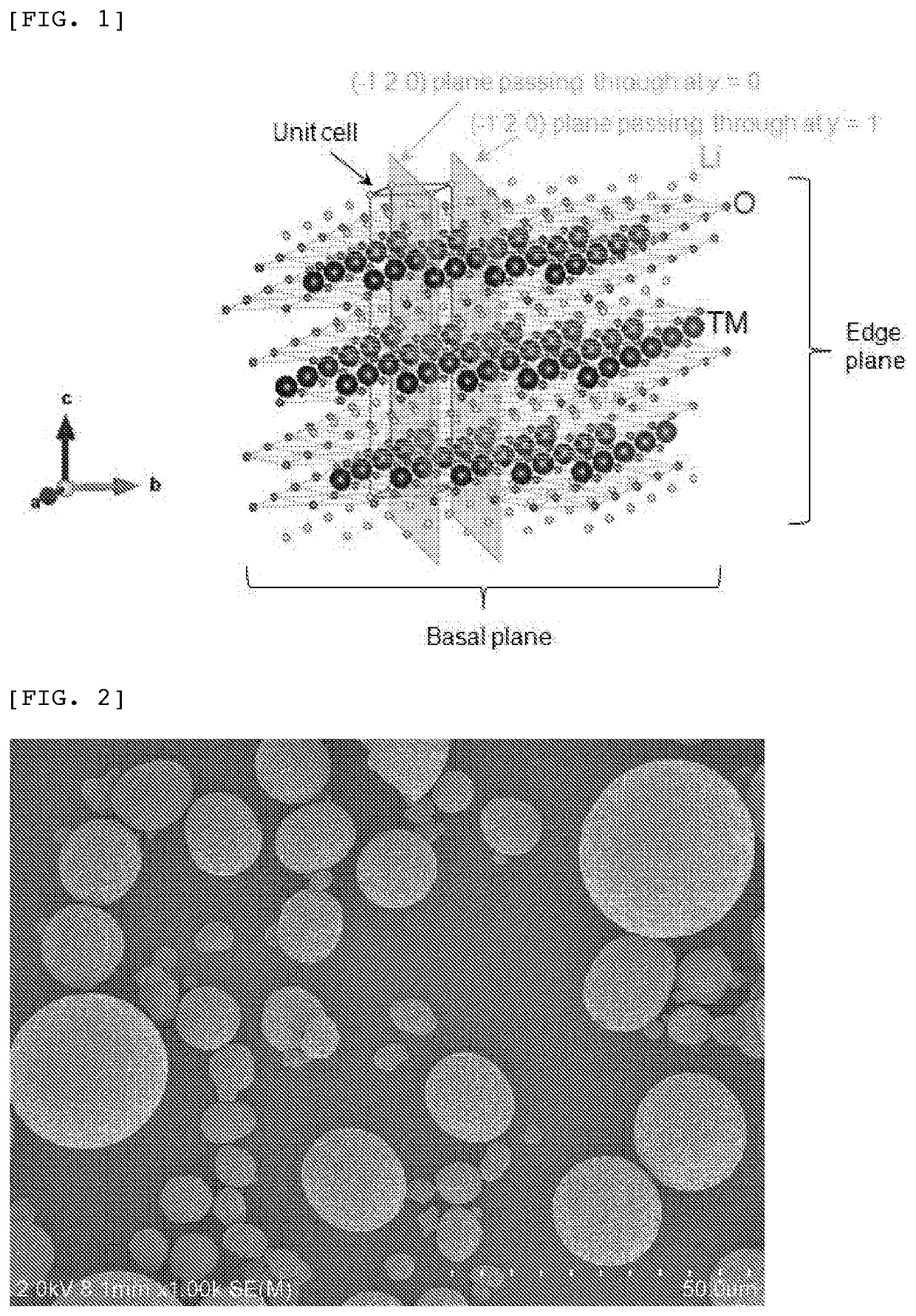
Figure 1 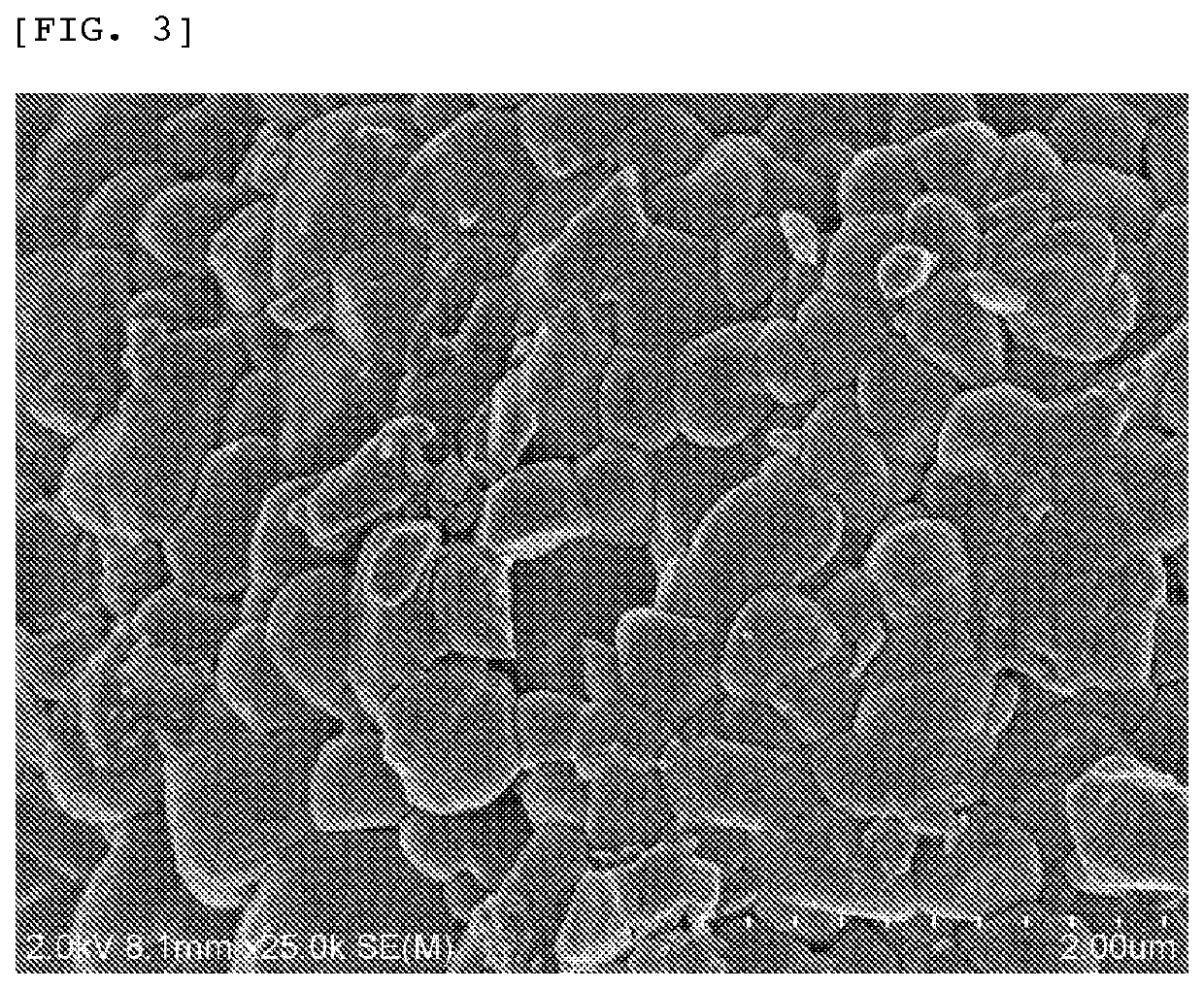
Figure 2 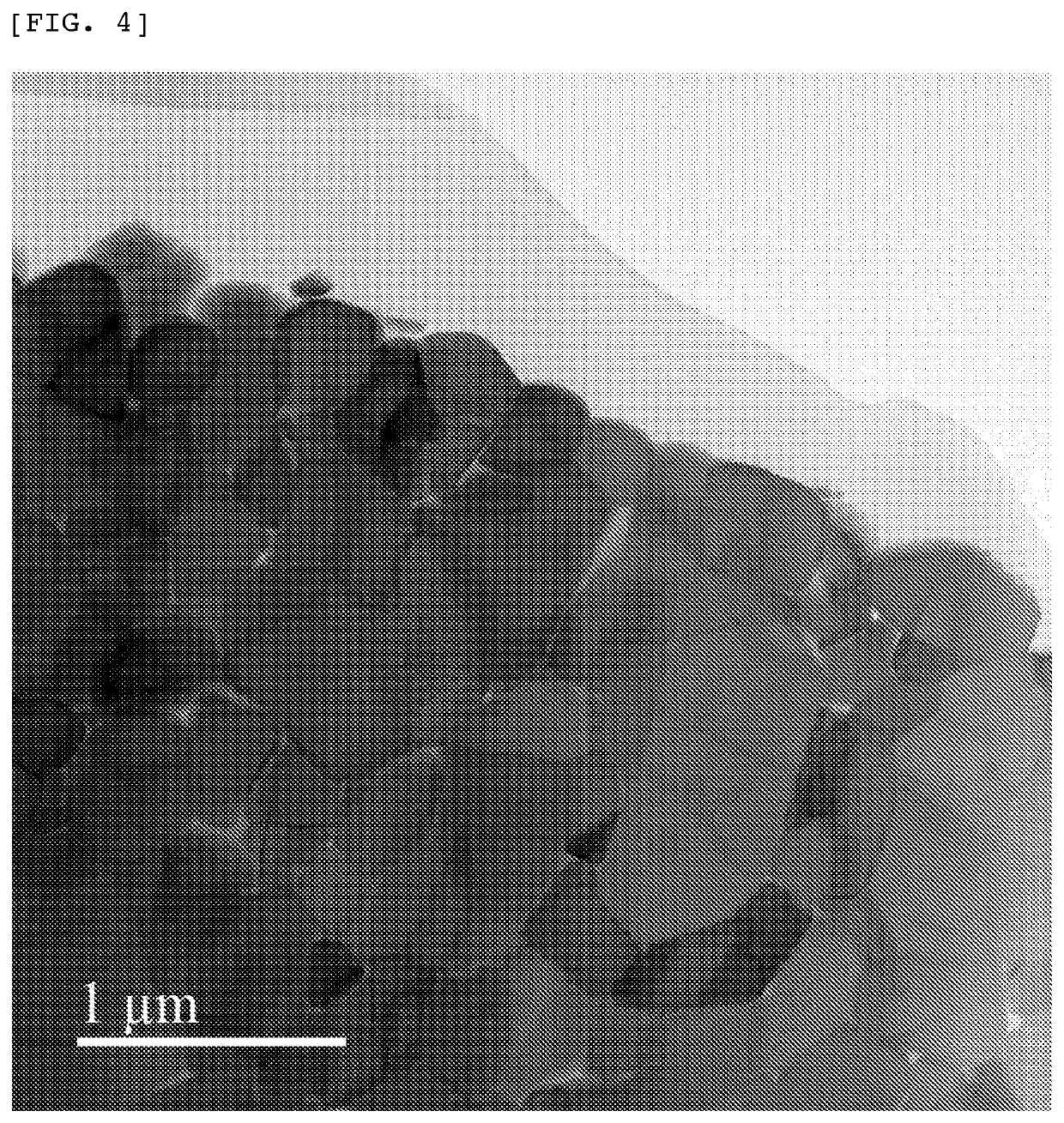
Figure 3
Abstract
Description
TECHNICAL FIELD
[0001] The present invention relates to positive electrode active substance particles having a high energy density and excellent repeated charge / discharge cycle characteristics, as well as a non-aqueous electrolyte secondary battery using the positive electrode active substance particles.BACKGROUND ART
[0002] With the recent rapid progress for reduction in size and weight of electronic equipments such as mobile phones and personal computers, there is an increasing demand for secondary batteries having a high energy density as a power source for driving these electronic equipments. Under these circumstances, the batteries having a large charge / discharge capacity per unit weight and unit volume and high repeated charge / discharge cycle characteristics have been recently noticed.
[0003] Hitherto, as one kind of positive electrode active substance particles which are useful for high energy-type lithium ion secondary batteries, there is known lithium nickelate LiNiO2 as shown in...
Examples
example 1
[0088]Cobalt-containing nickel hydroxide Ni0.84Co0.16(OH)2 as a precursor was obtained by a crystallization method via an ammonia complex in a water solvent over several days. The cobalt-containing nickel hydroxide, lithium hydroxide monohydrate LiOH.H2O and aluminum hydroxide Al(OH)3 were weighed in predetermined amounts such as the molar ratio between elements Li, Ni, Co and Al therein was Li:Ni:Co:Al=1.02:0.81:0.15:0.04. Thereafter, these compounds were mixed with each other using a high-speed mixer, and the resulting mixture was calcined in an oxygen atmosphere at 770° C. using a roller hearth kiln, thereby obtaining a lithium nickelate composite oxide capable of being formed into a core particle X.
[0089]The resulting particles capable of being formed into a core particle X were treated by an atomic layer deposition method. In the atomic layer deposition method, trimethyl aluminum Al(CH3)3 was used as a raw material gas A, and H2O was used as a raw material gas B. The respective...
example 2
[0124]Using the lithium nickelate composite oxide Li1.02Ni0.81Co0.15Al0.04O2 having a layer structure capable of being formed into the core particle X which were obtained in Example 1, a coating compound Y was formed thereon by an atomic layer deposition method. The treating conditions used in the atomic layer deposition method were the same as those used in Example 1, i.e., trimethyl aluminum Al(CH3)3 was used as a raw material gas A, and H2O was used as a raw material gas B, and these raw materials were subjected to 4 cycle treatment at 180° C. Thereafter, the obtained particles were treated in atmospheric air at 350° C. for 2 hr to increase the degree of crystallinity of the coating compound Y. The thus obtained particles were the lithium nickelate composite oxide particles that were provided thereon with the coating compound Y having a high degree of epitaxy. The resulting composite oxide particles were used as positive electrode active substance particles and evaluated by the f...