
Systems and methods of body motion management during non-invasive imaging and treatment procedures
Patent Information
- Authority / Receiving Office
- US · United States
- Current Assignee / Owner
- Publication Date
- 2022-02-17
Smart Images
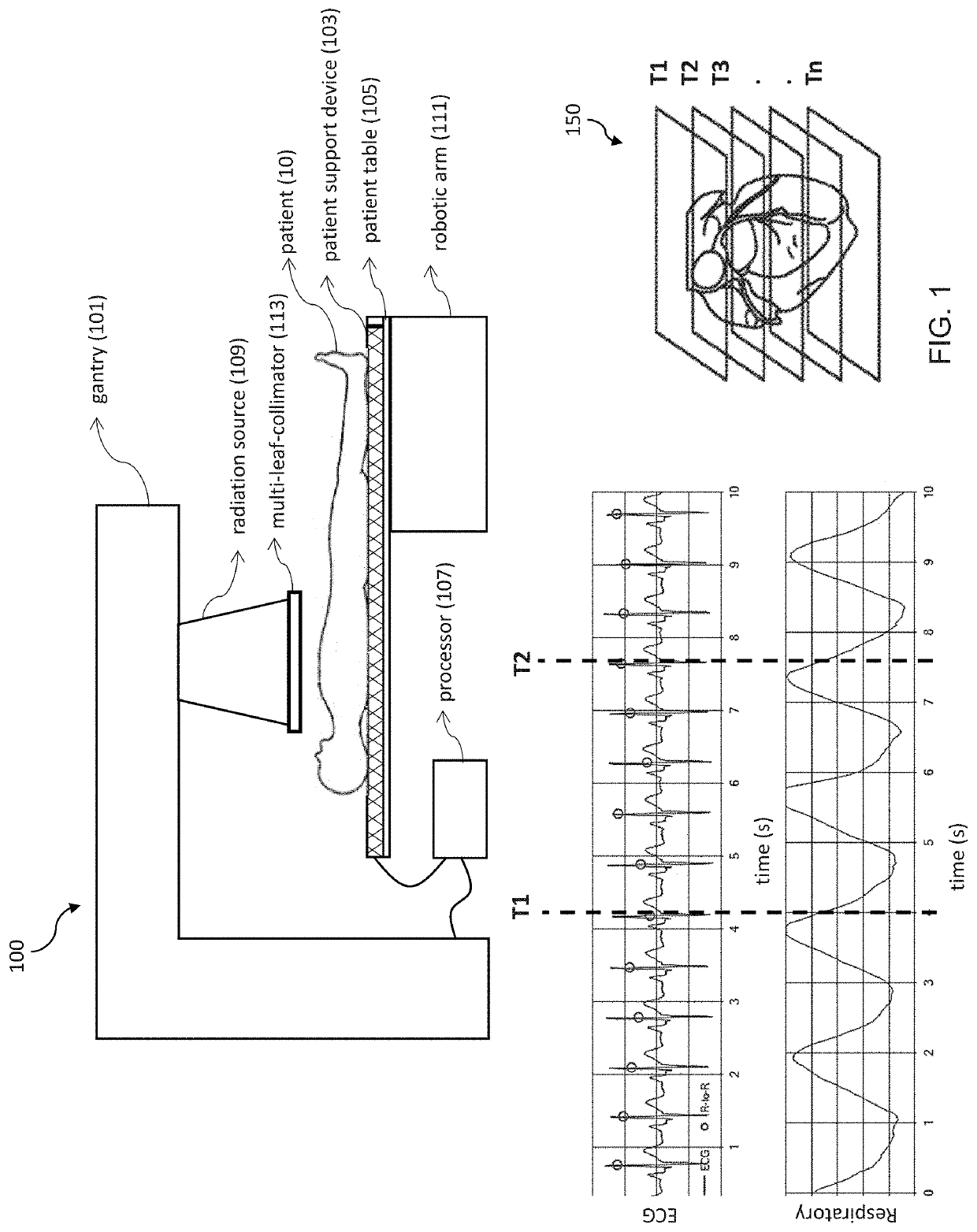
Figure 1 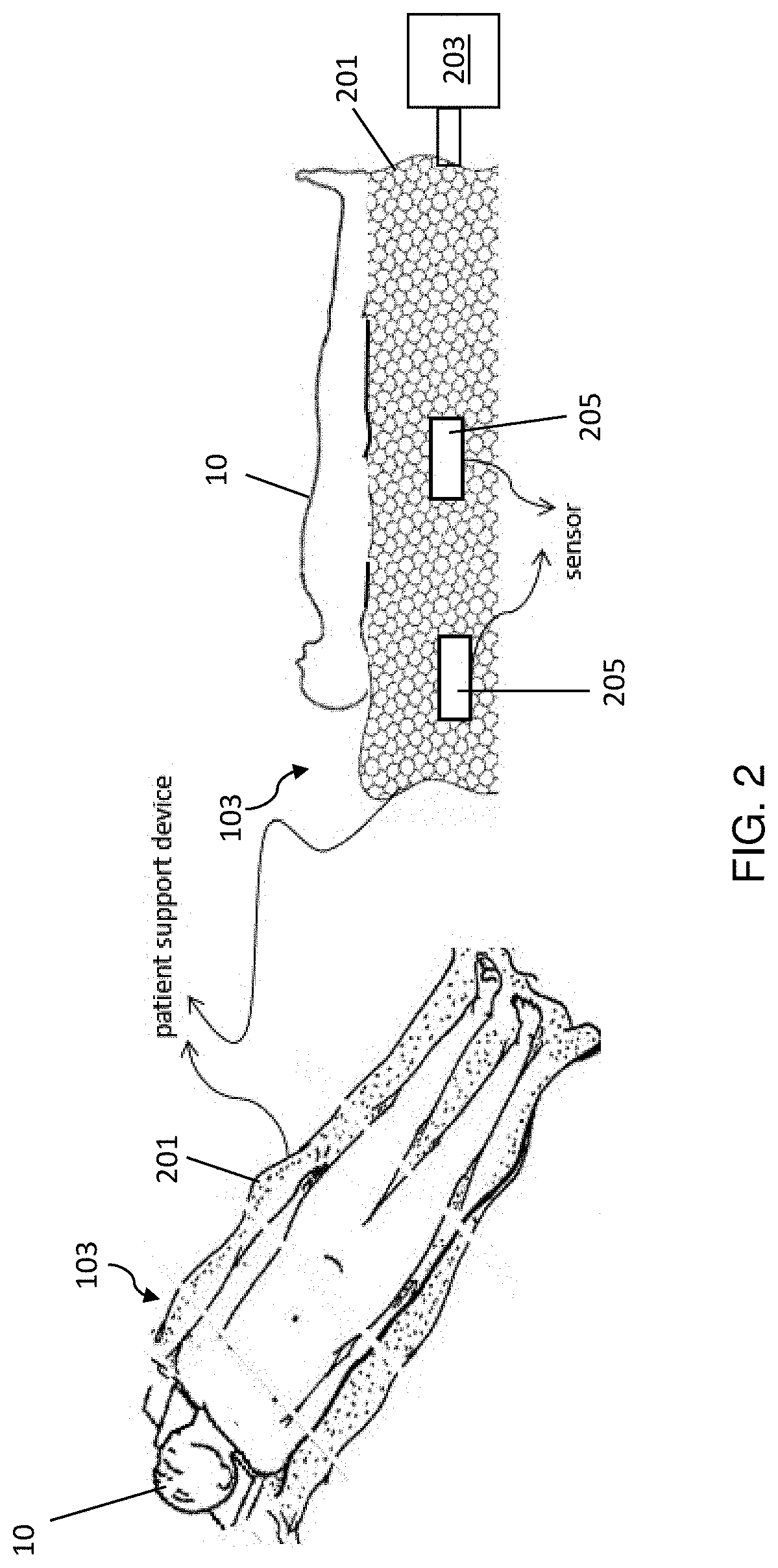
Figure 2 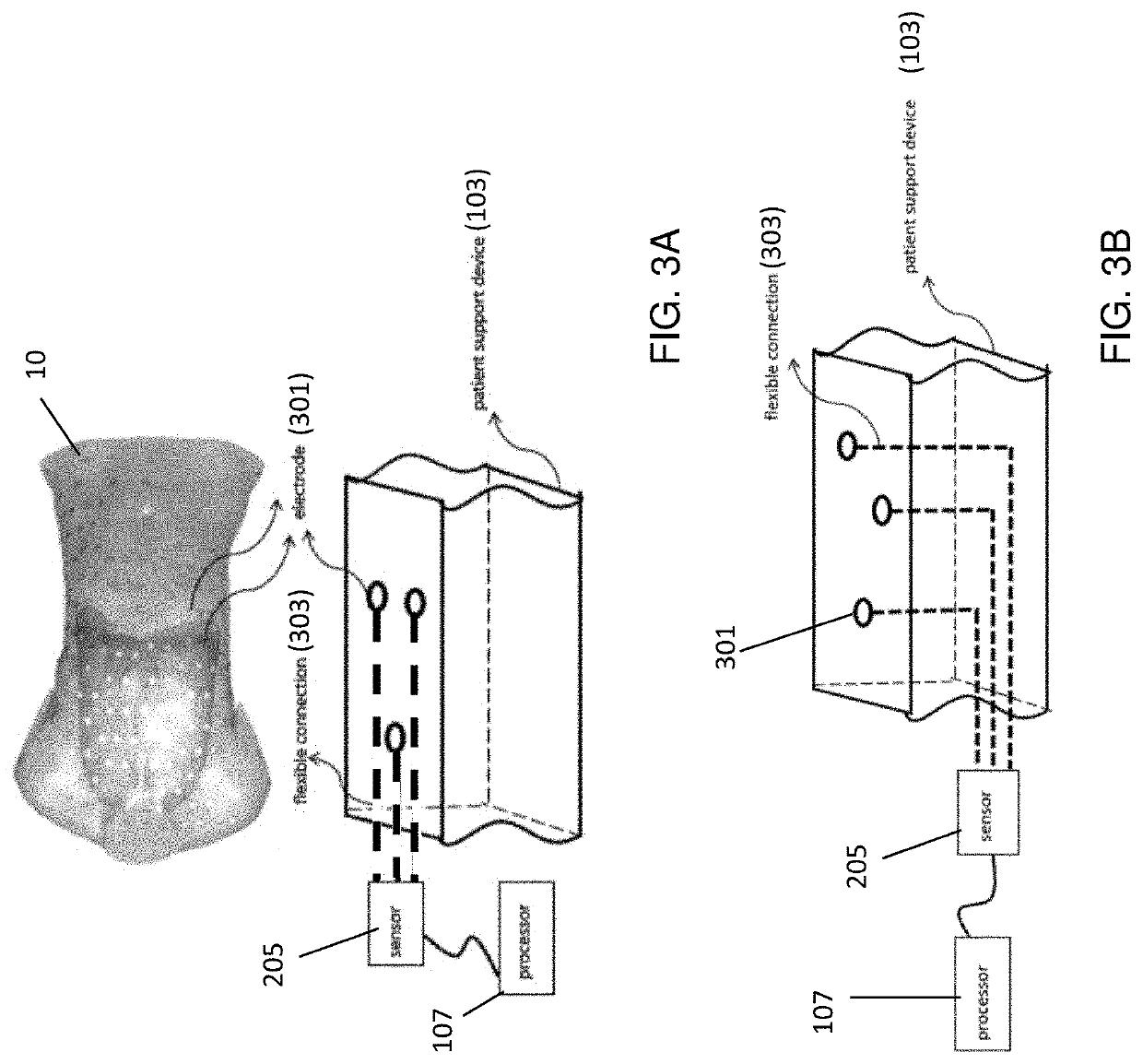
Figure 3
Abstract
Description
RELATED APPLICATIONS
[0001] This application claims the benefit of priority to U.S. Provisional Application No. 63 / 063,257, filed on Aug. 8, 2020, the entire contents of which are incorporated by reference herein for all purposes.FIELD
[0002] This disclosure relates generally to radiation therapy or radiotherapy. More specifically, this disclosure relates to non-invasive systems and methods for managing patient motion.BACKGROUND
[0003] Radiotherapy has been employed to treat cancer tumours and cardiac arrhythmias. During radiation therapy, a high-energy beam is applied from an external source towards a target that may be located inside a patient's body. Such high-energy beam (typically megavoltage X-rays), for example, could be generated by a linear accelerator (LINAC) which produces a collimated radiation beam that is directed into the target. Other types of radiotherapy may deliver particles such as beams of electrons, positrons, neutrons or protons to the target.
[0004] One problem that ...
Examples
example 8
[0086] A system 100 according to any of Examples 1-7, in which the at least one sensor (205, 301) of the patient support device 103 includes at least two skin-electrode interfaces for measuring electronic potentials from the body of the patient 10.
[0087]Example 9. A system 100 according to any of Examples 1-8, in which the at least one sensor (205, 301) of the patient support device 103 includes an electrode array with more than two skin-electrode interfaces for measuring multiple electronic potentials across the body of the patient 10.
[0088]Example 10. A system 100 according to any of Examples 1-9, in which each of the at least two skin-electrode interfaces includes an electrode 301 selected from a wet-contact gel-based Ag / AgCl electrode, a dry-contact MEMS and metal plate electrode, a thin-film insulated metal plate electrode, a flexible electrode and a stretchable electrode.
[0089]Example 11. A system 100 according to any of Examples 1-10, in which the at least one sensor (205, 30...
example 33
[0111] A non-invasive method according to any of Examples 28-32, further including controlling an operation of a medical device (109, 206) based on the artificial signal when a confidence level of the predicted biological motion state is above a threshold level.
[0112]Embodiments of the present disclosure may be implemented using specifically designed hardware, configurable hardware, programmable data processors configured by the provision of software (which may optionally comprise “firmware”) capable of executing on the data processors, special purpose computers or data processors that are specifically programmed, configured, or constructed to perform one or more steps in a method as explained in detail herein and / or combinations of two or more of these. Examples of specifically designed hardware are: logic circuits, application-specific integrated circuits (“ASICs”), large scale integrated circuits (“LSIs”), very large scale integrated circuits (“VLSIs”), and the like. Examples of ...