
Bacteriostatic filter cartridge
a filter cartridge and bacteria technology, applied in the field of filters, can solve the problems of unfit drinking water and other necessary uses, waste of water resources, and waste of water resources, and achieve the effects of preventing an increase in the bacteria count of effluent, reducing the bacterial count, and safe, effective and economical filtering
Patent Information
- Authority / Receiving Office
- US · United States
- Current Assignee / Owner
- Publication Date
- 2005-02-15
- Estimated Expiration
- Not applicable · inactive patent
Smart Images
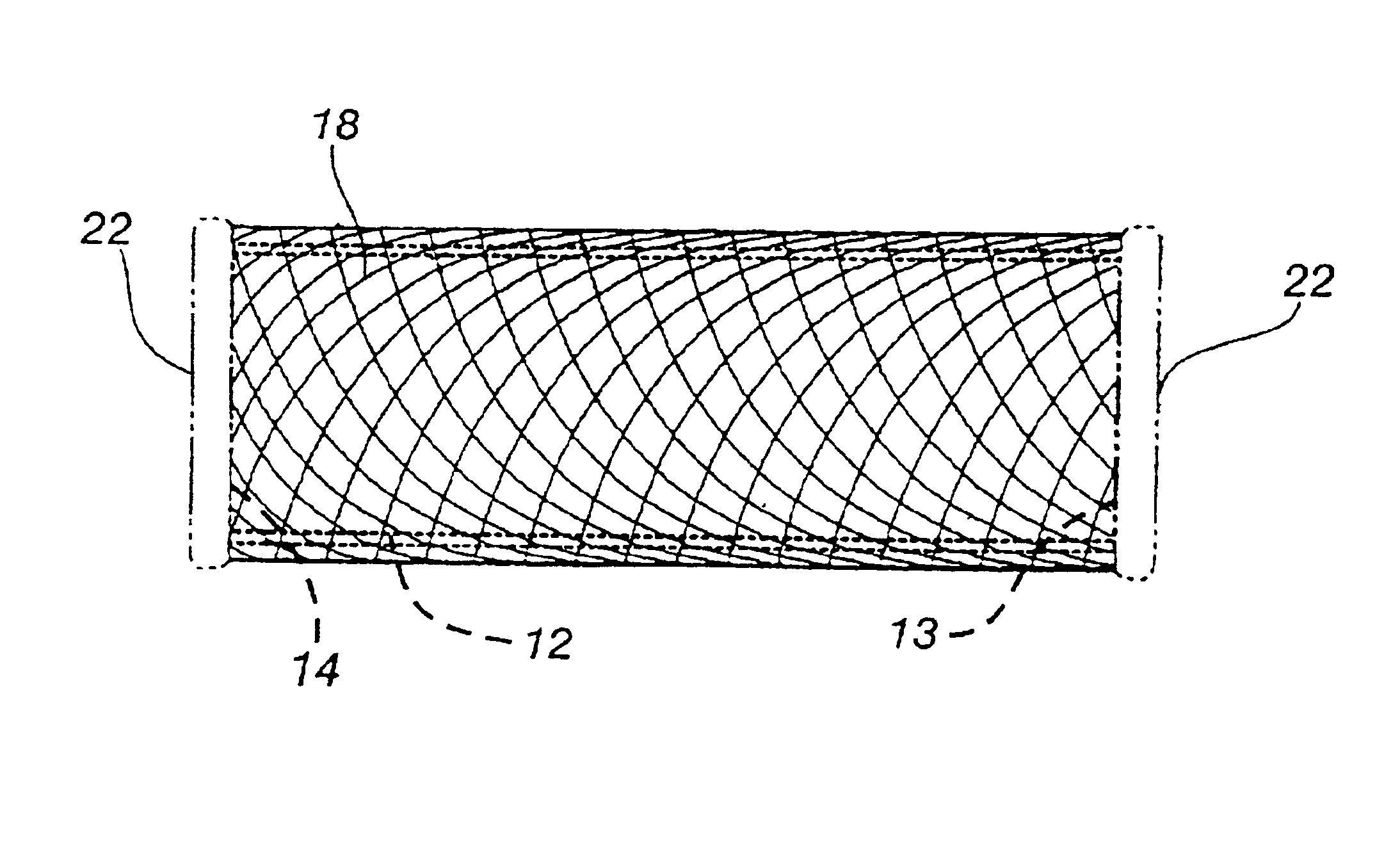
Figure 1 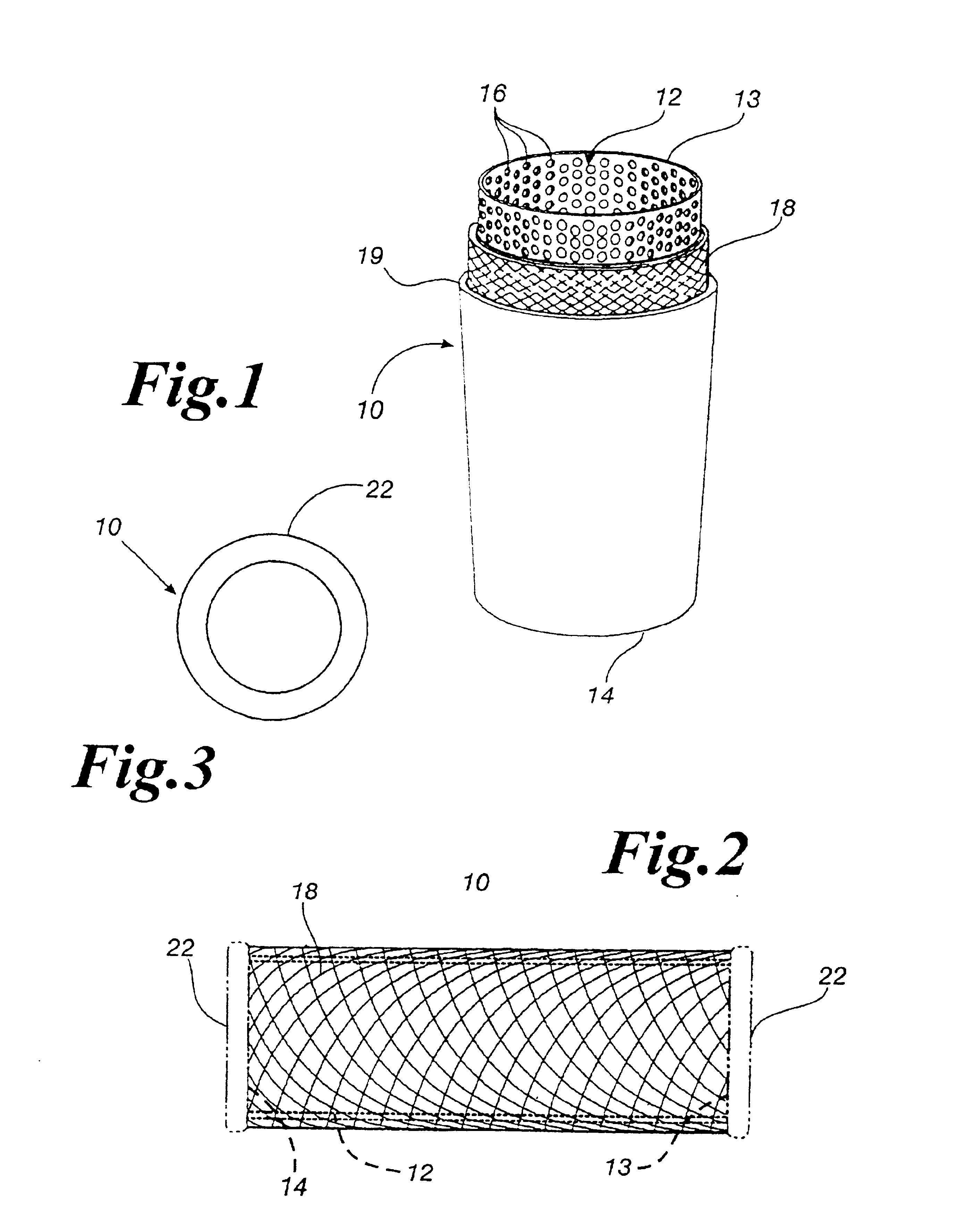
Figure 2 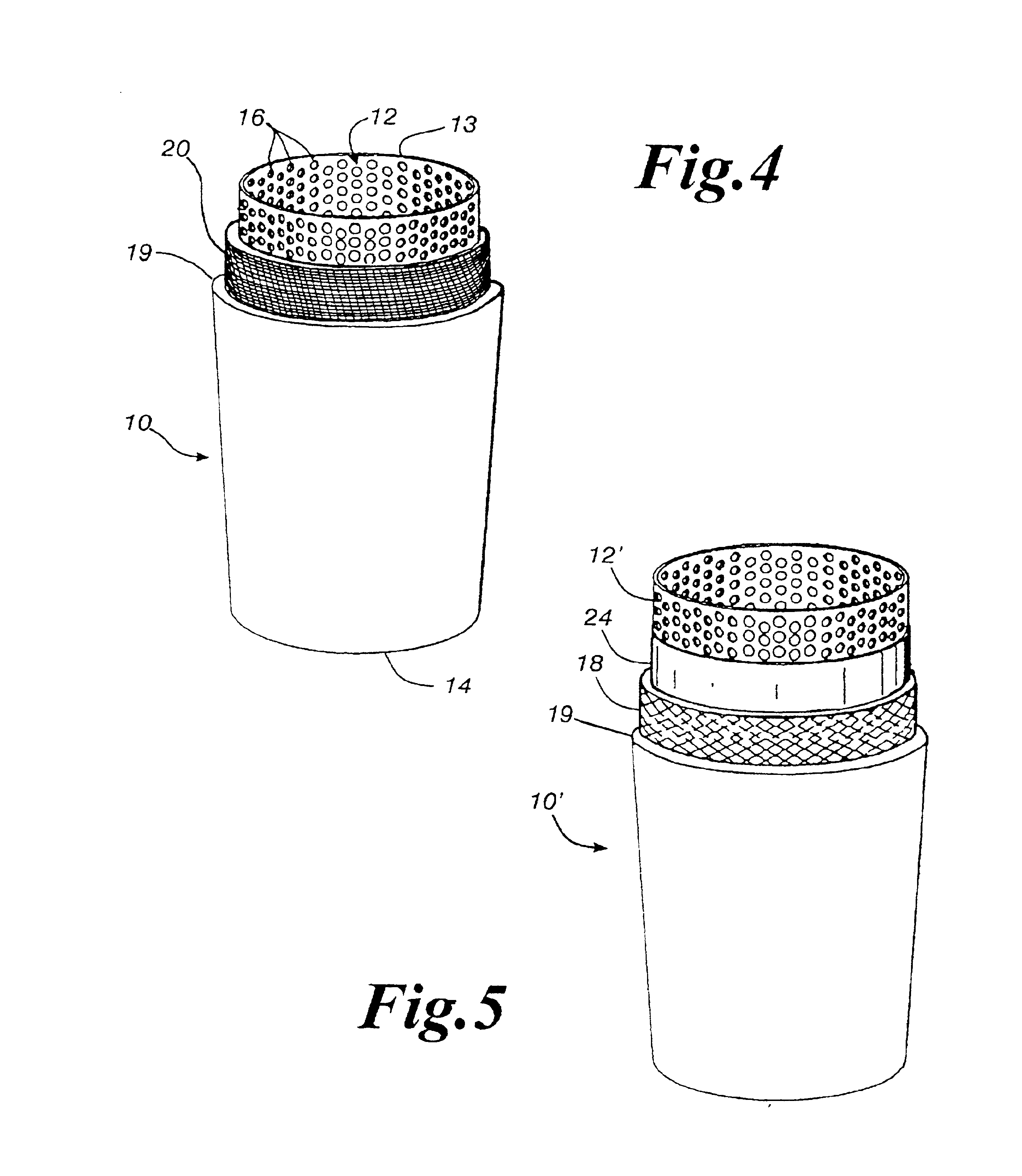
Figure 3
Abstract
Description
FIELD OF THE INVENTIONThis invention relates generally to filters for the purification of liquids. In particular, the present invention relates to a bacteriostatic filter cartridge for use in a filtration system. The bacteriostatic filter cartridge is formed from layers of wound yarn and / or nonwoven melt blown web treated with an antimicrobial agent and wrapped about a porous core. The bacteriostatic filter cartridge is designed to remove particulates from water and prevent the growth of bacteria within the filter.BACKGROUND OF THE INVENTIONIn recent years, the public has become increasingly aware of the deteriorating quality of our nation's and the world's water supply. Pollutants, biological and toxic waste and other contaminants are being introduced into water supplies at an ever increasing rate, making such water supplies unfit for drinking and other necessary uses. For example, medical patients with low immunity are now being requested not to drink tap water, and disease and il...
Examples
Embodiment Construction
Referring now to the drawings in which like numerals indicate like parts throughout the several views, FIG. 1 illustrates a preferred embodiment of a bacteriostatic filter cartridge 10 constructed in accordance with the present invention. The bacteriostatic filter cartridge10 includes a hollow central perforated core 12 having open ends 13 and 14, and which can be formed from plastic, paper, metal, or can be a ceramic candle material, which is inherently perforated. In the preferred embodiment shown in FIG. 1, the core is a porous polypropylene. The core is formed as a tube or cylinder approximately 5 to 30 inches in length and generally has a diameter of approximately 1 to 2 inches, although larger or smaller diameters can be used, if necessary. A series of pores or perforations 16 at least approximately 10 microns (μ) in size or larger generally are formed through the core at spaced positions along its length.
The porous polypropylene core 12 is wrapped with yarn 18 treated with an...