
Slow-wave induction plasma transport
a plasma transport and slow-wave technology, applied in the field of plasma chemistry, can solve the problems of reducing the efficiency of plasma transpor
Patent Information
- Authority / Receiving Office
- US · United States
- Patent Type
- Patents(United States)
- Current Assignee / Owner
- Publication Date
- 2005-05-24
- Estimated Expiration
- Not applicable · inactive patent
Smart Images
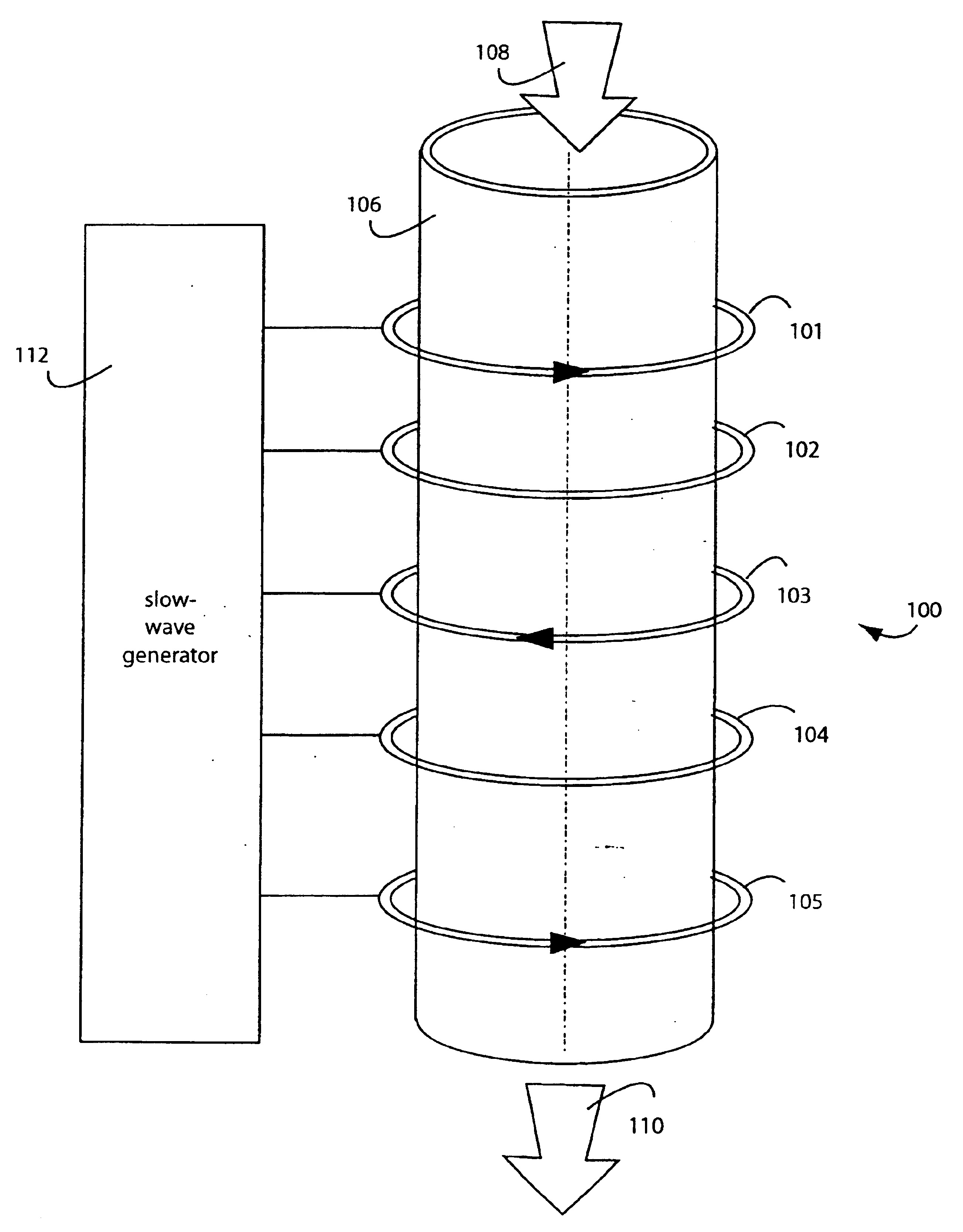
Figure 1 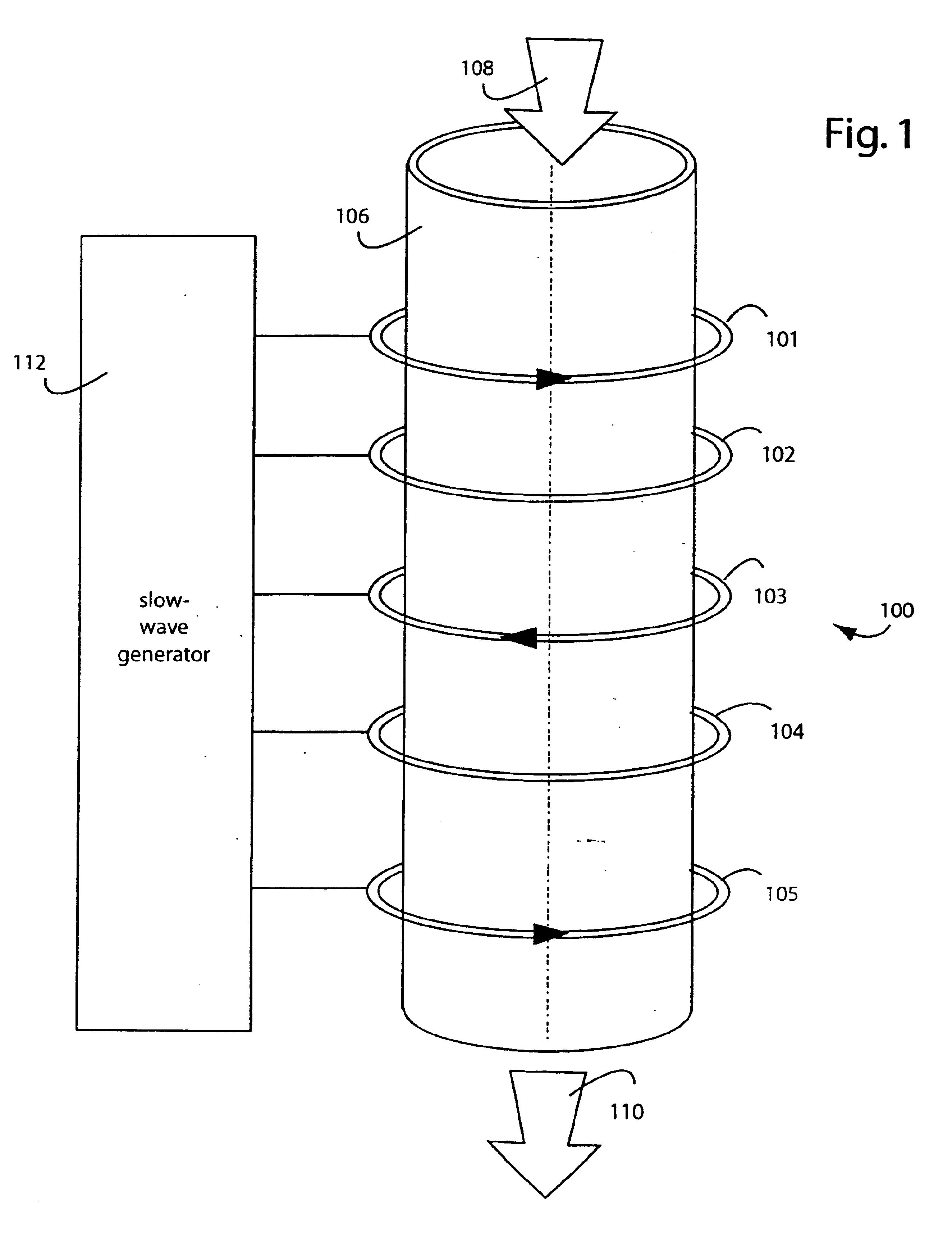
Figure 2 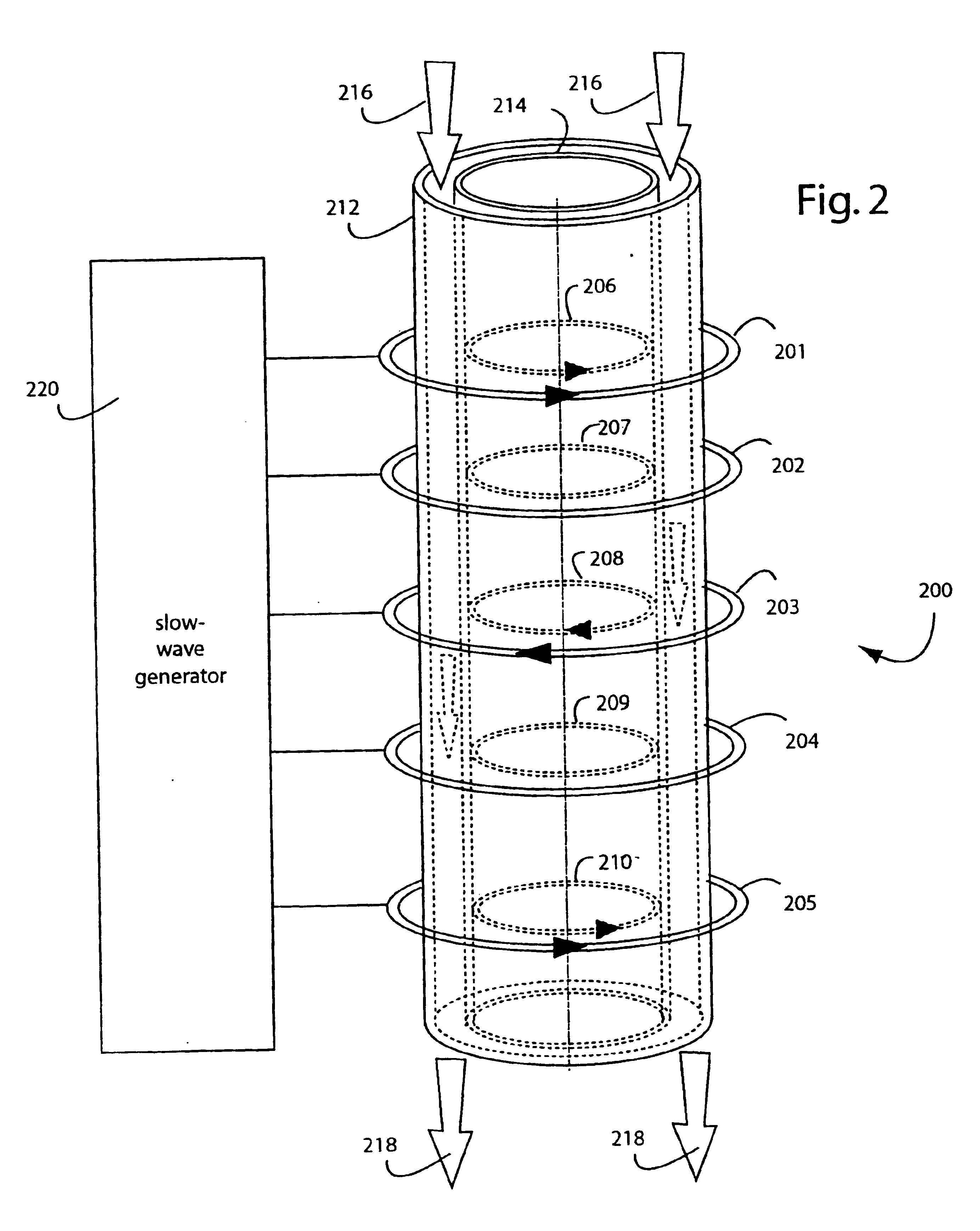
Figure 3
Abstract
Description
BACKGROUND OF THE INVENTION
[0001] 1. Field of the Invention
[0002] The present invention relates to plasma chemistry, and more particularly to devices and methods for transporting and motivating ionized gases which allow a separation of plasma generation and plasma application.
[0003] 2. Description of Related Art
[0004] Plasmas of ionized gases are routinely used in electronics and semiconductor manufacturing. Such plasmas are an almost neutral mix of electrons and ions that will recombine as they cool off. The challenge in many applications is to use the plasmas to do useful work before they cool off. One way to do that is to generate the plasma itself at or near the point of use. But that situation often results in compromises being made between what is best for generating the plasma in the first place and what is best for working the plasma once generated.
[0005] It occurs from this that it would be advantageous to generate the plasmas in one area specialized to plasma-generation, and th...
Examples
Embodiment Construction
[0023]FIG. 1 represents a plasma transport system embodiment of the present invention, referred to herein by the general reference numeral 100. The system 100 includes a set of five equally spaced coil inductors 101-105 coaxially disposed in a spatial array along the outside of a slow-wave structure 106. The slow-wave structure 106 comprises a hollow cylinder of dielectric material, such as ceramic. The use of five such inductors is simply for illustration in FIG. 1, more such inductors are possible.
[0024]An entering plasma and gas mixture 108 at the top is propelled along inside the duct to become an exiting plasma and gas flow 110. A slow-wave generator 112 produces five sets of signal waveforms to the inductors 101-105 that cooperate to move the plasma and gases along inside. The signal phases between the outputs of the slow-wave generator 112 are separated by π2.
The slow-wave generator 112 drives the plasma and gases along inside by generating five phased RF drive currents, resp...