
Cross folded, pressure sealed multi-page paper assembly and methods of making same
a multi-page paper and assembly technology, applied in the field of multi-page paper assembly, can solve the problems of increasing the cost of producing this type of multi-page document, and achieve the effects of reducing manufacturing time and cost, preserving data and information confidentiality, and being easy to pull or peel
Patent Information
- Authority / Receiving Office
- US · United States
- Patent Type
- Patents(United States)
- Current Assignee / Owner
- Publication Date
- 2007-05-22
- Estimated Expiration
- Not applicable · inactive patent
Smart Images
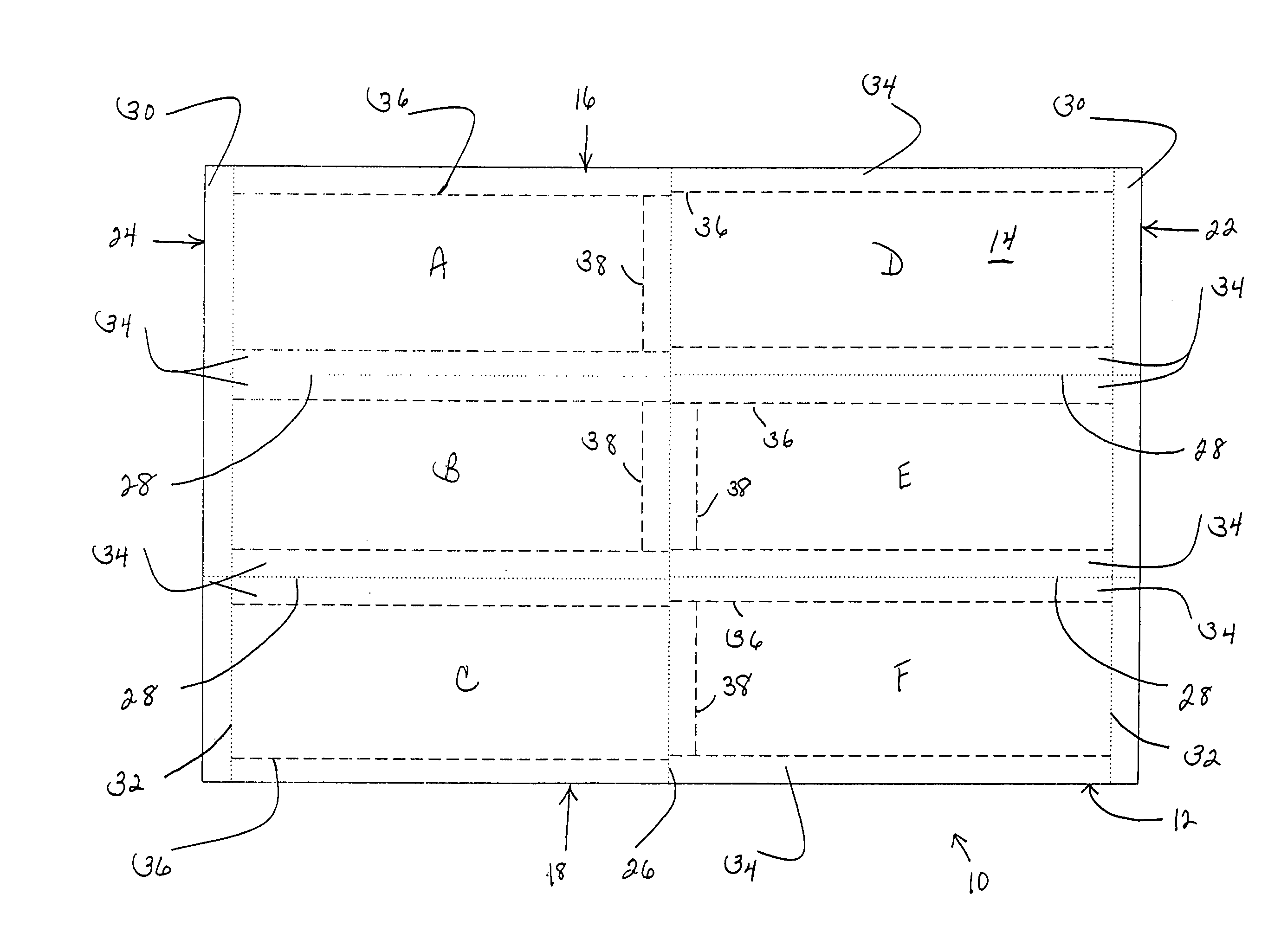
Figure 1 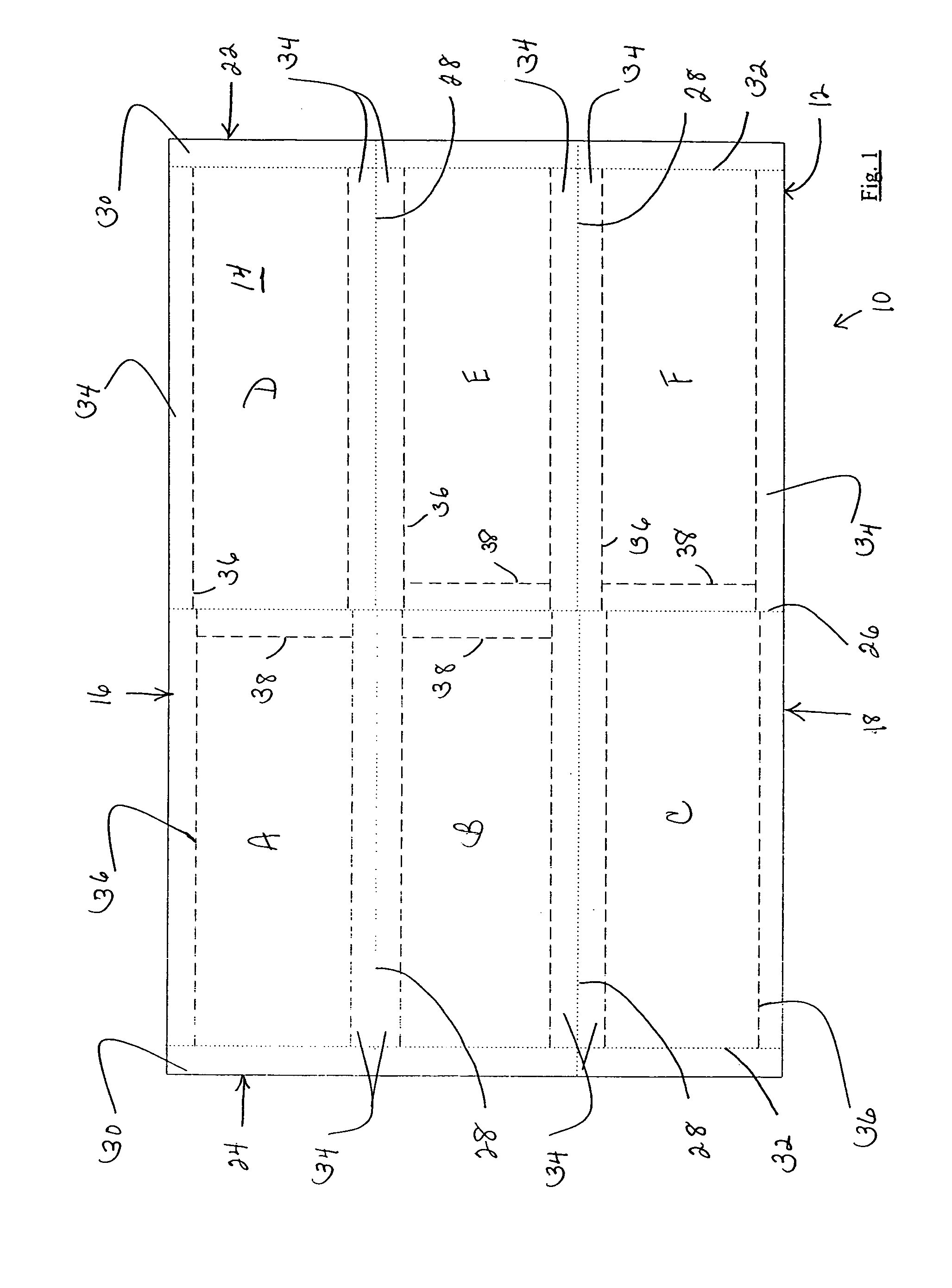
Figure 2 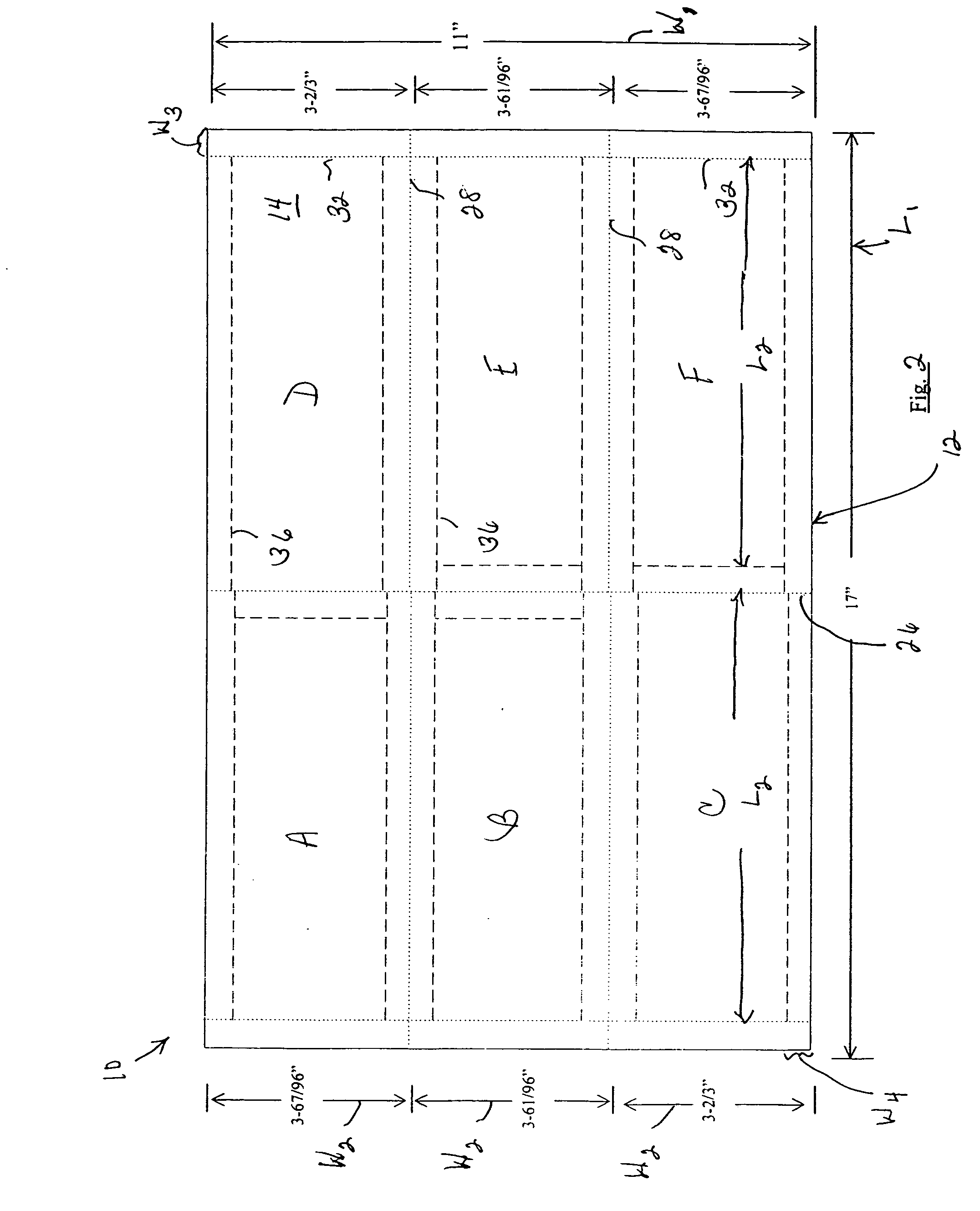
Figure 3
Abstract
Description
PRIOR RELATED PATENT APPLICATIONS
[0001] The present invention claims priority under 37 C.F.R. § 119(e) to U.S. provisional patent application Ser. No. 60 / 420,814, filed on Oct. 25, 2002, which is incorporated herein by reference.FIELD OF THE INVENTION
[0002] The invention relates to a multi-page paper assembly.BACKGROUND OF THE INVENTION
[0003] Multi-page paper assemblies, such as mailer-type assemblies, used for business forms, direct mail pieces, information and promotional booklets, and other multi-page volumes are formed to distribute and supply information and / or instruments, e.g., having a certain dollar value, to end users. Such multi-page paper assemblies are typically constructed of a multiple of plies or sheets of suitable paper. The multiple plies or sheets of paper are typically printed, imaged or otherwise processed to dispose data and information on one or more surfaces of each ply or sheet. Thereafter, the multiple of plies or sheets are typically collated, stacked and joi...
Examples
Embodiment Construction
[0029]At least some embodiments of the invention provide a cross folded, pressure sealed multi-page paper assembly. Embodiments of the invention provide a multi-page paper assembly for use as, e.g., a business form or a direct mail piece, where the assembly is a one-piece assembly constructed of a single ply or sheet of paper, and is folded and sealed according to the invention to provide a multi-page assembly or booklet. The paper assembly has a center transverse line of cross fold perforations and one or more longitudinal fold lines of perforations to assist folding the single sheet assembly into a desired number of panels. The assembly further includes a plurality of deposits of pressure-activated cohesive disposed along at least one surface of the assembly to bind or adhere folded portions of the assembly. The center transverse line of cross fold perforations and certain cohesive deposits form a secure binder when the assembly is folded along the cross fold perforations such tha...