
EGC compliant wire mesh cable tray system
a wire mesh cable and tray technology, applied in the field of wire mesh cable tray system, can solve the problems of no longer adhering to or complying with the egc standards to which it had been manufactured, and achieve the effect of easy and rapid modification
Patent Information
- Authority / Receiving Office
- US · United States
- Patent Type
- Patents(United States)
- Current Assignee / Owner
- Publication Date
- 2012-07-10
Smart Images
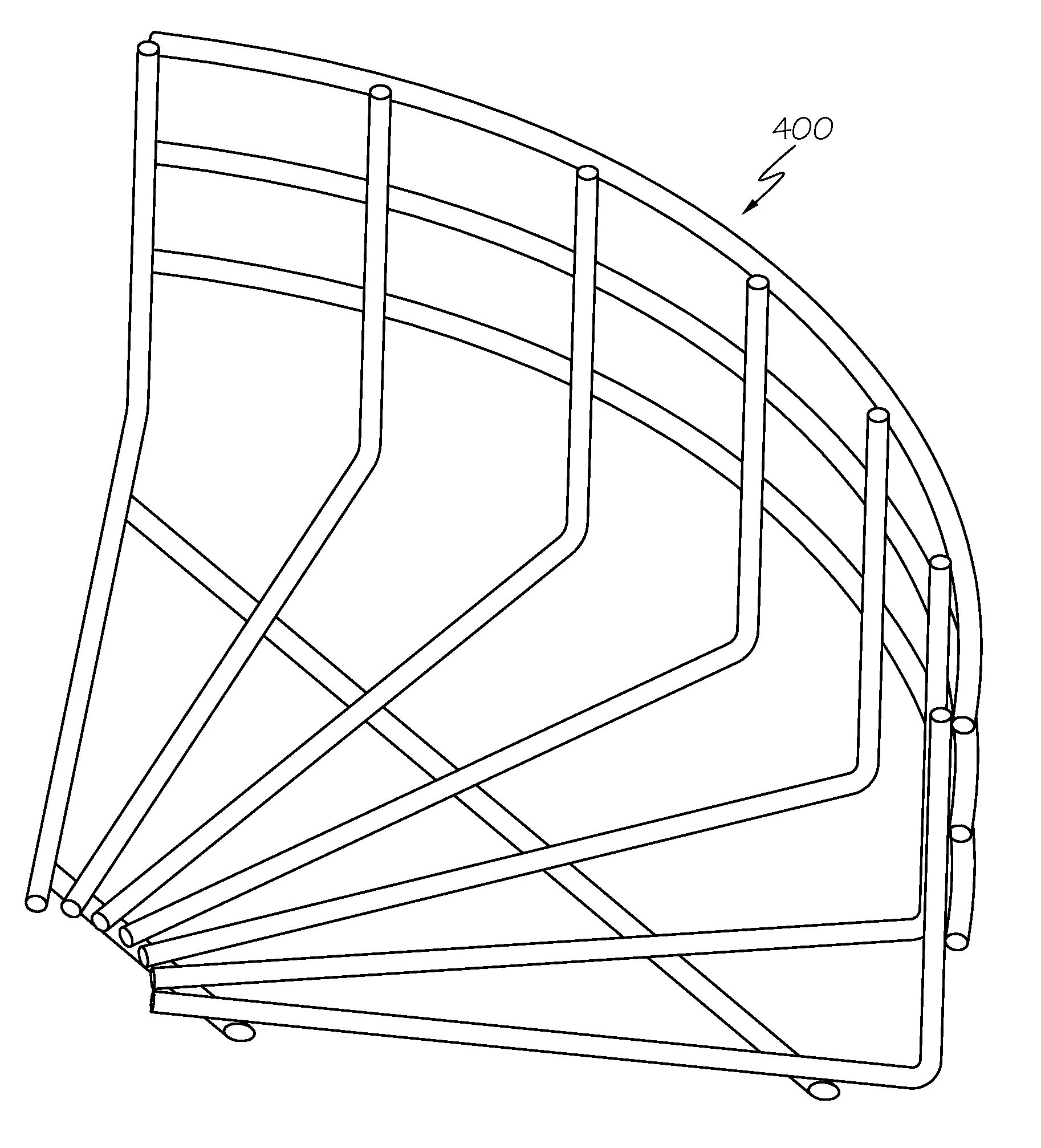
Figure 1 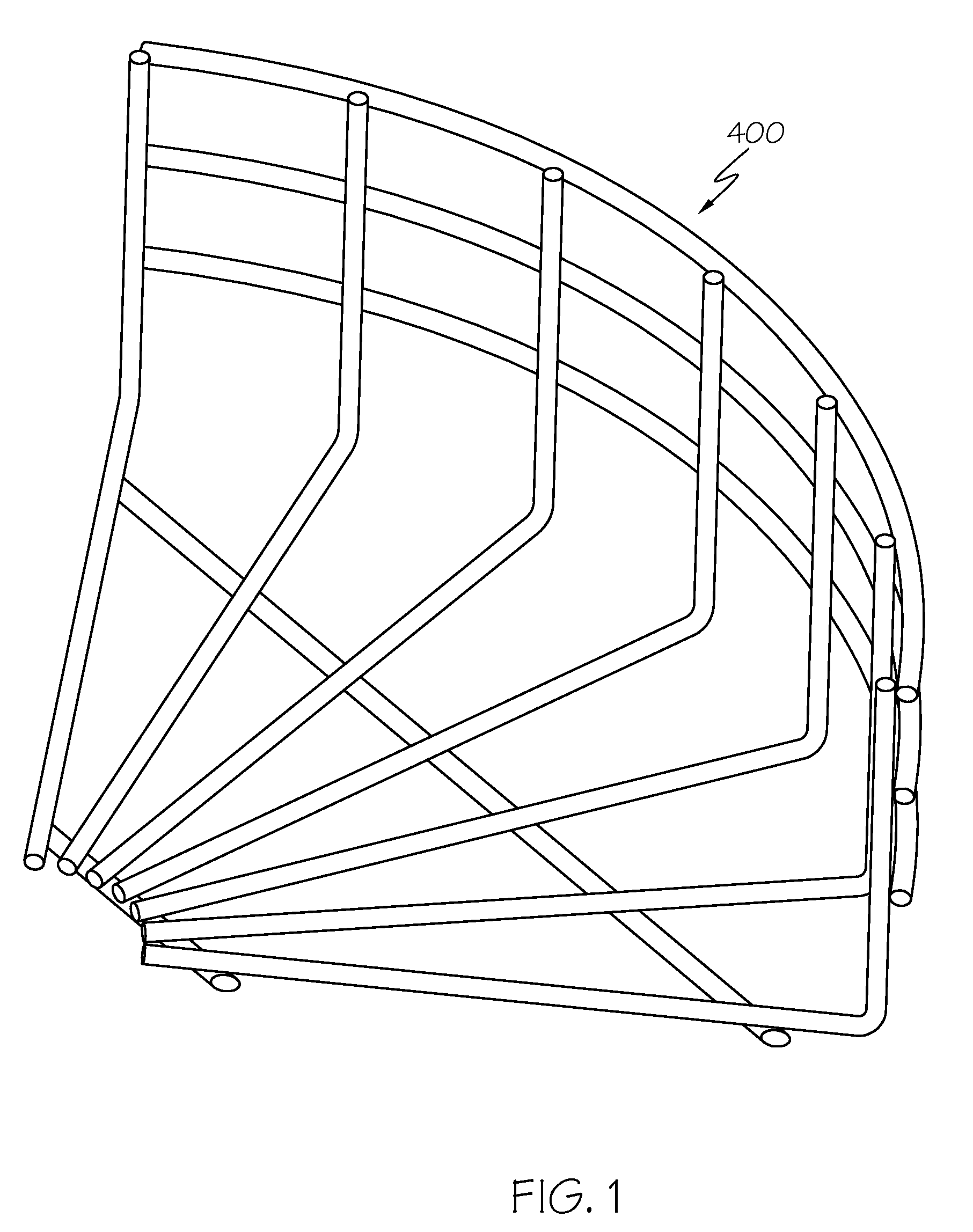
Figure 2 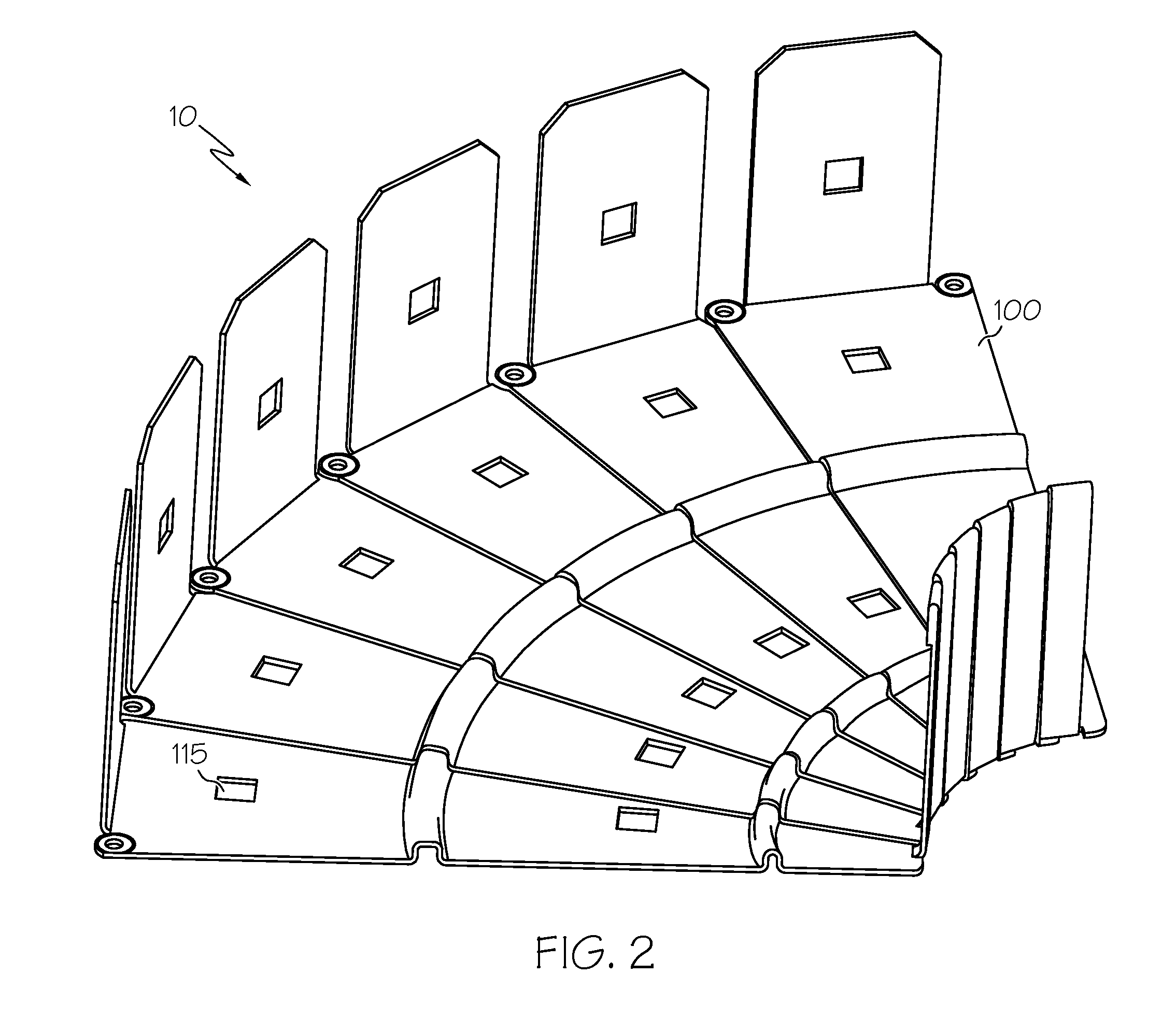
Figure 3
Abstract
Description
BACKGROUND
[0001] The present disclosure relates, generally, to a wire mesh cable tray system and, in particular, to a component for a wire mesh cable tray that can be installed in the field to maintain equipment ground conductor (EGC) compliance for the wire mesh cable tray system.
[0002] Generally, a cable tray system is a rigid structural support system used to securely and mechanically support cables and wires across open spans. One type of cable tray is a wire mesh cable tray. Typically, these wire mesh cable trays are used at a job site for field adaptable support systems for a variety of cables such as, for example, low voltage, telecommunication and fiber-optics cables supporting analog and digital signals. In addition, the cables may be for applications that require different operational electrical voltages. The wire mesh cable trays are installed on short support spans between about four to about eight feet. These systems are typically steel wire mesh and zinc plated. Wire mes...
Examples
Embodiment Construction
[0015]In the following detailed description of the embodiments, reference is made to the accompanying drawings that form a part hereof, and in which are shown by way of illustration, and not by way of limitation, specific embodiments in which the disclosure may be practiced. It is to be understood that other embodiments may be utilized and that logical, mechanical and electrical changes may be made without departing from the spirit and scope of the present disclosure.
[0016]As discussed above, the manufacturing standard requirements for wire mesh cable trays are govern by the NEMA and tested by establishments such as UL and CSA. In order for the wire mesh cable tray systems to comply with the installation standards set forth in NFPA-70, NEC, Table 392.7(b), the wire mesh cable trays should: 1) meet minimum cross-sectional area requirements as designated under Table 392.7(b); 2) not exceed a net resistance, the UL tests the conductivity of the wire mesh tray system using NEMA VE-1-200...