
Method for assessing the quality of a distorted version of a frame sequence
a frame sequence and quality assessment technology, applied in image analysis, image enhancement, instruments, etc., can solve the problems of distortion, more visible distortion and thus more annoying to users, and the same measured distance between the distorted version and the original, so as to improve the quality of the distorted video
Patent Information
- Authority / Receiving Office
- US · United States
- Patent Type
- Patents(United States)
- Current Assignee / Owner
- Publication Date
- 2014-09-02
- Estimated Expiration
- Not applicable · inactive patent
Smart Images
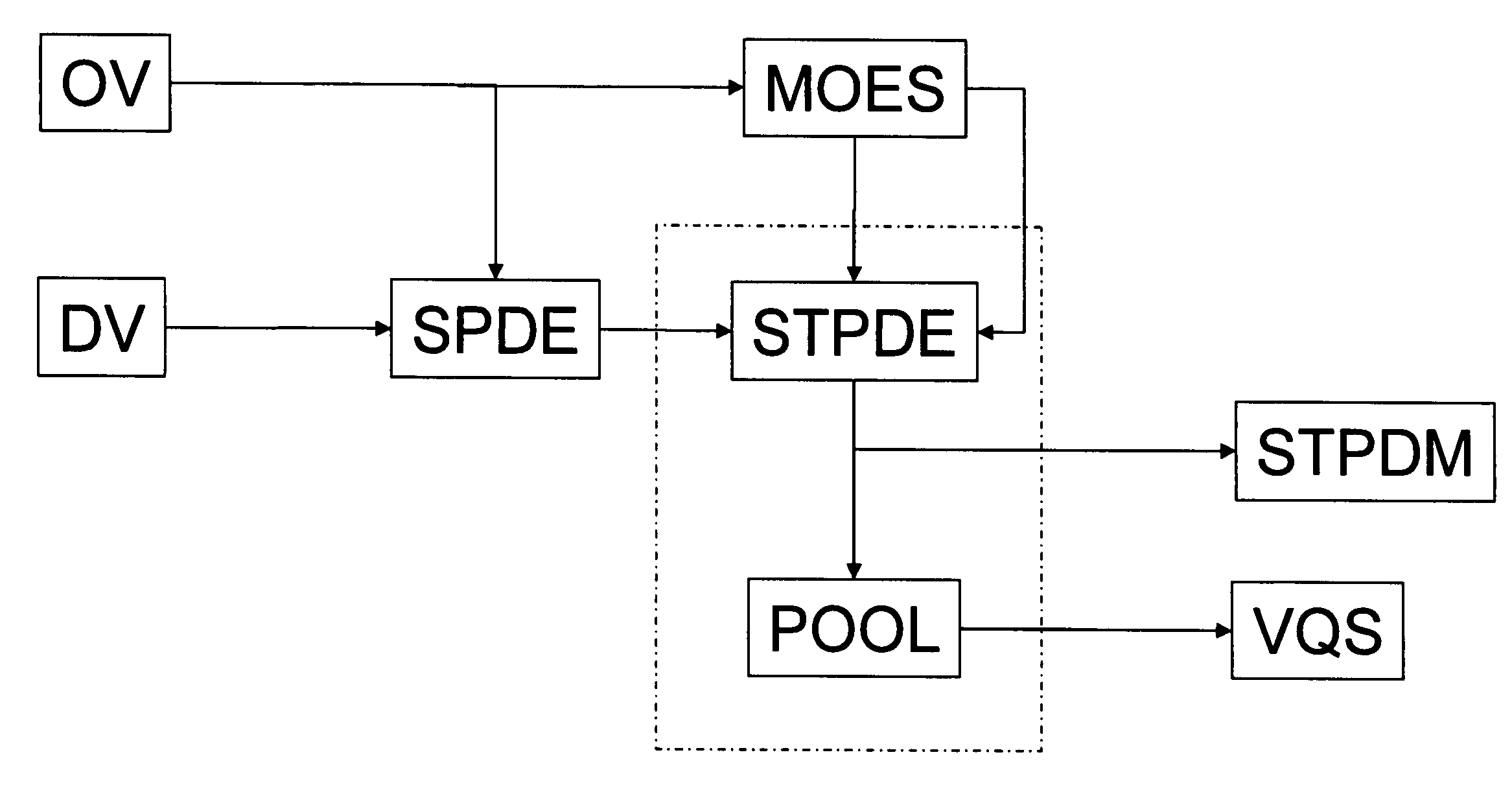
Figure 1 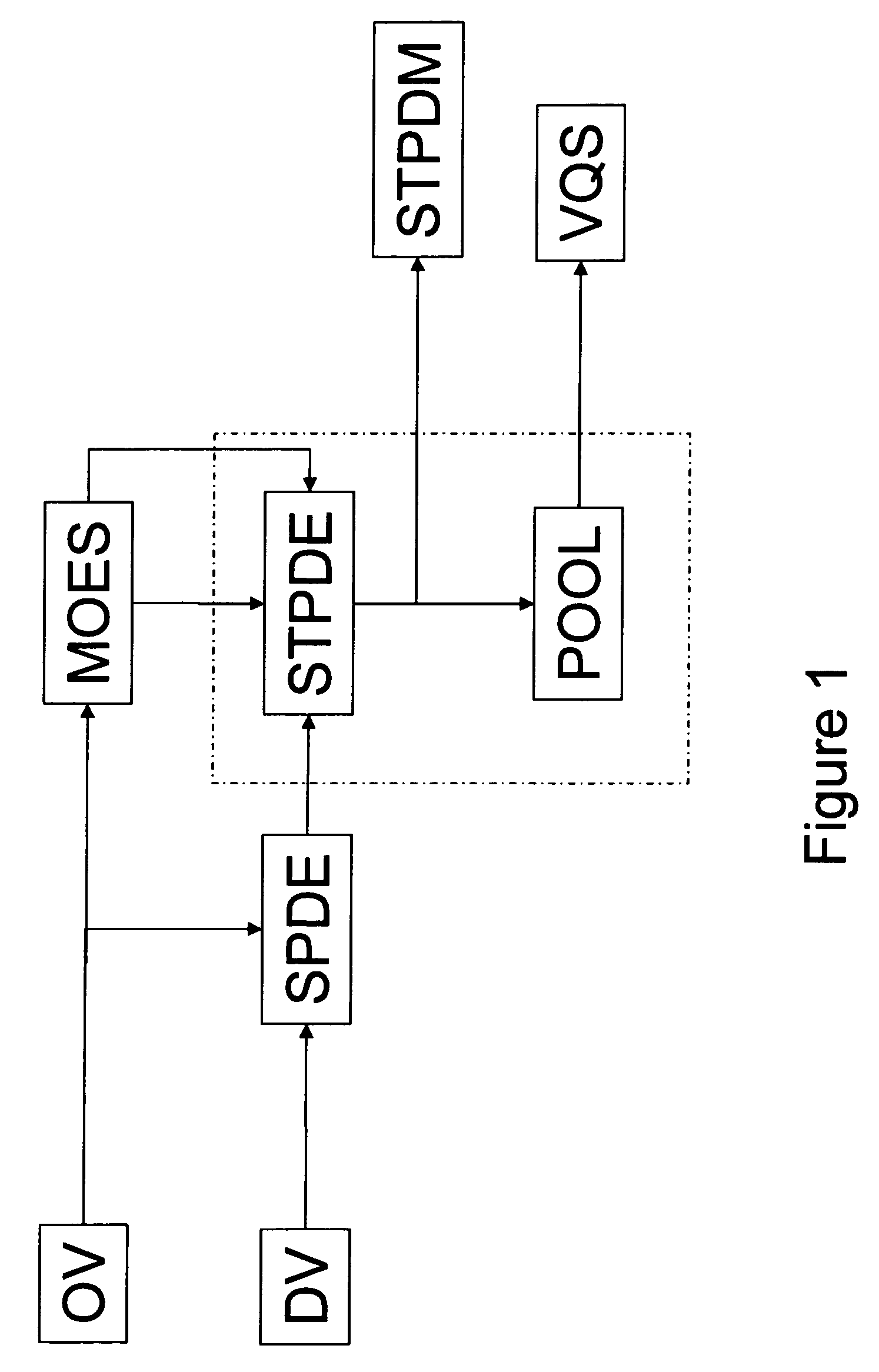
Figure 2 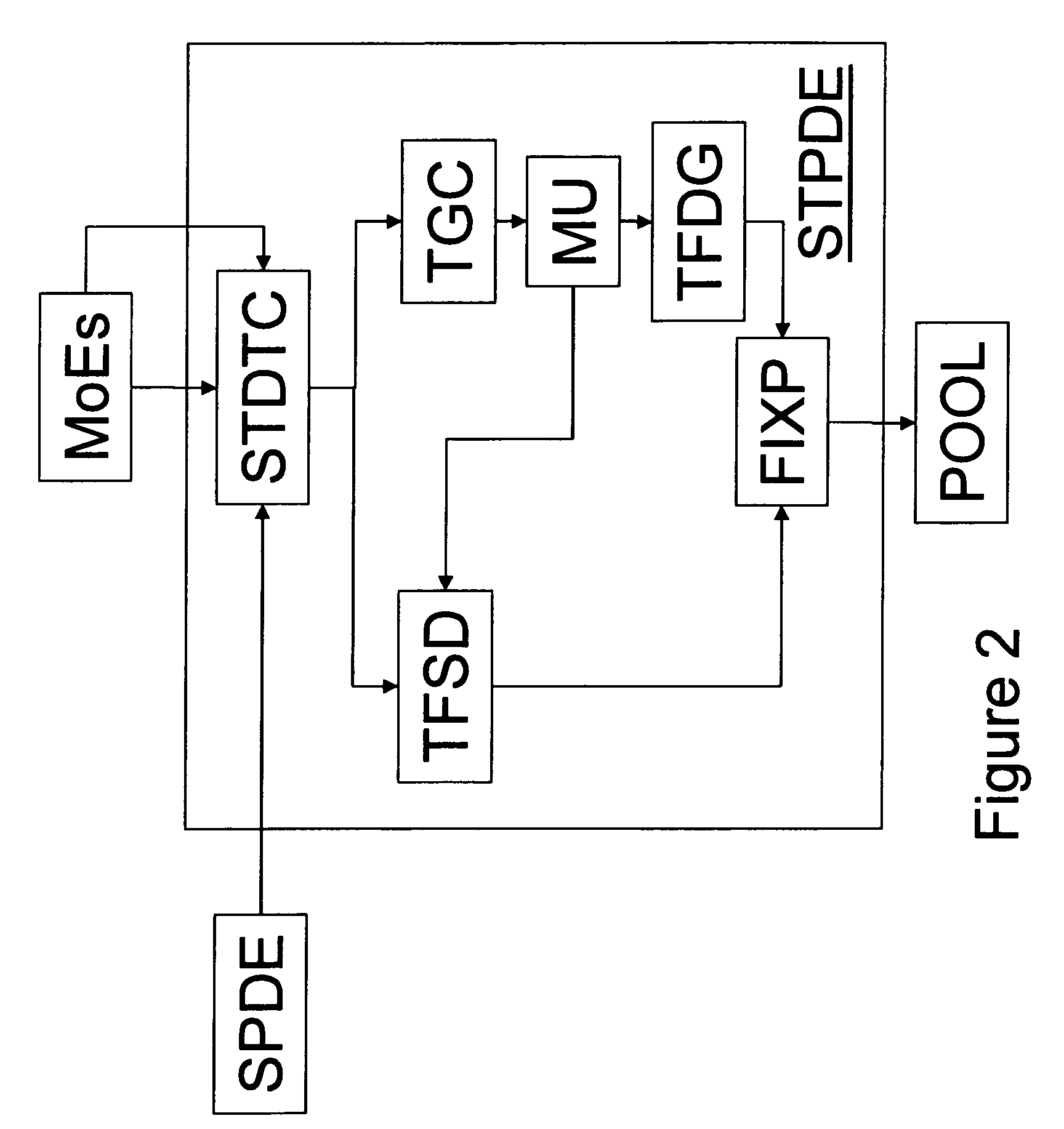
Figure 3
Abstract
Description
[0001] This application claims the benefit, under 35 U.S.C. §119, of European Patent Application No. 08305139.1 of 30 Apr. 2008.FIELD OF THE INVENTION
[0002] The invention is related to a method for assessing the quality of a distorted version of a frame sequence.BACKGROUND OF THE INVENTION
[0003] When image or frame sequences like video or film are compressed distortions are introduced in the compressed frame sequence. Errors introduced by transmission over a noisy or distorted channel may be another source of distortion.
[0004] For evaluating the quality of a distorted version of a frame sequence a video quality metric is necessary.
[0005] Well known mathematical metrics for measuring distances between an original and a distorted version, like mean square error or maximum absolute error, do not take into account the psychological aspects of distortions. That is, some distortions are more visible and thus more annoying to users than other distortions although the may all result in the same ...
Examples
Embodiment Construction
[0025]FIG. 1 shows an exemplary embodiment of the claimed invention. An original video OV is inputted into a motion estimation module MOES which outputs dominant motion parameters and motion vectors. A distorted version of the video DV is inputted into a spatial perceptual distortion evaluation module SPDE which outputs spatial perceptual distortion maps. Each spatial perceptual distortion map comprises distortion values associated with the pixels of one of the frames of the video. The spatial perceptual distortion maps, the motion parameters and the motion vectors are inputted into a spatio-temporal perceptual distortion evaluation module STPDE which outputs spatio-temporal perceptual distortion maps STPDM. Said spatio-temporal perceptual distortion maps STPDM are inputted into a pooling module POOL and may be used for other purposes, also.
[0026]The pooling module POOL then outputs video quality score VQS.
[0027]FIG. 2 shows an exemplary embodiment of the inventive spatio-temporal d...