
Method and apparatus for minimally invasive insertion of intervertebral implants
a technology of intervertebral implants and implants, which is applied in the field of medical devices, can solve the problems of high cost, long inpatient hospital stays, and inability to meet patient requirements, and achieve the effect of facilitating the introduction of instruments and/or devices
Patent Information
- Authority / Receiving Office
- US · United States
- Patent Type
- Patents(United States)
- Current Assignee / Owner
- Publication Date
- 2016-03-08
Smart Images
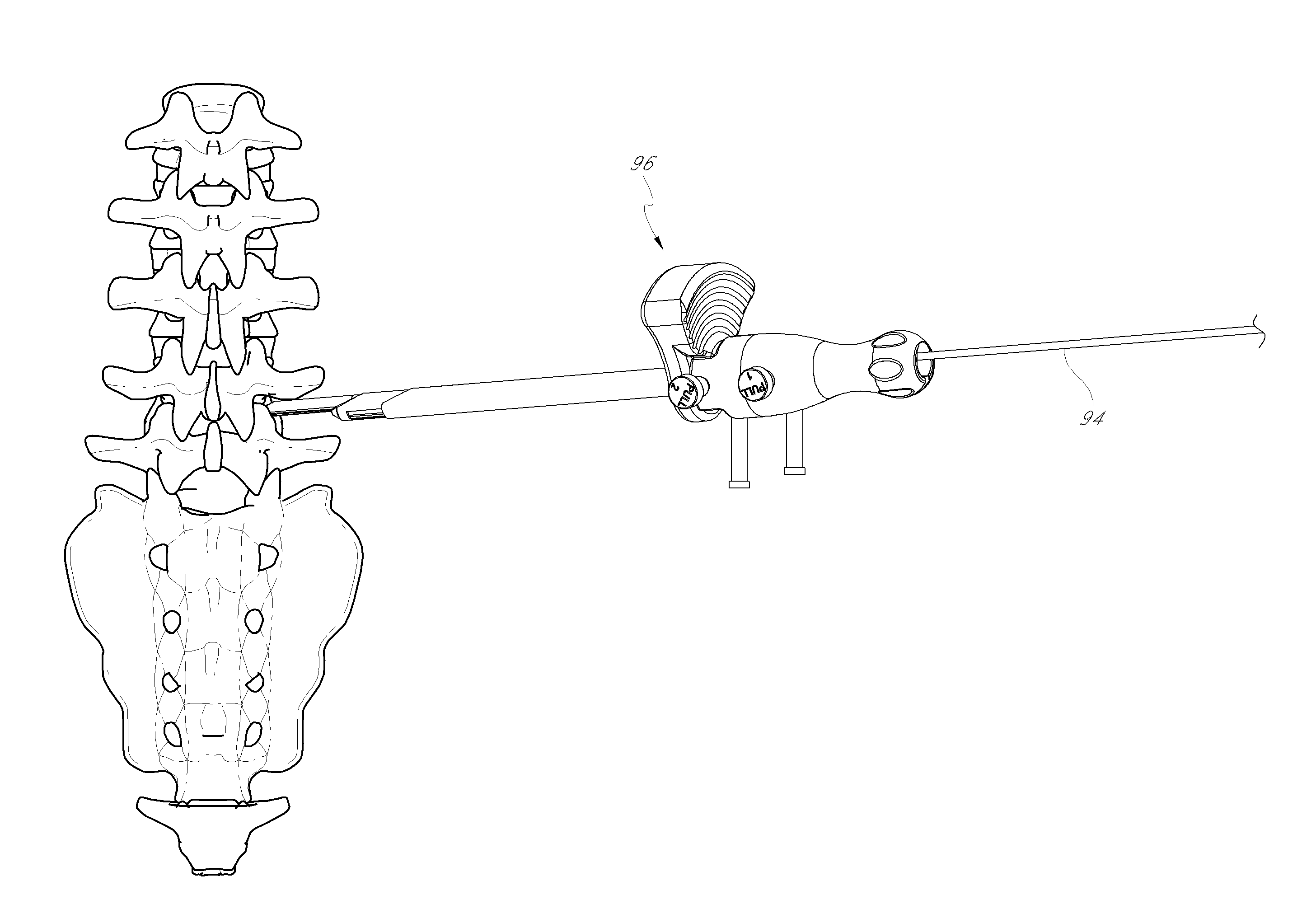
Figure 1 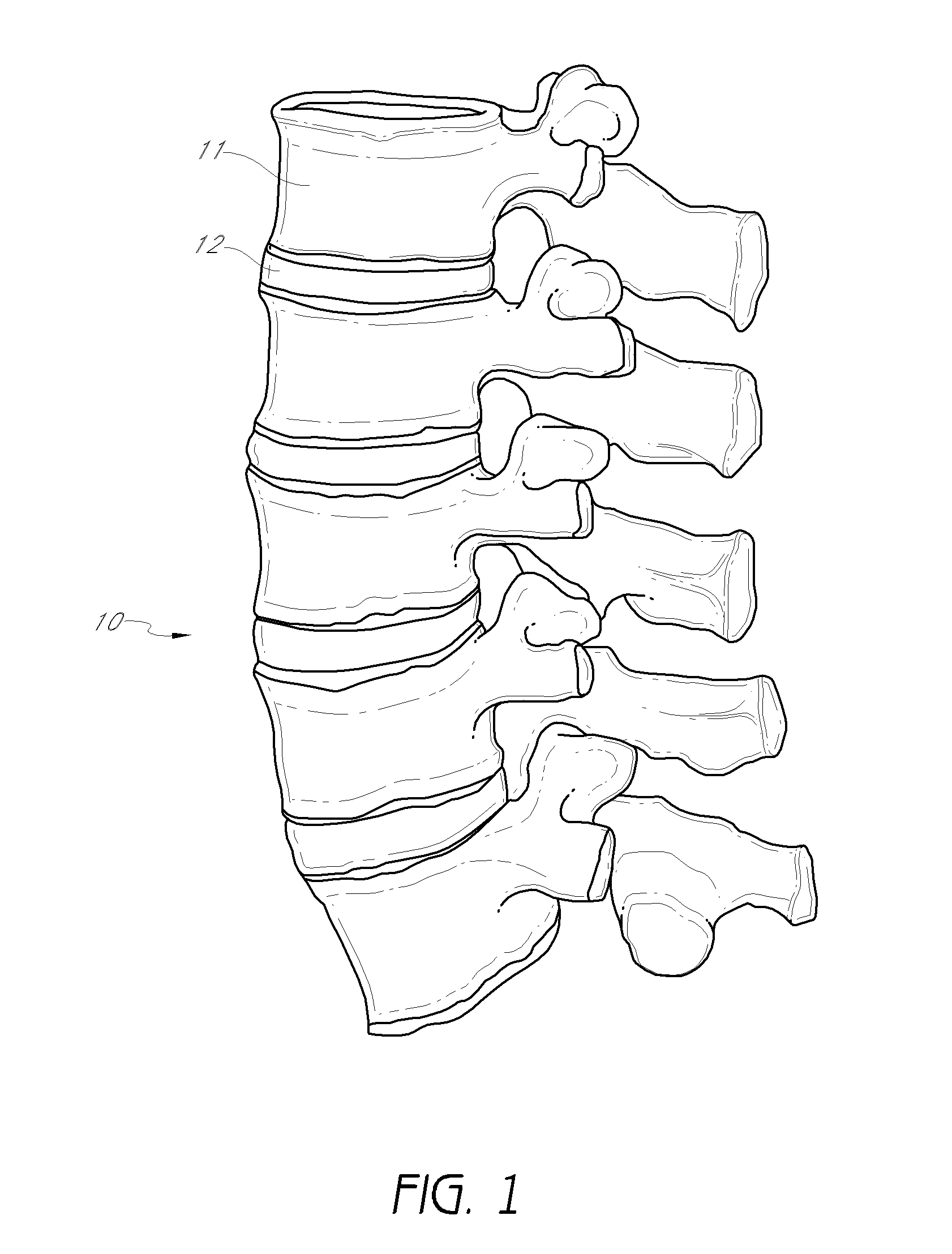
Figure 2 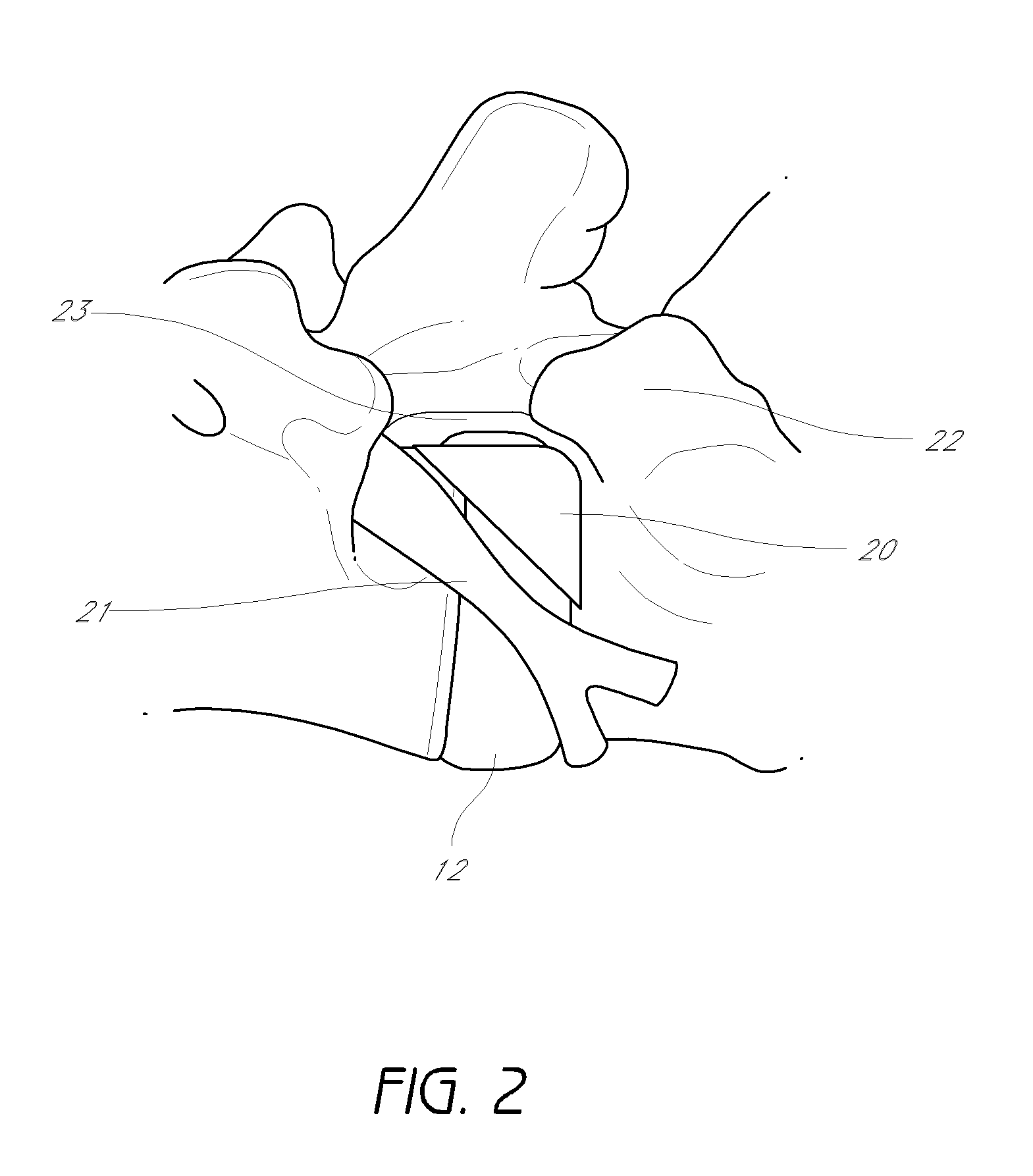
Figure 3
Abstract
Description
BACKGROUND OF THE INVENTION
[0001] 1. Field of the Invention
[0002] The present application relates to medical devices and, more particularly, to a medical device and method for treating the spine.
[0003] 2. Description of the Related Art
[0004] The human spine is a flexible weight bearing column formed from a plurality of bones called vertebrae. There are thirty-three vertebrae, which can be grouped into one of five regions (cervical, thoracic, lumbar, sacral, and coccygeal). Moving down the spine, there are generally seven cervical vertebrae, twelve thoracic vertebrae, five lumbar vertebrae, five sacral vertebrae, and four coccygeal vertebrae. The vertebrae of the cervical, thoracic, and lumbar regions of the spine are typically separate throughout the life of an individual. In contrast, the vertebra of the sacral and coccygeal regions in an adult are fused to form two bones, the five sacral vertebrae which form the sacrum and the four coccygeal vertebrae which form the coccyx.
[0005] In ge...
Examples
Embodiment Construction
[0095]In accordance with certain embodiments disclosed herein, an improved apparatus for inserting an intervertebral implant is provided. For example, in one embodiment, the apparatus may be used to insert surgical instruments and / or one or more intervertebral implants through a minimally invasive procedure to reduce trauma to the patient and thereby enhance recovery and improve overall results. By minimally invasive, Applicant means a procedure performed percutaneously through an access device in contrast to a typically more invasive open surgical procedure.
[0096]Certain embodiments disclosed herein are discussed in the context of an intervertebral implant and spinal fusion because of the device and methods have applicability and usefulness in such a field. The device can be used for fusion, for example, by inserting an intervertebral implant to properly space adjacent vertebrae in situations where a disc has ruptured or otherwise been damaged. “Adjacent” vertebrae can include thos...