
Continuous gas flow trocar assembly
a continuous gas flow and assembly technology, applied in the field of medical devices, can solve the problems of affecting the removal of instruments or any tissue, affecting the operation of instruments, and certain seals only working for a limited range of instrument diameters, so as to minimize the splashing of exiting gas and maintain constant pressure
Patent Information
- Authority / Receiving Office
- US · United States
- Patent Type
- Patents(United States)
- Current Assignee / Owner
- Publication Date
- 2007-02-27
- Estimated Expiration
- Not applicable · inactive patent
Smart Images
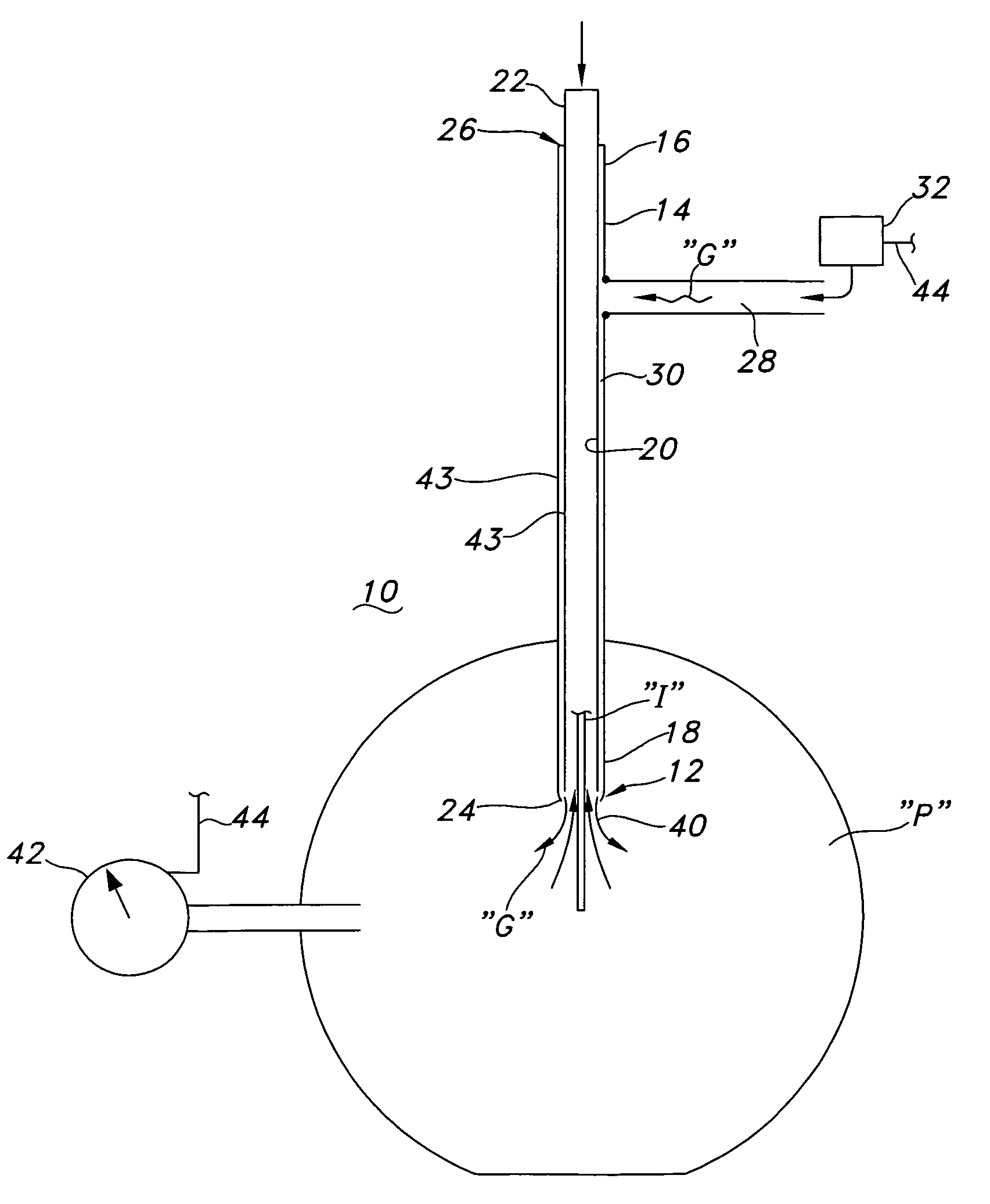
Figure 1 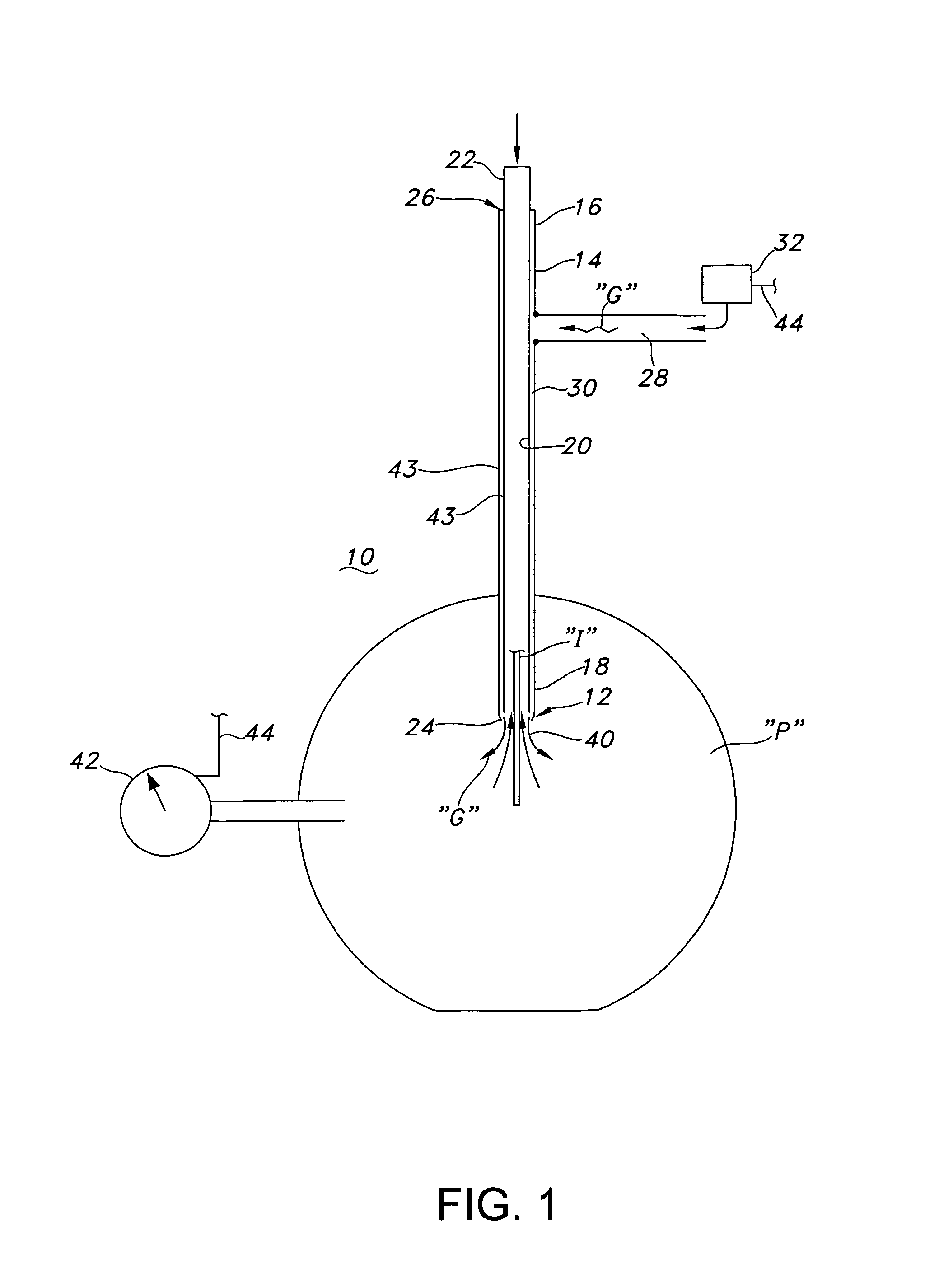
Figure 2 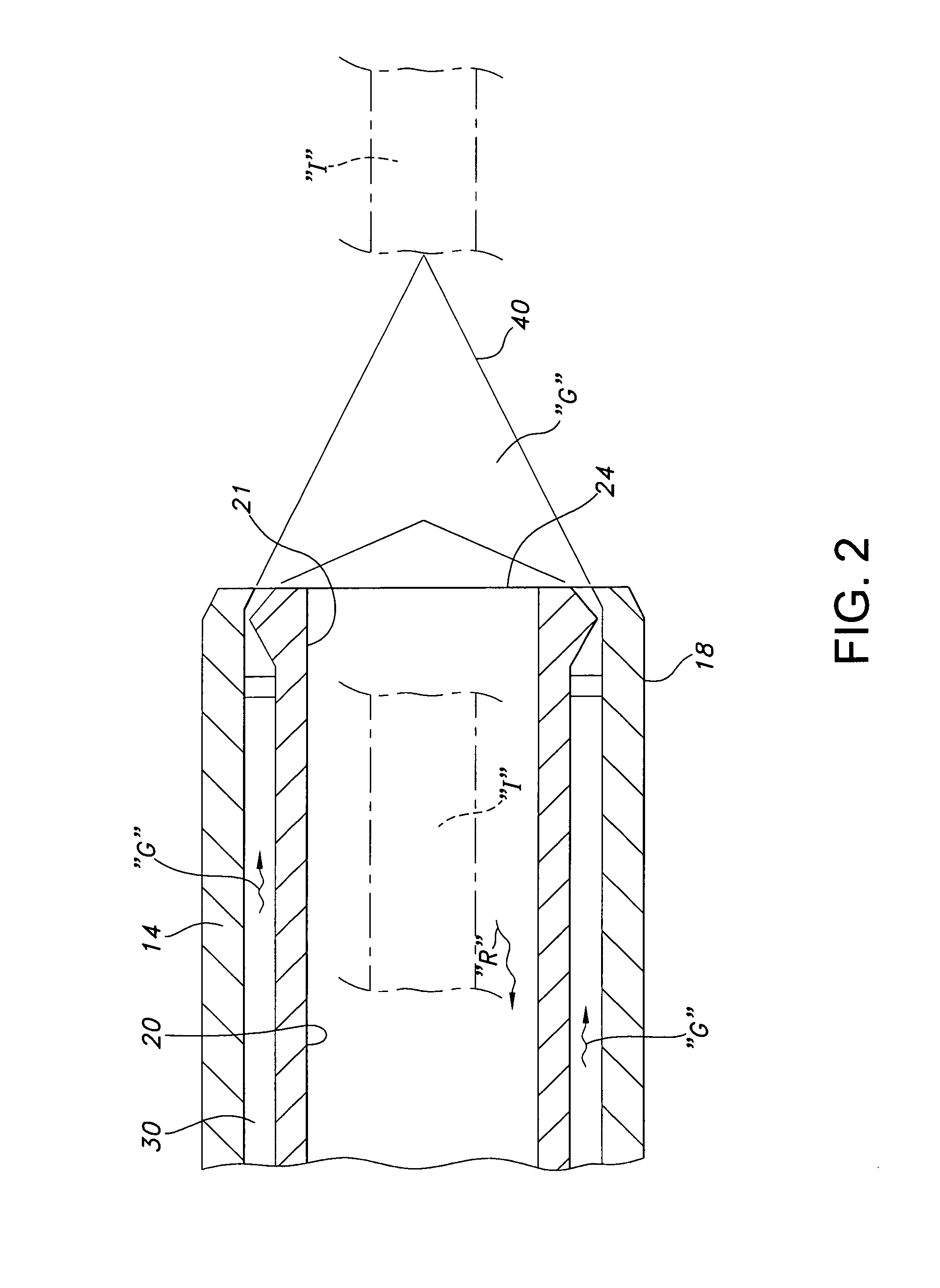
Figure 3
Abstract
Description
BACKGROUND OF THE INVENTION
[0001] 1. Field of the Invention
[0002] The present invention relates to medical devices and more particularly to access devices and particularly their seal arrangements and closure mechanisms applicable to such medical devices, and is based upon and incorporates herein Provisional Application Ser. No. 60 / 461,149 filed 8 Apr. 2003 by reference.
[0003] 2. Prior Art
[0004] Laparoscopic surgery is now standard procedure in hospitals today. Abdominal operations are being performed with narrow elongated instruments inserted through small incisions into interior portions of the body. Such laparoscopic procedures are now considered the treatment of choice for operations such as the removal of the gall bladder, spleen, adrenal glands, uterus and ovaries. Such laparoscopic procedures are accomplished via access through a device typically known as a trocar which facilitates the introduction of laparoscopic instruments into the abdomen of the body. The introductions of thes...
Examples
Embodiment Construction
[0039]Referring now to the drawings in detail, and particularly to FIG. 1, there is shown the present invention which comprises a continuous gas flow trocar assembly 10 which provides a completely open aperture 12 for the introduction of a surgical instrument “I” and its access to the peritoneum “P” without any physical contact between the innermost surface of the trocar assembly 10 and the surgical instrument “I” being introduced therewithin or withdrawn therefrom. Use of the trocar assembly 10 would also include the use of an obturator (not shown for clarity) to pierce the patient's abdomen to permit the access into the patient via the trocar assembly 10. The trocar assembly 10 of the present invention comprises an elongated outer tubular member (cannula) 14 having a first or proximal end 16 and a second or distal end 18. The assembly 10 includes an internal tubular member 20, having an open proximal end 22 and an open distalmost end 24, the internal tubular member 20 defining an ...