
Sensor device and residual stress detection system employing same
a technology of sensor device and residual stress, which is applied in the direction of measurement device, force measurement, instruments, etc., can solve the problems of inability to realize real-time detection, inability to meet the requirement of on-site measurement, and inability to realize on-site measurement with x-ray diffraction, etc., to achieve enhanced reliability, reduce size, and improve integration
Patent Information
- Authority / Receiving Office
- US · United States
- Patent Type
- Patents(United States)
- Current Assignee / Owner
- Publication Date
- 2018-01-09
Smart Images
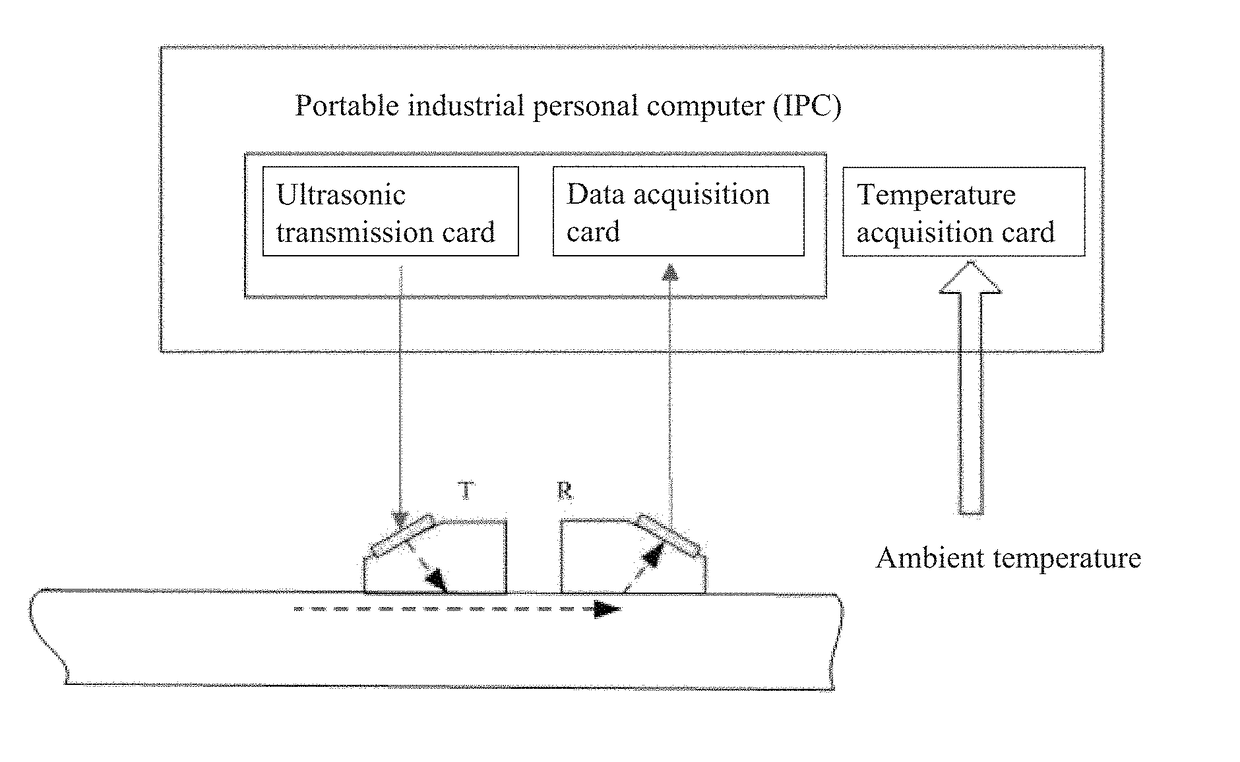
Figure 1 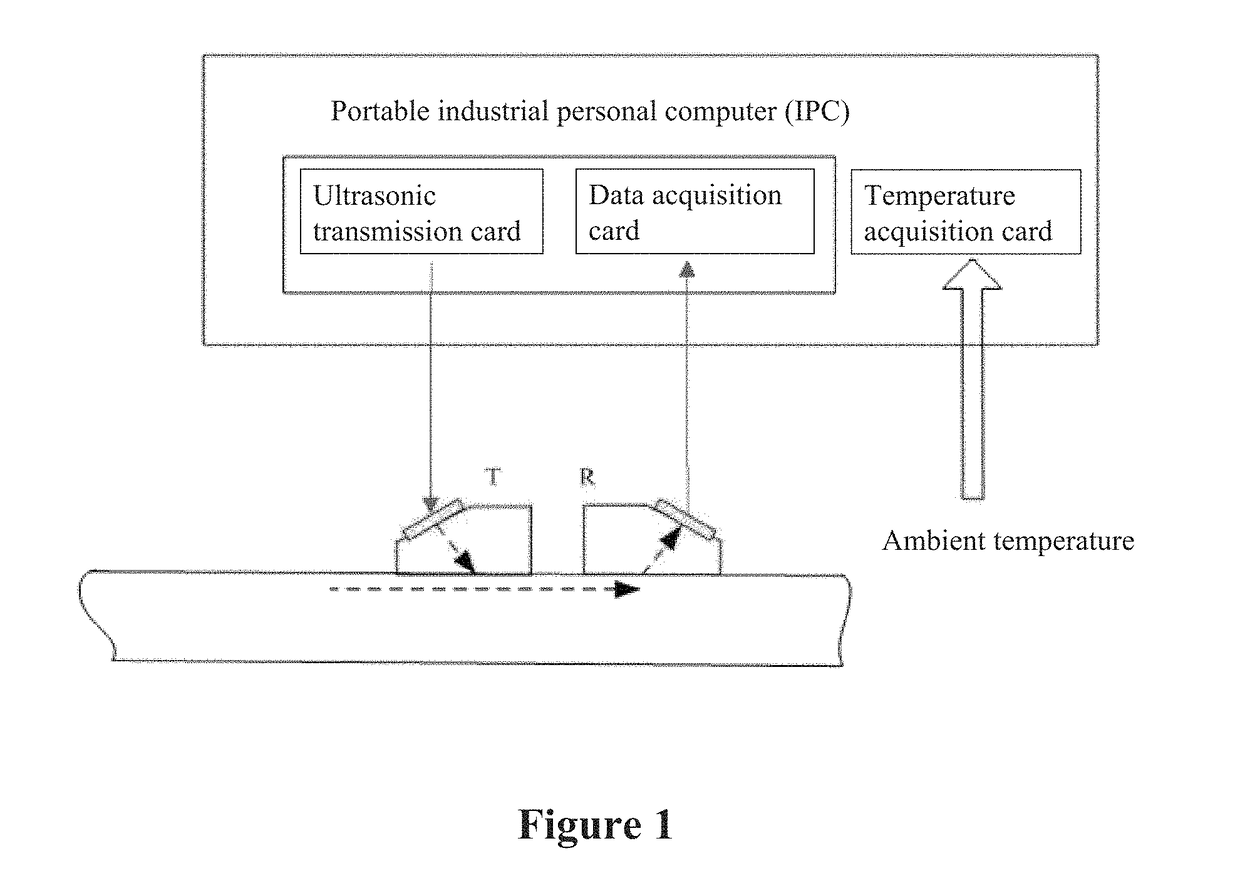
Figure 2 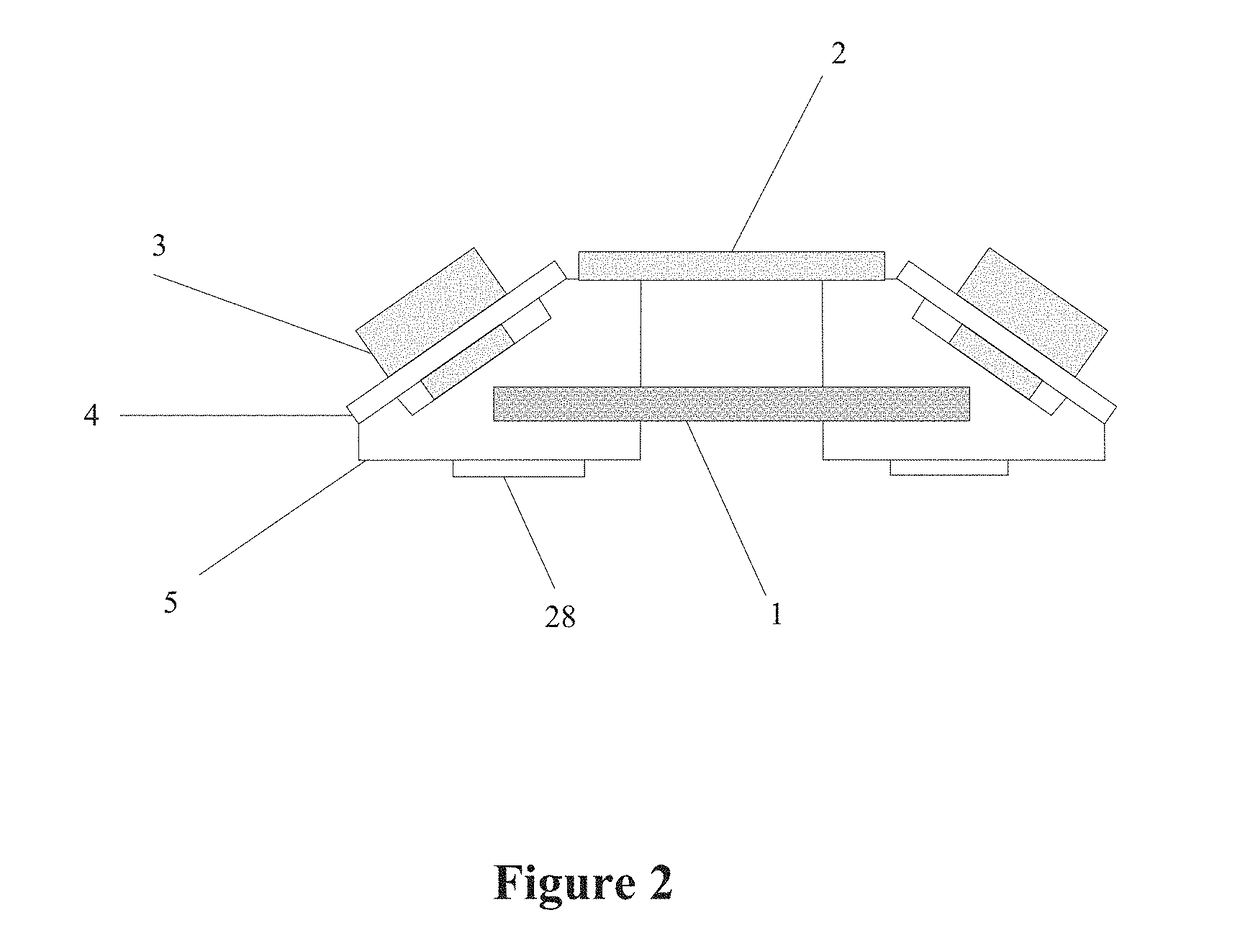
Figure 3
Abstract
Description
CROSS-REFERENCE TO RELATED APPLICATION(S)
[0001] This application is the U.S. National Stage of International Patent Application No. PCT / CN2013 / 078687, filed on Jul. 2, 2013, which claims the priority of Chinese Patent Application No. 201210500278.6, filed on Nov. 29, 2012 with the Chinese Intellectual Property Office the disclosures of which are hereby incorporated in their entireties by reference.FIELD OF THE INVENTION
[0002] The presented invention relates to a sensor device and residual stress detection system employing same. The residual stress at certain depth from the surface of metal materials can be detected by employment of ultrasonic longitudinal waves in the presented invention.BACKGROUND OF THE INVENTION
[0003] The available techniques for the measurement of residual stress mainly include hole drilling and X-Ray diffraction. The measurement by hole drilling provides a higher accuracy, which is premised on damaged surface status of materials. The surface needs to be prepared b...
Examples
embodiment 1
[0033]The near-surface residual stress detection system for metal materials, includes two major parts, that are hardware and software, and auxiliary equipment. As shown in FIG. 1, based on a computer platform, the present invention mainly comprises several parts, such as an exciting and receiving probe, an ultrasonic transmittance card, a data acquisition card, a computer system, a transmission line, etc. When there is a large temperature difference, the plexiglass wedge 5 (sonolucent wedge) and top fixed plate 2 would experience deformation caused by thermal expansion and contraction. A temperature acquisition card is further installed to acquire real-time ambient temperature by software (shown by the hollow arrow in FIG. 1), and eliminate the deformation of mechanical part of the system and effect on sound speed both caused by change of ambient temperature, so that the system can be adapted for measurement under a complex environment and have a wider range of applications. The hig...
embodiment 2
[0043]Sensor device 23 may also employ other configurations. For example, when domestic and foreign designers are designing the configuration of ultrasonic oblique incident sensor, it is common for them to fix the ultrasonic transducer in the plexiglass wedge with bolts or special fixture. While for this configuration, in a case where the transducer is coupled with the wedge, every time the transducer need to be removed and mounted again after coating with the coupling agent, resulting in an increased inconvenience.
[0044]In the present embodiment, as shown in FIG. 3, the sensor device comprises plexiglass wedges 5, a magnetic base 7 and fixed plates 4. Threads are processed in the inclined planes of the plexiglass wedges 5, so that the ultrasonic transducers 3 are threadedly fixed with the plexiglass wedges 5. Cylindrical cavities 9 are processed inside the plexiglass wedge 5, with diameters slightly larger (such as 4 mm larger) than that of the circular chips of the transducers 3. ...
embodiment 3
[0056]Currently the measurement of residual stress by applying ultrasonic waves is mostly carried out for flat plates, while pipes can be seen everywhere in daily life. When the residual stress present in the inner or outer surface of the pipes is too large, a serious accident may be caused. Therefore, the stress detection of pipes has attracted more and more attention. When measuring the surface residual stress of curved surfaces such as pipes, an appropriate adjustment shall be made to the structure of the detected system.
[0057]When measuring the residual stress of the inner or outer surface of a pipe, the bottom of each plexiglass wedge 5 is machined, so as to have the same curvature as that of the pipe. Alternatively, a bottom surface contacting member with the same curvature of the pipe is mounted on the bottom surface of each plexiglass wedge 5. In addition, the magnetic base 7 can be mounted between two plexiglass wedges 5, providing a greater magnetic force to allow the coup...