
Method of deterministic garbage collection
a garbage collection and deterministic technology, applied in the field of digital computer programming, can solve problems such as memory leakage, dangling pointers, and unnecessary exhaustion of memory available for executing programs
Patent Information
- Authority / Receiving Office
- US · United States
- Patent Type
- Patents(United States)
- Current Assignee / Owner
- Publication Date
- 2011-05-24
- Estimated Expiration
- Not applicable · inactive patent
Smart Images
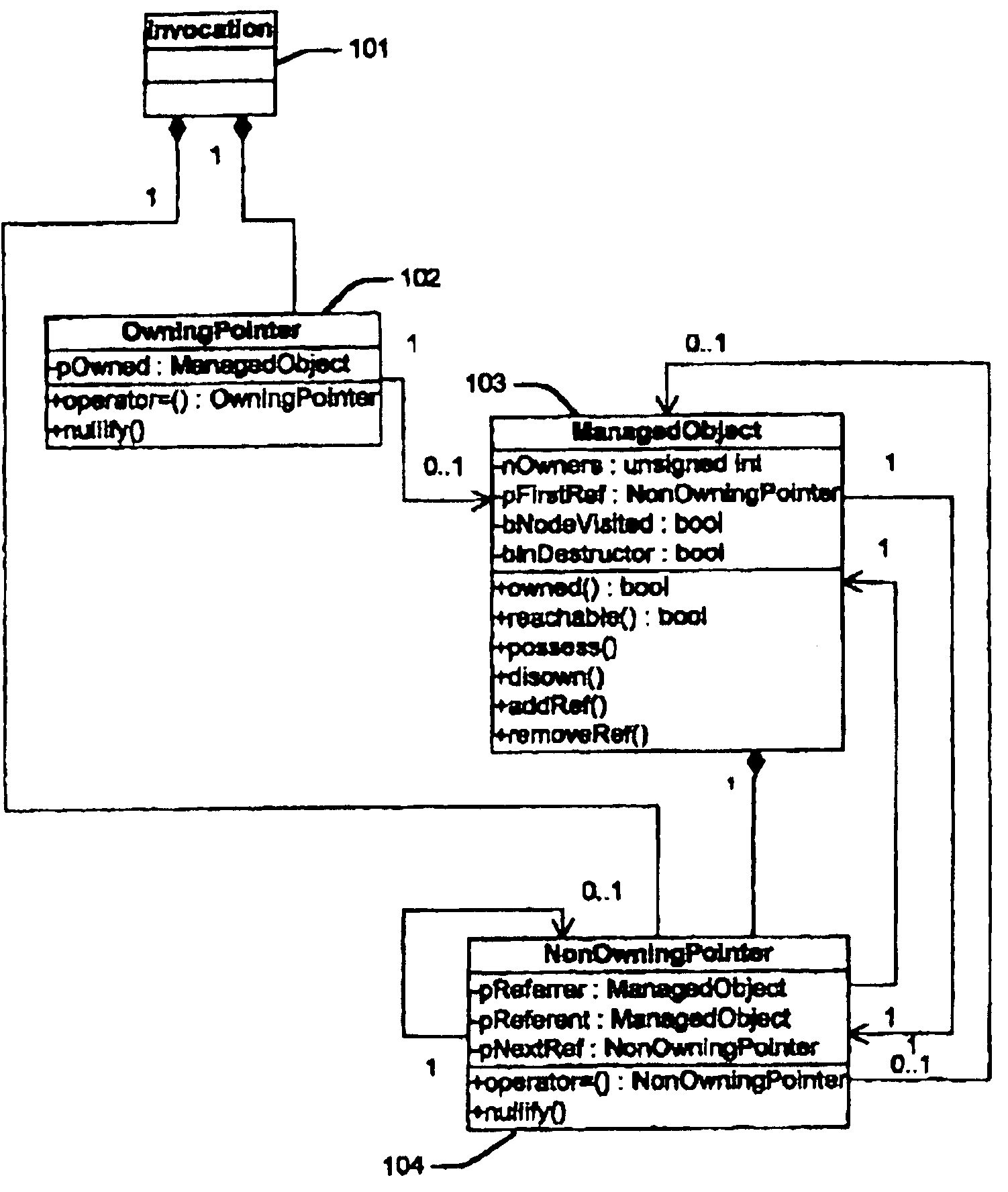
Figure 1 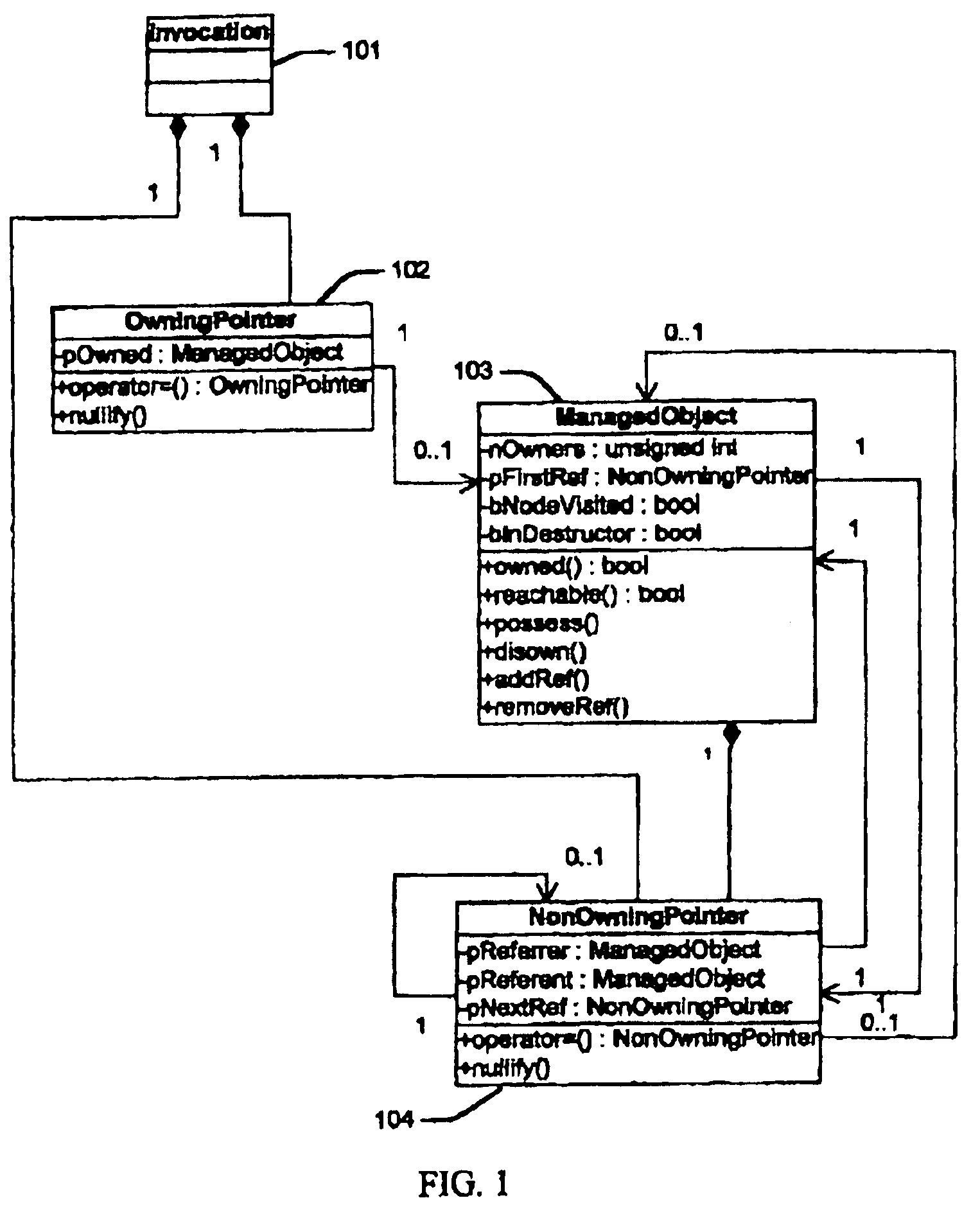
Figure 2 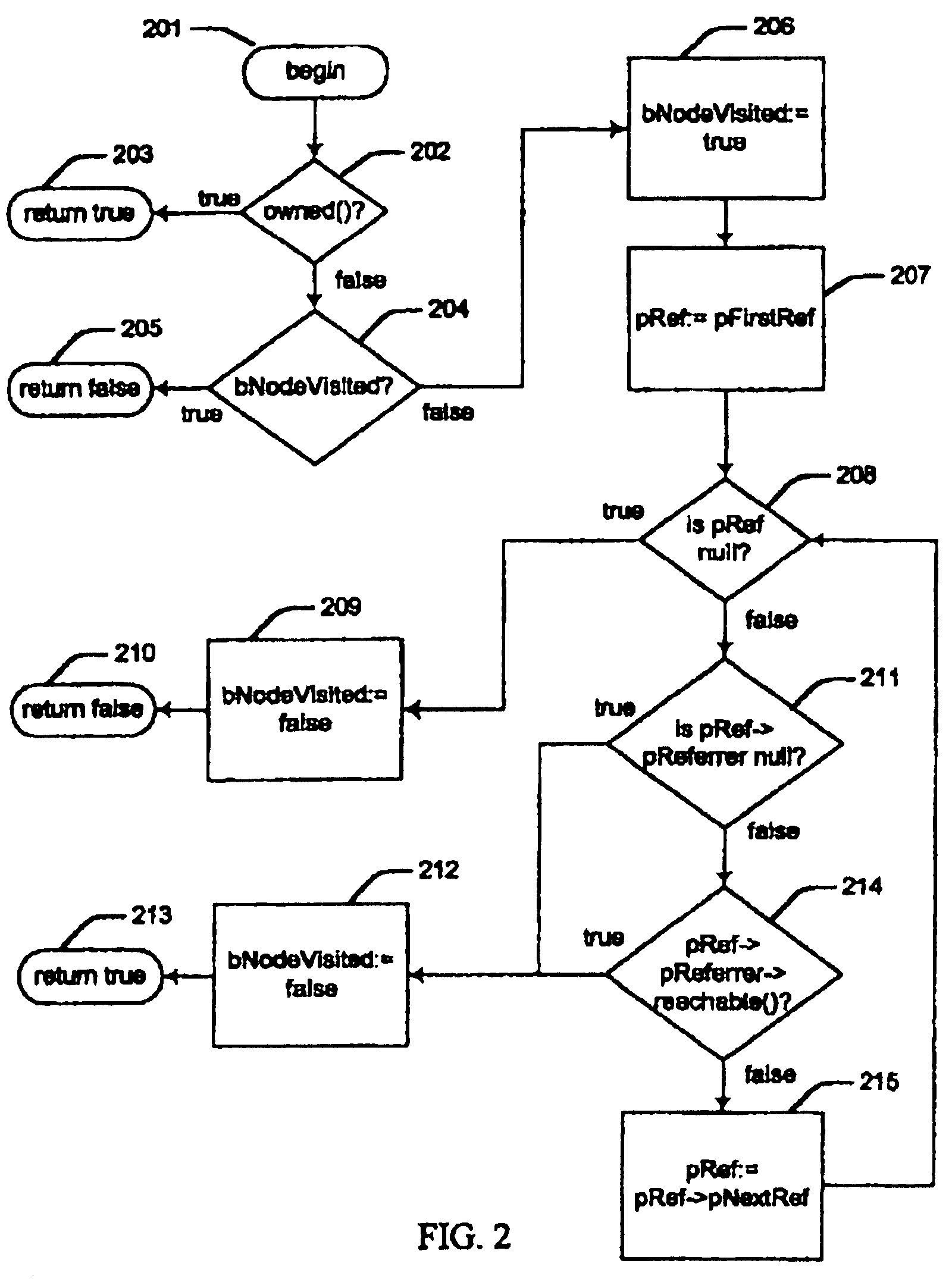
Figure 3
Abstract
Description
[0001] A portion of the disclosure of this patent document contains material which is subject to copyright protection. The copyright owner has no objection to the facsimile reproduction by anyone of the patent document or the patent disclosure, as it appears in the Patent and Trademark Office patent file or records, but otherwise reserves all copyright rights whatsoever.BACKGROUND OF THE INVENTION
[0002] This invention relates generally to programming of digital computers, and, more specifically, to memory management and garbage collection.
[0003] There are presently two broad approaches to memory management: (1) programmer memory management where programmers are responsible for writing explicit program code to de-allocate memory for the storage of objects no longer needed by a program; and (2) automatic memory management where the de-allocation of memory is done automatically, after the system determines that objects are no longer needed.
[0004] If memory management is automatic, there is...
Examples
Embodiment Construction
[0023]The present invention specifies an invocation, an owning pointer, a non-owning pointer, and a managed object. In the preferred embodiment, these are modeled using statements of an object-oriented programming language as classes with the names Invocation, OwningPointer, NonOwningPointer, and ManagedObject, respectively. FIG. 1 shows these classes using the graphical symbols of the Unified Modeling Language (UML), as defined by Rumbaugh, James, Ivar Jacobson, and Grady Booch, “The Unified Modeling Language Reference Manual,” Reading, Mass., Addison-Wesley, 1999, which is incorporated herein by reference.
[0024]An invocation is an invocation of a subroutine within a thread of a process of a system. An invocation ceases to exist when it is exited. An owning pointer is a pointer from an invocation to a managed object that establishes an ownership relationship between the invocation and the managed object. The owner of an owning pointer owns the managed object to which it points. A n...