Apply NMR for In-Depth Analysis of Crystalline Structures
SEP 22, 20259 MIN READ
Generate Your Research Report Instantly with AI Agent
Patsnap Eureka helps you evaluate technical feasibility & market potential.
NMR Crystallography Background and Objectives
Nuclear Magnetic Resonance (NMR) spectroscopy has evolved significantly since its discovery in the 1940s, transforming from a technique primarily used for chemical structure elucidation to a powerful tool for investigating crystalline materials at the atomic level. The integration of NMR with crystallography represents a convergence of complementary analytical methods that has revolutionized our understanding of solid-state structures and their properties.
Traditional crystallographic techniques such as X-ray diffraction (XRD) have long been the gold standard for determining crystal structures. However, these methods face limitations when dealing with disordered systems, materials containing light atoms, or compounds that cannot form suitable single crystals. NMR crystallography has emerged as a solution to these challenges, offering unique insights into local atomic environments that are often inaccessible through diffraction techniques alone.
The evolution of solid-state NMR hardware and methodology has been crucial to this development. Advances in magic-angle spinning (MAS), multi-dimensional correlation experiments, and dynamic nuclear polarization (DNP) have dramatically enhanced the sensitivity and resolution of NMR measurements for crystalline materials. These technological improvements have enabled researchers to probe increasingly complex structures with unprecedented detail.
Recent years have witnessed a paradigm shift in NMR crystallography with the integration of computational methods. Density Functional Theory (DFT) calculations now routinely complement experimental NMR data, allowing for the prediction of chemical shifts and the refinement of structural models. This synergy between experiment and theory has significantly expanded the scope and accuracy of crystalline structure determination.
The primary objectives of applying NMR for in-depth analysis of crystalline structures include: characterizing local atomic arrangements and bonding environments; identifying and quantifying structural disorder; investigating dynamic processes within crystalline frameworks; and developing comprehensive structural models that incorporate both long-range order and local variations. These goals address fundamental limitations in traditional crystallographic approaches.
Additionally, NMR crystallography aims to establish standardized protocols for data acquisition, processing, and interpretation that can be widely adopted across scientific disciplines. This standardization is essential for the broader implementation of NMR techniques in materials science, pharmaceutical research, and other fields where crystalline structure determination is critical.
Looking forward, the field is trending toward higher magnetic fields, faster spinning rates, and more sophisticated pulse sequences to extract increasingly detailed structural information. The integration of machine learning approaches for spectral analysis and structure prediction represents an exciting frontier that promises to further enhance the capabilities of NMR crystallography in addressing complex structural problems.
Traditional crystallographic techniques such as X-ray diffraction (XRD) have long been the gold standard for determining crystal structures. However, these methods face limitations when dealing with disordered systems, materials containing light atoms, or compounds that cannot form suitable single crystals. NMR crystallography has emerged as a solution to these challenges, offering unique insights into local atomic environments that are often inaccessible through diffraction techniques alone.
The evolution of solid-state NMR hardware and methodology has been crucial to this development. Advances in magic-angle spinning (MAS), multi-dimensional correlation experiments, and dynamic nuclear polarization (DNP) have dramatically enhanced the sensitivity and resolution of NMR measurements for crystalline materials. These technological improvements have enabled researchers to probe increasingly complex structures with unprecedented detail.
Recent years have witnessed a paradigm shift in NMR crystallography with the integration of computational methods. Density Functional Theory (DFT) calculations now routinely complement experimental NMR data, allowing for the prediction of chemical shifts and the refinement of structural models. This synergy between experiment and theory has significantly expanded the scope and accuracy of crystalline structure determination.
The primary objectives of applying NMR for in-depth analysis of crystalline structures include: characterizing local atomic arrangements and bonding environments; identifying and quantifying structural disorder; investigating dynamic processes within crystalline frameworks; and developing comprehensive structural models that incorporate both long-range order and local variations. These goals address fundamental limitations in traditional crystallographic approaches.
Additionally, NMR crystallography aims to establish standardized protocols for data acquisition, processing, and interpretation that can be widely adopted across scientific disciplines. This standardization is essential for the broader implementation of NMR techniques in materials science, pharmaceutical research, and other fields where crystalline structure determination is critical.
Looking forward, the field is trending toward higher magnetic fields, faster spinning rates, and more sophisticated pulse sequences to extract increasingly detailed structural information. The integration of machine learning approaches for spectral analysis and structure prediction represents an exciting frontier that promises to further enhance the capabilities of NMR crystallography in addressing complex structural problems.
Market Applications for NMR in Crystalline Analysis
Nuclear Magnetic Resonance (NMR) spectroscopy has established itself as an indispensable analytical tool across multiple industries due to its non-destructive nature and ability to provide detailed structural information at the molecular level. The pharmaceutical industry represents the largest market segment for NMR in crystalline analysis, where it plays a crucial role in drug development, formulation, and quality control processes. Pharmaceutical companies utilize NMR to analyze polymorphism in drug compounds, which directly impacts bioavailability, stability, and intellectual property protection.
The materials science sector constitutes another significant market for NMR crystalline analysis. Advanced materials development for electronics, aerospace, and automotive applications relies heavily on understanding crystalline structures at the atomic level. NMR provides unique insights into local disorder, defects, and phase transitions that other analytical techniques cannot easily detect, making it valuable for developing materials with specific properties.
In the semiconductor industry, NMR analysis helps optimize manufacturing processes by characterizing crystalline silicon and compound semiconductors. As device dimensions continue to shrink, the atomic-level insights provided by NMR become increasingly valuable for controlling material properties and improving device performance.
The petrochemical industry employs NMR for catalyst characterization and optimization. Understanding the crystalline structure of catalysts helps companies develop more efficient and selective catalytic processes, leading to significant economic benefits through improved yields and reduced energy consumption.
Academic and government research institutions represent a stable market segment, utilizing NMR for fundamental research in crystallography, materials science, and structural biology. These institutions often drive innovation in NMR methodologies that eventually find applications in industrial settings.
Emerging applications include the battery and energy storage sector, where NMR provides critical insights into ion mobility and structural changes during charge-discharge cycles. This information is essential for developing next-generation battery technologies with higher energy density and longer lifespans.
The global market for NMR instrumentation specifically for crystalline analysis is growing steadily, driven by increasing demand for advanced materials characterization across industries. Regional market distribution shows North America and Europe as traditional strongholds, while Asia-Pacific represents the fastest-growing market due to expanding pharmaceutical and materials research activities in China, Japan, and South Korea.
The materials science sector constitutes another significant market for NMR crystalline analysis. Advanced materials development for electronics, aerospace, and automotive applications relies heavily on understanding crystalline structures at the atomic level. NMR provides unique insights into local disorder, defects, and phase transitions that other analytical techniques cannot easily detect, making it valuable for developing materials with specific properties.
In the semiconductor industry, NMR analysis helps optimize manufacturing processes by characterizing crystalline silicon and compound semiconductors. As device dimensions continue to shrink, the atomic-level insights provided by NMR become increasingly valuable for controlling material properties and improving device performance.
The petrochemical industry employs NMR for catalyst characterization and optimization. Understanding the crystalline structure of catalysts helps companies develop more efficient and selective catalytic processes, leading to significant economic benefits through improved yields and reduced energy consumption.
Academic and government research institutions represent a stable market segment, utilizing NMR for fundamental research in crystallography, materials science, and structural biology. These institutions often drive innovation in NMR methodologies that eventually find applications in industrial settings.
Emerging applications include the battery and energy storage sector, where NMR provides critical insights into ion mobility and structural changes during charge-discharge cycles. This information is essential for developing next-generation battery technologies with higher energy density and longer lifespans.
The global market for NMR instrumentation specifically for crystalline analysis is growing steadily, driven by increasing demand for advanced materials characterization across industries. Regional market distribution shows North America and Europe as traditional strongholds, while Asia-Pacific represents the fastest-growing market due to expanding pharmaceutical and materials research activities in China, Japan, and South Korea.
Current NMR Techniques and Limitations for Crystal Studies
Nuclear Magnetic Resonance (NMR) spectroscopy has evolved into a powerful analytical tool for investigating crystalline structures at the molecular level. Current solid-state NMR techniques provide unique insights into local atomic environments, bond orientations, and molecular dynamics within crystalline materials that complement diffraction-based methods.
Magic Angle Spinning (MAS) represents one of the most significant advancements in solid-state NMR for crystal analysis. By rotating samples at the "magic angle" of 54.7° relative to the external magnetic field, MAS effectively averages out anisotropic interactions that would otherwise broaden spectral lines. Modern ultra-fast MAS probes can achieve rotation speeds exceeding 100 kHz, enabling high-resolution spectra even for challenging crystalline systems.
Cross-polarization (CP) techniques have substantially enhanced sensitivity for detecting low-abundance nuclei in crystalline structures. By transferring polarization from abundant nuclei (typically 1H) to less sensitive nuclei like 13C or 15N, CP-MAS experiments provide critical information about carbon frameworks and nitrogen-containing functional groups within crystal lattices.
Advanced multi-dimensional correlation experiments such as HETCOR (Heteronuclear Correlation) and INADEQUATE (Incredible Natural Abundance Double Quantum Transfer Experiment) now allow researchers to map connectivity patterns and spatial relationships between atoms in complex crystal structures. These techniques have proven invaluable for polymorphism studies in pharmaceutical compounds.
Despite these advances, significant limitations persist. Sample preparation remains challenging, as crystalline materials often require careful grinding to ensure homogeneity without disrupting the crystal structure. This mechanical processing can inadvertently induce phase transitions or create defects that alter the very properties being studied.
Sensitivity constraints continue to pose challenges, particularly for detecting nuclei with low natural abundance or small gyromagnetic ratios. While dynamic nuclear polarization (DNP) has emerged as a promising solution by enhancing NMR signals by orders of magnitude, its implementation requires specialized equipment and expertise not widely available.
Quadrupolar nuclei (spin > 1/2), which include approximately 75% of NMR-active elements in the periodic table, present particular difficulties in crystalline structure analysis due to complex line-broadening mechanisms. Although techniques like MQMAS (Multiple-Quantum Magic Angle Spinning) have been developed to address these challenges, they often suffer from poor sensitivity and require extensive optimization.
Time resolution remains another significant limitation. While X-ray diffraction can capture structural snapshots on millisecond timescales, NMR typically requires minutes to hours of signal averaging, making it less suitable for studying dynamic crystallization processes or transient intermediate phases.
Magic Angle Spinning (MAS) represents one of the most significant advancements in solid-state NMR for crystal analysis. By rotating samples at the "magic angle" of 54.7° relative to the external magnetic field, MAS effectively averages out anisotropic interactions that would otherwise broaden spectral lines. Modern ultra-fast MAS probes can achieve rotation speeds exceeding 100 kHz, enabling high-resolution spectra even for challenging crystalline systems.
Cross-polarization (CP) techniques have substantially enhanced sensitivity for detecting low-abundance nuclei in crystalline structures. By transferring polarization from abundant nuclei (typically 1H) to less sensitive nuclei like 13C or 15N, CP-MAS experiments provide critical information about carbon frameworks and nitrogen-containing functional groups within crystal lattices.
Advanced multi-dimensional correlation experiments such as HETCOR (Heteronuclear Correlation) and INADEQUATE (Incredible Natural Abundance Double Quantum Transfer Experiment) now allow researchers to map connectivity patterns and spatial relationships between atoms in complex crystal structures. These techniques have proven invaluable for polymorphism studies in pharmaceutical compounds.
Despite these advances, significant limitations persist. Sample preparation remains challenging, as crystalline materials often require careful grinding to ensure homogeneity without disrupting the crystal structure. This mechanical processing can inadvertently induce phase transitions or create defects that alter the very properties being studied.
Sensitivity constraints continue to pose challenges, particularly for detecting nuclei with low natural abundance or small gyromagnetic ratios. While dynamic nuclear polarization (DNP) has emerged as a promising solution by enhancing NMR signals by orders of magnitude, its implementation requires specialized equipment and expertise not widely available.
Quadrupolar nuclei (spin > 1/2), which include approximately 75% of NMR-active elements in the periodic table, present particular difficulties in crystalline structure analysis due to complex line-broadening mechanisms. Although techniques like MQMAS (Multiple-Quantum Magic Angle Spinning) have been developed to address these challenges, they often suffer from poor sensitivity and require extensive optimization.
Time resolution remains another significant limitation. While X-ray diffraction can capture structural snapshots on millisecond timescales, NMR typically requires minutes to hours of signal averaging, making it less suitable for studying dynamic crystallization processes or transient intermediate phases.
State-of-the-Art NMR Approaches for Crystalline Materials
01 NMR techniques for crystalline structure determination
Nuclear Magnetic Resonance (NMR) spectroscopy can be used to analyze crystalline structures by examining the magnetic properties of atomic nuclei. This technique provides detailed information about molecular arrangements, bond angles, and atomic interactions within crystalline materials. Advanced NMR methods can determine three-dimensional structures of crystalline compounds by measuring chemical shifts, coupling constants, and relaxation times, offering insights into crystalline lattice arrangements that complement other analytical techniques.- NMR techniques for crystalline structure determination: Nuclear Magnetic Resonance spectroscopy provides valuable insights into crystalline structures by analyzing the magnetic properties of atomic nuclei. These techniques can determine molecular arrangements, bond angles, and atomic distances within crystalline materials. Advanced NMR methods enable researchers to characterize polymorphs, identify crystal defects, and understand phase transitions in solid-state materials, offering high-resolution structural information complementary to X-ray diffraction methods.
- Solid-state NMR for pharmaceutical crystalline analysis: Solid-state NMR spectroscopy is particularly valuable for analyzing pharmaceutical crystalline compounds, enabling the characterization of different polymorphic forms, hydrates, and solvates. This technique can distinguish between amorphous and crystalline states, quantify crystallinity percentages, and detect impurities within drug formulations. The non-destructive nature of NMR makes it ideal for quality control and formulation development in pharmaceutical manufacturing processes.
- Advanced NMR hardware configurations for crystalline analysis: Specialized NMR hardware configurations have been developed specifically for crystalline structure analysis, including magic angle spinning (MAS) probes, cryogenic cooling systems, and high-field magnets. These hardware innovations improve signal resolution and sensitivity when analyzing crystalline materials. Custom-designed sample holders and temperature control systems enable in-situ monitoring of crystallization processes and phase transitions under various environmental conditions.
- Combined NMR and computational methods for structure determination: Integration of NMR spectroscopy with computational modeling enhances crystalline structure analysis through data correlation and validation. Machine learning algorithms can process complex NMR data to predict crystal structures and properties. Quantum mechanical calculations combined with experimental NMR parameters provide more accurate structural models of crystalline materials. This hybrid approach is particularly valuable for analyzing complex crystalline systems where traditional methods alone may be insufficient.
- Time-domain NMR for crystalline material characterization: Time-domain NMR techniques offer unique capabilities for characterizing crystalline materials by measuring relaxation times and molecular dynamics. These methods can determine crystallite size distributions, detect crystal defects, and analyze molecular mobility within crystalline lattices. Low-field time-domain NMR provides cost-effective solutions for industrial quality control of crystalline materials. The technique is particularly valuable for analyzing heterogeneous crystalline systems with varying degrees of crystallinity.
02 Solid-state NMR for crystalline polymorphism analysis
Solid-state NMR spectroscopy is particularly valuable for analyzing different polymorphic forms of crystalline materials. This technique can distinguish between various crystal forms of the same chemical compound by detecting subtle differences in molecular packing and interactions. It provides information about molecular mobility, orientation, and phase transitions in crystalline solids, making it essential for pharmaceutical research where polymorphism can affect drug efficacy, stability, and bioavailability.Expand Specific Solutions03 Advanced NMR hardware for crystalline structure analysis
Specialized NMR hardware configurations have been developed specifically for crystalline structure analysis. These include high-field magnets, specialized probes, and advanced pulse sequence generators that enhance resolution and sensitivity when examining crystalline materials. Magic Angle Spinning (MAS) techniques and cryogenic probe technologies allow for more precise measurements of crystalline structures by reducing line broadening effects and improving signal-to-noise ratios in solid samples.Expand Specific Solutions04 Combined NMR and diffraction techniques for crystalline analysis
Integrating NMR spectroscopy with X-ray or neutron diffraction techniques provides complementary data for comprehensive crystalline structure analysis. While diffraction methods reveal long-range order and unit cell parameters, NMR offers insights into local atomic environments and dynamics. This combined approach is particularly valuable for complex crystalline systems where traditional diffraction methods alone may be insufficient, such as materials with disorder, defects, or multiple phases.Expand Specific Solutions05 Data processing and computational methods for NMR crystallography
Advanced computational algorithms and data processing techniques have significantly enhanced the application of NMR for crystalline structure determination. These include quantum mechanical calculations to predict NMR parameters, machine learning approaches for spectrum interpretation, and specialized software for converting NMR data into structural models. These computational methods help overcome the inherent complexity of NMR data from crystalline samples and facilitate the extraction of precise structural information from experimental measurements.Expand Specific Solutions
Leading Research Groups and Instrument Manufacturers
The NMR crystalline structure analysis market is in a growth phase, with increasing applications across pharmaceutical, materials science, and petrochemical industries. The global market size is estimated to reach approximately $1.5 billion by 2025, driven by demand for high-resolution structural characterization. Technology maturity varies across applications, with established players like JEOL Ltd. and Bruker dominating the high-end instrumentation segment. Research institutions including Swiss Federal Institute of Technology and Osaka University are advancing fundamental methodologies, while industry players such as Schlumberger, Halliburton, and Saudi Aramco focus on specialized applications for resource exploration. Pharmaceutical companies like Astex Therapeutics are leveraging NMR for drug discovery, while emerging players including Abqmr are developing novel miniaturized systems, indicating a diversifying competitive landscape with opportunities for specialized applications and technological innovation.
JEOL Ltd.
Technical Solution: JEOL has developed advanced solid-state NMR systems specifically designed for crystalline structure analysis, featuring ultra-high field magnets (up to 1.3 GHz) and multi-dimensional experimental capabilities. Their JNM-ECZ series incorporates proprietary digital signal processing technology that enhances sensitivity for detecting weak interactions in crystalline lattices. JEOL's systems employ specialized pulse sequences and magic angle spinning (MAS) techniques operating at frequencies up to 80 kHz, enabling precise measurement of chemical shifts, dipolar couplings, and quadrupolar interactions that reveal atomic-level structural details. Their Delta software suite provides comprehensive data analysis tools specifically optimized for crystalline materials, including automated peak assignment and structural constraint generation for complex inorganic and pharmaceutical compounds.
Strengths: Superior hardware engineering with industry-leading magnetic field strengths and stability; extensive experience in solid-state NMR applications; comprehensive software ecosystem. Weaknesses: Higher cost compared to competitors; steeper learning curve for new users; requires specialized facilities and expertise for optimal operation.
Halliburton Energy Services, Inc.
Technical Solution: Halliburton has developed specialized NMR technologies for analyzing crystalline structures in geological formations and engineered materials relevant to energy production. Their MagTrak LWD (Logging While Drilling) system incorporates NMR sensors that can characterize crystalline phases in real-time during drilling operations, utilizing proprietary algorithms to distinguish between different mineral structures based on their magnetic resonance signatures. Halliburton's technology employs multi-frequency NMR measurements that can differentiate between crystalline and amorphous components in complex mixtures, with particular application to cement integrity analysis and formation evaluation. Their NMR systems feature robust calibration methods that account for temperature and pressure effects on crystalline structures, enabling accurate measurements under downhole conditions. Halliburton has recently enhanced their technology with machine learning capabilities that can identify subtle crystalline phase transitions indicative of formation damage or wellbore instability.
Strengths: Exceptional capability for in-situ measurements under extreme conditions; robust hardware designed for field deployment; strong integration with other petrophysical measurement techniques. Weaknesses: Lower spectral resolution compared to laboratory systems; technology primarily optimized for petroleum applications; limited application to fine structural details requiring high-field NMR.
Key Advances in Solid-State NMR Pulse Sequences
Nuclear magnetic resonance device, and microcrystalline structure analysis method
PatentWO2020045490A1
Innovation
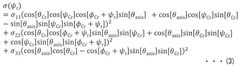
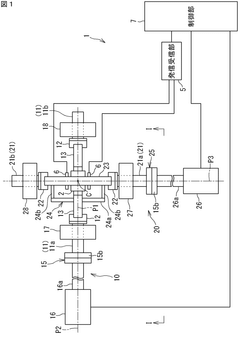
- A nuclear magnetic resonance apparatus that suspends microcrystals in a static magnetic field, applies a temporally varying magnetic field for three-dimensional orientation, and irradiates with pulsed electromagnetic waves synchronized with variable speed rotation, allowing for accurate detection of NMR signals even in samples where conventional methods fail.


NMR Crystallography Methods for Three-Dimensional Structure Determination
PatentInactiveUS20160109392A1
Innovation
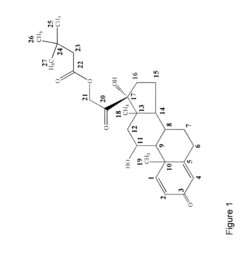
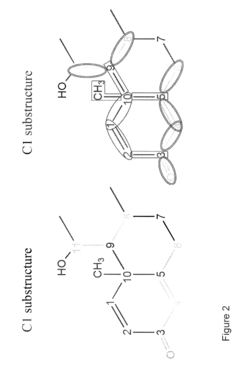
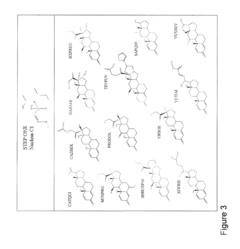
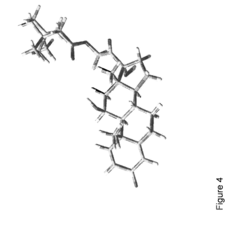
- A method utilizing NMR crystallography that identifies reference compounds with similar substructures to a target compound, selects those with the best statistical match based on NMR values and atomic coordinates, and compiles these to generate a three-dimensional structure, allowing for rapid and accurate determination of molecular structures and screening for similar test compounds.
Integration with Complementary Analytical Techniques
The integration of Nuclear Magnetic Resonance (NMR) spectroscopy with complementary analytical techniques creates powerful synergistic approaches for comprehensive crystalline structure analysis. X-ray diffraction (XRD) serves as a natural partner to NMR, providing long-range order information while NMR reveals local atomic environments. This combination enables researchers to construct complete structural models that neither technique could achieve independently. The correlation between XRD-derived lattice parameters and NMR chemical shifts often provides crucial validation of structural assignments.
Electron microscopy techniques, particularly Transmission Electron Microscopy (TEM) and Scanning Electron Microscopy (SEM), complement NMR by visualizing crystal morphology and defects at nanometer scales. When combined with NMR data on local atomic arrangements, these techniques create multi-scale structural understanding from atomic to macroscopic levels. High-resolution TEM coupled with solid-state NMR has proven particularly valuable for characterizing pharmaceutical polymorphs and complex mineral structures.
Vibrational spectroscopy methods including Raman and Infrared (IR) spectroscopy provide molecular-level fingerprinting that complements NMR's atomic-level insights. These techniques detect functional group vibrations and hydrogen bonding networks that influence crystalline packing. Multi-technique approaches combining NMR with vibrational spectroscopy have become standard practice in pharmaceutical solid-state analysis for polymorph identification and quality control.
Thermal analysis techniques such as Differential Scanning Calorimetry (DSC) and Thermogravimetric Analysis (TGA) offer complementary information about phase transitions, melting points, and thermal stability. When correlated with variable-temperature NMR experiments, these techniques provide comprehensive understanding of temperature-dependent structural changes in crystalline materials, particularly important for materials used in extreme environments.
Computational modeling has emerged as a critical complementary approach to NMR crystallography. Density Functional Theory (DFT) calculations can predict NMR parameters from proposed crystal structures, allowing iterative refinement between experimental and theoretical data. Machine learning algorithms increasingly facilitate the integration of multi-technique datasets, automatically identifying correlations between NMR, XRD, and spectroscopic data that might otherwise remain hidden.
Modern analytical workflows increasingly implement automated data integration platforms that combine NMR with complementary techniques. These systems enable real-time correlation of results across methods, significantly accelerating materials characterization processes. The future of crystalline structure analysis lies in these integrated approaches, where NMR serves as a cornerstone technique within a broader analytical ecosystem designed for comprehensive structural elucidation.
Electron microscopy techniques, particularly Transmission Electron Microscopy (TEM) and Scanning Electron Microscopy (SEM), complement NMR by visualizing crystal morphology and defects at nanometer scales. When combined with NMR data on local atomic arrangements, these techniques create multi-scale structural understanding from atomic to macroscopic levels. High-resolution TEM coupled with solid-state NMR has proven particularly valuable for characterizing pharmaceutical polymorphs and complex mineral structures.
Vibrational spectroscopy methods including Raman and Infrared (IR) spectroscopy provide molecular-level fingerprinting that complements NMR's atomic-level insights. These techniques detect functional group vibrations and hydrogen bonding networks that influence crystalline packing. Multi-technique approaches combining NMR with vibrational spectroscopy have become standard practice in pharmaceutical solid-state analysis for polymorph identification and quality control.
Thermal analysis techniques such as Differential Scanning Calorimetry (DSC) and Thermogravimetric Analysis (TGA) offer complementary information about phase transitions, melting points, and thermal stability. When correlated with variable-temperature NMR experiments, these techniques provide comprehensive understanding of temperature-dependent structural changes in crystalline materials, particularly important for materials used in extreme environments.
Computational modeling has emerged as a critical complementary approach to NMR crystallography. Density Functional Theory (DFT) calculations can predict NMR parameters from proposed crystal structures, allowing iterative refinement between experimental and theoretical data. Machine learning algorithms increasingly facilitate the integration of multi-technique datasets, automatically identifying correlations between NMR, XRD, and spectroscopic data that might otherwise remain hidden.
Modern analytical workflows increasingly implement automated data integration platforms that combine NMR with complementary techniques. These systems enable real-time correlation of results across methods, significantly accelerating materials characterization processes. The future of crystalline structure analysis lies in these integrated approaches, where NMR serves as a cornerstone technique within a broader analytical ecosystem designed for comprehensive structural elucidation.
Data Processing and Computational Methods for NMR Crystallography
The processing of NMR data for crystallographic analysis has evolved significantly with advancements in computational methods. Raw NMR data requires sophisticated processing techniques to extract meaningful structural information. Fourier transformation remains fundamental, converting time-domain signals to frequency-domain spectra, but modern approaches now incorporate multi-dimensional processing algorithms that enhance resolution and sensitivity for complex crystalline materials.
Machine learning and artificial intelligence have revolutionized NMR data processing, with neural networks demonstrating remarkable capabilities in pattern recognition and noise reduction. These techniques have proven particularly valuable for analyzing crystalline structures with subtle disorder or polymorphism, where traditional processing methods might miss critical structural details.
Density functional theory (DFT) calculations have become indispensable in NMR crystallography, providing theoretical frameworks for interpreting experimental data. The GIPAW (Gauge-Including Projector Augmented Wave) method specifically has emerged as the gold standard for calculating NMR parameters in crystalline solids, enabling accurate prediction of chemical shifts and quadrupolar couplings from crystal structures.
Correlation techniques bridging experimental and computational data have advanced significantly. Modern software packages now integrate multiple data sources, combining NMR measurements with X-ray diffraction data and computational predictions to refine structural models iteratively. This multi-modal approach substantially improves the accuracy of crystallographic determinations.
Cloud computing and distributed processing architectures have addressed the computational intensity of NMR crystallography. Complex simulations that once required specialized supercomputing facilities can now be performed on scalable cloud platforms, democratizing access to advanced computational methods across research institutions globally.
Open-source software frameworks like SIMPSON, SPINEVOLUTION, and CASTEP have created collaborative ecosystems for method development. These platforms enable researchers to implement and share novel algorithms for specific crystallographic challenges, accelerating innovation in the field.
Real-time processing capabilities are emerging as the next frontier, allowing researchers to analyze NMR data during acquisition. This approach enables adaptive experimental protocols that can automatically adjust parameters based on preliminary structural insights, optimizing data collection for challenging crystalline systems.
Machine learning and artificial intelligence have revolutionized NMR data processing, with neural networks demonstrating remarkable capabilities in pattern recognition and noise reduction. These techniques have proven particularly valuable for analyzing crystalline structures with subtle disorder or polymorphism, where traditional processing methods might miss critical structural details.
Density functional theory (DFT) calculations have become indispensable in NMR crystallography, providing theoretical frameworks for interpreting experimental data. The GIPAW (Gauge-Including Projector Augmented Wave) method specifically has emerged as the gold standard for calculating NMR parameters in crystalline solids, enabling accurate prediction of chemical shifts and quadrupolar couplings from crystal structures.
Correlation techniques bridging experimental and computational data have advanced significantly. Modern software packages now integrate multiple data sources, combining NMR measurements with X-ray diffraction data and computational predictions to refine structural models iteratively. This multi-modal approach substantially improves the accuracy of crystallographic determinations.
Cloud computing and distributed processing architectures have addressed the computational intensity of NMR crystallography. Complex simulations that once required specialized supercomputing facilities can now be performed on scalable cloud platforms, democratizing access to advanced computational methods across research institutions globally.
Open-source software frameworks like SIMPSON, SPINEVOLUTION, and CASTEP have created collaborative ecosystems for method development. These platforms enable researchers to implement and share novel algorithms for specific crystallographic challenges, accelerating innovation in the field.
Real-time processing capabilities are emerging as the next frontier, allowing researchers to analyze NMR data during acquisition. This approach enables adaptive experimental protocols that can automatically adjust parameters based on preliminary structural insights, optimizing data collection for challenging crystalline systems.
Unlock deeper insights with Patsnap Eureka Quick Research — get a full tech report to explore trends and direct your research. Try now!
Generate Your Research Report Instantly with AI Agent
Supercharge your innovation with Patsnap Eureka AI Agent Platform!