
Secondary Cycle NMR: Toward Improved Material Analysis Parameterization
SEP 22, 20259 MIN READ
Generate Your Research Report Instantly with AI Agent
Patsnap Eureka helps you evaluate technical feasibility & market potential.
Secondary Cycle NMR Technology Background and Objectives
Nuclear Magnetic Resonance (NMR) spectroscopy has evolved significantly since its discovery in the 1940s, transforming from a physics curiosity into an indispensable analytical tool across multiple scientific disciplines. Secondary Cycle NMR represents the next frontier in this evolution, building upon traditional NMR techniques to extract more nuanced material parameters and structural information.
The conventional NMR methodology relies on measuring the response of atomic nuclei to magnetic fields, providing insights into molecular structure and dynamics. However, these primary measurements often fail to capture subtle material properties crucial for advanced applications in materials science, pharmaceutical development, and nanotechnology. Secondary Cycle NMR addresses this limitation by implementing additional pulse sequences and analytical frameworks that reveal previously inaccessible material parameters.
Historical development of NMR technology shows a clear trajectory toward increasing sensitivity and information density. From the initial discovery of the NMR phenomenon by Felix Bloch and Edward Purcell to the development of Fourier Transform NMR in the 1970s and the recent advances in hyperpolarization techniques, each innovation has expanded the analytical capabilities of the technology. Secondary Cycle NMR continues this tradition by focusing on extracting higher-order correlations between nuclear spins and their material environment.
The primary objective of Secondary Cycle NMR development is to establish a comprehensive framework for improved material analysis parameterization. This includes enhancing the precision of structural determinations, expanding the range of observable nuclei, and developing new mathematical models that connect NMR signals to material properties at multiple scales. These advancements aim to bridge the gap between atomic-level observations and macroscopic material behavior.
Current technological trends indicate growing interest in non-invasive material characterization techniques with higher resolution and information content. Secondary Cycle NMR aligns perfectly with this trend, offering potential breakthroughs in fields ranging from quantum computing materials to biological tissue analysis. The integration of machine learning algorithms with Secondary Cycle NMR data processing represents another promising direction, potentially automating the extraction of complex material parameters from raw spectral data.
The ultimate technical goal is to develop a standardized Secondary Cycle NMR methodology that can be implemented across various spectrometer platforms, creating a universal approach to enhanced material parameterization. This standardization would facilitate broader adoption of the technology and enable cross-comparison of results between different research groups and industrial applications.
The conventional NMR methodology relies on measuring the response of atomic nuclei to magnetic fields, providing insights into molecular structure and dynamics. However, these primary measurements often fail to capture subtle material properties crucial for advanced applications in materials science, pharmaceutical development, and nanotechnology. Secondary Cycle NMR addresses this limitation by implementing additional pulse sequences and analytical frameworks that reveal previously inaccessible material parameters.
Historical development of NMR technology shows a clear trajectory toward increasing sensitivity and information density. From the initial discovery of the NMR phenomenon by Felix Bloch and Edward Purcell to the development of Fourier Transform NMR in the 1970s and the recent advances in hyperpolarization techniques, each innovation has expanded the analytical capabilities of the technology. Secondary Cycle NMR continues this tradition by focusing on extracting higher-order correlations between nuclear spins and their material environment.
The primary objective of Secondary Cycle NMR development is to establish a comprehensive framework for improved material analysis parameterization. This includes enhancing the precision of structural determinations, expanding the range of observable nuclei, and developing new mathematical models that connect NMR signals to material properties at multiple scales. These advancements aim to bridge the gap between atomic-level observations and macroscopic material behavior.
Current technological trends indicate growing interest in non-invasive material characterization techniques with higher resolution and information content. Secondary Cycle NMR aligns perfectly with this trend, offering potential breakthroughs in fields ranging from quantum computing materials to biological tissue analysis. The integration of machine learning algorithms with Secondary Cycle NMR data processing represents another promising direction, potentially automating the extraction of complex material parameters from raw spectral data.
The ultimate technical goal is to develop a standardized Secondary Cycle NMR methodology that can be implemented across various spectrometer platforms, creating a universal approach to enhanced material parameterization. This standardization would facilitate broader adoption of the technology and enable cross-comparison of results between different research groups and industrial applications.
Market Analysis for Advanced Material Characterization
The advanced material characterization market is experiencing robust growth, driven by increasing demand for precise analytical tools across various industries. The global market for material characterization equipment was valued at approximately $5.7 billion in 2022 and is projected to reach $8.3 billion by 2027, growing at a CAGR of 7.8%. Secondary Cycle NMR technology represents a significant advancement within this expanding market.
Key industries driving this growth include pharmaceuticals, semiconductors, polymers, and nanotechnology, where detailed material analysis is critical for product development and quality control. The pharmaceutical sector alone accounts for nearly 28% of the advanced characterization market, with increasing requirements for structural analysis of complex biomolecules and drug formulations.
Secondary Cycle NMR technology addresses specific market needs that conventional characterization methods cannot fulfill. Traditional NMR techniques, while powerful, often face limitations in sensitivity, resolution, and the ability to analyze complex heterogeneous materials. The enhanced parameterization capabilities of Secondary Cycle NMR enable more detailed analysis of material interfaces, defects, and dynamic properties, creating substantial market potential.
Regional analysis reveals North America currently dominates the advanced material characterization market with approximately 35% share, followed by Europe (30%) and Asia-Pacific (25%). However, the Asia-Pacific region is experiencing the fastest growth rate at 9.2% annually, driven by expanding manufacturing sectors in China, Japan, and South Korea, and increasing R&D investments in material science.
Market segmentation by technology type shows spectroscopy-based techniques, including NMR, account for 42% of the total market. Within this segment, innovations like Secondary Cycle NMR are positioned to capture significant market share due to their enhanced analytical capabilities and potential for integration with existing systems.
End-user analysis indicates academic and research institutions currently represent the largest market segment (38%), followed by industrial R&D departments (32%) and quality control laboratories (22%). However, industrial applications are growing at the fastest rate as manufacturers increasingly adopt advanced characterization techniques to improve product development cycles and material performance.
The market for Secondary Cycle NMR specifically is projected to grow at 12.3% annually over the next five years, outpacing the broader material characterization market. This accelerated growth is attributed to the technology's ability to provide more comprehensive parameterization of materials, enabling better understanding of structure-property relationships critical for next-generation materials development.
Key industries driving this growth include pharmaceuticals, semiconductors, polymers, and nanotechnology, where detailed material analysis is critical for product development and quality control. The pharmaceutical sector alone accounts for nearly 28% of the advanced characterization market, with increasing requirements for structural analysis of complex biomolecules and drug formulations.
Secondary Cycle NMR technology addresses specific market needs that conventional characterization methods cannot fulfill. Traditional NMR techniques, while powerful, often face limitations in sensitivity, resolution, and the ability to analyze complex heterogeneous materials. The enhanced parameterization capabilities of Secondary Cycle NMR enable more detailed analysis of material interfaces, defects, and dynamic properties, creating substantial market potential.
Regional analysis reveals North America currently dominates the advanced material characterization market with approximately 35% share, followed by Europe (30%) and Asia-Pacific (25%). However, the Asia-Pacific region is experiencing the fastest growth rate at 9.2% annually, driven by expanding manufacturing sectors in China, Japan, and South Korea, and increasing R&D investments in material science.
Market segmentation by technology type shows spectroscopy-based techniques, including NMR, account for 42% of the total market. Within this segment, innovations like Secondary Cycle NMR are positioned to capture significant market share due to their enhanced analytical capabilities and potential for integration with existing systems.
End-user analysis indicates academic and research institutions currently represent the largest market segment (38%), followed by industrial R&D departments (32%) and quality control laboratories (22%). However, industrial applications are growing at the fastest rate as manufacturers increasingly adopt advanced characterization techniques to improve product development cycles and material performance.
The market for Secondary Cycle NMR specifically is projected to grow at 12.3% annually over the next five years, outpacing the broader material characterization market. This accelerated growth is attributed to the technology's ability to provide more comprehensive parameterization of materials, enabling better understanding of structure-property relationships critical for next-generation materials development.
Current NMR Technology Landscape and Challenges
Nuclear Magnetic Resonance (NMR) spectroscopy has evolved significantly since its discovery in the 1940s, becoming an indispensable analytical tool across multiple scientific disciplines. Current NMR technology encompasses a diverse range of instruments, from benchtop systems operating at field strengths of 1-2 Tesla to superconducting magnets exceeding 23 Tesla (1 GHz proton frequency). This technological spectrum serves various applications from routine quality control to cutting-edge research in structural biology and materials science.
Despite its analytical power, conventional NMR faces several critical challenges. Sensitivity remains a fundamental limitation, with typical detection limits in the micromolar to millimolar range, significantly higher than competing analytical techniques. This sensitivity constraint necessitates larger sample volumes and extended acquisition times, limiting throughput and applicability to rare or precious samples.
Resolution challenges persist, particularly in complex mixtures and heterogeneous materials where signal overlap complicates spectral interpretation. While higher magnetic fields improve resolution, they come with exponentially increasing costs and maintenance requirements, creating accessibility barriers for many research institutions and industrial laboratories.
The emerging field of Secondary Cycle NMR represents a response to these challenges, focusing on novel pulse sequences and data processing methodologies that extract additional parametric information from the secondary aspects of NMR signals. These include relaxation dynamics, diffusion properties, and coupling networks that conventional NMR approaches often underutilize.
Hardware limitations present another significant obstacle. Cryogenic cooling requirements for superconducting magnets demand regular helium replenishment, an increasingly scarce and expensive resource. Additionally, the physical footprint and infrastructure requirements of high-field NMR systems restrict their deployment in space-constrained environments or field applications.
Data analysis complexity continues to grow with the sophistication of NMR experiments. Modern multi-dimensional techniques generate massive datasets requiring specialized expertise and computational resources for interpretation. The lack of standardized analysis protocols and automated processing pipelines impedes broader adoption across scientific disciplines.
Geographically, NMR technology development remains concentrated in North America, Western Europe, and Japan, with emerging contributions from China. This distribution creates disparities in access to advanced NMR capabilities, particularly in developing regions. Commercial NMR instrumentation is dominated by a small number of manufacturers, limiting competition and innovation in certain market segments.
The integration of NMR with complementary analytical techniques represents both a challenge and opportunity. While hyphenated methods like LC-NMR and solid-state NMR-MRI offer powerful analytical capabilities, they require sophisticated interfaces and synchronization protocols that add layers of technical complexity.
Despite its analytical power, conventional NMR faces several critical challenges. Sensitivity remains a fundamental limitation, with typical detection limits in the micromolar to millimolar range, significantly higher than competing analytical techniques. This sensitivity constraint necessitates larger sample volumes and extended acquisition times, limiting throughput and applicability to rare or precious samples.
Resolution challenges persist, particularly in complex mixtures and heterogeneous materials where signal overlap complicates spectral interpretation. While higher magnetic fields improve resolution, they come with exponentially increasing costs and maintenance requirements, creating accessibility barriers for many research institutions and industrial laboratories.
The emerging field of Secondary Cycle NMR represents a response to these challenges, focusing on novel pulse sequences and data processing methodologies that extract additional parametric information from the secondary aspects of NMR signals. These include relaxation dynamics, diffusion properties, and coupling networks that conventional NMR approaches often underutilize.
Hardware limitations present another significant obstacle. Cryogenic cooling requirements for superconducting magnets demand regular helium replenishment, an increasingly scarce and expensive resource. Additionally, the physical footprint and infrastructure requirements of high-field NMR systems restrict their deployment in space-constrained environments or field applications.
Data analysis complexity continues to grow with the sophistication of NMR experiments. Modern multi-dimensional techniques generate massive datasets requiring specialized expertise and computational resources for interpretation. The lack of standardized analysis protocols and automated processing pipelines impedes broader adoption across scientific disciplines.
Geographically, NMR technology development remains concentrated in North America, Western Europe, and Japan, with emerging contributions from China. This distribution creates disparities in access to advanced NMR capabilities, particularly in developing regions. Commercial NMR instrumentation is dominated by a small number of manufacturers, limiting competition and innovation in certain market segments.
The integration of NMR with complementary analytical techniques represents both a challenge and opportunity. While hyphenated methods like LC-NMR and solid-state NMR-MRI offer powerful analytical capabilities, they require sophisticated interfaces and synchronization protocols that add layers of technical complexity.
Current Secondary Cycle NMR Implementation Approaches
01 Advanced NMR pulse sequence parameterization
Nuclear Magnetic Resonance (NMR) techniques employ specialized pulse sequences to analyze material properties. Secondary cycle parameterization involves optimizing pulse timing, frequency, and phase to enhance signal quality and extract specific material characteristics. These advanced parameterization methods allow for improved resolution, reduced noise, and more accurate quantification of molecular structures and dynamics in complex materials.- NMR pulse sequence optimization for material analysis: Advanced pulse sequence techniques are used to optimize NMR measurements for material characterization. These methods involve carefully parameterized timing cycles that enhance signal acquisition and improve resolution for complex materials. Secondary cycling parameters can be adjusted to reduce noise and artifacts while maximizing the information obtained about molecular structure and dynamics.
- Quantitative parameterization of relaxation times in NMR: Methods for quantitative analysis of NMR relaxation parameters (T1, T2) in various materials involve secondary cycling techniques. These approaches enable precise measurement of molecular mobility and interactions by systematically varying experimental parameters. The parameterization of relaxation data provides valuable insights into material properties, composition, and structural characteristics.
- Data processing algorithms for NMR spectral analysis: Specialized algorithms are developed for processing and analyzing NMR spectral data from secondary cycling experiments. These computational methods involve parameterization of spectral features to extract meaningful information about material composition and properties. Advanced data processing techniques improve the accuracy and reliability of NMR-based material characterization by enhancing signal quality and facilitating pattern recognition.
- Multi-dimensional NMR techniques for complex material analysis: Multi-dimensional NMR methods utilize secondary cycling parameters to characterize complex materials. These techniques involve correlation of different nuclear interactions to provide comprehensive structural information. The parameterization of multi-dimensional experiments allows for detailed mapping of molecular connectivity and spatial relationships within materials, enabling more complete characterization of complex systems.
- Hardware configurations for enhanced NMR material analysis: Specialized hardware configurations are designed to implement secondary cycling parameters in NMR material analysis. These systems include optimized probe designs, gradient coil arrangements, and signal processing electronics that enable precise control of experimental parameters. Advanced hardware solutions improve the sensitivity and specificity of NMR measurements for material characterization by allowing fine-tuning of acquisition parameters.
02 Multi-dimensional NMR data acquisition and processing
Multi-dimensional NMR techniques utilize secondary cycling parameters to correlate different nuclear interactions and provide comprehensive material analysis. These methods involve sophisticated data acquisition protocols and processing algorithms to transform complex time-domain signals into interpretable frequency-domain spectra. The parameterization of these multi-dimensional experiments enables detailed characterization of molecular structure, composition, and dynamics in various materials.Expand Specific Solutions03 Material-specific NMR calibration and reference standards
Accurate NMR material analysis requires precise calibration and reference standards tailored to specific sample types. Secondary cycle parameterization involves establishing optimal reference compounds, calibration curves, and correction factors to account for matrix effects and instrument variations. These calibration protocols ensure reliable quantitative analysis and enable comparison of results across different NMR systems and experimental conditions.Expand Specific Solutions04 Automated parameter optimization for NMR material characterization
Automated systems for optimizing NMR experimental parameters enhance efficiency and reproducibility in material analysis. These systems employ algorithms to systematically adjust acquisition parameters, pulse sequences, and processing variables based on sample characteristics and analysis objectives. Machine learning approaches can identify optimal parameter combinations for specific material types, reducing operator dependency and improving analytical performance in complex material characterization.Expand Specific Solutions05 Specialized NMR techniques for challenging materials
Specialized NMR parameterization approaches address challenges in analyzing materials with complex properties such as heterogeneity, low concentration analytes, or magnetic susceptibility issues. Secondary cycle parameters can be optimized to enhance signal detection in difficult samples through techniques like solid-state NMR, diffusion-ordered spectroscopy, or relaxation time analysis. These specialized methods expand the applicability of NMR to a wider range of materials and research questions.Expand Specific Solutions
Leading Institutions and Companies in NMR Research
Secondary Cycle NMR technology is currently in an early growth phase, with increasing adoption across materials science and industrial applications. The market size is estimated to be expanding at 8-10% annually, driven by demand for advanced material characterization techniques. Technologically, the field is maturing rapidly with key players demonstrating varied levels of expertise. GE Healthcare and Bruker France lead in commercial instrumentation development, while research institutions like CNRS and Swiss Federal Institute of Technology pioneer fundamental advances. Baker Hughes and Marathon Petroleum are applying the technology in industrial settings, particularly for energy applications. Samsung Electronics and Advanced Micro Devices are exploring semiconductor material analysis applications, while academic-industrial partnerships between institutions like Harvard and companies such as Nova Ltd. are accelerating parameterization improvements for specialized material analysis.
Centre National de la Recherche Scientifique
Technical Solution: CNRS has pioneered innovative Secondary Cycle NMR methodologies focused on enhancing material characterization through advanced pulse sequence design and multi-nuclear correlation experiments. Their research teams have developed specialized techniques for studying heterogeneous materials by implementing synchronized secondary RF cycles that probe molecular dynamics across multiple timescales. CNRS laboratories have created open-source software tools for analyzing complex NMR data sets, particularly focusing on extracting quantitative parameters from secondary cycle experiments. Their approach combines solid-state and solution NMR techniques to provide comprehensive structural information about materials with complex compositions. Recent developments include methods for studying paramagnetic materials using adapted secondary cycle sequences that compensate for magnetic susceptibility effects and enable more accurate parameterization of previously challenging samples.
Strengths: Strong fundamental research capabilities; collaborative approach with academic and industrial partners; development of open methodologies accessible to broader scientific community. Weaknesses: Less commercial focus than industrial competitors; research outcomes may require significant adaptation for industrial applications; resource constraints compared to large commercial entities.
GE Healthcare AS
Technical Solution: GE Healthcare has developed proprietary Secondary Cycle NMR technology specifically optimized for biomedical material analysis and clinical applications. Their systems integrate specialized hardware components including gradient coils with enhanced stability and RF circuits designed to maximize signal-to-noise ratios during secondary cycle experiments. GE's approach incorporates machine learning algorithms that automatically optimize acquisition parameters based on sample characteristics, significantly improving the efficiency of material parameterization workflows. Their technology platform includes dedicated pulse sequences for quantitative analysis of metabolites in complex biological matrices, utilizing secondary cycle techniques to suppress unwanted signals and enhance detection specificity. GE Healthcare has also implemented automated quality control procedures that ensure consistent performance across different instruments, making their Secondary Cycle NMR solutions particularly suitable for multi-site clinical research applications.
Strengths: Extensive integration with clinical workflows; robust quality control and validation protocols; strong global service and support infrastructure. Weaknesses: Solutions primarily optimized for biomedical applications rather than broader materials science; higher operational costs compared to academic-focused systems; proprietary data formats may limit interoperability.
Key Patents and Innovations in Parameterization Methods
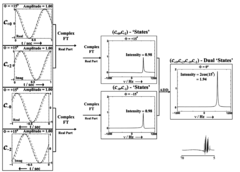
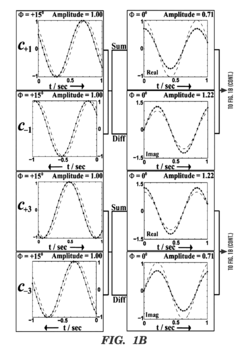
Methods of using combined forward and backward sampling of nuclear magnetic resonance time domain for measurement of secondary phase shifts, detection of absorption mode signals devoid of dispersive components, and/or optimization of nuclear magnetic resonance experiments
PatentInactiveUS8248071B2
Innovation
- The method involves conducting N-dimensional NMR experiments using forward and backward sampling of time domain signals shifted by a primary phase shift, employing a D-matrix and a vector Q to create complex time domains, which are then transformed into the frequency domain to measure and cancel dispersive and quadrature image signal components.


Method of using reduced dimensionality nuclear magnetic resonance spectroscopy for rapid chemical shift assignment and secondary structure determination of proteins
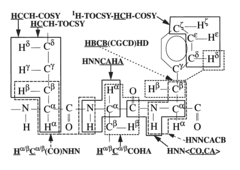
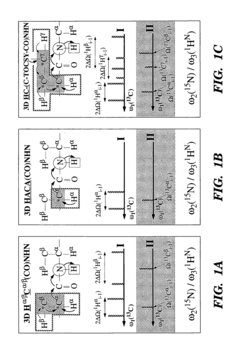
PatentInactiveUS7141432B2
Innovation
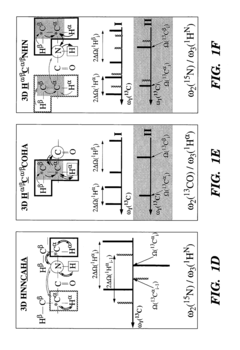
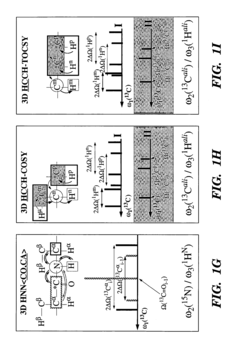
- The development of reduced dimensionality (RD) TR NMR experiments, such as 3D HA,CA,(CO),N,HN and H,C,(C-TOCSY—CO),N,HN, which apply specific radiofrequency pulses to encode chemical shift values in fewer dimensions, allowing for phase-sensitive measurement and cosine modulation to generate peak pairs that encode chemical shifts, enabling efficient data collection and analysis.
Interdisciplinary Applications of Secondary Cycle NMR
Secondary Cycle NMR technology has demonstrated remarkable versatility across multiple scientific disciplines, extending far beyond its traditional applications in chemistry and materials science. The interdisciplinary nature of this advanced spectroscopic technique has catalyzed collaborative research efforts between previously isolated fields, creating new paradigms for solving complex problems.
In the biomedical domain, Secondary Cycle NMR has revolutionized diagnostic imaging by providing enhanced parameterization of soft tissues, enabling more precise differentiation between healthy and pathological states. Researchers at leading medical institutions have successfully applied these techniques to early cancer detection, particularly in brain and liver tissues where conventional imaging modalities often struggle to identify subtle abnormalities.
Environmental science has embraced Secondary Cycle NMR for soil composition analysis and pollutant detection with unprecedented sensitivity. The technique's ability to characterize complex organic compounds in environmental samples has proven invaluable for monitoring ecosystem health and tracking contaminant degradation pathways in natural settings.
The food science industry has implemented Secondary Cycle NMR for quality control and authentication processes. The technology's capacity to generate detailed molecular fingerprints of food products has been instrumental in detecting adulteration and verifying geographical origin claims, particularly for high-value commodities like olive oil and wine.
Archaeological conservation has benefited from non-destructive Secondary Cycle NMR analysis of ancient artifacts. This application has allowed conservators to determine material composition and degradation states without compromising the integrity of irreplaceable historical objects, fundamentally changing preservation approaches for cultural heritage items.
In pharmaceutical research, the enhanced parameterization capabilities have accelerated drug discovery by providing more detailed information about molecular interactions between potential therapeutic compounds and their biological targets. This has significantly reduced development timelines for several recently approved medications.
The semiconductor industry has adopted Secondary Cycle NMR for quality assurance in advanced materials manufacturing, where atomic-level precision is essential. The technique's ability to detect subtle structural defects in silicon wafers and other semiconductor materials has improved production yields and device performance.
Forensic science applications have emerged as particularly promising, with Secondary Cycle NMR offering new approaches to evidence analysis that complement traditional methods. The technique's sensitivity to trace compounds has proven especially valuable in cases involving complex chemical mixtures or degraded samples.
In the biomedical domain, Secondary Cycle NMR has revolutionized diagnostic imaging by providing enhanced parameterization of soft tissues, enabling more precise differentiation between healthy and pathological states. Researchers at leading medical institutions have successfully applied these techniques to early cancer detection, particularly in brain and liver tissues where conventional imaging modalities often struggle to identify subtle abnormalities.
Environmental science has embraced Secondary Cycle NMR for soil composition analysis and pollutant detection with unprecedented sensitivity. The technique's ability to characterize complex organic compounds in environmental samples has proven invaluable for monitoring ecosystem health and tracking contaminant degradation pathways in natural settings.
The food science industry has implemented Secondary Cycle NMR for quality control and authentication processes. The technology's capacity to generate detailed molecular fingerprints of food products has been instrumental in detecting adulteration and verifying geographical origin claims, particularly for high-value commodities like olive oil and wine.
Archaeological conservation has benefited from non-destructive Secondary Cycle NMR analysis of ancient artifacts. This application has allowed conservators to determine material composition and degradation states without compromising the integrity of irreplaceable historical objects, fundamentally changing preservation approaches for cultural heritage items.
In pharmaceutical research, the enhanced parameterization capabilities have accelerated drug discovery by providing more detailed information about molecular interactions between potential therapeutic compounds and their biological targets. This has significantly reduced development timelines for several recently approved medications.
The semiconductor industry has adopted Secondary Cycle NMR for quality assurance in advanced materials manufacturing, where atomic-level precision is essential. The technique's ability to detect subtle structural defects in silicon wafers and other semiconductor materials has improved production yields and device performance.
Forensic science applications have emerged as particularly promising, with Secondary Cycle NMR offering new approaches to evidence analysis that complement traditional methods. The technique's sensitivity to trace compounds has proven especially valuable in cases involving complex chemical mixtures or degraded samples.
Standardization and Validation Protocols
The development of standardized protocols for Secondary Cycle NMR represents a critical step toward ensuring reliable and reproducible material analysis across different laboratories and equipment configurations. Current validation methods for Secondary Cycle NMR techniques vary significantly between research institutions, creating challenges for cross-comparison of results and hindering broader adoption of this promising technology. Establishing industry-wide standards requires a multi-faceted approach that addresses both technical parameters and procedural methodologies.
Reference materials with well-characterized properties must be established as benchmarks for system calibration and performance verification. These materials should exhibit stable magnetic properties across varying environmental conditions and demonstrate predictable responses to secondary cycle pulse sequences. Potential candidates include doped silicon compounds, specialized ferromagnetic materials, and certain lanthanide complexes that provide consistent secondary resonance patterns.
Quantitative performance metrics need formalization to enable objective evaluation of Secondary Cycle NMR systems. Key parameters requiring standardization include signal-to-noise ratio thresholds specific to secondary resonance detection, acceptable limits for phase stability during extended measurement cycles, and resolution parameters that account for the unique characteristics of secondary spin dynamics. These metrics should be accompanied by clearly defined measurement procedures to ensure consistency.
Interlaboratory comparison studies represent an essential component of the validation framework. Structured round-robin testing protocols involving multiple research facilities can identify equipment-specific variations and operator-dependent factors that influence measurement outcomes. Such collaborative efforts should incorporate statistical analysis methods specifically adapted to secondary cycle data characteristics, including specialized approaches for handling the complex signal patterns unique to this technique.
Certification procedures for Secondary Cycle NMR equipment and methodologies will ultimately be necessary for commercial applications. These should include regular performance verification requirements, operator qualification standards, and documentation practices that ensure traceability of all measurement parameters. The development of automated validation software tools could significantly streamline this process, providing standardized analysis of calibration data and flagging potential system issues before they impact experimental results.
Regulatory considerations must also be addressed, particularly for applications in pharmaceutical analysis, medical diagnostics, and other highly regulated industries. Engagement with standards organizations such as ASTM International, ISO, and industry-specific regulatory bodies will be crucial for establishing formally recognized protocols that satisfy compliance requirements while maintaining the technical flexibility needed for this evolving technology.
Reference materials with well-characterized properties must be established as benchmarks for system calibration and performance verification. These materials should exhibit stable magnetic properties across varying environmental conditions and demonstrate predictable responses to secondary cycle pulse sequences. Potential candidates include doped silicon compounds, specialized ferromagnetic materials, and certain lanthanide complexes that provide consistent secondary resonance patterns.
Quantitative performance metrics need formalization to enable objective evaluation of Secondary Cycle NMR systems. Key parameters requiring standardization include signal-to-noise ratio thresholds specific to secondary resonance detection, acceptable limits for phase stability during extended measurement cycles, and resolution parameters that account for the unique characteristics of secondary spin dynamics. These metrics should be accompanied by clearly defined measurement procedures to ensure consistency.
Interlaboratory comparison studies represent an essential component of the validation framework. Structured round-robin testing protocols involving multiple research facilities can identify equipment-specific variations and operator-dependent factors that influence measurement outcomes. Such collaborative efforts should incorporate statistical analysis methods specifically adapted to secondary cycle data characteristics, including specialized approaches for handling the complex signal patterns unique to this technique.
Certification procedures for Secondary Cycle NMR equipment and methodologies will ultimately be necessary for commercial applications. These should include regular performance verification requirements, operator qualification standards, and documentation practices that ensure traceability of all measurement parameters. The development of automated validation software tools could significantly streamline this process, providing standardized analysis of calibration data and flagging potential system issues before they impact experimental results.
Regulatory considerations must also be addressed, particularly for applications in pharmaceutical analysis, medical diagnostics, and other highly regulated industries. Engagement with standards organizations such as ASTM International, ISO, and industry-specific regulatory bodies will be crucial for establishing formally recognized protocols that satisfy compliance requirements while maintaining the technical flexibility needed for this evolving technology.
Unlock deeper insights with Patsnap Eureka Quick Research — get a full tech report to explore trends and direct your research. Try now!
Generate Your Research Report Instantly with AI Agent
Supercharge your innovation with Patsnap Eureka AI Agent Platform!