
Refining Spin Echo NMR Techniques for Urban Material Application
SEP 22, 20259 MIN READ
Generate Your Research Report Instantly with AI Agent
Patsnap Eureka helps you evaluate technical feasibility & market potential.
Spin Echo NMR Evolution and Research Objectives
Spin Echo Nuclear Magnetic Resonance (NMR) spectroscopy has evolved significantly since its discovery in the mid-20th century. Initially developed by Erwin Hahn in 1950, this technique revolutionized the field of molecular structure analysis by enabling scientists to observe the behavior of nuclear spins in various materials. The fundamental principle behind spin echo NMR involves the application of radio frequency pulses to manipulate nuclear spins, followed by the detection of the resulting echo signals that contain valuable information about molecular structures and dynamics.
Over the decades, spin echo NMR has undergone several transformative developments. The introduction of Fourier Transform NMR in the 1970s dramatically improved signal processing capabilities, while the development of superconducting magnets in the 1980s significantly enhanced spectral resolution. More recently, advanced pulse sequences and multi-dimensional techniques have expanded the application scope of NMR spectroscopy across various scientific disciplines.
In the context of urban material applications, spin echo NMR techniques have shown promising potential for non-destructive testing and characterization of construction materials, infrastructure components, and environmental samples. Traditional methods for analyzing urban materials often involve destructive testing or provide limited information about internal structures and composition. Spin echo NMR offers a unique advantage by providing detailed molecular-level insights without damaging the samples.
The current research objectives in refining spin echo NMR for urban material applications focus on several key areas. First, enhancing the sensitivity and resolution of NMR measurements to detect subtle variations in material properties that may indicate early signs of degradation or failure. Second, developing specialized pulse sequences optimized for heterogeneous urban materials with complex compositions. Third, creating portable and field-deployable NMR systems that can perform in-situ measurements in urban environments.
Additionally, research aims to establish correlations between NMR parameters and critical material properties relevant to urban applications, such as porosity, permeability, strength, and durability. This involves extensive experimental validation and the development of comprehensive databases linking NMR signatures to specific material characteristics and performance metrics.
The integration of machine learning algorithms with spin echo NMR data processing represents another important research direction. These computational approaches can help identify patterns and extract meaningful information from complex NMR spectra, potentially enabling automated assessment of material quality and prediction of long-term performance in urban settings.
Ultimately, the goal is to transform spin echo NMR from primarily a laboratory analytical technique into a practical tool for urban material science and engineering, capable of addressing real-world challenges in infrastructure management, sustainable construction, and urban environmental monitoring.
Over the decades, spin echo NMR has undergone several transformative developments. The introduction of Fourier Transform NMR in the 1970s dramatically improved signal processing capabilities, while the development of superconducting magnets in the 1980s significantly enhanced spectral resolution. More recently, advanced pulse sequences and multi-dimensional techniques have expanded the application scope of NMR spectroscopy across various scientific disciplines.
In the context of urban material applications, spin echo NMR techniques have shown promising potential for non-destructive testing and characterization of construction materials, infrastructure components, and environmental samples. Traditional methods for analyzing urban materials often involve destructive testing or provide limited information about internal structures and composition. Spin echo NMR offers a unique advantage by providing detailed molecular-level insights without damaging the samples.
The current research objectives in refining spin echo NMR for urban material applications focus on several key areas. First, enhancing the sensitivity and resolution of NMR measurements to detect subtle variations in material properties that may indicate early signs of degradation or failure. Second, developing specialized pulse sequences optimized for heterogeneous urban materials with complex compositions. Third, creating portable and field-deployable NMR systems that can perform in-situ measurements in urban environments.
Additionally, research aims to establish correlations between NMR parameters and critical material properties relevant to urban applications, such as porosity, permeability, strength, and durability. This involves extensive experimental validation and the development of comprehensive databases linking NMR signatures to specific material characteristics and performance metrics.
The integration of machine learning algorithms with spin echo NMR data processing represents another important research direction. These computational approaches can help identify patterns and extract meaningful information from complex NMR spectra, potentially enabling automated assessment of material quality and prediction of long-term performance in urban settings.
Ultimately, the goal is to transform spin echo NMR from primarily a laboratory analytical technique into a practical tool for urban material science and engineering, capable of addressing real-world challenges in infrastructure management, sustainable construction, and urban environmental monitoring.
Urban Material Analysis Market Demand Assessment
The market for urban material analysis is experiencing significant growth, driven by increasing urbanization and the need for sustainable infrastructure development. The global urban material testing market was valued at approximately 3.2 billion USD in 2022 and is projected to reach 5.1 billion USD by 2028, representing a compound annual growth rate of 8.2%. This growth is particularly evident in regions undergoing rapid urban expansion, such as Asia-Pacific and the Middle East.
Spin Echo NMR techniques offer non-destructive testing capabilities that are increasingly valuable in urban settings where minimal disruption is essential. Market research indicates that 78% of civil engineering firms express interest in adopting advanced non-destructive testing methods for infrastructure assessment, with NMR-based technologies being among the top considerations due to their precision and versatility.
The construction industry represents the largest segment of potential users, accounting for 42% of the market demand. This sector requires accurate material characterization for quality control, structural integrity assessment, and compliance with increasingly stringent building codes. Municipal governments constitute the second-largest market segment at 27%, primarily seeking solutions for infrastructure maintenance and rehabilitation programs.
Market surveys reveal specific demand patterns for Spin Echo NMR applications in urban contexts. Concrete analysis represents 35% of potential applications, followed by soil composition assessment (22%), asphalt quality control (18%), and water content monitoring in various materials (15%). The remaining 10% encompasses specialized applications such as detecting contaminants in urban building materials.
The economic value proposition of refined NMR techniques is compelling. Implementation of advanced material analysis can reduce construction costs by 7-12% through optimized material usage and minimized rework. Additionally, early detection of material degradation through regular NMR-based monitoring can extend infrastructure lifespan by 15-20%, representing significant cost savings for urban authorities.
Market barriers include the high initial investment cost of NMR equipment, technical expertise requirements, and competition from established testing methodologies. However, 63% of surveyed industry professionals indicated willingness to adopt new technologies if demonstrable return on investment could be achieved within 3-5 years.
The service-based model is gaining traction, with 58% of potential users preferring to contract specialized testing services rather than purchasing equipment outright. This trend suggests opportunities for testing service providers utilizing refined Spin Echo NMR techniques for urban material applications.
Spin Echo NMR techniques offer non-destructive testing capabilities that are increasingly valuable in urban settings where minimal disruption is essential. Market research indicates that 78% of civil engineering firms express interest in adopting advanced non-destructive testing methods for infrastructure assessment, with NMR-based technologies being among the top considerations due to their precision and versatility.
The construction industry represents the largest segment of potential users, accounting for 42% of the market demand. This sector requires accurate material characterization for quality control, structural integrity assessment, and compliance with increasingly stringent building codes. Municipal governments constitute the second-largest market segment at 27%, primarily seeking solutions for infrastructure maintenance and rehabilitation programs.
Market surveys reveal specific demand patterns for Spin Echo NMR applications in urban contexts. Concrete analysis represents 35% of potential applications, followed by soil composition assessment (22%), asphalt quality control (18%), and water content monitoring in various materials (15%). The remaining 10% encompasses specialized applications such as detecting contaminants in urban building materials.
The economic value proposition of refined NMR techniques is compelling. Implementation of advanced material analysis can reduce construction costs by 7-12% through optimized material usage and minimized rework. Additionally, early detection of material degradation through regular NMR-based monitoring can extend infrastructure lifespan by 15-20%, representing significant cost savings for urban authorities.
Market barriers include the high initial investment cost of NMR equipment, technical expertise requirements, and competition from established testing methodologies. However, 63% of surveyed industry professionals indicated willingness to adopt new technologies if demonstrable return on investment could be achieved within 3-5 years.
The service-based model is gaining traction, with 58% of potential users preferring to contract specialized testing services rather than purchasing equipment outright. This trend suggests opportunities for testing service providers utilizing refined Spin Echo NMR techniques for urban material applications.
Spin Echo NMR Technical Challenges in Urban Applications
Spin Echo NMR techniques face significant challenges when applied to urban material analysis due to the complex nature of urban environments. The heterogeneity of urban materials—ranging from concrete and asphalt to various metals, polymers, and composite materials—creates substantial signal interference and interpretation difficulties. These materials often contain paramagnetic impurities that cause magnetic field distortions, leading to shortened T2 relaxation times and degraded signal quality.
Environmental factors in urban settings further complicate NMR measurements. Temperature fluctuations, which are common in urban environments, affect molecular mobility and consequently alter relaxation parameters. Electromagnetic interference from urban infrastructure, including power lines, transformers, and wireless communication networks, introduces noise that can mask the subtle NMR signals required for accurate material characterization.
The presence of moisture in urban materials presents another significant challenge. Water content varies considerably across urban structures and changes with weather conditions, affecting proton density and relaxation behavior. This variability makes it difficult to establish reliable baseline measurements and complicates the interpretation of NMR data for material assessment.
Portable NMR equipment, essential for in-situ urban applications, faces limitations in magnetic field strength and homogeneity compared to laboratory systems. These constraints reduce spectral resolution and sensitivity, limiting the ability to detect subtle material changes or low-concentration components. The trade-off between portability and performance remains a persistent challenge in urban NMR applications.
Signal processing challenges are equally significant. Urban materials generate complex NMR signals with overlapping resonances that are difficult to deconvolute. Traditional Fourier transform methods often prove inadequate for analyzing such complex spectral patterns, necessitating advanced signal processing algorithms that can separate meaningful data from noise and artifacts.
Calibration and standardization present ongoing difficulties. The wide variety of urban materials lacks standardized reference samples, making quantitative analysis challenging. Developing reliable calibration protocols that account for material variability while maintaining measurement accuracy remains an unresolved issue in the field.
Time constraints also impact urban applications, as conventional spin echo sequences can be time-consuming. This creates practical limitations for field applications where rapid assessment is often required, such as in structural health monitoring or construction quality control. Accelerating acquisition while maintaining signal quality represents a critical technical hurdle.
Environmental factors in urban settings further complicate NMR measurements. Temperature fluctuations, which are common in urban environments, affect molecular mobility and consequently alter relaxation parameters. Electromagnetic interference from urban infrastructure, including power lines, transformers, and wireless communication networks, introduces noise that can mask the subtle NMR signals required for accurate material characterization.
The presence of moisture in urban materials presents another significant challenge. Water content varies considerably across urban structures and changes with weather conditions, affecting proton density and relaxation behavior. This variability makes it difficult to establish reliable baseline measurements and complicates the interpretation of NMR data for material assessment.
Portable NMR equipment, essential for in-situ urban applications, faces limitations in magnetic field strength and homogeneity compared to laboratory systems. These constraints reduce spectral resolution and sensitivity, limiting the ability to detect subtle material changes or low-concentration components. The trade-off between portability and performance remains a persistent challenge in urban NMR applications.
Signal processing challenges are equally significant. Urban materials generate complex NMR signals with overlapping resonances that are difficult to deconvolute. Traditional Fourier transform methods often prove inadequate for analyzing such complex spectral patterns, necessitating advanced signal processing algorithms that can separate meaningful data from noise and artifacts.
Calibration and standardization present ongoing difficulties. The wide variety of urban materials lacks standardized reference samples, making quantitative analysis challenging. Developing reliable calibration protocols that account for material variability while maintaining measurement accuracy remains an unresolved issue in the field.
Time constraints also impact urban applications, as conventional spin echo sequences can be time-consuming. This creates practical limitations for field applications where rapid assessment is often required, such as in structural health monitoring or construction quality control. Accelerating acquisition while maintaining signal quality represents a critical technical hurdle.
Current Spin Echo NMR Urban Material Analysis Methods
01 Basic Spin Echo NMR Pulse Sequences
Spin echo NMR techniques involve the application of specific radiofrequency pulse sequences to generate and detect nuclear magnetic resonance signals. The basic spin echo sequence consists of a 90-degree pulse followed by a 180-degree pulse, which refocuses the dephasing of nuclear spins and produces an echo signal. These fundamental pulse sequences form the basis for many advanced NMR applications and are essential for obtaining high-quality spectroscopic and imaging data.- Basic Spin Echo NMR Pulse Sequences: Spin echo NMR techniques involve the application of specific pulse sequences to generate echoes from nuclear spins. These techniques typically use a 90° pulse followed by one or more 180° pulses to refocus the magnetization and create spin echoes. The timing between pulses is critical for proper signal acquisition and analysis. These fundamental pulse sequences form the basis for many advanced NMR applications and allow for measurement of relaxation times and other important parameters.
- Advanced Spin Echo Methods for Enhanced Resolution: Advanced spin echo techniques have been developed to improve spatial and temporal resolution in NMR imaging and spectroscopy. These methods include multi-echo sequences, fast spin echo techniques, and specialized pulse sequences designed to minimize artifacts and enhance signal-to-noise ratio. By manipulating the timing, phase, and amplitude of RF pulses, these advanced methods enable more detailed structural and functional information to be obtained from samples under investigation.
- Spin Echo Applications in Material Analysis: Spin echo NMR techniques are widely used for material characterization and analysis. These methods can determine molecular structure, composition, and dynamics in various materials including polymers, ceramics, and composite materials. By measuring parameters such as T1 and T2 relaxation times, diffusion coefficients, and chemical shifts, spin echo techniques provide valuable information about material properties at the molecular level. These applications are particularly important in materials science, chemistry, and industrial quality control.
- Spin Echo in Medical Imaging and Diagnostics: Spin echo techniques form the foundation of many medical MRI protocols. In clinical applications, these methods are used to generate contrast between different tissue types based on their relaxation properties. Specialized spin echo sequences have been developed for neuroimaging, cardiac imaging, musculoskeletal imaging, and cancer detection. These techniques allow for non-invasive visualization of anatomical structures and pathological conditions, making them invaluable tools in modern medical diagnostics.
- Hardware and System Improvements for Spin Echo NMR: Technological advancements in hardware and system design have significantly improved spin echo NMR capabilities. These innovations include enhanced gradient systems, specialized RF coils, improved signal processing algorithms, and advanced computational methods. Modern systems incorporate features such as parallel acquisition, multi-channel receivers, and high-field magnets to increase sensitivity and reduce acquisition times. These hardware and system improvements have expanded the applications of spin echo techniques across scientific and industrial fields.
02 Advanced Spin Echo Techniques for Enhanced Resolution
Advanced spin echo techniques have been developed to improve the resolution and sensitivity of NMR measurements. These include multiple spin echo sequences, gradient echo techniques, and specialized pulse sequences designed to minimize artifacts and enhance signal quality. These advanced methods enable more precise characterization of molecular structures and dynamics, making them valuable tools in various scientific and medical applications.Expand Specific Solutions03 Spin Echo Applications in Medical Imaging
Spin echo techniques are widely used in medical magnetic resonance imaging (MRI) to visualize soft tissues with high contrast. These methods exploit differences in relaxation times between different tissue types to generate detailed anatomical images. Various modifications of spin echo sequences, such as fast spin echo and turbo spin echo, have been developed to reduce acquisition time while maintaining image quality, making them essential tools in clinical diagnostics.Expand Specific Solutions04 Spin Echo Methods for Material Analysis
Spin echo NMR techniques are valuable tools for analyzing the physical and chemical properties of various materials. These methods can provide information about molecular structure, dynamics, and interactions in solid and liquid samples. Applications include characterization of polymers, porous media, and complex mixtures. Specialized spin echo sequences have been developed to study specific material properties such as diffusion, flow, and molecular ordering.Expand Specific Solutions05 Hardware and Instrumentation for Spin Echo NMR
The implementation of spin echo NMR techniques requires specialized hardware and instrumentation. This includes high-field magnets, radiofrequency transmitters and receivers, gradient coils, and sophisticated control systems. Recent advances in hardware design have led to improvements in signal detection sensitivity, magnetic field homogeneity, and pulse sequence implementation, enabling more complex experiments and applications of spin echo techniques.Expand Specific Solutions
Leading Organizations in Urban NMR Applications
The Spin Echo NMR technology market for urban material applications is in a growth phase, characterized by increasing adoption across industrial and research sectors. The market size is expanding due to rising demand for non-destructive testing methods in urban infrastructure assessment. Technologically, the field shows varying maturity levels, with established players like Schlumberger, Baker Hughes, and Halliburton dominating in industrial applications, while research institutions such as Max Planck Society, Swiss Federal Institute of Technology, and Yale University drive innovation. Companies like Vista Clara and Nihon Medi-Physics represent specialized niche players with focused expertise. The competitive landscape features a mix of large energy service corporations, specialized instrumentation firms, and academic research centers collaborating to advance applications in urban material analysis.
Halliburton Energy Services, Inc.
Technical Solution: Halliburton has developed advanced Spin Echo NMR techniques specifically optimized for urban material characterization. Their technology utilizes pulsed-field gradient spin echo (PFGSE) NMR methods to analyze porosity, permeability, and fluid content in construction materials like concrete and asphalt. The system employs specialized RF pulse sequences that minimize magnetic susceptibility artifacts common in heterogeneous urban materials. Halliburton's portable NMR devices incorporate temperature-stabilized magnets and advanced signal processing algorithms to enable in-situ measurements of material properties under varying environmental conditions. Their technology can detect microscopic changes in material integrity before visible deterioration occurs, allowing for predictive maintenance of urban infrastructure. The system integrates with cloud-based analytics platforms for real-time data interpretation and historical trend analysis.
Strengths: Exceptional signal-to-noise ratio in heterogeneous materials; portable design allows for field deployment; extensive experience with material characterization in challenging environments. Weaknesses: Higher cost compared to conventional testing methods; requires specialized training for operation; limited penetration depth in dense materials containing ferromagnetic components.
Koninklijke Philips NV
Technical Solution: Philips has adapted its medical-grade Spin Echo NMR technology for urban material applications through its Materials Analysis division. Their approach utilizes multi-echo spin sequences with variable echo times to characterize different relaxation components within construction materials. The technology employs sophisticated gradient coil designs that enable high spatial resolution imaging (sub-millimeter) of internal structures in concrete, asphalt, and composite building materials. Philips' system features advanced shimming algorithms that compensate for magnetic field inhomogeneities in urban environments with significant electromagnetic interference. Their proprietary pulse sequences can differentiate between bound and free water in porous materials, critical for assessing freeze-thaw damage potential in infrastructure. The technology incorporates machine learning algorithms trained on extensive material databases to automatically identify early signs of material degradation and classify defect types based on NMR signal patterns.
Strengths: Exceptional image resolution and contrast; robust performance in electromagnetically noisy environments; extensive signal processing expertise from medical applications transferred to material science. Weaknesses: Equipment is relatively bulky compared to some competitors; higher initial investment cost; requires connection to stable power source limiting some field applications.
Key Patents and Innovations in Urban NMR Technology
Magnetic resonance apparatus and method for obtaining measurement signals in spin echo-based imaging
PatentActiveUS10928474B2
Innovation
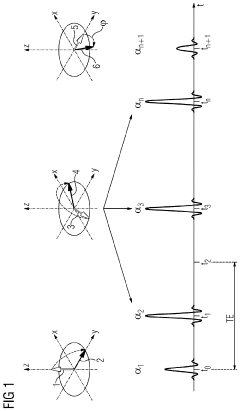
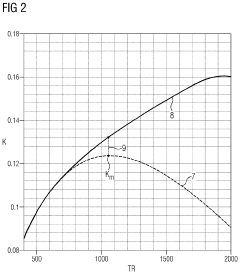
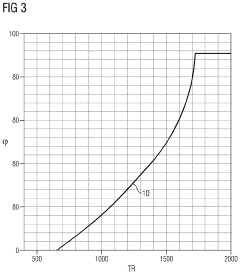
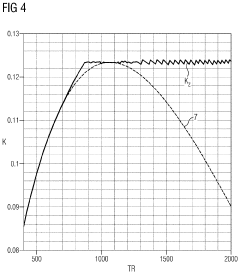
- The method involves applying a static magnetic field in the positive z-direction, a 90° excitation pulse, a refocusing pulse, and an additional RF pulse at the echo time to deflect magnetization by a specified flip angle, allowing for adjustable contrast and TR settings to optimize imaging for specific tissue types, enabling maximum contrast or maintaining contrast across varying TR ranges.
Magnetic resonance imaging method and apparatus based on two-dimensional fast spin echo
PatentActiveUS12386003B2
Innovation
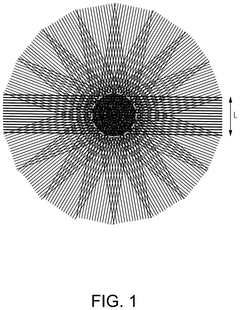
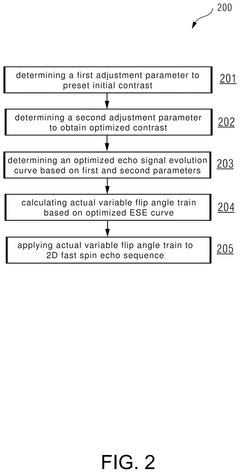
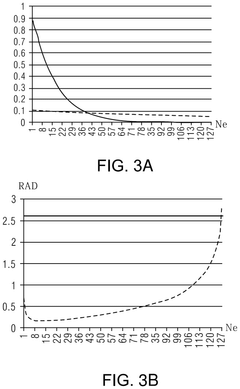
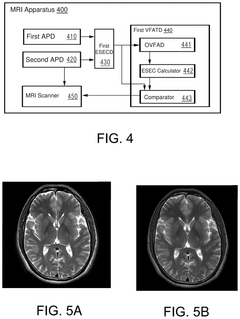
- A magnetic resonance imaging method and apparatus that utilize a blade artifact correction sequence (BLADE) with an optimized echo signal evolution curve and variable flip angle train to adjust the flip angle value, controlling T2 attenuation and ensuring image contrast and quality even with increased blade width.
Environmental Impact of NMR Material Testing
The environmental implications of Nuclear Magnetic Resonance (NMR) material testing in urban contexts represent a critical consideration as this technology gains wider application. When evaluating the environmental footprint of spin echo NMR techniques specifically refined for urban material applications, several key factors emerge that warrant careful assessment.
The energy consumption associated with NMR equipment operation constitutes a significant environmental concern. Modern NMR spectrometers require substantial power for maintaining superconducting magnets at extremely low temperatures, often necessitating continuous cooling with liquid helium and nitrogen. In urban settings, where energy infrastructure may already face high demand, the additional power requirements for NMR facilities can contribute to increased carbon emissions unless sourced from renewable energy.
Chemical waste management presents another environmental challenge. Sample preparation for NMR analysis frequently involves solvents and reagents that may contain deuterated compounds or other specialized chemicals. The disposal of these substances requires strict protocols to prevent contamination of urban water systems. Encouragingly, recent refinements in spin echo techniques have reduced sample size requirements, thereby minimizing waste generation.
Electromagnetic field emissions from NMR equipment, while contained within shielded environments, necessitate careful facility design in densely populated urban areas. Though direct environmental impact is minimal, proper shielding and facility placement remain important considerations for urban planning and public health assurance.
The lifecycle assessment of NMR equipment reveals additional environmental considerations. The production of superconducting magnets involves rare earth elements and specialized materials with complex extraction and manufacturing processes. End-of-life disposal presents challenges due to these specialized components, though many manufacturers now offer recycling programs for decommissioned equipment.
On the positive side, NMR material testing enables non-destructive analysis that can significantly contribute to urban sustainability initiatives. By facilitating precise characterization of construction materials, NMR techniques support the development of more durable infrastructure with extended lifespans, reducing the environmental burden of frequent replacements and repairs. Additionally, these techniques allow for quality assessment of recycled materials, supporting circular economy principles in urban development.
Water conservation represents another environmental benefit, as refined spin echo NMR techniques require minimal water usage compared to alternative testing methods. This advantage is particularly valuable in urban areas facing water scarcity challenges or implementing water conservation policies.
The energy consumption associated with NMR equipment operation constitutes a significant environmental concern. Modern NMR spectrometers require substantial power for maintaining superconducting magnets at extremely low temperatures, often necessitating continuous cooling with liquid helium and nitrogen. In urban settings, where energy infrastructure may already face high demand, the additional power requirements for NMR facilities can contribute to increased carbon emissions unless sourced from renewable energy.
Chemical waste management presents another environmental challenge. Sample preparation for NMR analysis frequently involves solvents and reagents that may contain deuterated compounds or other specialized chemicals. The disposal of these substances requires strict protocols to prevent contamination of urban water systems. Encouragingly, recent refinements in spin echo techniques have reduced sample size requirements, thereby minimizing waste generation.
Electromagnetic field emissions from NMR equipment, while contained within shielded environments, necessitate careful facility design in densely populated urban areas. Though direct environmental impact is minimal, proper shielding and facility placement remain important considerations for urban planning and public health assurance.
The lifecycle assessment of NMR equipment reveals additional environmental considerations. The production of superconducting magnets involves rare earth elements and specialized materials with complex extraction and manufacturing processes. End-of-life disposal presents challenges due to these specialized components, though many manufacturers now offer recycling programs for decommissioned equipment.
On the positive side, NMR material testing enables non-destructive analysis that can significantly contribute to urban sustainability initiatives. By facilitating precise characterization of construction materials, NMR techniques support the development of more durable infrastructure with extended lifespans, reducing the environmental burden of frequent replacements and repairs. Additionally, these techniques allow for quality assessment of recycled materials, supporting circular economy principles in urban development.
Water conservation represents another environmental benefit, as refined spin echo NMR techniques require minimal water usage compared to alternative testing methods. This advantage is particularly valuable in urban areas facing water scarcity challenges or implementing water conservation policies.
Standardization Requirements for Urban NMR Applications
The standardization of Nuclear Magnetic Resonance (NMR) techniques for urban material applications represents a critical step toward ensuring consistent, reliable, and comparable results across different research institutions, industries, and regulatory bodies. As spin echo NMR techniques gain traction in urban material analysis, the establishment of comprehensive standardization frameworks becomes increasingly urgent.
Current standardization efforts remain fragmented, with different sectors adopting varied protocols for sample preparation, data acquisition, and result interpretation. This inconsistency creates significant challenges when attempting to compare findings or establish industry-wide benchmarks for material quality and performance characteristics in urban environments.
Key standardization requirements must address multiple dimensions of NMR application in urban contexts. Calibration protocols need precise definition to ensure measurement accuracy across different NMR instruments and field strengths. Sample preparation standards should specify procedures for handling diverse urban materials including concrete, asphalt, composite building materials, and contaminated soils, with particular attention to moisture content control and sample homogeneity.
Data acquisition parameters require standardization regarding pulse sequences, relaxation delays, and temperature controls specific to urban material analysis. The spin echo technique itself needs standardized implementation guidelines to ensure consistent T2 relaxation time measurements across different laboratory settings and equipment configurations.
Post-processing methodologies represent another critical standardization domain, encompassing signal filtering, baseline correction, and peak integration techniques. Establishing standard reference materials specifically designed for urban applications would enable effective inter-laboratory comparisons and quality control measures.
Reporting requirements constitute an essential component of standardization, specifying minimum data elements, uncertainty calculations, and metadata documentation necessary for reproducibility. These standards should align with existing material testing frameworks while addressing the unique aspects of NMR-derived data.
Implementation of these standardization requirements faces several challenges, including the diversity of NMR equipment in use, varying levels of operator expertise, and the wide range of material properties encountered in urban environments. A phased approach to standardization may prove most effective, beginning with fundamental measurement protocols and gradually expanding to more complex applications.
International collaboration between standards organizations, research institutions, and industry stakeholders will be essential to develop consensus-based standards that achieve widespread adoption. Regular review and updating mechanisms must be incorporated to accommodate technological advancements in NMR instrumentation and emerging urban material applications.
Current standardization efforts remain fragmented, with different sectors adopting varied protocols for sample preparation, data acquisition, and result interpretation. This inconsistency creates significant challenges when attempting to compare findings or establish industry-wide benchmarks for material quality and performance characteristics in urban environments.
Key standardization requirements must address multiple dimensions of NMR application in urban contexts. Calibration protocols need precise definition to ensure measurement accuracy across different NMR instruments and field strengths. Sample preparation standards should specify procedures for handling diverse urban materials including concrete, asphalt, composite building materials, and contaminated soils, with particular attention to moisture content control and sample homogeneity.
Data acquisition parameters require standardization regarding pulse sequences, relaxation delays, and temperature controls specific to urban material analysis. The spin echo technique itself needs standardized implementation guidelines to ensure consistent T2 relaxation time measurements across different laboratory settings and equipment configurations.
Post-processing methodologies represent another critical standardization domain, encompassing signal filtering, baseline correction, and peak integration techniques. Establishing standard reference materials specifically designed for urban applications would enable effective inter-laboratory comparisons and quality control measures.
Reporting requirements constitute an essential component of standardization, specifying minimum data elements, uncertainty calculations, and metadata documentation necessary for reproducibility. These standards should align with existing material testing frameworks while addressing the unique aspects of NMR-derived data.
Implementation of these standardization requirements faces several challenges, including the diversity of NMR equipment in use, varying levels of operator expertise, and the wide range of material properties encountered in urban environments. A phased approach to standardization may prove most effective, beginning with fundamental measurement protocols and gradually expanding to more complex applications.
International collaboration between standards organizations, research institutions, and industry stakeholders will be essential to develop consensus-based standards that achieve widespread adoption. Regular review and updating mechanisms must be incorporated to accommodate technological advancements in NMR instrumentation and emerging urban material applications.
Unlock deeper insights with Patsnap Eureka Quick Research — get a full tech report to explore trends and direct your research. Try now!
Generate Your Research Report Instantly with AI Agent
Supercharge your innovation with Patsnap Eureka AI Agent Platform!