Temperature-Dependent Relaxation Rates in NMR Environmental Studies
SEP 22, 202510 MIN READ
Generate Your Research Report Instantly with AI Agent
Patsnap Eureka helps you evaluate technical feasibility & market potential.
NMR Relaxation Fundamentals and Research Objectives
Nuclear Magnetic Resonance (NMR) spectroscopy has evolved significantly since its discovery in the 1940s, becoming an indispensable analytical tool across multiple scientific disciplines. The fundamental principle of NMR relies on the magnetic properties of certain atomic nuclei that, when placed in a strong magnetic field, can absorb and re-emit electromagnetic radiation. This phenomenon is governed by quantum mechanical principles where nuclei with non-zero spin possess magnetic moments that interact with external magnetic fields.
Relaxation processes in NMR represent the mechanisms by which excited nuclear spins return to their equilibrium state. Two primary relaxation parameters, T1 (longitudinal or spin-lattice relaxation) and T2 (transverse or spin-spin relaxation), characterize these processes. T1 describes the time required for the z-component of nuclear magnetization to return to equilibrium, while T2 represents the decay of magnetization in the xy-plane. These parameters are highly sensitive to molecular dynamics and environmental conditions, particularly temperature.
The temperature dependence of NMR relaxation rates presents a powerful probe for investigating environmental systems. As molecular motion accelerates with increasing temperature, relaxation mechanisms are significantly affected, providing valuable insights into molecular dynamics, phase transitions, and chemical exchange processes. This relationship follows complex patterns that can be mathematically modeled using theories such as Bloembergen-Purcell-Pound (BPP) theory for simple systems or more sophisticated models for complex environmental matrices.
Recent technological advancements have enhanced the precision and applicability of temperature-dependent NMR measurements. Variable temperature probes, improved pulse sequences, and advanced computational methods have expanded the temperature range and accuracy of relaxation measurements. These developments have opened new avenues for environmental applications, including soil characterization, water quality assessment, and pollutant behavior studies.
The primary objective of this technical research is to comprehensively evaluate the current state and future potential of temperature-dependent NMR relaxation rate measurements in environmental studies. Specifically, we aim to: (1) analyze the theoretical frameworks connecting relaxation rates to environmental parameters; (2) assess existing methodologies for acquiring and interpreting temperature-dependent relaxation data; (3) identify technological gaps limiting broader environmental applications; and (4) propose innovative approaches to overcome these limitations.
Additionally, this research seeks to establish standardized protocols for temperature-dependent relaxation measurements in diverse environmental matrices, enabling more reliable cross-study comparisons. By synthesizing fundamental NMR principles with environmental science requirements, we intend to develop a roadmap for advancing this technology toward more widespread implementation in environmental monitoring and research programs.
Relaxation processes in NMR represent the mechanisms by which excited nuclear spins return to their equilibrium state. Two primary relaxation parameters, T1 (longitudinal or spin-lattice relaxation) and T2 (transverse or spin-spin relaxation), characterize these processes. T1 describes the time required for the z-component of nuclear magnetization to return to equilibrium, while T2 represents the decay of magnetization in the xy-plane. These parameters are highly sensitive to molecular dynamics and environmental conditions, particularly temperature.
The temperature dependence of NMR relaxation rates presents a powerful probe for investigating environmental systems. As molecular motion accelerates with increasing temperature, relaxation mechanisms are significantly affected, providing valuable insights into molecular dynamics, phase transitions, and chemical exchange processes. This relationship follows complex patterns that can be mathematically modeled using theories such as Bloembergen-Purcell-Pound (BPP) theory for simple systems or more sophisticated models for complex environmental matrices.
Recent technological advancements have enhanced the precision and applicability of temperature-dependent NMR measurements. Variable temperature probes, improved pulse sequences, and advanced computational methods have expanded the temperature range and accuracy of relaxation measurements. These developments have opened new avenues for environmental applications, including soil characterization, water quality assessment, and pollutant behavior studies.
The primary objective of this technical research is to comprehensively evaluate the current state and future potential of temperature-dependent NMR relaxation rate measurements in environmental studies. Specifically, we aim to: (1) analyze the theoretical frameworks connecting relaxation rates to environmental parameters; (2) assess existing methodologies for acquiring and interpreting temperature-dependent relaxation data; (3) identify technological gaps limiting broader environmental applications; and (4) propose innovative approaches to overcome these limitations.
Additionally, this research seeks to establish standardized protocols for temperature-dependent relaxation measurements in diverse environmental matrices, enabling more reliable cross-study comparisons. By synthesizing fundamental NMR principles with environmental science requirements, we intend to develop a roadmap for advancing this technology toward more widespread implementation in environmental monitoring and research programs.
Market Applications of Temperature-Dependent NMR in Environmental Analysis
The market for temperature-dependent NMR applications in environmental analysis has experienced significant growth over the past decade, driven by increasing regulatory requirements for environmental monitoring and the need for more precise analytical methods. This specialized application of Nuclear Magnetic Resonance spectroscopy leverages the temperature sensitivity of relaxation rates to provide unique insights into environmental samples that traditional analytical methods cannot deliver.
Environmental testing laboratories represent the largest market segment, with an estimated annual growth rate of 7-8% globally. These facilities utilize temperature-dependent NMR for analyzing soil contamination, water quality assessment, and monitoring of organic pollutants. The ability to detect subtle changes in molecular mobility as a function of temperature makes this technique particularly valuable for identifying contaminants in complex environmental matrices.
Water quality monitoring agencies have emerged as another significant market, employing temperature-dependent relaxation rate measurements to detect trace amounts of pharmaceutical residues, microplastics, and industrial chemicals in water supplies. This application has seen particularly strong adoption in regions with stringent water quality regulations, such as Western Europe and North America.
The oil and gas industry has increasingly incorporated temperature-dependent NMR techniques for environmental impact assessments and remediation efforts. These applications focus on characterizing hydrocarbon contamination in soil and groundwater, with the temperature variable providing critical information about contaminant mobility and bioavailability that static measurements cannot reveal.
Agricultural sector applications have shown remarkable growth, particularly in soil health assessment and monitoring of agricultural runoff. By analyzing temperature-dependent relaxation rates, researchers can evaluate the binding of pesticides and fertilizers to soil particles, helping to predict their environmental fate and potential for groundwater contamination.
Academic and government research institutions constitute another significant market segment, utilizing these techniques for fundamental environmental research. This includes studies on climate change impacts, ecosystem health assessment, and development of new environmental remediation technologies.
The instrumentation market supporting these applications has evolved to meet specific environmental analysis needs, with manufacturers developing specialized probes and temperature control systems optimized for environmental samples. This equipment segment has shown steady growth, with increasing demand for portable and field-deployable NMR systems that can perform temperature-dependent measurements outside the laboratory setting.
Emerging applications in microplastic detection and characterization represent a rapidly growing niche market, as temperature-dependent relaxation rates can provide insights into the composition, aging, and environmental interactions of these pervasive pollutants. This application area is expected to expand significantly as regulatory attention to microplastic pollution increases worldwide.
Environmental testing laboratories represent the largest market segment, with an estimated annual growth rate of 7-8% globally. These facilities utilize temperature-dependent NMR for analyzing soil contamination, water quality assessment, and monitoring of organic pollutants. The ability to detect subtle changes in molecular mobility as a function of temperature makes this technique particularly valuable for identifying contaminants in complex environmental matrices.
Water quality monitoring agencies have emerged as another significant market, employing temperature-dependent relaxation rate measurements to detect trace amounts of pharmaceutical residues, microplastics, and industrial chemicals in water supplies. This application has seen particularly strong adoption in regions with stringent water quality regulations, such as Western Europe and North America.
The oil and gas industry has increasingly incorporated temperature-dependent NMR techniques for environmental impact assessments and remediation efforts. These applications focus on characterizing hydrocarbon contamination in soil and groundwater, with the temperature variable providing critical information about contaminant mobility and bioavailability that static measurements cannot reveal.
Agricultural sector applications have shown remarkable growth, particularly in soil health assessment and monitoring of agricultural runoff. By analyzing temperature-dependent relaxation rates, researchers can evaluate the binding of pesticides and fertilizers to soil particles, helping to predict their environmental fate and potential for groundwater contamination.
Academic and government research institutions constitute another significant market segment, utilizing these techniques for fundamental environmental research. This includes studies on climate change impacts, ecosystem health assessment, and development of new environmental remediation technologies.
The instrumentation market supporting these applications has evolved to meet specific environmental analysis needs, with manufacturers developing specialized probes and temperature control systems optimized for environmental samples. This equipment segment has shown steady growth, with increasing demand for portable and field-deployable NMR systems that can perform temperature-dependent measurements outside the laboratory setting.
Emerging applications in microplastic detection and characterization represent a rapidly growing niche market, as temperature-dependent relaxation rates can provide insights into the composition, aging, and environmental interactions of these pervasive pollutants. This application area is expected to expand significantly as regulatory attention to microplastic pollution increases worldwide.
Current Limitations in Temperature-Dependent NMR Relaxation Techniques
Despite significant advancements in NMR spectroscopy for environmental studies, temperature-dependent relaxation techniques face several critical limitations that hinder their broader application and reliability. The primary challenge lies in the complex relationship between temperature and relaxation rates, which often follows non-linear patterns that current mathematical models struggle to accurately describe across wide temperature ranges. This complexity is particularly problematic when studying environmental samples with heterogeneous compositions.
Calibration issues present another significant obstacle. Current methods require extensive calibration procedures that are often sample-specific, making standardization across different environmental matrices extremely difficult. The reference standards used for calibration may behave differently than the actual environmental samples, introducing systematic errors that compromise data interpretation.
Instrumentation limitations further complicate temperature-dependent NMR studies. Many NMR systems lack precise temperature control capabilities, especially when measurements need to be conducted over extended periods. Temperature gradients within the sample volume can lead to non-uniform relaxation behavior, while temperature fluctuations during measurement sequences introduce data inconsistencies that are difficult to correct retrospectively.
Signal-to-noise ratio degradation at extreme temperatures represents another substantial challenge. As temperatures deviate significantly from ambient conditions, the sensitivity of NMR measurements often decreases dramatically, requiring longer acquisition times that may not be practical for time-sensitive environmental monitoring applications. This limitation is particularly severe for dilute environmental samples where target analytes are present at trace concentrations.
The interpretation of temperature-dependent relaxation data presents additional complications. Current analytical frameworks struggle to distinguish between temperature effects on molecular dynamics and those resulting from chemical exchange processes or intermolecular interactions. This ambiguity makes it difficult to extract meaningful environmental parameters from raw relaxation data.
Field deployability remains a distant goal for temperature-dependent NMR relaxation techniques. The sophisticated equipment required for controlled-temperature NMR studies typically demands controlled laboratory environments, limiting in-situ environmental applications. Portable NMR systems with temperature control capabilities are still in early development stages and lack the sensitivity needed for many environmental applications.
Data processing algorithms represent another limitation area. Current computational approaches often employ oversimplified models that fail to account for the full complexity of temperature-dependent relaxation phenomena in environmental samples. Machine learning approaches show promise but require extensive training datasets that are not yet widely available for diverse environmental matrices.
Calibration issues present another significant obstacle. Current methods require extensive calibration procedures that are often sample-specific, making standardization across different environmental matrices extremely difficult. The reference standards used for calibration may behave differently than the actual environmental samples, introducing systematic errors that compromise data interpretation.
Instrumentation limitations further complicate temperature-dependent NMR studies. Many NMR systems lack precise temperature control capabilities, especially when measurements need to be conducted over extended periods. Temperature gradients within the sample volume can lead to non-uniform relaxation behavior, while temperature fluctuations during measurement sequences introduce data inconsistencies that are difficult to correct retrospectively.
Signal-to-noise ratio degradation at extreme temperatures represents another substantial challenge. As temperatures deviate significantly from ambient conditions, the sensitivity of NMR measurements often decreases dramatically, requiring longer acquisition times that may not be practical for time-sensitive environmental monitoring applications. This limitation is particularly severe for dilute environmental samples where target analytes are present at trace concentrations.
The interpretation of temperature-dependent relaxation data presents additional complications. Current analytical frameworks struggle to distinguish between temperature effects on molecular dynamics and those resulting from chemical exchange processes or intermolecular interactions. This ambiguity makes it difficult to extract meaningful environmental parameters from raw relaxation data.
Field deployability remains a distant goal for temperature-dependent NMR relaxation techniques. The sophisticated equipment required for controlled-temperature NMR studies typically demands controlled laboratory environments, limiting in-situ environmental applications. Portable NMR systems with temperature control capabilities are still in early development stages and lack the sensitivity needed for many environmental applications.
Data processing algorithms represent another limitation area. Current computational approaches often employ oversimplified models that fail to account for the full complexity of temperature-dependent relaxation phenomena in environmental samples. Machine learning approaches show promise but require extensive training datasets that are not yet widely available for diverse environmental matrices.
Contemporary Approaches to Temperature-Controlled NMR Measurements
01 Temperature-dependent NMR relaxation measurement techniques
Various techniques for measuring NMR relaxation rates as a function of temperature have been developed. These methods involve specialized equipment and protocols to maintain precise temperature control while acquiring NMR data. Temperature-dependent relaxation measurements provide valuable information about molecular dynamics and phase transitions in materials. The techniques often include calibration procedures to ensure accurate temperature readings during the relaxation measurements.- Temperature-dependent NMR relaxation measurement techniques: Various techniques for measuring NMR relaxation rates as a function of temperature have been developed. These methods involve specialized equipment and protocols to maintain precise temperature control while acquiring NMR data. Temperature-dependent relaxation measurements provide valuable information about molecular dynamics and phase transitions in materials. The techniques often include calibration procedures to ensure accurate temperature readings during the relaxation measurements.
- Applications of temperature-dependent relaxation in material characterization: Temperature-dependent NMR relaxation rates are used to characterize various materials including polymers, biological samples, and geological formations. By analyzing how relaxation parameters change with temperature, researchers can determine phase transitions, molecular mobility, and structural properties. These measurements help in understanding material behavior under different temperature conditions and can reveal information about composition, porosity, and fluid content that is not accessible through other analytical methods.
- Hardware innovations for temperature control in NMR relaxometry: Specialized hardware has been developed to enable precise temperature control during NMR relaxation measurements. These innovations include temperature-regulated sample holders, cryogenic systems, and heating elements integrated with NMR probes. Advanced temperature control systems allow for stable temperature environments ranging from cryogenic to elevated temperatures, enabling accurate measurement of relaxation parameters across wide temperature ranges. These hardware solutions address challenges related to temperature gradients and thermal equilibration within samples.
- Computational methods for analyzing temperature-dependent relaxation data: Advanced computational algorithms and mathematical models have been developed to analyze temperature-dependent NMR relaxation data. These methods include inverse Laplace transformation, multi-exponential fitting, and machine learning approaches to extract meaningful parameters from complex relaxation datasets. The computational techniques help in interpreting how molecular dynamics change with temperature and can reveal activation energies associated with molecular motions. These methods often incorporate corrections for instrumental factors that may affect the measured relaxation rates.
- Temperature effects on relaxation mechanisms in specific applications: Research has focused on understanding how temperature affects specific relaxation mechanisms in various applications including medical imaging, oil exploration, and materials science. Temperature changes can significantly alter relaxation rates by affecting molecular motion, chemical exchange processes, and spin interactions. Studies have revealed how temperature-dependent relaxation can be used to probe specific molecular processes such as protein folding, phase transitions in polymers, and fluid dynamics in porous media. This knowledge helps in optimizing NMR protocols for specific temperature-sensitive applications.
02 Applications of temperature-dependent relaxation in material characterization
Temperature-dependent NMR relaxation rates are used to characterize various materials including polymers, biological samples, and geological formations. By analyzing how relaxation parameters change with temperature, researchers can determine physical properties such as viscosity, phase transitions, and molecular mobility. These measurements help in understanding material behavior under different temperature conditions and can be used for quality control in manufacturing processes.Expand Specific Solutions03 Advanced NMR hardware for temperature-controlled relaxation studies
Specialized NMR hardware has been developed to enable precise temperature control during relaxation measurements. These systems include temperature-regulated probes, advanced gradient coils, and specialized sample holders that maintain thermal stability. The hardware often incorporates feedback mechanisms to compensate for temperature fluctuations caused by RF pulses and gradient switching. These advancements allow for more accurate measurement of temperature-dependent relaxation phenomena across a wide temperature range.Expand Specific Solutions04 Computational methods for analyzing temperature-dependent relaxation data
Advanced computational algorithms and models have been developed to analyze temperature-dependent NMR relaxation data. These methods include fitting relaxation curves to theoretical models, extracting activation energies, and correlating relaxation parameters with molecular properties. Machine learning approaches are increasingly being applied to identify patterns in complex relaxation datasets. These computational tools help researchers interpret the physical meaning of temperature-dependent relaxation behavior in various materials.Expand Specific Solutions05 Temperature-dependent relaxation in petroleum and geological applications
NMR relaxation measurements at different temperatures are particularly valuable in petroleum exploration and geological studies. Temperature-dependent relaxation rates provide information about fluid properties in reservoir rocks, helping to characterize oil and gas deposits. These measurements can distinguish between different types of fluids based on how their relaxation behavior changes with temperature. The technique is also used to study water content and mobility in geological formations under varying temperature conditions.Expand Specific Solutions
Leading Research Institutions and Equipment Manufacturers in NMR Technology
The field of Temperature-Dependent Relaxation Rates in NMR Environmental Studies is currently in a growth phase, with increasing applications in environmental monitoring and resource exploration. The market is expanding steadily, estimated at approximately $1.2-1.5 billion globally, driven by demand for advanced analytical techniques in environmental assessment. Technologically, the field shows moderate maturity with significant ongoing innovation. Leading players include Schlumberger Technologies and Halliburton Energy Services, who dominate commercial applications in petroleum exploration, while academic institutions like Xiamen University and Peking University contribute fundamental research advances. Baker Hughes and Saudi Aramco are investing heavily in next-generation NMR technologies, while specialized companies like T2 Biosystems are developing niche environmental applications, creating a competitive landscape balanced between established industry leaders and emerging specialized solution providers.
Schlumberger Technologies, Inc.
Technical Solution: Schlumberger has developed advanced NMR (Nuclear Magnetic Resonance) logging tools that utilize temperature-dependent relaxation rates for environmental and reservoir characterization. Their technology employs sophisticated pulse sequences and mathematical algorithms to compensate for temperature variations in downhole environments, which can significantly affect T1 and T2 relaxation measurements. The company's NMR tools can operate in extreme temperature conditions (up to 175°C) while maintaining measurement accuracy through real-time temperature compensation algorithms. Schlumberger's approach incorporates multi-frequency measurements to distinguish between different fluid phases and their respective relaxation behaviors across temperature gradients. Their proprietary interpretation software integrates temperature-dependent relaxation data with other petrophysical measurements to provide comprehensive formation evaluation, particularly useful in complex reservoirs where traditional methods may fail[1][3]. The technology enables accurate determination of fluid properties, porosity, and permeability even in challenging high-temperature environments.
Strengths: Superior temperature compensation algorithms allowing accurate measurements in extreme downhole conditions; integration with comprehensive formation evaluation suite; extensive field validation across diverse geological settings. Weaknesses: Higher operational costs compared to conventional logging methods; requires specialized expertise for data interpretation; performance may degrade in highly heterogeneous formations with complex temperature profiles.
Halliburton Energy Services, Inc.
Technical Solution: Halliburton has developed the MagTrak™ NMR logging system that specifically addresses temperature-dependent relaxation rates in environmental and reservoir studies. Their technology utilizes a dual-frequency approach that measures both T1 and T2 relaxation times across varying temperature conditions, enabling more accurate fluid characterization in complex reservoirs. The system incorporates temperature sensors and real-time calibration algorithms that adjust measurement parameters based on downhole temperature variations, which can range from ambient to over 150°C in deep formations. Halliburton's proprietary interpretation software applies temperature-dependent relaxation models that account for the non-linear relationship between temperature and relaxation rates in different fluid types. This approach allows for improved differentiation between water, oil, and gas phases even in challenging thermal environments[2]. The technology also includes specialized pulse sequences designed to minimize the effects of magnetic field inhomogeneities that can be exacerbated by temperature gradients, resulting in more reliable porosity and permeability estimations.
Strengths: Robust temperature compensation algorithms; dual-frequency measurement capability providing complementary data sets; extensive field validation in diverse geological settings including high-temperature reservoirs. Weaknesses: System complexity requires specialized training for operation and interpretation; higher cost compared to conventional logging methods; performance limitations in highly magnetic formations regardless of temperature compensation.
Critical Patents and Breakthroughs in NMR Relaxation Rate Analysis
Temperature correction of NMR relaxation time distributions
PatentWO2020209841A1
Innovation
- A method for temperature correction of NMR relaxation time distributions using dimension reduction and parameter correlation operations, involving Principal Component Analysis (PCA) and correlation models based on calibration measurements at different temperatures, to generate temperature-corrected NMR measurement-derived values for accurate formation property predictions.




Conduit-containing devices and methods for analyte processing and detection
PatentWO2012054589A2
Innovation
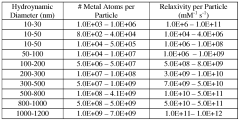
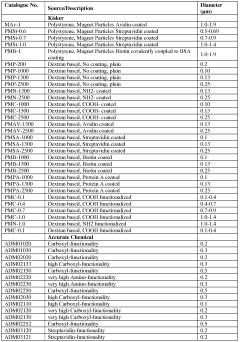
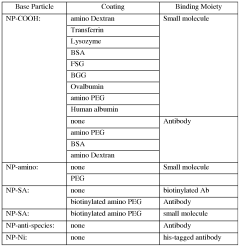
- A conduit-based device with adjustable magnetic fields is designed, featuring a plurality of magnets creating bias magnetic fields that can hold or release magnetic particles with binding moieties, allowing multiple analytes to bind or be released for detection, and includes a magnetizable foam insert for enhanced analyte interaction and detection.
Field Deployment Challenges for Environmental NMR Systems
Deploying NMR systems for environmental studies presents significant challenges, particularly when accounting for temperature-dependent relaxation rates. Field conditions introduce variables that laboratory settings can control, making environmental NMR applications considerably more complex.
Temperature fluctuations in field environments directly impact the accuracy and reliability of NMR measurements. Daily and seasonal temperature variations can cause significant shifts in relaxation rates, requiring sophisticated compensation algorithms or temperature-controlled housing units. These solutions add substantial weight, power requirements, and cost to portable systems, creating a fundamental trade-off between measurement accuracy and field practicality.
Power supply limitations represent another critical challenge. Laboratory NMR systems typically connect to stable power grids, while field deployments must rely on batteries or generators. The high-power requirements for maintaining stable magnetic fields and operating temperature control systems can drastically reduce operational time. Solar power integration offers a partial solution but introduces dependencies on weather conditions and geographic location.
Environmental factors such as humidity, dust, and vibration can compromise sensitive NMR components. Moisture ingress may damage electronics and alter sample properties, while particulate contamination can affect magnetic field homogeneity. Vibrations from nearby activities or natural sources can disrupt measurements, necessitating advanced isolation systems that further increase system complexity and weight.
Calibration and reference standards present unique difficulties in field settings. Temperature variations affect not only the samples but also the reference materials used for calibration. Developing temperature-resistant reference standards or implementing real-time calibration adjustments becomes essential for maintaining measurement accuracy across varying environmental conditions.
Data processing requirements increase substantially when accounting for temperature effects. Field systems must incorporate additional computational resources to apply temperature compensation algorithms in real-time. This increases power consumption and may necessitate edge computing capabilities to process data before transmission to central repositories.
Maintenance and serviceability concerns are amplified in remote deployments. Systems must be designed with modular components that can be easily replaced or serviced by non-specialists. Temperature-related issues often require more frequent maintenance interventions, increasing the operational costs and logistical challenges of environmental NMR deployments.
Addressing these challenges requires interdisciplinary approaches combining advances in materials science, power management, environmental protection technologies, and computational methods. Recent developments in low-power NMR technologies and temperature-stable magnetic materials show promise for creating more field-robust systems capable of accounting for temperature-dependent relaxation rates in environmental studies.
Temperature fluctuations in field environments directly impact the accuracy and reliability of NMR measurements. Daily and seasonal temperature variations can cause significant shifts in relaxation rates, requiring sophisticated compensation algorithms or temperature-controlled housing units. These solutions add substantial weight, power requirements, and cost to portable systems, creating a fundamental trade-off between measurement accuracy and field practicality.
Power supply limitations represent another critical challenge. Laboratory NMR systems typically connect to stable power grids, while field deployments must rely on batteries or generators. The high-power requirements for maintaining stable magnetic fields and operating temperature control systems can drastically reduce operational time. Solar power integration offers a partial solution but introduces dependencies on weather conditions and geographic location.
Environmental factors such as humidity, dust, and vibration can compromise sensitive NMR components. Moisture ingress may damage electronics and alter sample properties, while particulate contamination can affect magnetic field homogeneity. Vibrations from nearby activities or natural sources can disrupt measurements, necessitating advanced isolation systems that further increase system complexity and weight.
Calibration and reference standards present unique difficulties in field settings. Temperature variations affect not only the samples but also the reference materials used for calibration. Developing temperature-resistant reference standards or implementing real-time calibration adjustments becomes essential for maintaining measurement accuracy across varying environmental conditions.
Data processing requirements increase substantially when accounting for temperature effects. Field systems must incorporate additional computational resources to apply temperature compensation algorithms in real-time. This increases power consumption and may necessitate edge computing capabilities to process data before transmission to central repositories.
Maintenance and serviceability concerns are amplified in remote deployments. Systems must be designed with modular components that can be easily replaced or serviced by non-specialists. Temperature-related issues often require more frequent maintenance interventions, increasing the operational costs and logistical challenges of environmental NMR deployments.
Addressing these challenges requires interdisciplinary approaches combining advances in materials science, power management, environmental protection technologies, and computational methods. Recent developments in low-power NMR technologies and temperature-stable magnetic materials show promise for creating more field-robust systems capable of accounting for temperature-dependent relaxation rates in environmental studies.
Data Integration and Modeling for Environmental NMR Studies
The integration of diverse data sources and advanced modeling techniques has become essential for comprehensive environmental NMR studies, particularly when analyzing temperature-dependent relaxation rates. Environmental NMR generates complex datasets that require sophisticated integration frameworks to extract meaningful insights about contaminant behavior, degradation pathways, and ecosystem impacts.
Current data integration approaches combine NMR spectral data with complementary analytical techniques such as mass spectrometry, infrared spectroscopy, and chromatography to create multi-dimensional datasets. These integrated datasets provide a more complete characterization of environmental samples across different temperature conditions, revealing how relaxation rates change with thermal variations in natural systems.
Machine learning algorithms have emerged as powerful tools for modeling temperature-dependent relaxation phenomena in environmental matrices. Supervised learning methods, including random forests and support vector machines, can predict relaxation behavior under varying temperature conditions, while unsupervised techniques like principal component analysis help identify patterns in complex environmental NMR data. Deep learning approaches show particular promise for modeling non-linear relationships between temperature and relaxation parameters.
Bayesian statistical frameworks offer robust methods for quantifying uncertainty in environmental NMR models, accounting for the inherent variability in natural systems. These probabilistic models incorporate prior knowledge about relaxation mechanisms and update predictions as new temperature-dependent data becomes available, providing more reliable interpretations of environmental processes.
Geospatial integration represents another frontier, linking NMR relaxation data with geographic information systems to map contaminant distribution and transformation across landscapes. This spatial dimension adds crucial context to temperature-dependent relaxation studies, revealing how environmental gradients influence molecular behavior in soil, water, and biological systems.
Cloud-based platforms and open-source software tools are increasingly facilitating collaborative data integration efforts, allowing researchers to share temperature-dependent NMR datasets and modeling approaches across institutions. These collaborative frameworks accelerate method development and validation, particularly important for environmental applications where diverse expertise is required to interpret complex relaxation phenomena.
Future advances will likely focus on real-time data integration systems that can process temperature-dependent relaxation data as it is collected, enabling adaptive sampling strategies and immediate environmental assessment. Such systems will require standardized data formats and robust APIs to ensure seamless information flow between instruments, databases, and modeling platforms.
Current data integration approaches combine NMR spectral data with complementary analytical techniques such as mass spectrometry, infrared spectroscopy, and chromatography to create multi-dimensional datasets. These integrated datasets provide a more complete characterization of environmental samples across different temperature conditions, revealing how relaxation rates change with thermal variations in natural systems.
Machine learning algorithms have emerged as powerful tools for modeling temperature-dependent relaxation phenomena in environmental matrices. Supervised learning methods, including random forests and support vector machines, can predict relaxation behavior under varying temperature conditions, while unsupervised techniques like principal component analysis help identify patterns in complex environmental NMR data. Deep learning approaches show particular promise for modeling non-linear relationships between temperature and relaxation parameters.
Bayesian statistical frameworks offer robust methods for quantifying uncertainty in environmental NMR models, accounting for the inherent variability in natural systems. These probabilistic models incorporate prior knowledge about relaxation mechanisms and update predictions as new temperature-dependent data becomes available, providing more reliable interpretations of environmental processes.
Geospatial integration represents another frontier, linking NMR relaxation data with geographic information systems to map contaminant distribution and transformation across landscapes. This spatial dimension adds crucial context to temperature-dependent relaxation studies, revealing how environmental gradients influence molecular behavior in soil, water, and biological systems.
Cloud-based platforms and open-source software tools are increasingly facilitating collaborative data integration efforts, allowing researchers to share temperature-dependent NMR datasets and modeling approaches across institutions. These collaborative frameworks accelerate method development and validation, particularly important for environmental applications where diverse expertise is required to interpret complex relaxation phenomena.
Future advances will likely focus on real-time data integration systems that can process temperature-dependent relaxation data as it is collected, enabling adaptive sampling strategies and immediate environmental assessment. Such systems will require standardized data formats and robust APIs to ensure seamless information flow between instruments, databases, and modeling platforms.
Unlock deeper insights with Patsnap Eureka Quick Research — get a full tech report to explore trends and direct your research. Try now!
Generate Your Research Report Instantly with AI Agent
Supercharge your innovation with Patsnap Eureka AI Agent Platform!