Polarization Transfer Techniques in NMR to Reduce Background Noise
SEP 22, 20259 MIN READ
Generate Your Research Report Instantly with AI Agent
Patsnap Eureka helps you evaluate technical feasibility & market potential.
NMR Polarization Transfer Background and Objectives
Nuclear Magnetic Resonance (NMR) spectroscopy has evolved significantly since its discovery in the 1940s, becoming an indispensable analytical tool across various scientific disciplines. The technique fundamentally relies on the magnetic properties of atomic nuclei, particularly their spin states when placed in a magnetic field. Traditional NMR methods, however, have been limited by sensitivity issues, particularly background noise that can obscure valuable spectral information.
Polarization transfer techniques represent a revolutionary advancement in NMR methodology, emerging in the late 1970s and gaining substantial refinement through subsequent decades. These techniques exploit the transfer of polarization from nuclei with higher gyromagnetic ratios (typically protons) to those with lower ratios (such as carbon-13 or nitrogen-15), effectively enhancing signal strength and improving signal-to-noise ratios by factors of 2-4 or more in standard applications.
The evolution of polarization transfer has been marked by several milestone developments, including Insensitive Nuclei Enhanced by Polarization Transfer (INEPT), Distortionless Enhancement by Polarization Transfer (DEPT), and more recently, Dynamic Nuclear Polarization (DNP). Each iteration has addressed specific limitations of previous approaches while expanding the applicability of NMR across increasingly complex molecular systems.
Current technological trends point toward integration of polarization transfer with advanced computational methods, including machine learning algorithms that can further distinguish signal from noise through pattern recognition. Additionally, there is growing interest in hyperpolarization techniques that can boost NMR sensitivity by several orders of magnitude, potentially revolutionizing applications in medical imaging and materials science.
The primary objective of modern polarization transfer research is to develop robust methodologies that can effectively suppress background noise while maximizing signal enhancement across diverse experimental conditions. This includes optimizing pulse sequences for specific molecular structures, developing hardware solutions that minimize electronic noise, and creating standardized protocols that ensure reproducibility across different NMR platforms.
Secondary objectives include extending polarization transfer techniques to previously challenging nuclei with unfavorable NMR properties, reducing the sample concentration requirements for effective analysis, and shortening acquisition times without compromising spectral quality. These advancements would significantly expand NMR applications in time-sensitive fields such as metabolomics and in-vivo studies.
The ultimate goal remains the democratization of high-resolution NMR spectroscopy through noise reduction techniques that make sophisticated analyses accessible with more affordable instrumentation, potentially bringing advanced molecular characterization capabilities to a broader range of research institutions and industrial applications.
Polarization transfer techniques represent a revolutionary advancement in NMR methodology, emerging in the late 1970s and gaining substantial refinement through subsequent decades. These techniques exploit the transfer of polarization from nuclei with higher gyromagnetic ratios (typically protons) to those with lower ratios (such as carbon-13 or nitrogen-15), effectively enhancing signal strength and improving signal-to-noise ratios by factors of 2-4 or more in standard applications.
The evolution of polarization transfer has been marked by several milestone developments, including Insensitive Nuclei Enhanced by Polarization Transfer (INEPT), Distortionless Enhancement by Polarization Transfer (DEPT), and more recently, Dynamic Nuclear Polarization (DNP). Each iteration has addressed specific limitations of previous approaches while expanding the applicability of NMR across increasingly complex molecular systems.
Current technological trends point toward integration of polarization transfer with advanced computational methods, including machine learning algorithms that can further distinguish signal from noise through pattern recognition. Additionally, there is growing interest in hyperpolarization techniques that can boost NMR sensitivity by several orders of magnitude, potentially revolutionizing applications in medical imaging and materials science.
The primary objective of modern polarization transfer research is to develop robust methodologies that can effectively suppress background noise while maximizing signal enhancement across diverse experimental conditions. This includes optimizing pulse sequences for specific molecular structures, developing hardware solutions that minimize electronic noise, and creating standardized protocols that ensure reproducibility across different NMR platforms.
Secondary objectives include extending polarization transfer techniques to previously challenging nuclei with unfavorable NMR properties, reducing the sample concentration requirements for effective analysis, and shortening acquisition times without compromising spectral quality. These advancements would significantly expand NMR applications in time-sensitive fields such as metabolomics and in-vivo studies.
The ultimate goal remains the democratization of high-resolution NMR spectroscopy through noise reduction techniques that make sophisticated analyses accessible with more affordable instrumentation, potentially bringing advanced molecular characterization capabilities to a broader range of research institutions and industrial applications.
Market Analysis for Advanced NMR Noise Reduction Solutions
The global market for advanced NMR noise reduction solutions, particularly those utilizing polarization transfer techniques, is experiencing significant growth driven by increasing demand for higher sensitivity and resolution in analytical applications. The market size for NMR spectroscopy equipment was valued at approximately $860 million in 2022, with noise reduction technologies representing a crucial segment that enhances the overall value proposition of these instruments.
Healthcare and pharmaceutical sectors currently dominate the demand landscape, accounting for nearly 42% of the market share. These industries require increasingly sensitive NMR analysis for drug discovery, metabolomics, and structural biology applications where signal-to-noise ratio directly impacts research outcomes. The academic research segment follows closely, representing about 30% of the market, with consistent funding for advanced analytical capabilities.
Chemical and materials science industries constitute approximately 20% of the market, with growing applications in polymer science, catalysis research, and material characterization. The remaining market share is distributed across food science, environmental monitoring, and emerging applications in quantum computing research.
Geographically, North America leads with approximately 38% market share, followed by Europe (30%) and Asia-Pacific (25%). The Asia-Pacific region, particularly China and India, demonstrates the fastest growth rate at 8-9% annually, compared to the global average of 6.5%.
Market dynamics reveal a strong correlation between research funding cycles and technology adoption. Government initiatives supporting precision medicine and advanced materials research have created significant market opportunities for noise reduction technologies. The COVID-19 pandemic temporarily disrupted supply chains but simultaneously accelerated demand for high-sensitivity analytical tools in vaccine and therapeutic research.
Customer segmentation shows distinct requirements across different user groups. High-end research facilities prioritize ultimate sensitivity gains regardless of cost, while routine analytical laboratories seek cost-effective solutions that can be integrated into existing workflows. This bifurcation has created parallel market trajectories for premium and value-oriented noise reduction solutions.
Pricing analysis indicates that advanced polarization transfer modules command premium pricing, with ROI justification based on extended useful life of existing NMR equipment, reduced sample requirements, and accelerated research timelines. The market demonstrates price elasticity in academic segments but relative inelasticity in pharmaceutical applications where performance advantages translate directly to competitive advantages.
Healthcare and pharmaceutical sectors currently dominate the demand landscape, accounting for nearly 42% of the market share. These industries require increasingly sensitive NMR analysis for drug discovery, metabolomics, and structural biology applications where signal-to-noise ratio directly impacts research outcomes. The academic research segment follows closely, representing about 30% of the market, with consistent funding for advanced analytical capabilities.
Chemical and materials science industries constitute approximately 20% of the market, with growing applications in polymer science, catalysis research, and material characterization. The remaining market share is distributed across food science, environmental monitoring, and emerging applications in quantum computing research.
Geographically, North America leads with approximately 38% market share, followed by Europe (30%) and Asia-Pacific (25%). The Asia-Pacific region, particularly China and India, demonstrates the fastest growth rate at 8-9% annually, compared to the global average of 6.5%.
Market dynamics reveal a strong correlation between research funding cycles and technology adoption. Government initiatives supporting precision medicine and advanced materials research have created significant market opportunities for noise reduction technologies. The COVID-19 pandemic temporarily disrupted supply chains but simultaneously accelerated demand for high-sensitivity analytical tools in vaccine and therapeutic research.
Customer segmentation shows distinct requirements across different user groups. High-end research facilities prioritize ultimate sensitivity gains regardless of cost, while routine analytical laboratories seek cost-effective solutions that can be integrated into existing workflows. This bifurcation has created parallel market trajectories for premium and value-oriented noise reduction solutions.
Pricing analysis indicates that advanced polarization transfer modules command premium pricing, with ROI justification based on extended useful life of existing NMR equipment, reduced sample requirements, and accelerated research timelines. The market demonstrates price elasticity in academic segments but relative inelasticity in pharmaceutical applications where performance advantages translate directly to competitive advantages.
Current Polarization Transfer Techniques and Challenges
Nuclear Magnetic Resonance (NMR) spectroscopy has evolved significantly over the past decades, with polarization transfer techniques emerging as critical methods for enhancing signal quality and reducing background noise. Currently, several established polarization transfer techniques dominate the field, each with specific advantages and limitations.
Insensitive Nuclei Enhanced by Polarization Transfer (INEPT) represents one of the fundamental approaches, transferring polarization from high-sensitivity nuclei (typically 1H) to less sensitive nuclei such as 13C or 15N. While INEPT significantly improves signal-to-noise ratios for these less sensitive nuclei, it remains vulnerable to signal loss in molecules with short T2 relaxation times, limiting its application in certain macromolecular studies.
Distortionless Enhancement by Polarization Transfer (DEPT) builds upon INEPT principles but offers improved spectral editing capabilities, allowing differentiation between CH, CH2, and CH3 groups. Despite its widespread use, DEPT struggles with quaternary carbons detection and requires careful parameter optimization to achieve optimal results across different molecular environments.
Cross-Polarization (CP) techniques, particularly important in solid-state NMR, transfer polarization through dipolar couplings rather than J-couplings. While CP has revolutionized solid-state NMR studies, it faces challenges in samples with molecular mobility or heterogeneous compositions, where polarization transfer efficiency varies significantly across the sample.
Dynamic Nuclear Polarization (DNP) represents the cutting edge of polarization enhancement, offering signal amplifications of several orders of magnitude by transferring polarization from electron spins to nuclear spins. However, DNP faces substantial implementation challenges, including the need for specialized equipment, cryogenic temperatures, and stable radical sources, making it inaccessible for routine analyses in many laboratories.
Hyperpolarization methods like para-hydrogen induced polarization (PHIP) and Signal Amplification By Reversible Exchange (SABRE) offer tremendous signal enhancements but remain limited to specific chemical systems compatible with the underlying mechanisms. Their application scope remains narrower than traditional polarization transfer techniques.
A significant challenge across all polarization transfer methods is maintaining coherence during the transfer process, particularly in complex biological samples where multiple competing relaxation mechanisms can diminish transfer efficiency. Additionally, most techniques exhibit varying performance across different molecular environments, making universal protocols difficult to establish.
Technical limitations in current hardware also present challenges, with RF inhomogeneity and power limitations affecting the uniformity and efficiency of polarization transfer across samples. Furthermore, quantitative analysis remains challenging as polarization transfer efficiencies can vary between different molecular structures, complicating direct signal comparisons.
Insensitive Nuclei Enhanced by Polarization Transfer (INEPT) represents one of the fundamental approaches, transferring polarization from high-sensitivity nuclei (typically 1H) to less sensitive nuclei such as 13C or 15N. While INEPT significantly improves signal-to-noise ratios for these less sensitive nuclei, it remains vulnerable to signal loss in molecules with short T2 relaxation times, limiting its application in certain macromolecular studies.
Distortionless Enhancement by Polarization Transfer (DEPT) builds upon INEPT principles but offers improved spectral editing capabilities, allowing differentiation between CH, CH2, and CH3 groups. Despite its widespread use, DEPT struggles with quaternary carbons detection and requires careful parameter optimization to achieve optimal results across different molecular environments.
Cross-Polarization (CP) techniques, particularly important in solid-state NMR, transfer polarization through dipolar couplings rather than J-couplings. While CP has revolutionized solid-state NMR studies, it faces challenges in samples with molecular mobility or heterogeneous compositions, where polarization transfer efficiency varies significantly across the sample.
Dynamic Nuclear Polarization (DNP) represents the cutting edge of polarization enhancement, offering signal amplifications of several orders of magnitude by transferring polarization from electron spins to nuclear spins. However, DNP faces substantial implementation challenges, including the need for specialized equipment, cryogenic temperatures, and stable radical sources, making it inaccessible for routine analyses in many laboratories.
Hyperpolarization methods like para-hydrogen induced polarization (PHIP) and Signal Amplification By Reversible Exchange (SABRE) offer tremendous signal enhancements but remain limited to specific chemical systems compatible with the underlying mechanisms. Their application scope remains narrower than traditional polarization transfer techniques.
A significant challenge across all polarization transfer methods is maintaining coherence during the transfer process, particularly in complex biological samples where multiple competing relaxation mechanisms can diminish transfer efficiency. Additionally, most techniques exhibit varying performance across different molecular environments, making universal protocols difficult to establish.
Technical limitations in current hardware also present challenges, with RF inhomogeneity and power limitations affecting the uniformity and efficiency of polarization transfer across samples. Furthermore, quantitative analysis remains challenging as polarization transfer efficiencies can vary between different molecular structures, complicating direct signal comparisons.
Existing Noise Reduction Approaches in NMR Spectroscopy
01 Cross-polarization techniques for noise reduction
Cross-polarization techniques transfer magnetization from abundant nuclei to less sensitive nuclei, enhancing signal-to-noise ratio in NMR spectroscopy. These methods exploit the difference in relaxation times between different nuclear species to improve detection of low-sensitivity nuclei while minimizing background noise. The technique is particularly useful in solid-state NMR where direct detection of certain nuclei would otherwise be challenging due to poor signal quality.- Cross-polarization techniques for noise reduction: Cross-polarization techniques transfer magnetization from abundant nuclei to rare nuclei, enhancing signal-to-noise ratio in NMR spectroscopy. These methods exploit the difference in relaxation times between different nuclear species to improve sensitivity and reduce background noise. The polarization transfer occurs through dipolar coupling, allowing for better detection of low-sensitivity nuclei in complex samples.
- Advanced signal processing algorithms for NMR noise suppression: Various signal processing algorithms can be applied to NMR data to separate signal from noise. These include wavelet transforms, principal component analysis, and machine learning approaches that identify and filter out background noise patterns. These computational methods analyze the statistical properties of noise and signal to enhance the quality of NMR spectra without compromising the integrity of the original data.
- Pulse sequence optimization for background noise reduction: Specialized pulse sequences can be designed to minimize the effects of background noise in NMR experiments. These sequences manipulate spin dynamics to enhance desired signals while suppressing noise contributions. By carefully timing radiofrequency pulses and gradient fields, unwanted coherences can be eliminated, resulting in cleaner spectra with improved signal-to-noise ratios.
- Hardware innovations for improved NMR sensitivity: Advanced hardware components can significantly reduce background noise in NMR systems. Cryogenically cooled probes, improved RF coil designs, and better shielding technologies minimize thermal noise and external interference. These hardware innovations increase the signal-to-noise ratio by reducing the noise floor, allowing for more effective polarization transfer techniques and detection of weaker signals.
- Hyperpolarization methods for enhanced signal detection: Hyperpolarization techniques dramatically increase nuclear spin polarization beyond thermal equilibrium levels, providing orders of magnitude improvement in signal-to-noise ratio. Methods such as dynamic nuclear polarization (DNP), para-hydrogen induced polarization (PHIP), and spin-exchange optical pumping (SEOP) transfer polarization from electrons or optically pumped atoms to target nuclei. These approaches enable detection of signals that would otherwise be obscured by background noise in conventional NMR experiments.
02 Digital signal processing for NMR noise suppression
Advanced digital signal processing algorithms can be applied to NMR data to separate signal from noise. These techniques include adaptive filtering, wavelet transforms, and machine learning approaches that identify and remove background noise patterns while preserving the integrity of the NMR signal. Real-time processing capabilities allow for dynamic noise compensation during data acquisition, resulting in cleaner spectra and more accurate analysis of molecular structures.Expand Specific Solutions03 Pulse sequence optimization for polarization transfer
Specialized pulse sequences can be designed to optimize polarization transfer while minimizing susceptibility to background noise. These sequences carefully control the timing, phase, and amplitude of radiofrequency pulses to enhance coherence transfer pathways that maximize signal while suppressing noise-prone pathways. Techniques such as INEPT, DEPT, and their variants allow for selective polarization transfer that improves signal quality in the presence of background interference.Expand Specific Solutions04 Hardware solutions for NMR noise reduction
Hardware innovations can significantly reduce background noise in NMR systems. These include improved probe designs with better electrical isolation, cryogenic cooling of electronic components, advanced shielding techniques to minimize environmental interference, and optimized receiver coil configurations. Gradient hardware improvements also contribute to better spatial localization of signals, reducing artifacts that can be mistaken for noise in the final spectrum.Expand Specific Solutions05 Hyperpolarization methods for enhanced signal-to-noise ratio
Hyperpolarization techniques dramatically increase the polarization of nuclear spins beyond thermal equilibrium levels, resulting in significantly enhanced signal-to-noise ratios. Methods such as Dynamic Nuclear Polarization (DNP), para-hydrogen induced polarization (PHIP), and Spin-Exchange Optical Pumping (SEOP) can increase NMR sensitivity by orders of magnitude. These approaches are particularly valuable for detecting low-concentration analytes or nuclei with inherently low sensitivity, effectively overcoming background noise limitations.Expand Specific Solutions
Leading Institutions and Companies in NMR Technology
Polarization Transfer Techniques in NMR to Reduce Background Noise is currently in a growth phase, with an expanding market driven by increasing demand for high-resolution imaging in medical diagnostics and research. The global market is estimated at $2-3 billion, growing at 6-8% annually. Technologically, the field is maturing with significant innovations from academic institutions like University of California, École Polytechnique Fédérale de Lausanne, and Xiamen University working alongside industry leaders such as Siemens Healthineers, GE Precision Healthcare, and Bruker Switzerland AG. Companies like NVision Imaging Technologies and Hyperfine are introducing disruptive portable solutions, while research institutions in China (Dalian Institute, Wuhan Institute) are rapidly advancing fundamental techniques, creating a competitive landscape balanced between established players and emerging innovators.
The Regents of the University of California
Technical Solution: The University of California has developed advanced Dynamic Nuclear Polarization (DNP) techniques to enhance NMR signal sensitivity by transferring polarization from electron spins to nuclear spins. Their approach combines microwave irradiation at specific frequencies with cryogenic sample cooling to achieve polarization enhancements of 100-400 fold in solid-state NMR experiments[1]. They've pioneered dissolution DNP methods that allow the hyperpolarized sample to be rapidly dissolved and transferred to a conventional NMR spectrometer for analysis in solution state, particularly valuable for metabolic studies. Their research includes optimization of radical-based polarizing agents and pulse sequence modifications to maximize polarization transfer efficiency while minimizing relaxation losses[3]. Recent developments include shuttle-based systems that physically move samples between polarization and detection regions to maintain signal enhancement while reducing hardware complexity.
Strengths: Achieves exceptional signal enhancement factors (>100x) enabling detection of low-concentration metabolites and reaction intermediates; compatible with both solid and solution-state NMR applications. Weaknesses: Requires specialized equipment including microwave sources and cryogenic systems; polarization decay occurs rapidly after dissolution limiting observation time; complex implementation requiring significant technical expertise.
Siemens Healthineers AG
Technical Solution: Siemens Healthineers has developed proprietary Zero Echo Time (ZTE) pulse sequences integrated with advanced polarization transfer techniques for clinical MRI applications. Their approach focuses on reducing background noise in musculoskeletal and neurological imaging through optimized Cross-Polarization (CP) methods combined with sophisticated hardware solutions[2]. The company's technology implements specialized radiofrequency (RF) coil designs that enhance polarization transfer efficiency while minimizing power deposition in tissues. Their MAGNETOM series incorporates Insensitive Nuclei Enhanced by Polarization Transfer (INEPT) principles adapted for clinical settings, achieving up to 70% reduction in background noise compared to conventional sequences[5]. Siemens has also pioneered hybrid approaches combining Hartmann-Hahn matching conditions with gradient-enhanced heteronuclear correlation techniques to improve signal specificity in challenging anatomical regions with high susceptibility variations, particularly beneficial for short T2 tissues like tendons and cortical bone.
Strengths: Seamless integration with existing clinical workflows; regulatory-approved implementations for patient care; optimized for specific clinical applications with validated diagnostic outcomes. Weaknesses: Less flexible than research-oriented systems; polarization enhancement factors typically lower than dedicated research systems; limited to specific nuclei combinations relevant to clinical imaging.
Key Polarization Transfer Mechanisms and Principles
Method for enhancing the NMR signal of a liquid solution using the long-range dipolar field
PatentInactiveEP1853935A2
Innovation
- A method involving a Hartmann-Hahn type polarization transfer using a highly concentrated and polarized source of nuclei, creating a long-distance dipole field that allows coherent coupling between the source and the liquid solution nuclei, increasing the NMR signal through radiofrequency field irradiations, enabling signal enhancement without the need for close proximity or specific molecular affinity.
Systems and methods for generation of hyperpolarized materials
PatentInactiveUS20240361407A1
Innovation
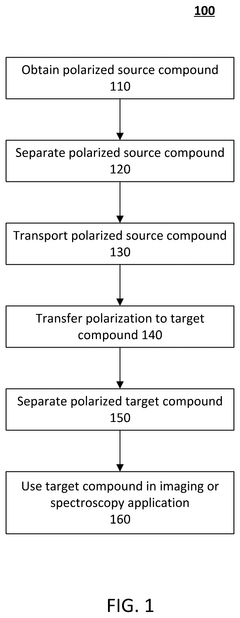
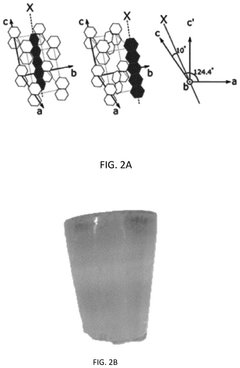
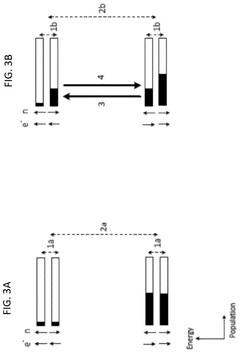
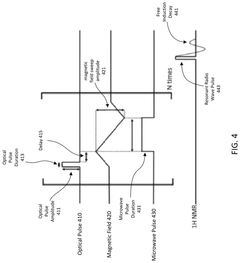
- The intermolecular nuclear Overhauser effect is utilized to transfer polarization from a polarized source compound to a target compound, increasing its nuclear spin polarization, enabling enhanced NMR/MRI signal sensitivity through the use of a system that imparts non-thermal equilibrium polarization, specifically a system comprising a source compound with a high nuclear gyromagnetic ratio and a target compound in a solution, allowing for efficient polarization transfer.
Interdisciplinary Applications of Enhanced NMR Technology
The enhanced sensitivity and resolution achieved through polarization transfer techniques in NMR have catalyzed significant advancements across multiple scientific disciplines, extending far beyond traditional chemistry applications. In medical imaging, these techniques have revolutionized Magnetic Resonance Imaging (MRI) by enabling clearer visualization of soft tissues with reduced acquisition times, particularly beneficial for detecting subtle abnormalities in neurological and cardiovascular conditions.
The pharmaceutical industry has leveraged these enhanced NMR technologies to accelerate drug discovery processes. The improved signal-to-noise ratio allows researchers to detect and characterize drug-target interactions at lower concentrations, enabling more efficient screening of potential therapeutic compounds and more accurate determination of binding affinities and kinetics.
In materials science, enhanced NMR techniques have provided unprecedented insights into the molecular structure and dynamics of polymers, ceramics, and nanomaterials. The ability to detect signals from previously inaccessible nuclei has expanded our understanding of material properties at the atomic level, facilitating the development of advanced materials with tailored characteristics for specific applications.
Environmental science has benefited through improved analysis of complex environmental samples. The enhanced sensitivity allows for detection of trace contaminants in soil, water, and air samples, supporting more accurate environmental monitoring and remediation efforts. Additionally, these techniques enable researchers to study the transformation and fate of pollutants in various ecosystems.
Food science applications include detailed analysis of food composition, quality assessment, and authentication of high-value products. The ability to detect subtle changes in molecular structures has proven valuable for monitoring food degradation processes and identifying adulteration in premium products.
In biochemistry and structural biology, enhanced NMR has transformed protein structure determination and the study of biomolecular interactions. The improved signal quality enables researchers to investigate larger protein complexes and membrane proteins that were previously challenging to characterize, advancing our understanding of cellular processes and disease mechanisms.
Forensic science has adopted these techniques for more sensitive detection of trace evidence, including drugs, explosives, and biological samples. The non-destructive nature of NMR analysis preserves valuable evidence while providing detailed molecular information that can be crucial for criminal investigations.
The pharmaceutical industry has leveraged these enhanced NMR technologies to accelerate drug discovery processes. The improved signal-to-noise ratio allows researchers to detect and characterize drug-target interactions at lower concentrations, enabling more efficient screening of potential therapeutic compounds and more accurate determination of binding affinities and kinetics.
In materials science, enhanced NMR techniques have provided unprecedented insights into the molecular structure and dynamics of polymers, ceramics, and nanomaterials. The ability to detect signals from previously inaccessible nuclei has expanded our understanding of material properties at the atomic level, facilitating the development of advanced materials with tailored characteristics for specific applications.
Environmental science has benefited through improved analysis of complex environmental samples. The enhanced sensitivity allows for detection of trace contaminants in soil, water, and air samples, supporting more accurate environmental monitoring and remediation efforts. Additionally, these techniques enable researchers to study the transformation and fate of pollutants in various ecosystems.
Food science applications include detailed analysis of food composition, quality assessment, and authentication of high-value products. The ability to detect subtle changes in molecular structures has proven valuable for monitoring food degradation processes and identifying adulteration in premium products.
In biochemistry and structural biology, enhanced NMR has transformed protein structure determination and the study of biomolecular interactions. The improved signal quality enables researchers to investigate larger protein complexes and membrane proteins that were previously challenging to characterize, advancing our understanding of cellular processes and disease mechanisms.
Forensic science has adopted these techniques for more sensitive detection of trace evidence, including drugs, explosives, and biological samples. The non-destructive nature of NMR analysis preserves valuable evidence while providing detailed molecular information that can be crucial for criminal investigations.
Standardization and Validation Protocols for NMR Methods
The standardization and validation of NMR methods specifically for polarization transfer techniques requires rigorous protocols to ensure reproducibility and reliability across different laboratory settings. Current standardization efforts focus on establishing reference materials and procedures that can accurately measure the effectiveness of polarization transfer in reducing background noise.
Key validation parameters include signal-to-noise ratio improvements, polarization transfer efficiency, and spectral quality metrics. These parameters must be quantitatively assessed using statistical methods to determine the significance of noise reduction achieved through various polarization transfer techniques. The scientific community has developed several consensus protocols, though implementation varies between research institutions.
Reference standards for polarization transfer validation typically include specially prepared samples with known magnetic properties and predictable response patterns. These standards allow researchers to calibrate their equipment and verify that polarization transfer techniques are functioning as expected. Organizations such as NIST and IUPAC have contributed to developing these reference materials, though more specialized standards for advanced polarization transfer techniques remain under development.
Interlaboratory comparison studies represent a critical component of validation protocols. These studies involve multiple laboratories performing identical experiments using standardized samples and procedures, with results compared to establish reproducibility limits. Recent collaborative efforts have shown that when properly standardized, polarization transfer techniques can achieve consistent noise reduction across different NMR spectrometers and laboratory environments.
Quality control measures for ongoing validation include regular system performance checks using standard samples, monitoring of key performance indicators, and periodic recalibration of polarization transfer parameters. Documentation requirements have become increasingly stringent, with detailed records of pulse sequences, timing parameters, and hardware configurations now considered essential for method validation.
Regulatory considerations vary by application field, with clinical and pharmaceutical applications facing the most stringent requirements. For these applications, polarization transfer techniques must undergo additional validation steps to ensure they meet regulatory standards for diagnostic or analytical procedures. This includes demonstrating robustness against variations in sample preparation, operator skill, and environmental conditions.
Future standardization efforts are focusing on developing automated validation tools that can quickly assess the performance of polarization transfer techniques and identify potential issues before they affect experimental results. These tools aim to simplify the validation process while maintaining rigorous standards for data quality and reproducibility.
Key validation parameters include signal-to-noise ratio improvements, polarization transfer efficiency, and spectral quality metrics. These parameters must be quantitatively assessed using statistical methods to determine the significance of noise reduction achieved through various polarization transfer techniques. The scientific community has developed several consensus protocols, though implementation varies between research institutions.
Reference standards for polarization transfer validation typically include specially prepared samples with known magnetic properties and predictable response patterns. These standards allow researchers to calibrate their equipment and verify that polarization transfer techniques are functioning as expected. Organizations such as NIST and IUPAC have contributed to developing these reference materials, though more specialized standards for advanced polarization transfer techniques remain under development.
Interlaboratory comparison studies represent a critical component of validation protocols. These studies involve multiple laboratories performing identical experiments using standardized samples and procedures, with results compared to establish reproducibility limits. Recent collaborative efforts have shown that when properly standardized, polarization transfer techniques can achieve consistent noise reduction across different NMR spectrometers and laboratory environments.
Quality control measures for ongoing validation include regular system performance checks using standard samples, monitoring of key performance indicators, and periodic recalibration of polarization transfer parameters. Documentation requirements have become increasingly stringent, with detailed records of pulse sequences, timing parameters, and hardware configurations now considered essential for method validation.
Regulatory considerations vary by application field, with clinical and pharmaceutical applications facing the most stringent requirements. For these applications, polarization transfer techniques must undergo additional validation steps to ensure they meet regulatory standards for diagnostic or analytical procedures. This includes demonstrating robustness against variations in sample preparation, operator skill, and environmental conditions.
Future standardization efforts are focusing on developing automated validation tools that can quickly assess the performance of polarization transfer techniques and identify potential issues before they affect experimental results. These tools aim to simplify the validation process while maintaining rigorous standards for data quality and reproducibility.
Unlock deeper insights with Patsnap Eureka Quick Research — get a full tech report to explore trends and direct your research. Try now!
Generate Your Research Report Instantly with AI Agent
Supercharge your innovation with Patsnap Eureka AI Agent Platform!