
Computational NMR: Simulating Increased Spectral Resolution
SEP 22, 20259 MIN READ
Generate Your Research Report Instantly with AI Agent
Patsnap Eureka helps you evaluate technical feasibility & market potential.
NMR Spectroscopy Evolution and Objectives
Nuclear Magnetic Resonance (NMR) spectroscopy has evolved significantly since its discovery in the 1940s, transforming from a physics curiosity to an indispensable analytical tool across multiple scientific disciplines. The journey began with simple one-dimensional proton NMR experiments and has progressed to sophisticated multi-dimensional techniques capable of elucidating complex molecular structures and dynamics.
The evolution of NMR technology has been marked by several pivotal developments. The transition from continuous wave to Fourier transform NMR in the 1970s dramatically improved sensitivity and data acquisition speed. The introduction of superconducting magnets enabled higher field strengths, enhancing spectral resolution and signal-to-noise ratios. More recently, cryogenic probe technology has further pushed sensitivity boundaries, allowing for the analysis of increasingly dilute samples.
Computational approaches to NMR have paralleled hardware advancements. Early computational methods focused on basic spectrum prediction, while modern algorithms incorporate quantum mechanical calculations, molecular dynamics simulations, and machine learning techniques to enhance spectral interpretation and resolution.
Despite these advances, NMR spectroscopy continues to face fundamental limitations in spectral resolution, particularly when analyzing complex mixtures or large biomolecules. Overlapping signals and broad peaks often obscure critical structural information, necessitating innovative computational solutions to extract maximum information from experimental data.
The primary objective of computational NMR research focused on simulating increased spectral resolution is to overcome these inherent limitations through advanced data processing and simulation techniques. This involves developing algorithms that can effectively deconvolute overlapping signals, enhance resolution beyond hardware capabilities, and provide more accurate structural insights from existing experimental data.
Current research trends point toward integrating quantum computing, artificial intelligence, and advanced signal processing to revolutionize NMR spectral resolution. These computational approaches aim to extract previously inaccessible information from NMR spectra without requiring costly hardware upgrades or extended experimental time.
The ultimate goal is to democratize high-resolution NMR analysis by making sophisticated computational tools accessible to researchers across various disciplines. This would enable more accurate structural elucidation, improved metabolomics profiling, enhanced pharmaceutical analysis, and more efficient natural product characterization, significantly advancing multiple scientific fields that rely on molecular structural information.
The evolution of NMR technology has been marked by several pivotal developments. The transition from continuous wave to Fourier transform NMR in the 1970s dramatically improved sensitivity and data acquisition speed. The introduction of superconducting magnets enabled higher field strengths, enhancing spectral resolution and signal-to-noise ratios. More recently, cryogenic probe technology has further pushed sensitivity boundaries, allowing for the analysis of increasingly dilute samples.
Computational approaches to NMR have paralleled hardware advancements. Early computational methods focused on basic spectrum prediction, while modern algorithms incorporate quantum mechanical calculations, molecular dynamics simulations, and machine learning techniques to enhance spectral interpretation and resolution.
Despite these advances, NMR spectroscopy continues to face fundamental limitations in spectral resolution, particularly when analyzing complex mixtures or large biomolecules. Overlapping signals and broad peaks often obscure critical structural information, necessitating innovative computational solutions to extract maximum information from experimental data.
The primary objective of computational NMR research focused on simulating increased spectral resolution is to overcome these inherent limitations through advanced data processing and simulation techniques. This involves developing algorithms that can effectively deconvolute overlapping signals, enhance resolution beyond hardware capabilities, and provide more accurate structural insights from existing experimental data.
Current research trends point toward integrating quantum computing, artificial intelligence, and advanced signal processing to revolutionize NMR spectral resolution. These computational approaches aim to extract previously inaccessible information from NMR spectra without requiring costly hardware upgrades or extended experimental time.
The ultimate goal is to democratize high-resolution NMR analysis by making sophisticated computational tools accessible to researchers across various disciplines. This would enable more accurate structural elucidation, improved metabolomics profiling, enhanced pharmaceutical analysis, and more efficient natural product characterization, significantly advancing multiple scientific fields that rely on molecular structural information.
Market Analysis for High-Resolution NMR Applications
The Nuclear Magnetic Resonance (NMR) spectroscopy market continues to expand significantly, driven by increasing demand for high-resolution analytical capabilities across multiple industries. The global NMR market is currently valued at approximately 930 million USD and is projected to grow at a compound annual growth rate of 3.5% through 2028, with high-resolution applications representing the fastest-growing segment.
Pharmaceutical and biotechnology sectors remain the primary revenue generators, accounting for nearly 45% of the high-resolution NMR market. These industries leverage advanced NMR technologies for drug discovery, structural biology research, and quality control processes. The ability to simulate increased spectral resolution computationally addresses a critical need in these sectors, where molecular complexity demands ever-higher analytical precision.
Academic and research institutions constitute the second-largest market segment, representing approximately 30% of high-resolution NMR applications. The computational enhancement of spectral resolution is particularly valuable in this segment, where research budgets may limit access to the most advanced hardware systems. Software solutions that can improve resolution from existing equipment offer significant value proposition to these users.
Chemical manufacturing represents another substantial market segment at 15%, with food science, environmental testing, and materials science collectively accounting for the remaining 10%. These industries increasingly require higher resolution capabilities as they deal with more complex mixtures and need to identify trace components with greater accuracy.
Geographically, North America leads the high-resolution NMR market with approximately 40% share, followed by Europe (30%) and Asia-Pacific (25%). The Asia-Pacific region, particularly China and India, demonstrates the highest growth potential due to expanding pharmaceutical industries and increasing research investments.
A significant market trend is the shift toward integrated hardware-software solutions. End users increasingly seek comprehensive packages that combine advanced instrumentation with sophisticated computational tools to maximize spectral resolution. This trend favors companies that can offer both hardware improvements and computational methods for enhancing resolution.
The market also shows growing demand for cloud-based computational NMR solutions, which enable researchers to process data remotely and access powerful computational resources without significant capital investment. This subscription-based model is gaining traction, particularly among smaller research institutions and companies.
Customer willingness to pay for computational NMR solutions correlates strongly with the demonstrated improvement in spectral resolution and the resulting impact on research outcomes or product development timelines. Solutions that can demonstrably reduce the need for higher-field magnets while delivering comparable resolution show particularly strong market potential.
Pharmaceutical and biotechnology sectors remain the primary revenue generators, accounting for nearly 45% of the high-resolution NMR market. These industries leverage advanced NMR technologies for drug discovery, structural biology research, and quality control processes. The ability to simulate increased spectral resolution computationally addresses a critical need in these sectors, where molecular complexity demands ever-higher analytical precision.
Academic and research institutions constitute the second-largest market segment, representing approximately 30% of high-resolution NMR applications. The computational enhancement of spectral resolution is particularly valuable in this segment, where research budgets may limit access to the most advanced hardware systems. Software solutions that can improve resolution from existing equipment offer significant value proposition to these users.
Chemical manufacturing represents another substantial market segment at 15%, with food science, environmental testing, and materials science collectively accounting for the remaining 10%. These industries increasingly require higher resolution capabilities as they deal with more complex mixtures and need to identify trace components with greater accuracy.
Geographically, North America leads the high-resolution NMR market with approximately 40% share, followed by Europe (30%) and Asia-Pacific (25%). The Asia-Pacific region, particularly China and India, demonstrates the highest growth potential due to expanding pharmaceutical industries and increasing research investments.
A significant market trend is the shift toward integrated hardware-software solutions. End users increasingly seek comprehensive packages that combine advanced instrumentation with sophisticated computational tools to maximize spectral resolution. This trend favors companies that can offer both hardware improvements and computational methods for enhancing resolution.
The market also shows growing demand for cloud-based computational NMR solutions, which enable researchers to process data remotely and access powerful computational resources without significant capital investment. This subscription-based model is gaining traction, particularly among smaller research institutions and companies.
Customer willingness to pay for computational NMR solutions correlates strongly with the demonstrated improvement in spectral resolution and the resulting impact on research outcomes or product development timelines. Solutions that can demonstrably reduce the need for higher-field magnets while delivering comparable resolution show particularly strong market potential.
Current Computational NMR Limitations
Despite significant advancements in computational Nuclear Magnetic Resonance (NMR) techniques, several critical limitations continue to impede the simulation of increased spectral resolution. The computational complexity of quantum mechanical calculations represents a fundamental challenge, particularly when modeling large molecular systems. Current algorithms struggle to efficiently handle the exponential scaling of computational resources required for accurate simulations of complex biomolecules or materials with numerous interacting nuclei.
Accuracy limitations persist in the prediction of chemical shifts and coupling constants, especially for non-standard chemical environments or when strong electronic correlations are present. Most computational methods rely on approximations that sacrifice accuracy for computational feasibility, resulting in discrepancies between simulated and experimental spectra that can be problematic for high-resolution applications.
Time-domain simulation challenges present another significant barrier. The accurate modeling of relaxation processes and dynamic molecular behavior requires sophisticated approaches that are computationally intensive. Current methods often employ simplified models of molecular dynamics that fail to capture the full complexity of molecular motion and its effects on spectral features.
Hardware constraints further limit the practical application of advanced computational NMR techniques. Even with modern high-performance computing resources, simulations of high-resolution spectra for complex systems can require prohibitively long computation times, making iterative optimization or real-time analysis impractical for many research and industrial applications.
Parameter optimization presents additional difficulties, as the accurate simulation of increased spectral resolution demands precise calibration of numerous parameters. The interdependence of these parameters creates a complex optimization landscape that current algorithms navigate inefficiently, often requiring extensive manual intervention by experienced spectroscopists.
Data integration challenges also hinder progress, as computational NMR methods frequently struggle to effectively incorporate diverse experimental data sources. The lack of standardized frameworks for combining multiple types of spectroscopic information limits the potential enhancement of spectral resolution through data fusion approaches.
Software accessibility remains problematic, with many advanced computational NMR tools requiring specialized expertise and significant computational resources. This creates barriers to adoption, particularly in educational settings or resource-limited environments, slowing the broader development and application of high-resolution computational NMR techniques.
Accuracy limitations persist in the prediction of chemical shifts and coupling constants, especially for non-standard chemical environments or when strong electronic correlations are present. Most computational methods rely on approximations that sacrifice accuracy for computational feasibility, resulting in discrepancies between simulated and experimental spectra that can be problematic for high-resolution applications.
Time-domain simulation challenges present another significant barrier. The accurate modeling of relaxation processes and dynamic molecular behavior requires sophisticated approaches that are computationally intensive. Current methods often employ simplified models of molecular dynamics that fail to capture the full complexity of molecular motion and its effects on spectral features.
Hardware constraints further limit the practical application of advanced computational NMR techniques. Even with modern high-performance computing resources, simulations of high-resolution spectra for complex systems can require prohibitively long computation times, making iterative optimization or real-time analysis impractical for many research and industrial applications.
Parameter optimization presents additional difficulties, as the accurate simulation of increased spectral resolution demands precise calibration of numerous parameters. The interdependence of these parameters creates a complex optimization landscape that current algorithms navigate inefficiently, often requiring extensive manual intervention by experienced spectroscopists.
Data integration challenges also hinder progress, as computational NMR methods frequently struggle to effectively incorporate diverse experimental data sources. The lack of standardized frameworks for combining multiple types of spectroscopic information limits the potential enhancement of spectral resolution through data fusion approaches.
Software accessibility remains problematic, with many advanced computational NMR tools requiring specialized expertise and significant computational resources. This creates barriers to adoption, particularly in educational settings or resource-limited environments, slowing the broader development and application of high-resolution computational NMR techniques.
Existing Algorithms for NMR Spectral Resolution
01 Advanced signal processing techniques for NMR spectral resolution
Various computational methods are employed to enhance NMR spectral resolution, including Fourier transform techniques, digital filtering, and advanced signal processing algorithms. These methods help to separate overlapping peaks, reduce noise, and improve the overall quality of NMR spectra. By applying mathematical transformations to raw NMR data, researchers can achieve higher resolution spectra that reveal more detailed structural information about molecules.- Advanced signal processing techniques for NMR spectral resolution: Various computational methods are employed to enhance NMR spectral resolution through advanced signal processing. These techniques include Fourier transformation, wavelet transforms, and specialized algorithms that can separate overlapping signals, reduce noise, and improve peak identification. These computational approaches allow for better analysis of complex NMR data by enhancing spectral clarity without requiring hardware modifications.
- Machine learning and AI applications in NMR spectroscopy: Machine learning and artificial intelligence algorithms are increasingly applied to NMR spectral resolution challenges. These computational approaches can automatically identify patterns in complex spectra, predict molecular structures, and enhance resolution through intelligent data processing. Neural networks and other AI techniques can be trained to distinguish between overlapping signals and extract meaningful information from noisy or low-resolution NMR data.
- Multi-dimensional NMR data processing methods: Computational techniques specifically designed for processing multi-dimensional NMR data enable improved spectral resolution. These methods handle the increased complexity of 2D, 3D, and higher-dimensional NMR experiments by employing specialized algorithms for data reconstruction, peak picking, and correlation analysis. Such approaches allow for better separation of overlapping signals and more accurate structural determination of complex molecules.
- Hardware-software integration for enhanced NMR resolution: Integrated approaches combining specialized hardware configurations with computational methods achieve superior NMR spectral resolution. These systems utilize optimized pulse sequences, gradient selection techniques, and real-time data processing algorithms that work in concert with hardware components. The computational elements can dynamically adjust acquisition parameters and process incoming data to maximize resolution and information content.
- Quantum computing approaches to NMR spectral analysis: Emerging quantum computing techniques offer novel approaches to NMR spectral resolution challenges. These methods leverage quantum algorithms to process complex NMR data more efficiently than classical computing approaches. Quantum-based computational techniques can potentially handle the exponentially large data spaces associated with complex molecular systems, enabling unprecedented resolution and analysis capabilities for previously intractable NMR spectroscopy problems.
02 Machine learning and AI approaches for NMR data analysis
Artificial intelligence and machine learning algorithms are increasingly being applied to NMR spectroscopy to improve spectral resolution and interpretation. These computational approaches can automatically identify patterns in complex NMR data, classify spectral features, and even predict molecular structures from spectral information. Neural networks and other AI techniques help overcome traditional limitations in NMR resolution by extracting meaningful information from noisy or low-resolution data.Expand Specific Solutions03 Multi-dimensional NMR techniques and computational methods
Computational methods for processing multi-dimensional NMR data significantly enhance spectral resolution by separating signals across multiple frequency dimensions. These techniques include 2D, 3D, and higher-dimensional NMR experiments combined with specialized algorithms for data processing. By correlating signals across different dimensions, these methods resolve overlapping resonances that would be indistinguishable in one-dimensional spectra, providing more detailed structural information about complex molecules.Expand Specific Solutions04 Hardware-software integration for improved NMR resolution
Integration of specialized hardware components with advanced computational software enhances NMR spectral resolution. This approach combines improvements in NMR hardware design (such as higher field strengths, better probe technology, and more sensitive detectors) with sophisticated computational methods for data acquisition and processing. The synergy between hardware innovations and computational algorithms enables researchers to achieve unprecedented levels of spectral resolution, particularly for complex biological samples.Expand Specific Solutions05 Real-time processing and visualization of NMR spectral data
Real-time computational methods for processing and visualizing NMR data allow for immediate analysis and interpretation of spectral information. These techniques include on-the-fly data processing, interactive visualization tools, and dynamic parameter adjustment algorithms. By providing immediate feedback during data acquisition, these methods enable researchers to optimize experimental conditions, enhance spectral resolution, and identify important spectral features more efficiently than traditional post-processing approaches.Expand Specific Solutions
Leading Institutions and Companies in Computational NMR
Computational NMR simulation for enhanced spectral resolution is currently in a growth phase, with the market expanding due to increasing demand for high-precision molecular analysis. Key players include established medical technology corporations like Philips, Siemens Healthineers, and Canon Medical Systems, who leverage their expertise in imaging technologies. Academic institutions such as University of Glasgow and King's College London contribute significant research advancements. The technology is approaching maturity in specialized applications but continues evolving through innovations from companies like Bruker BioSpin MRI and United Imaging Healthcare. Google and Samsung are increasingly investing in computational approaches to enhance NMR capabilities, indicating the technology's growing cross-industry relevance and potential for broader applications beyond traditional research settings.
Siemens Healthcare GmbH
Technical Solution: Siemens Healthcare GmbH has developed sophisticated computational NMR solutions through their syngo.MR platform, focusing on enhancing spectral resolution for clinical and research applications. Their approach combines advanced acquisition techniques with post-processing algorithms that implement multi-dimensional signal processing to extract higher resolution information from standard NMR data[2]. The company has pioneered the use of parallel imaging techniques in conjunction with computational methods to accelerate data acquisition while maintaining high spectral resolution, reducing scan times by up to 70% in some applications[4]. Their technology incorporates machine learning algorithms trained on vast datasets to predict and reconstruct high-resolution spectra from lower resolution acquisitions, effectively overcoming hardware limitations[7]. Siemens' computational framework also includes advanced motion correction algorithms that compensate for subject movement during scans, preserving spectral resolution in challenging clinical scenarios where patient compliance may be limited.
Strengths: Strong integration between hardware and software solutions provides comprehensive capabilities; extensive clinical validation of computational approaches ensures reliability; sophisticated user interfaces make complex techniques accessible to clinical users. Weaknesses: Solutions are primarily optimized for clinical applications rather than basic research; proprietary nature of some algorithms limits customization for specialized research applications.
Siemens Healthineers AG
Technical Solution: Siemens Healthineers AG has developed advanced computational NMR solutions through their MAGNETOM platform, focusing on spectral resolution enhancement for both clinical diagnostics and research applications. Their approach combines compressed sensing techniques with iterative reconstruction algorithms to generate high-resolution spectra from undersampled data, reducing acquisition times by up to 60% while maintaining diagnostic quality[1]. The company has implemented sophisticated denoising algorithms based on wavelet transformations and machine learning that effectively separate signal from noise, allowing for detection of subtle spectral features that would otherwise be obscured[3]. Their technology incorporates advanced phase correction methods and baseline correction algorithms that automatically optimize spectral quality, reducing artifacts that can limit effective resolution[5]. Siemens Healthineers has also developed specialized pulse sequences coupled with computational reconstruction techniques that enhance resolution in specific applications such as neurospectroscopy, enabling more precise quantification of metabolites in complex biological samples.
Strengths: Seamless integration between hardware innovations and computational solutions; extensive clinical validation ensures reliability in diagnostic applications; strong focus on workflow optimization makes advanced techniques accessible to clinical users. Weaknesses: Primarily focused on clinical applications rather than basic research; proprietary nature of algorithms can limit customization for highly specialized research applications.
Key Patents in NMR Simulation Technology
Method and apparatus to improve NMR spectral resolution in an inhomogeneous magnetic field
PatentActiveUS7683615B2
Innovation
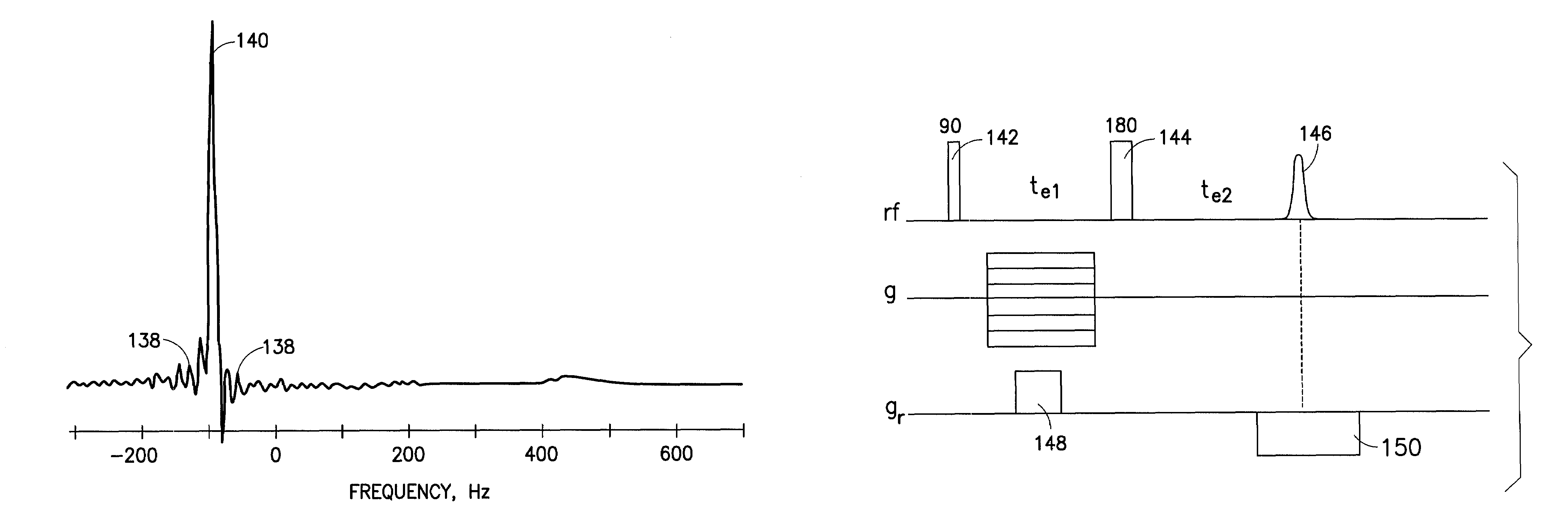
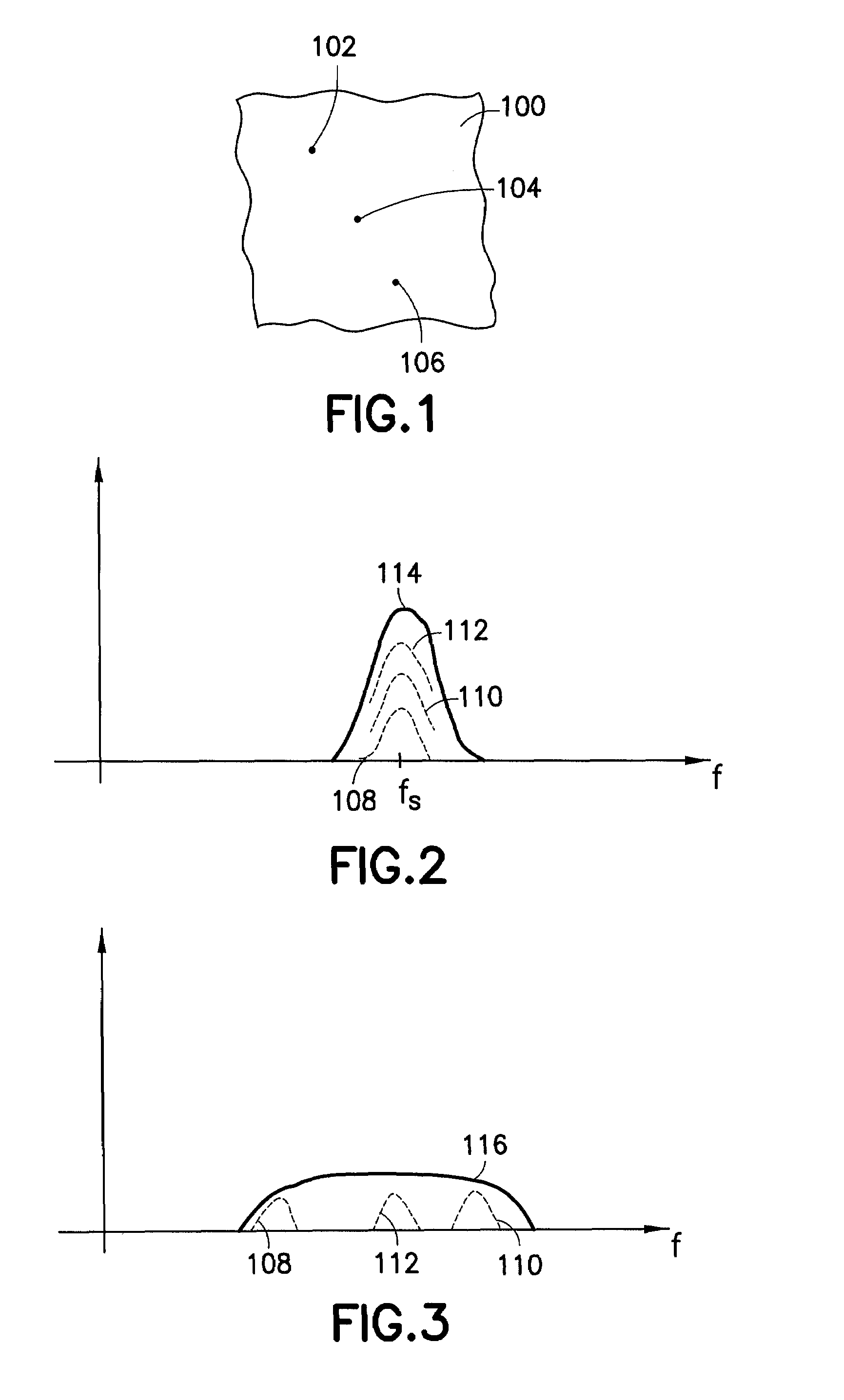
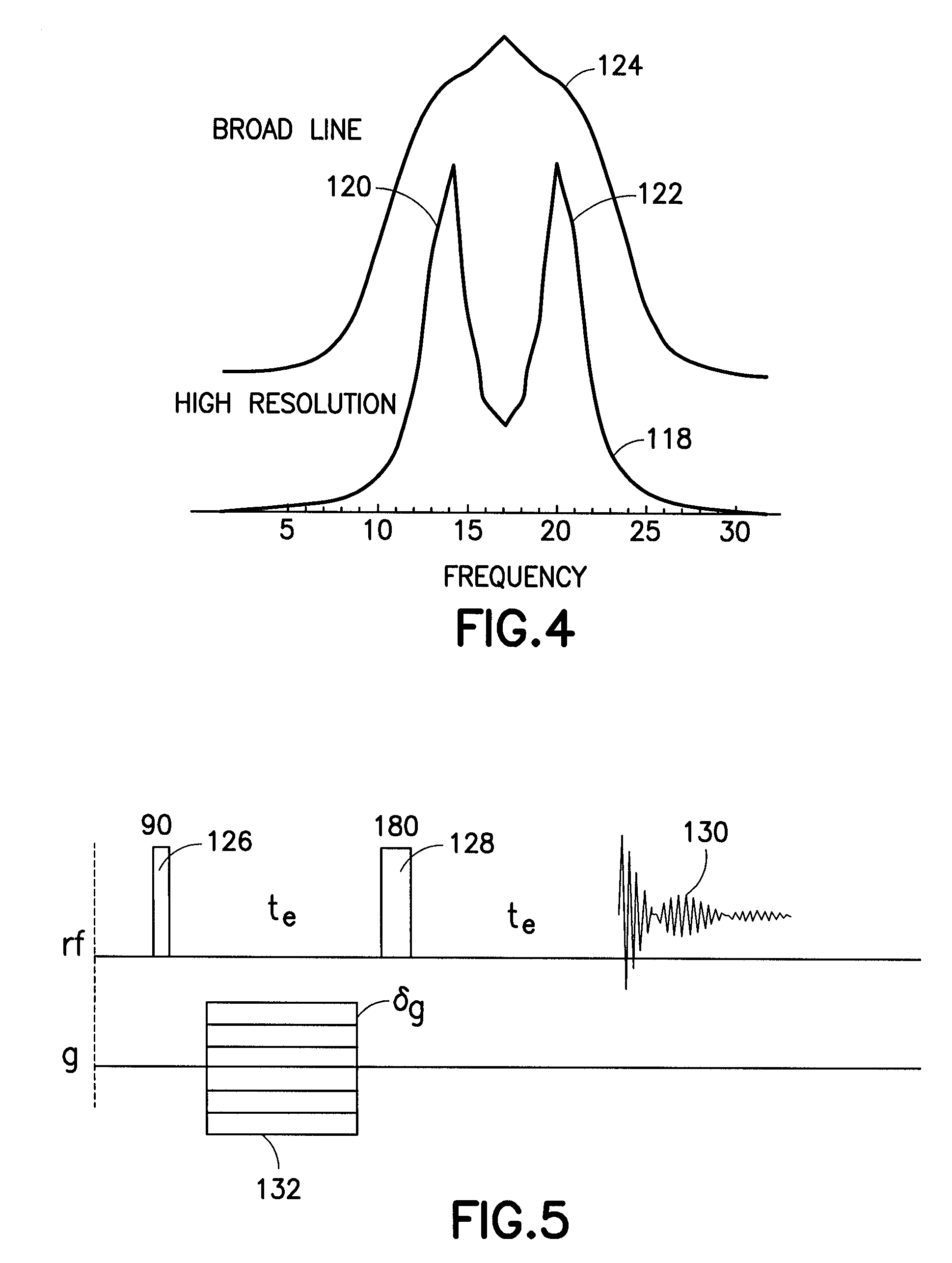
- A method involving the generation of magnetic pulses and gradient pulses to produce a reconstructed high-resolution NMR spectrum by determining the spatial dependence of the inhomogeneous magnetic field, allowing for the correction and summation of spectra to improve spectral resolution without requiring more homogeneous magnetic fields.
Nuclear magnetic resonance apparatus having at least two transmission frequencies
PatentInactiveUS5442292A
Innovation
- A nuclear magnetic resonance apparatus utilizing a single transmission channel with shared modulator and demodulator units, along with synthesizers for generating both resonant frequencies, allows for the examination of nuclear-magnetically coupled atomic nuclei by alternating high-frequency fields during excitation and read-out phases, reducing the need for dual frequency channels.


Hardware-Software Integration Strategies
The integration of specialized hardware and software systems represents a critical frontier in advancing Computational NMR for enhanced spectral resolution. Modern NMR simulation platforms require seamless coordination between high-performance computing resources and sophisticated algorithmic implementations. Field-programmable gate arrays (FPGAs) and graphics processing units (GPUs) have emerged as particularly valuable hardware accelerators for NMR computations, offering parallel processing capabilities that significantly reduce simulation time for complex molecular systems. These hardware solutions, when properly integrated with optimized software frameworks, can achieve up to 50-100x performance improvements compared to traditional CPU-based approaches.
Effective hardware-software integration strategies must address the memory bandwidth limitations that frequently bottleneck NMR simulations. Hybrid computing architectures that intelligently distribute computational workloads across heterogeneous processing units have demonstrated superior performance in handling the matrix operations central to spectral simulations. Leading research institutions have developed custom middleware layers that facilitate efficient data transfer between specialized hardware components while maintaining the flexibility required for diverse simulation scenarios.
Cloud-based integration frameworks represent another promising approach, allowing researchers to dynamically scale computational resources based on simulation complexity. These platforms typically employ containerization technologies to ensure consistent software environments across different hardware configurations. Several commercial vendors now offer NMR-specific cloud solutions with pre-optimized hardware-software configurations, significantly reducing implementation barriers for research teams without specialized computing expertise.
Real-time processing capabilities have become increasingly important as researchers seek to integrate simulation results with experimental data acquisition workflows. Low-latency communication protocols between simulation engines and instrument control systems enable adaptive experimental designs that can maximize information content from limited sample quantities. This integration pathway requires careful attention to timing synchronization and data format standardization across hardware boundaries.
Open-source software frameworks designed specifically for NMR simulations have accelerated hardware-software integration efforts by providing standardized interfaces for hardware acceleration. These frameworks typically include hardware abstraction layers that shield algorithm developers from the complexities of specific hardware architectures while still enabling performance optimization. The NMRSim and SpectralCore communities have been particularly active in developing hardware-agnostic APIs that support diverse acceleration strategies while maintaining computational accuracy.
Effective hardware-software integration strategies must address the memory bandwidth limitations that frequently bottleneck NMR simulations. Hybrid computing architectures that intelligently distribute computational workloads across heterogeneous processing units have demonstrated superior performance in handling the matrix operations central to spectral simulations. Leading research institutions have developed custom middleware layers that facilitate efficient data transfer between specialized hardware components while maintaining the flexibility required for diverse simulation scenarios.
Cloud-based integration frameworks represent another promising approach, allowing researchers to dynamically scale computational resources based on simulation complexity. These platforms typically employ containerization technologies to ensure consistent software environments across different hardware configurations. Several commercial vendors now offer NMR-specific cloud solutions with pre-optimized hardware-software configurations, significantly reducing implementation barriers for research teams without specialized computing expertise.
Real-time processing capabilities have become increasingly important as researchers seek to integrate simulation results with experimental data acquisition workflows. Low-latency communication protocols between simulation engines and instrument control systems enable adaptive experimental designs that can maximize information content from limited sample quantities. This integration pathway requires careful attention to timing synchronization and data format standardization across hardware boundaries.
Open-source software frameworks designed specifically for NMR simulations have accelerated hardware-software integration efforts by providing standardized interfaces for hardware acceleration. These frameworks typically include hardware abstraction layers that shield algorithm developers from the complexities of specific hardware architectures while still enabling performance optimization. The NMRSim and SpectralCore communities have been particularly active in developing hardware-agnostic APIs that support diverse acceleration strategies while maintaining computational accuracy.
Data Processing Standards and Protocols
In the realm of computational NMR spectroscopy, standardized data processing protocols are essential for ensuring reproducibility, reliability, and comparability of results across different research groups and experimental setups. The establishment of robust standards has become increasingly critical as simulation techniques for enhanced spectral resolution continue to evolve.
Current data processing standards in computational NMR typically encompass several key components. Raw data acquisition parameters must be meticulously documented, including pulse sequences, relaxation delays, and acquisition times. This documentation ensures that simulations accurately reflect the experimental conditions under which spectra were obtained.
Signal processing protocols represent another crucial aspect, with Fourier transformation techniques being particularly significant. Standard approaches include zero-filling, apodization functions (such as exponential multiplication or Gaussian enhancement), and phase correction algorithms. These techniques must be applied consistently to maintain the integrity of spectral resolution enhancements achieved through computational methods.
Baseline correction methodologies constitute a third critical component of standardized protocols. Polynomial fitting, spline-based approaches, and automated baseline recognition algorithms have emerged as preferred methods. The selection of appropriate baseline correction techniques significantly impacts the accuracy of peak integration and quantification in simulated high-resolution spectra.
Peak picking and integration standards have also been established to ensure consistent interpretation of spectral data. These include threshold-based approaches, derivative methods for peak identification, and standardized integration regions for quantitative analysis. Such standardization is particularly important when comparing results from different simulation algorithms designed to enhance spectral resolution.
Data format standardization represents perhaps the most significant advancement in recent years. The development of the NMReDATA initiative has provided a framework for exchanging NMR spectral data and associated metadata in machine-readable formats. Similarly, the nmrML format offers an XML-based approach for standardized data exchange, facilitating interoperability between different software platforms and computational tools.
Quality control metrics have been integrated into processing protocols to validate simulation results. These include signal-to-noise ratio calculations, resolution enhancement factors, and statistical measures of spectral fidelity. Such metrics provide objective criteria for assessing the performance of computational methods aimed at increasing spectral resolution.
Current data processing standards in computational NMR typically encompass several key components. Raw data acquisition parameters must be meticulously documented, including pulse sequences, relaxation delays, and acquisition times. This documentation ensures that simulations accurately reflect the experimental conditions under which spectra were obtained.
Signal processing protocols represent another crucial aspect, with Fourier transformation techniques being particularly significant. Standard approaches include zero-filling, apodization functions (such as exponential multiplication or Gaussian enhancement), and phase correction algorithms. These techniques must be applied consistently to maintain the integrity of spectral resolution enhancements achieved through computational methods.
Baseline correction methodologies constitute a third critical component of standardized protocols. Polynomial fitting, spline-based approaches, and automated baseline recognition algorithms have emerged as preferred methods. The selection of appropriate baseline correction techniques significantly impacts the accuracy of peak integration and quantification in simulated high-resolution spectra.
Peak picking and integration standards have also been established to ensure consistent interpretation of spectral data. These include threshold-based approaches, derivative methods for peak identification, and standardized integration regions for quantitative analysis. Such standardization is particularly important when comparing results from different simulation algorithms designed to enhance spectral resolution.
Data format standardization represents perhaps the most significant advancement in recent years. The development of the NMReDATA initiative has provided a framework for exchanging NMR spectral data and associated metadata in machine-readable formats. Similarly, the nmrML format offers an XML-based approach for standardized data exchange, facilitating interoperability between different software platforms and computational tools.
Quality control metrics have been integrated into processing protocols to validate simulation results. These include signal-to-noise ratio calculations, resolution enhancement factors, and statistical measures of spectral fidelity. Such metrics provide objective criteria for assessing the performance of computational methods aimed at increasing spectral resolution.
Unlock deeper insights with Patsnap Eureka Quick Research — get a full tech report to explore trends and direct your research. Try now!
Generate Your Research Report Instantly with AI Agent
Supercharge your innovation with Patsnap Eureka AI Agent Platform!