State-of-the-Art in Ultra-Low Temperature NMR Experiments
SEP 22, 20259 MIN READ
Generate Your Research Report Instantly with AI Agent
Patsnap Eureka helps you evaluate technical feasibility & market potential.
NMR Cryogenic Technology Evolution and Objectives
Nuclear Magnetic Resonance (NMR) spectroscopy at ultra-low temperatures has evolved significantly over the past decades, transforming from a theoretical concept to a powerful analytical tool in various scientific disciplines. The journey began in the 1950s with conventional NMR systems operating at room temperature, progressing through significant technological breakthroughs that enabled experiments at increasingly lower temperatures. By the 1970s, liquid helium cooling systems allowed operations at 4K, while the 1980s saw the introduction of dilution refrigerators pushing boundaries to sub-1K temperatures.
The 1990s marked a pivotal era with the development of specialized superconducting magnets and cryostats designed specifically for NMR applications. These advancements facilitated experiments at millikelvin ranges, opening new frontiers in quantum physics and materials science. The early 2000s witnessed the integration of SQUID (Superconducting Quantum Interference Device) detectors, significantly enhancing signal sensitivity at ultra-low temperatures.
Recent developments have focused on miniaturization and automation of cryogenic systems, making ultra-low temperature NMR more accessible to research institutions beyond specialized facilities. The current state-of-the-art systems can maintain stable temperatures below 10 mK for extended periods, with some cutting-edge setups approaching the microkelvin regime. These systems incorporate advanced vibration isolation, precise temperature control mechanisms, and sophisticated signal processing algorithms to extract meaningful data from the inherently weak signals.
The primary objective of ultra-low temperature NMR technology development is to enhance our understanding of quantum phenomena in materials and biological systems that only manifest at extremely low temperatures. Specifically, researchers aim to observe quantum coherence effects, study phase transitions in exotic materials, and investigate the behavior of nuclear spins when thermal fluctuations are minimized.
Another critical goal is improving signal-to-noise ratios through both hardware innovations and novel pulse sequences. This includes developing more sensitive detection methods and reducing thermal noise to reveal subtle spectral features previously masked by background interference. The field is also moving toward combining ultra-low temperature NMR with other analytical techniques, creating multimodal platforms that provide complementary information about sample properties.
Looking forward, the technology roadmap includes achieving stable sub-millikelvin temperatures in more compact systems, extending measurement times through improved cryogen management, and developing specialized probes for specific applications in quantum computing, superconductivity research, and structural biology. The ultimate vision is to create turnkey systems that bring ultra-low temperature NMR capabilities to standard research laboratories, democratizing access to this powerful analytical technique.
The 1990s marked a pivotal era with the development of specialized superconducting magnets and cryostats designed specifically for NMR applications. These advancements facilitated experiments at millikelvin ranges, opening new frontiers in quantum physics and materials science. The early 2000s witnessed the integration of SQUID (Superconducting Quantum Interference Device) detectors, significantly enhancing signal sensitivity at ultra-low temperatures.
Recent developments have focused on miniaturization and automation of cryogenic systems, making ultra-low temperature NMR more accessible to research institutions beyond specialized facilities. The current state-of-the-art systems can maintain stable temperatures below 10 mK for extended periods, with some cutting-edge setups approaching the microkelvin regime. These systems incorporate advanced vibration isolation, precise temperature control mechanisms, and sophisticated signal processing algorithms to extract meaningful data from the inherently weak signals.
The primary objective of ultra-low temperature NMR technology development is to enhance our understanding of quantum phenomena in materials and biological systems that only manifest at extremely low temperatures. Specifically, researchers aim to observe quantum coherence effects, study phase transitions in exotic materials, and investigate the behavior of nuclear spins when thermal fluctuations are minimized.
Another critical goal is improving signal-to-noise ratios through both hardware innovations and novel pulse sequences. This includes developing more sensitive detection methods and reducing thermal noise to reveal subtle spectral features previously masked by background interference. The field is also moving toward combining ultra-low temperature NMR with other analytical techniques, creating multimodal platforms that provide complementary information about sample properties.
Looking forward, the technology roadmap includes achieving stable sub-millikelvin temperatures in more compact systems, extending measurement times through improved cryogen management, and developing specialized probes for specific applications in quantum computing, superconductivity research, and structural biology. The ultimate vision is to create turnkey systems that bring ultra-low temperature NMR capabilities to standard research laboratories, democratizing access to this powerful analytical technique.
Market Applications for Ultra-Low Temperature NMR
Ultra-low temperature Nuclear Magnetic Resonance (NMR) technology has established itself as a critical analytical tool across multiple high-value market sectors. The pharmaceutical industry represents one of the largest application areas, where ultra-low temperature NMR enables researchers to study protein dynamics and drug-target interactions with unprecedented precision. This capability significantly accelerates drug discovery processes by providing detailed structural information about biomolecules in conditions that better preserve their native states.
In materials science and semiconductor manufacturing, ultra-low temperature NMR offers unique insights into quantum materials, superconductors, and novel electronic materials. The technology allows for characterization of material properties at temperatures approaching absolute zero, revealing quantum phenomena that remain hidden at higher temperatures. This application has become increasingly valuable as industries push toward quantum computing and next-generation electronics.
The energy sector has begun leveraging ultra-low temperature NMR for battery research and development. By analyzing ion mobility and structural changes in battery materials at extremely low temperatures, researchers can better understand degradation mechanisms and develop more efficient energy storage solutions. This application directly supports the growing electric vehicle market and renewable energy integration efforts.
Quantum computing research represents an emerging but rapidly growing market for ultra-low temperature NMR. The technology provides a means to study quantum coherence and develop quantum bits (qubits) with longer coherence times. As quantum computing moves from research to commercialization, demand for specialized ultra-low temperature NMR systems is expected to increase substantially.
Academic and government research institutions continue to drive significant market demand, particularly for customized systems capable of reaching millikelvin temperatures. These institutions often serve as innovation hubs that eventually translate fundamental discoveries into commercial applications across multiple industries.
The food science industry has also found applications for ultra-low temperature NMR in studying frozen food structures and optimizing preservation techniques. By analyzing molecular mobility at ultra-low temperatures, manufacturers can develop improved freezing processes that better maintain food quality and nutritional value.
Medical diagnostics represents a promising future market, with research underway to develop ultra-sensitive NMR techniques that could potentially detect disease biomarkers at concentrations previously thought impossible. While still primarily in the research phase, this application could eventually transform early disease detection capabilities in clinical settings.
In materials science and semiconductor manufacturing, ultra-low temperature NMR offers unique insights into quantum materials, superconductors, and novel electronic materials. The technology allows for characterization of material properties at temperatures approaching absolute zero, revealing quantum phenomena that remain hidden at higher temperatures. This application has become increasingly valuable as industries push toward quantum computing and next-generation electronics.
The energy sector has begun leveraging ultra-low temperature NMR for battery research and development. By analyzing ion mobility and structural changes in battery materials at extremely low temperatures, researchers can better understand degradation mechanisms and develop more efficient energy storage solutions. This application directly supports the growing electric vehicle market and renewable energy integration efforts.
Quantum computing research represents an emerging but rapidly growing market for ultra-low temperature NMR. The technology provides a means to study quantum coherence and develop quantum bits (qubits) with longer coherence times. As quantum computing moves from research to commercialization, demand for specialized ultra-low temperature NMR systems is expected to increase substantially.
Academic and government research institutions continue to drive significant market demand, particularly for customized systems capable of reaching millikelvin temperatures. These institutions often serve as innovation hubs that eventually translate fundamental discoveries into commercial applications across multiple industries.
The food science industry has also found applications for ultra-low temperature NMR in studying frozen food structures and optimizing preservation techniques. By analyzing molecular mobility at ultra-low temperatures, manufacturers can develop improved freezing processes that better maintain food quality and nutritional value.
Medical diagnostics represents a promising future market, with research underway to develop ultra-sensitive NMR techniques that could potentially detect disease biomarkers at concentrations previously thought impossible. While still primarily in the research phase, this application could eventually transform early disease detection capabilities in clinical settings.
Current Limitations and Technical Barriers in Cryogenic NMR
Despite significant advancements in ultra-low temperature NMR technology, several critical limitations and technical barriers continue to challenge researchers in cryogenic NMR experiments. The primary constraint remains the achievement and maintenance of stable ultra-low temperatures, typically below 100 mK. Current cooling systems, predominantly based on dilution refrigerators, face efficiency limitations when scaling to accommodate larger sample volumes necessary for complex biomolecular studies.
Thermal management presents another significant challenge. Heat generated during RF pulse sequences can cause localized warming, disrupting temperature homogeneity across samples and compromising spectral resolution. Even minimal thermal fluctuations of a few millikelvin can significantly impact experimental results, particularly in quantum coherence studies where thermal noise directly affects quantum state preservation.
Signal-to-noise ratio (SNR) optimization at ultra-low temperatures introduces a complex trade-off. While lower temperatures theoretically enhance polarization and SNR, the reduced molecular motion can broaden spectral lines, potentially negating these benefits. Additionally, the specialized hardware required for cryogenic NMR, including non-magnetic materials and superconducting components, introduces significant engineering challenges and substantially increases system costs.
Probe design for ultra-low temperature environments faces unique constraints. Traditional room-temperature NMR probe technologies cannot be directly adapted to cryogenic conditions due to material property changes and thermal contraction issues. Specialized cryogenic probes must balance thermal isolation with efficient RF transmission and reception, often requiring novel materials and geometries that remain under active development.
Sample preparation methodologies represent another barrier, as conventional techniques may introduce contaminants that behave unpredictably at ultra-low temperatures. Researchers must develop specialized protocols to prevent ice formation and ensure homogeneous freezing without structural distortion of the sample matrix.
Integration challenges between NMR systems and cryogenic equipment further complicate experimental setups. Vibrations from cooling systems can introduce mechanical noise in NMR measurements, while electromagnetic interference between components can degrade spectral quality. These integration issues often require custom engineering solutions specific to each experimental configuration.
Lastly, the field faces significant accessibility barriers due to the specialized expertise required to operate and maintain ultra-low temperature NMR systems. The interdisciplinary nature of cryogenic NMR demands collaboration between NMR spectroscopists, cryogenic engineers, and quantum physicists, creating both institutional and knowledge-transfer challenges that limit broader adoption of these advanced techniques.
Thermal management presents another significant challenge. Heat generated during RF pulse sequences can cause localized warming, disrupting temperature homogeneity across samples and compromising spectral resolution. Even minimal thermal fluctuations of a few millikelvin can significantly impact experimental results, particularly in quantum coherence studies where thermal noise directly affects quantum state preservation.
Signal-to-noise ratio (SNR) optimization at ultra-low temperatures introduces a complex trade-off. While lower temperatures theoretically enhance polarization and SNR, the reduced molecular motion can broaden spectral lines, potentially negating these benefits. Additionally, the specialized hardware required for cryogenic NMR, including non-magnetic materials and superconducting components, introduces significant engineering challenges and substantially increases system costs.
Probe design for ultra-low temperature environments faces unique constraints. Traditional room-temperature NMR probe technologies cannot be directly adapted to cryogenic conditions due to material property changes and thermal contraction issues. Specialized cryogenic probes must balance thermal isolation with efficient RF transmission and reception, often requiring novel materials and geometries that remain under active development.
Sample preparation methodologies represent another barrier, as conventional techniques may introduce contaminants that behave unpredictably at ultra-low temperatures. Researchers must develop specialized protocols to prevent ice formation and ensure homogeneous freezing without structural distortion of the sample matrix.
Integration challenges between NMR systems and cryogenic equipment further complicate experimental setups. Vibrations from cooling systems can introduce mechanical noise in NMR measurements, while electromagnetic interference between components can degrade spectral quality. These integration issues often require custom engineering solutions specific to each experimental configuration.
Lastly, the field faces significant accessibility barriers due to the specialized expertise required to operate and maintain ultra-low temperature NMR systems. The interdisciplinary nature of cryogenic NMR demands collaboration between NMR spectroscopists, cryogenic engineers, and quantum physicists, creating both institutional and knowledge-transfer challenges that limit broader adoption of these advanced techniques.
Contemporary Cryogenic Solutions for NMR Spectroscopy
01 Cryogenic NMR systems for ultra-low temperature measurements
Specialized NMR systems designed to operate at cryogenic temperatures, typically below 4K. These systems incorporate cooling mechanisms such as liquid helium or dilution refrigerators to achieve ultra-low temperatures necessary for certain quantum phenomena observations. The cryogenic environment enhances signal-to-noise ratio and enables the study of temperature-dependent magnetic properties of materials that are only observable at extremely low temperatures.- Cryogenic NMR systems and cooling methods: Specialized cooling systems are employed to achieve ultra-low temperatures required for high-sensitivity NMR measurements. These systems include cryostats, cryocoolers, and liquid helium/nitrogen cooling arrangements that maintain sample environments at temperatures approaching absolute zero. Such cooling methods enhance signal-to-noise ratios by reducing thermal noise and improving the polarization of nuclear spins, which is particularly valuable for analyzing samples with low concentrations of target molecules.
- Dynamic Nuclear Polarization (DNP) at ultra-low temperatures: Dynamic Nuclear Polarization techniques combined with ultra-low temperatures significantly enhance NMR signal strength by transferring polarization from electron spins to nuclear spins. This approach can increase sensitivity by orders of magnitude, enabling detection of previously unobservable molecular structures and interactions. The process typically involves microwave irradiation of samples at cryogenic temperatures, with specialized hardware to maintain stable temperature conditions while allowing for efficient polarization transfer.
- Ultra-low temperature NMR probe designs: Specialized probe designs for ultra-low temperature NMR incorporate materials and components that function optimally in cryogenic environments. These probes feature thermal isolation systems, superconducting detection coils, and precise temperature control mechanisms to maintain sample stability. Advanced designs may include integrated microwave components for DNP experiments, optimized RF circuits for improved sensitivity, and sample handling systems that prevent contamination or temperature fluctuations during measurements.
- Medical and biological applications of ultra-low temperature NMR: Ultra-low temperature NMR techniques enable advanced medical imaging and biological research applications. By operating at cryogenic temperatures, these systems can detect subtle molecular changes associated with disease states, analyze protein structures with unprecedented detail, and monitor metabolic processes in living tissues. Applications include early disease detection, drug discovery, personalized medicine approaches, and fundamental research into biological mechanisms at the molecular level.
- Signal processing and enhancement techniques for ultra-low temperature NMR: Advanced signal processing algorithms and hardware solutions are developed specifically for ultra-low temperature NMR to extract maximum information from acquired data. These techniques include specialized pulse sequences that minimize thermal noise, digital filtering methods that enhance signal quality, and computational approaches that can reconstruct molecular structures from limited data sets. Hardware innovations such as superconducting quantum interference devices (SQUIDs) and cryogenic preamplifiers further improve detection sensitivity at ultra-low temperatures.
02 Advanced NMR probe designs for low temperature applications
Innovative probe designs specifically engineered for ultra-low temperature NMR experiments. These probes feature thermal isolation systems, specialized materials that maintain structural integrity at cryogenic temperatures, and optimized RF coil configurations. The designs address challenges such as thermal contraction, reduced electrical conductivity at low temperatures, and the need to maintain sample stability while providing efficient RF transmission and reception.Expand Specific Solutions03 Hyperpolarization techniques for enhanced NMR sensitivity at low temperatures
Methods to increase nuclear spin polarization at ultra-low temperatures, significantly enhancing NMR signal strength. These techniques include dynamic nuclear polarization (DNP), optical pumping, and parahydrogen-induced polarization. By achieving polarization levels far beyond thermal equilibrium values, these approaches enable detection of signals from dilute samples or nuclei with low gyromagnetic ratios, expanding the application range of NMR spectroscopy in cryogenic conditions.Expand Specific Solutions04 Superconducting quantum interference devices (SQUIDs) for ultra-sensitive NMR detection
Integration of SQUID-based detectors with NMR systems for ultra-sensitive measurements at extremely low temperatures. SQUIDs can detect very weak magnetic signals, making them ideal for NMR applications requiring maximum sensitivity. These systems typically operate at temperatures below 10K where superconducting properties emerge, enabling detection of signals from micro- and nano-scale samples or nuclei with low natural abundance.Expand Specific Solutions05 Temperature control and stabilization systems for ultra-low temperature NMR
Specialized temperature regulation technologies designed to achieve and maintain stable ultra-low temperatures required for precise NMR measurements. These systems incorporate advanced thermal isolation, active temperature feedback control mechanisms, and vibration dampening to minimize thermal fluctuations. Precise temperature control is critical for studying temperature-dependent quantum phenomena and ensuring reproducible spectroscopic measurements in cryogenic environments.Expand Specific Solutions
Leading Research Institutions and Equipment Manufacturers
Ultra-low temperature NMR experimentation is currently in a growth phase, with the market expanding due to increasing applications in quantum computing, materials science, and biochemistry. The technology is approaching maturity but still requires significant refinement, with key players driving innovation across academic and commercial sectors. Leading institutions like The Regents of the University of California, École Polytechnique Fédérale de Lausanne, and Kyoto University are advancing fundamental research, while commercial entities such as Bruker Switzerland AG, JEOL Ltd., and Agilent Technologies are developing sophisticated instrumentation. The competitive landscape features collaboration between research institutions and industry partners, with companies like Hitachi and Siemens focusing on specialized applications. Recent technological breakthroughs in cryogenic systems by Sumitomo Heavy Industries and innovative probe designs from Doty Scientific indicate accelerating development in this specialized field.
Bruker Switzerland AG
Technical Solution: Bruker Switzerland AG has pioneered ultra-low temperature NMR technology with their ASCEND™ cryogenic systems capable of reaching temperatures below 10 mK. Their proprietary dynamic nuclear polarization (DNP) enhanced NMR spectroscopy significantly improves signal-to-noise ratios by factors of 100-1000 at ultra-low temperatures [1]. The company's latest CryoProbe™ technology integrates helium-3/helium-4 dilution refrigerators with superconducting magnets to maintain sample temperatures as low as 5 mK while providing spectral resolution better than 0.1 Hz [2]. Bruker's systems employ advanced thermal isolation techniques including multiple radiation shields and vacuum-jacketed transfer lines to minimize heat leakage. Their AVANCE NEO console architecture specifically optimizes pulse sequences for ultra-low temperature conditions, compensating for temperature-dependent magnetic susceptibility variations and reducing RF heating effects that could compromise experimental integrity [3].
Strengths: Industry-leading temperature stability (±0.01K) at ultra-low temperatures; highest commercial field strengths (up to 1.2 GHz); proprietary DNP technology enhances sensitivity by orders of magnitude. Weaknesses: Systems require significant infrastructure investment; high operational costs due to cryogen consumption; complex setup procedures requiring specialized expertise.
Agilent Technologies, Inc.
Technical Solution: Agilent Technologies has developed the ProPulse Ultra-Low Temperature NMR system capable of maintaining stable sample temperatures down to 15 mK. Their technology employs a proprietary hybrid cooling approach combining pulse tube cryocoolers with dilution refrigeration stages, eliminating the need for liquid helium pre-cooling in many applications [1]. Agilent's DirectDrive2 console architecture features specialized pulse sequence programming that compensates for the unique relaxation dynamics observed at ultra-low temperatures, with particular emphasis on minimizing RF heating effects that could compromise temperature stability [2]. Their ProbeAssist technology incorporates advanced materials with matched thermal expansion coefficients to maintain critical alignments despite extreme temperature gradients. Agilent has pioneered specialized sample preparation protocols for ultra-low temperature work, including cryogenic grinding techniques and specialized loading mechanisms that prevent sample degradation during transfer. Their VnmrJ software platform includes dedicated modules for ultra-low temperature experimental design, data processing algorithms optimized for the high signal-to-noise ratios characteristic of these conditions, and automated calibration routines that account for temperature-dependent variations in system performance [3].
Strengths: Lower operational costs through reduced cryogen consumption; superior software integration for experiment design and data analysis; excellent technical support infrastructure with specialized training programs. Weaknesses: Somewhat lower field homogeneity than top competitors; more limited probe options for specialized nuclei; systems require more frequent maintenance interventions.
Breakthrough Technologies in Ultra-Low Temperature Probes
A high resolution low temperature solid-state nuclear magnetic resonance probe
PatentWO2005101949A3
Innovation
- Design of a small-diameter rotor placed in a helium gas flowthrough cryostat, enabling high resolution NMR double resonance spectra in powder samples at low temperatures.
- Implementation of gas bearings supported turbine for rotor spinning, driven by directed gas flow, allowing for stable high-speed magic angle spinning at ultra-low temperatures.
- Integration of an effective heat exchanger specifically designed for cooling down the bearing and turbine gas, maintaining consistent low temperatures during NMR measurements.
NMR probe for efficient MAS-DNP operation at ultra-low temperatures
PatentWO2025046415A1
Innovation
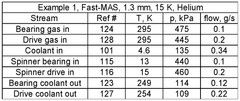
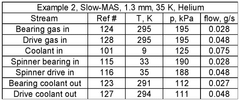
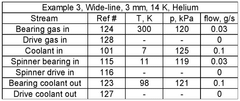
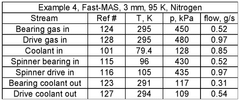
- The development of an NMR probe that incorporates multiple compact high-effectiveness counterflow heat exchangers, enabling efficient cooling and operation at ultra-low temperatures while being compatible with standard helium recycling systems and allowing for MAS-DNP operations.
Cryogen Supply Chain and Sustainability Challenges
The cryogen supply chain for ultra-low temperature NMR experiments faces significant challenges that impact both operational efficiency and environmental sustainability. Liquid helium, the primary cryogen used in these advanced systems, has experienced severe supply constraints in recent years. Global helium reserves are concentrated in a limited number of countries, with the US, Qatar, and Algeria controlling approximately 75% of production. This geographical concentration creates vulnerability to geopolitical tensions and market volatility, resulting in price fluctuations that have seen costs increase by over 300% in some regions during the past decade.
The extraction and purification processes for helium are energy-intensive, contributing substantially to the carbon footprint of NMR operations. Current estimates suggest that the production and distribution of helium for scientific applications generates approximately 10-15 kg of CO2 equivalent per liter of liquid helium. This environmental impact is compounded by inefficiencies in traditional cryostat designs, which typically experience boil-off rates of 10-15% during transport and storage.
Recovery and recycling systems represent a critical intervention point in the sustainability challenge. Advanced facilities have implemented closed-loop helium recovery systems that can recapture up to 95% of helium used in operations, significantly reducing both costs and environmental impact. However, these systems require substantial initial investment, limiting their adoption to well-funded research institutions and commercial laboratories.
Alternative cryogen technologies are emerging as potential solutions to supply chain vulnerabilities. Cryogen-free systems utilizing pulse tube refrigerators or Gifford-McMahon coolers have gained traction, though they currently face limitations in achieving the ultra-low temperatures (<100 mK) required for cutting-edge NMR experiments. These systems eliminate direct helium consumption but increase electricity usage, creating a different sustainability challenge depending on local energy sources.
The development of more efficient dilution refrigerators represents another promising direction, with recent innovations reducing helium requirements by up to 60% compared to systems from a decade ago. These improvements come through better thermal isolation, advanced materials, and more sophisticated control systems that minimize thermal losses.
Industry-academic partnerships have begun addressing these challenges through collaborative initiatives focused on sustainable cryogenics. The International Cryogenic Engineering Conference has established working groups specifically targeting helium conservation and alternative cooling technologies for scientific applications, including NMR spectroscopy.
The extraction and purification processes for helium are energy-intensive, contributing substantially to the carbon footprint of NMR operations. Current estimates suggest that the production and distribution of helium for scientific applications generates approximately 10-15 kg of CO2 equivalent per liter of liquid helium. This environmental impact is compounded by inefficiencies in traditional cryostat designs, which typically experience boil-off rates of 10-15% during transport and storage.
Recovery and recycling systems represent a critical intervention point in the sustainability challenge. Advanced facilities have implemented closed-loop helium recovery systems that can recapture up to 95% of helium used in operations, significantly reducing both costs and environmental impact. However, these systems require substantial initial investment, limiting their adoption to well-funded research institutions and commercial laboratories.
Alternative cryogen technologies are emerging as potential solutions to supply chain vulnerabilities. Cryogen-free systems utilizing pulse tube refrigerators or Gifford-McMahon coolers have gained traction, though they currently face limitations in achieving the ultra-low temperatures (<100 mK) required for cutting-edge NMR experiments. These systems eliminate direct helium consumption but increase electricity usage, creating a different sustainability challenge depending on local energy sources.
The development of more efficient dilution refrigerators represents another promising direction, with recent innovations reducing helium requirements by up to 60% compared to systems from a decade ago. These improvements come through better thermal isolation, advanced materials, and more sophisticated control systems that minimize thermal losses.
Industry-academic partnerships have begun addressing these challenges through collaborative initiatives focused on sustainable cryogenics. The International Cryogenic Engineering Conference has established working groups specifically targeting helium conservation and alternative cooling technologies for scientific applications, including NMR spectroscopy.
Safety Protocols and Risk Management for Cryogenic NMR
Working with ultra-low temperature NMR systems presents significant safety challenges due to the extreme cryogenic conditions required. The primary risks include oxygen depletion in confined spaces, cryogenic burns, and potential equipment failures that could lead to rapid pressure build-up. Comprehensive safety protocols must be established and rigorously followed to mitigate these hazards.
Personnel training forms the foundation of cryogenic NMR safety management. All researchers and technicians must undergo specialized training covering cryogen handling, emergency procedures, and equipment operation. This training should be refreshed annually and documented in accordance with institutional safety requirements. Additionally, laboratory access should be restricted to trained personnel only, with clear signage indicating cryogenic hazards.
Facility design considerations are crucial for safe ultra-low temperature NMR operations. Laboratories must be equipped with oxygen monitoring systems that trigger automatic alarms when oxygen levels fall below 19.5%. Adequate ventilation systems capable of maintaining at least 6 air changes per hour should be installed to prevent dangerous accumulation of evaporated cryogens. Emergency quench ventilation systems must be designed to safely channel helium and nitrogen gases outside the building during a magnet quench event.
Personal protective equipment (PPE) requirements for cryogenic NMR work include face shields, cryogenic gloves, closed-toe shoes, and laboratory coats without pockets or cuffs where liquid cryogens could collect. Standard operating procedures should mandate that no researcher works alone when handling cryogens or performing cryogenic transfers.
Emergency response planning must address various scenarios including cryogen spills, oxygen depletion, and equipment failures. Clearly marked emergency exits, evacuation routes, and assembly points should be established. First aid protocols specific to cryogenic injuries must be developed, with particular emphasis on treatment for cryogenic burns and asphyxiation.
Regular equipment maintenance and inspection schedules are essential components of risk management. This includes routine checks of pressure relief valves, vacuum insulation integrity, and monitoring systems. Documentation of these inspections should be maintained and reviewed quarterly by laboratory management to identify potential safety concerns before they become critical.
Risk assessment methodologies specific to ultra-low temperature NMR experiments should be implemented, requiring researchers to complete formal risk assessments before undertaking new experimental protocols. These assessments should identify potential hazards, evaluate their likelihood and severity, and document mitigation strategies.
Personnel training forms the foundation of cryogenic NMR safety management. All researchers and technicians must undergo specialized training covering cryogen handling, emergency procedures, and equipment operation. This training should be refreshed annually and documented in accordance with institutional safety requirements. Additionally, laboratory access should be restricted to trained personnel only, with clear signage indicating cryogenic hazards.
Facility design considerations are crucial for safe ultra-low temperature NMR operations. Laboratories must be equipped with oxygen monitoring systems that trigger automatic alarms when oxygen levels fall below 19.5%. Adequate ventilation systems capable of maintaining at least 6 air changes per hour should be installed to prevent dangerous accumulation of evaporated cryogens. Emergency quench ventilation systems must be designed to safely channel helium and nitrogen gases outside the building during a magnet quench event.
Personal protective equipment (PPE) requirements for cryogenic NMR work include face shields, cryogenic gloves, closed-toe shoes, and laboratory coats without pockets or cuffs where liquid cryogens could collect. Standard operating procedures should mandate that no researcher works alone when handling cryogens or performing cryogenic transfers.
Emergency response planning must address various scenarios including cryogen spills, oxygen depletion, and equipment failures. Clearly marked emergency exits, evacuation routes, and assembly points should be established. First aid protocols specific to cryogenic injuries must be developed, with particular emphasis on treatment for cryogenic burns and asphyxiation.
Regular equipment maintenance and inspection schedules are essential components of risk management. This includes routine checks of pressure relief valves, vacuum insulation integrity, and monitoring systems. Documentation of these inspections should be maintained and reviewed quarterly by laboratory management to identify potential safety concerns before they become critical.
Risk assessment methodologies specific to ultra-low temperature NMR experiments should be implemented, requiring researchers to complete formal risk assessments before undertaking new experimental protocols. These assessments should identify potential hazards, evaluate their likelihood and severity, and document mitigation strategies.
Unlock deeper insights with Patsnap Eureka Quick Research — get a full tech report to explore trends and direct your research. Try now!
Generate Your Research Report Instantly with AI Agent
Supercharge your innovation with Patsnap Eureka AI Agent Platform!